










When you handle finance marketing, SEO, or compliance for a bank, lender, wealth management firm, or insurance company, you'll notice organic search works completely differently for you than it does for most other industries.
You face a very unique challenge because you have to satisfy both search algorithms and industry regulators at the same time. Search engines demand absolute proof of expertise before they even consider ranking your pages, and financial regulators demand strict accuracy before you are allowed to publish a single word.
Because of this, we have put together the exact strategies you need to meet both of those requirements. We are going to walk through everything it takes to succeed in this space, from building undeniable trust signals on your website to earning valuable citations in AI-generated search answers.
TLDR
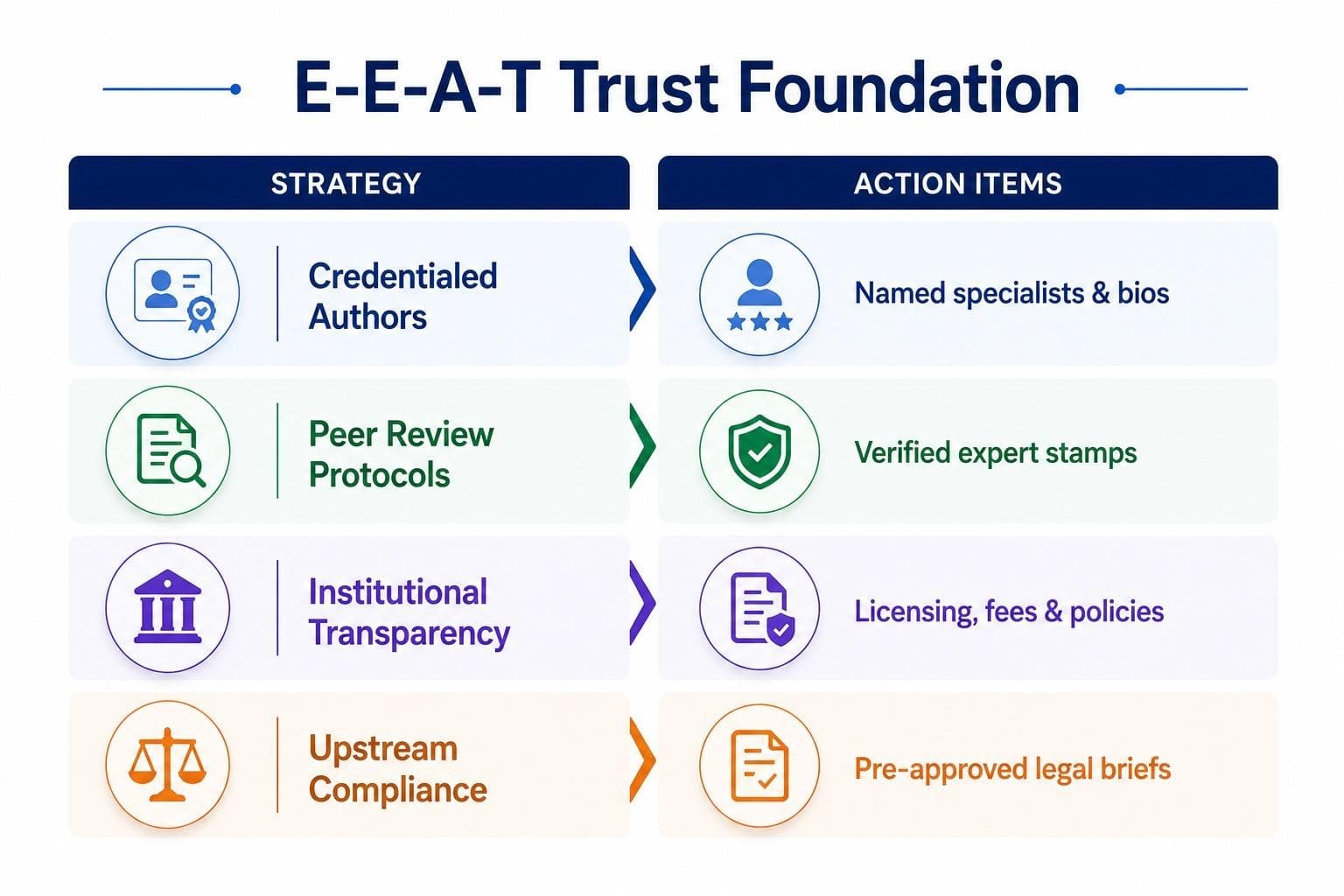
Prioritize Trust (E-E-A-T): Financial services SEO falls under the strict "Your Money or Your Life" (YMYL) category. You must establish trust by using credentialed authors, verified expert reviews, and complete institutional transparency (e.g., publishing regulatory numbers, privacy disclosures, and fee structures), because financial instutions face intense scrutiny online.
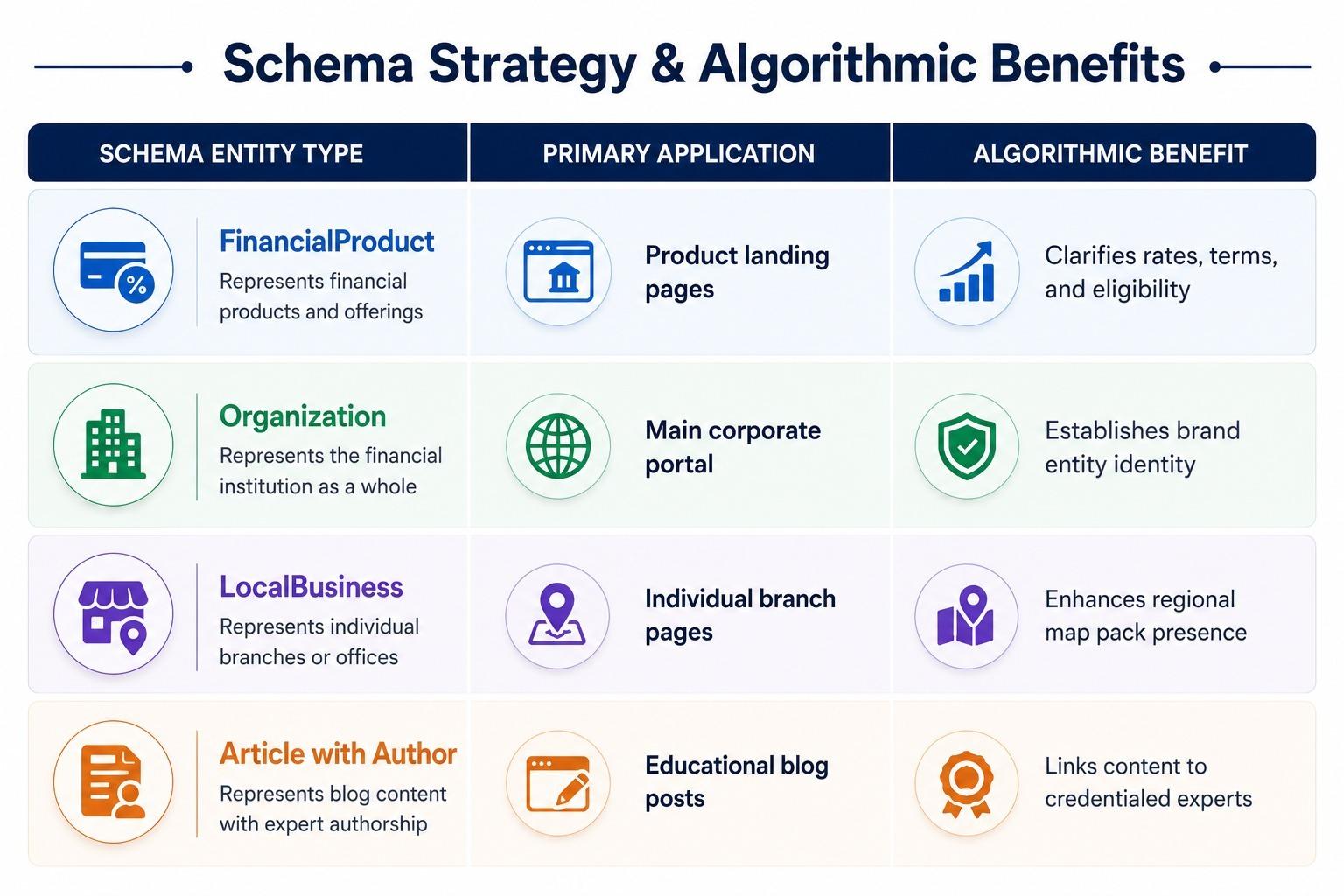
Solidify Technical SEO efforts: A strategy fails if search engines cannot crawl or index the site. Start with a thorough SEO audit, optimize Core Web Vitals and site speed for fast loading (like an LCP under 2.5 seconds), and apply specialized schema markups (like FinancialProduct and LocalBusiness).
Optimize Local Search: Branch-based financial firms should fully complete their Google Business Profiles with consistent contact information (NAP) and local photos. Additionally, every physical branch needs a unique, dedicated landing page tailored to its specific community.
Target Search Intent Over Volume: Avoid chasing raw, high-volume keywords that don't convert. Map your SEO content directly to the sales funnel, build topic clusters, and mine community forums for highly specific, bottom-of-funnel queries relevant to investment strategies and other financial challenges your target audience faces.
Earn Authority & Leverage PR: Gain authentic backlinks and brand mentions by publishing original research, benchmark reports, and interactive tools like calculators. Pitch your internal experts to journalists to expand your digital footprint and outpace direct industry competitors.
Adapt to AI Overviews: With AI dominating informational searches, you must provide fresh, experience-based insights to get cited. Double down on high-intent transactional and local queries where traditional search results still heavily rely on direct website links.
Integrate Compliance Early: Establish strict review rules at the content brief stage rather than after drafting. Use marketing-based compliance liaisons to pre-screen content, and conduct routine audits to ensure all regulatory information remains accurate and up to date, protecting your financial services brands from legal risk.
In the financial services sector, your site literally has to prove why it deserves to be trusted. When prospective clients are researching things like loans, wealth management, or commercial insurance, getting inaccurate advice can directly threaten their financial stability. Because of those real-world consequences, search systems put financial services squarely in the Your Money or Your Life category.
Under this standard, search engine algorithms scrutinise financial websites far more aggressively than they scrutinise a standard commercial blog. So if you want to achieve top placement across competitive search engine results pages, you have to prove that your organisation operates with complete operational transparency and deep expertise.
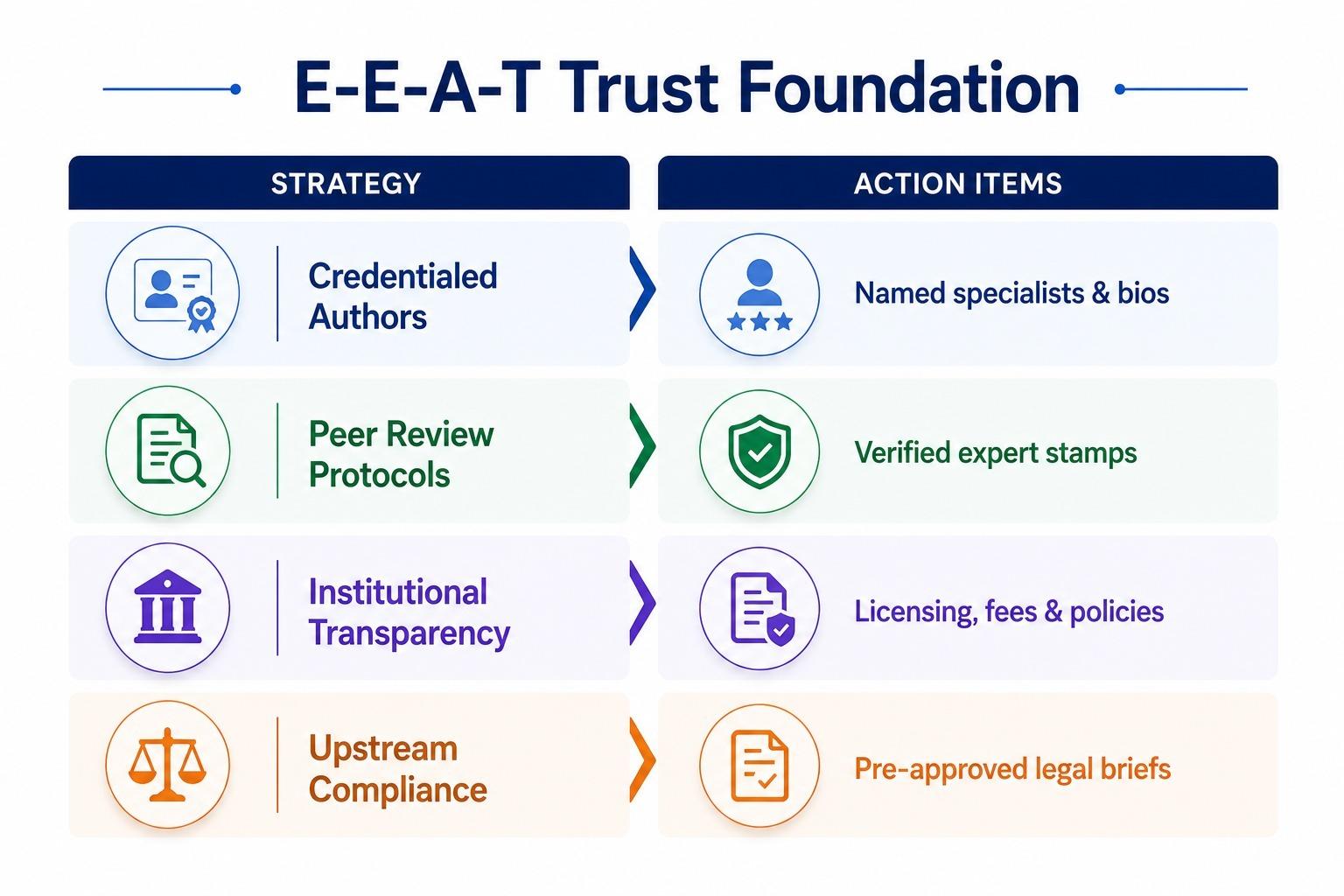
The main evaluation framework for the financial services sector centres on E E A T, where trust acts as the absolute critical foundation.
And you simply cannot fake trust. Every piece of financial services content must be written or rigorously reviewed by credentialed experts with proven domain experience. You want to showcase detailed author biographies, link out to professional licences, and display explicit expert review badges because that directly reinforces the credibility of your financial content. If the main writer lacks formal credentials, just add a visible line naming the expert who reviewed the piece before publication.
Beyond individual credentials, institutional transparency shapes how search engines view domain reputation as a whole. A dependable financial service provider publishes verifiable branch addresses, active regulatory charter numbers, full privacy disclosures, and straightforward fee structures.
Try As Much As Possible To Be Cited In AI Overview
By now it is pretty clear that AI Overviews are dominating search, especially for informational queries. We are seeing them trigger over 90% of the time, and there is not much we can do to stop it. Finance sites used to live off this kind of traffic, and most of this traffic is gone for good.
So if that organic traffic isn't coming back, the next best thing is getting on the list of sources the AI pulls from when it puts an answer together. To get quoted, you cannot just repeat what everyone else is saying. And to get cited, you need fresh insight, an angle or opinion nobody's said yet. The thing is, this has to stem from actual, real-world experience. You cannot just go out there dropping random opinions.
Search Engine Optimisation basics still matter alongside this, including the strategic use of relevant keywords. Keep giving direct, factual answers right in your opening sentences. Use clear headings and structured lists that search engines can easily scrape.
Luckily, AI still has some major gaps, especially when it comes to transactional queries, local searches, and detailed comparisons. For those, search engines still heavily rely on direct quotes from websites, or they just skip the overview entirely and give us the classic blue links we are all used to. Doubling down on these specific queries pays off, since they stay safer from AI disruption and carry the highest commercial intent, driving the most revenue, supporting long-term business growth, fueling lead generation, and building brand recognition at the same time.
Another huge factor for getting cited is brand visibility, which directly feeds into your broader online visibility. There is actually a very high correlation, around 0.664, between getting mentioned in trusted publications and appearing in Google AI overviews. So, you want to get your brand talked about in top-tier spaces, which really just circles back to the most important thing: you have to be a genuine expert in your field.
Beyond that, let's face it, reading long blog posts just is not the primary way most people consume information anymore. You have to diversify. Get on YouTube, TikTok, Instagram, and start doing podcasts. You want to show up on every platform your clients are using. That way, everywhere they look, and also when the AI looks, you are leaving a huge digital footprint.
Technical SEO Holds The Whole Digital Marketing Strategy
Together
You can do absolutely everything else right, but it is completely useless if Google cannot reliably crawl, render, or index your site. That is exactly why technical SEO should be done at the very beginning of every financial SEO strategy.
You need to start with a thorough financial services SEO audit. You are looking at crawlability, indexation, canonicals, redirects, and duplicate URLs. You also need to check your JavaScript rendering, XML sitemaps, robots directives, broken pages, and internal linking. Google does render JavaScript during crawling, but access can still get blocked by server problems or robots text rules.
And if you are doing things right, financial websites usually have extra technical complications. Things like rate tables changing, calculators using scripts, documents sitting in PDFs, and old CMS structures can easily leave important pages buried. You have to make sure the technical aspects of the site allow all that important information to remain accessible and easy to maintain.
Then you need to address page experience. Google wants strong Core Web Vitals along with secure, mobile-friendly pages, targeting an LCP under 2.5 seconds or less, an INP below 200 milliseconds, and a CLS below 0.1. Half of users abandon a page taking more than three seconds to load, so optimising rendering paths, compressing heavy visual assets, improving site speed, and securing the site through HTTPS all matter directly to conversion and to search engine rankings alike.
Finally, you should also try to utilise specialised schemas for financial products, corporate entities, local branches, and credentialed authors. This markup clears up entity confusion and raises the odds of appearing in rich snippets.
Local SEO Delivers The Fastest Wins For Branch-Based Firms
Having a Google Business Profile is just a basic requirement for any business today. But you need to break it down further to the specific branch details. Doing this helps you capture highly qualified local prospects, and the good thing is that, nine times out of ten, users looking for a nearby branch are ready to take action.
So, ensure that every physical branch has its own fully optimised Google Business Profile. This maximises your map pack placement. To really improve trust, ensure that your information is perfectly consistent everywhere it is listed online. That means having the exact same name, address, and phone number across the board. Actually, if you look at the data, businesses with fully completed profiles capture seven times more clicks and 70% more store visits.
You also need to look like a real, active business. Take photos of the location, post local events, and do everything you can to show your community presence. It really pays off because Google Business Profiles with over 100 mages generate over 10 times more website clicks and 520% more phone calls.
Once you get that right, remember that some clients will still want to do further research before they commit. Make sure that each physical location has a dedicated landing page designed specifically for that community, answering the questions the target audience actually has. Please do not just use a generic template with the city name swapped out.
Try to make it unique. You want to identify location-specific keywords and incorporate distinct local landmarks, regional economic context, and neighbourhood directions. You should also weave in specific details about your staff, your exact office hours, and the unique local services you offer right there. Just include anything that makes you sound like you actually know the place. And on the bright side, doing all of this completely prevents template duplication.
Finally, reviews really round out the picture. Nearly 97% of people read online reviews before selecting a local business. Asking clients for reviews works, though sending one or two polite reminders is plenty, since nobody wants to feel pestered. Once they do leave a review, make sure you respond to every single one on the profile, whether it is good or bad.
Start With Search Intent Instead of Search Volume
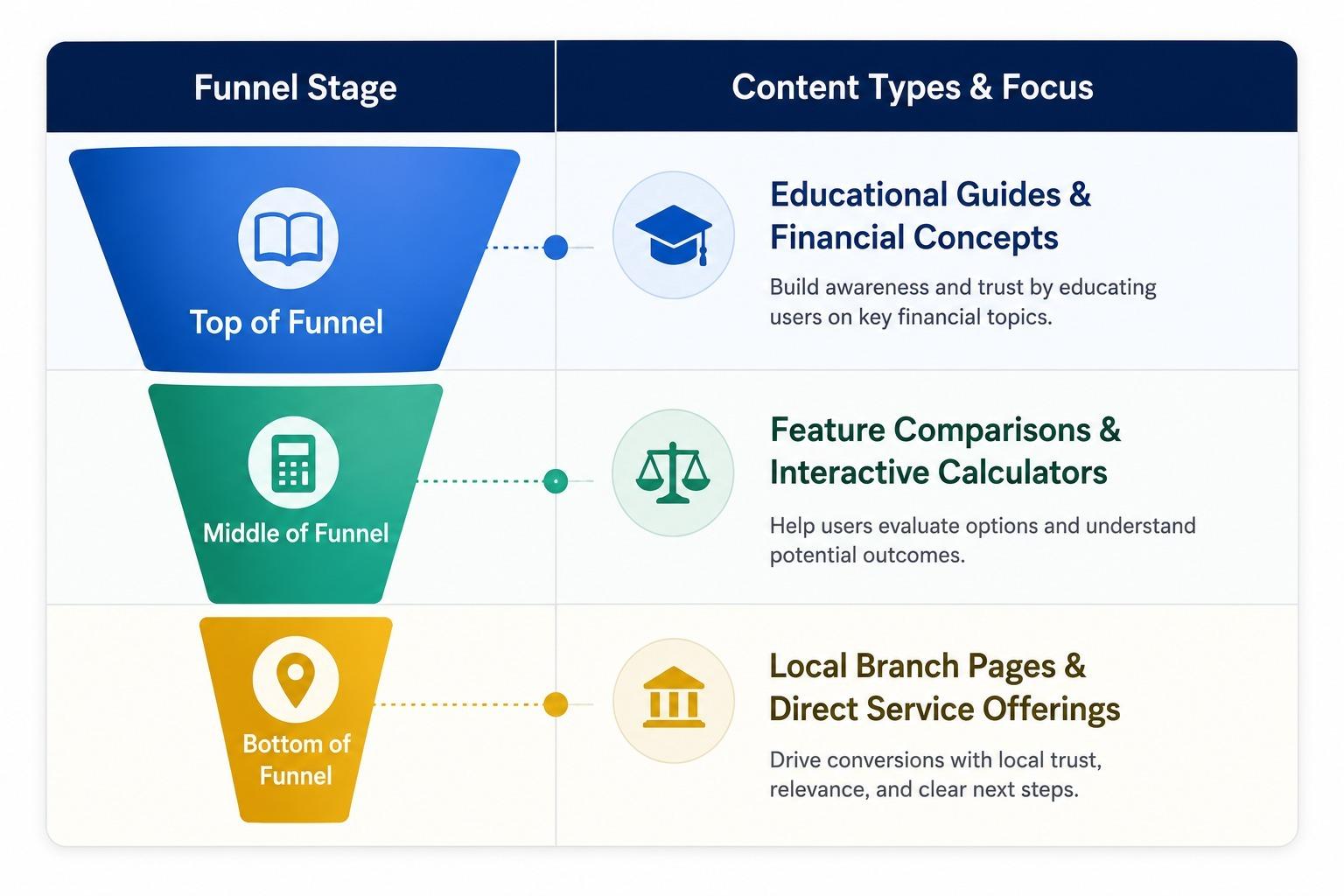
When it comes to building a content strategy for a financial company, a lot of people make the mistake of chasing raw search volume. They go after massive, generic terms like financial services. But those terms rarely ever convert, and chasing them just wastes a budget that a smaller finance business simply cannot spare.
Instead, you really need to start with search intent. You should map your keyword research directly to the sales funnel rather than just looking at volume.
If you want to attract high-value financial services clients who are actually ready to choose a partner, you have to focus on those specific, bottom-of-funnel queries. Interestingly, a lot of the absolute strongest keywords in the finance industry will show zero search volume in third-party tools, but they still carry massive real-world demand. If you want to find them, watch what questions keep repeating across finance forums, community threads, and question and answer sites. You can treat the exact language normal people use there as a direct feed for your editorial calendar.
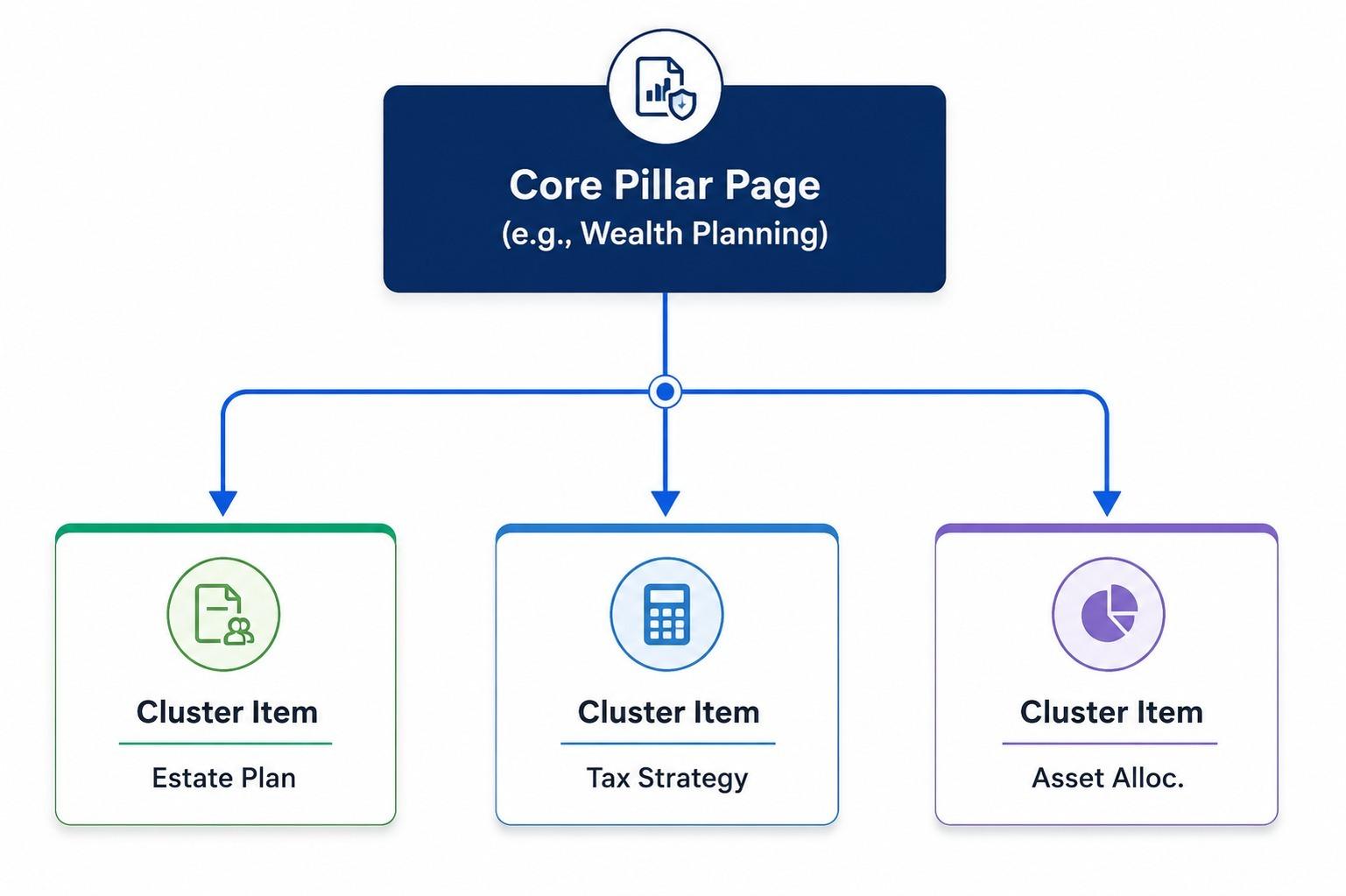
Finally, the best way to tie all of these different intents together is by using a topic cluster model. You build one central guide that covers the broad subject, and then all your supporting pages answer those narrower forum questions and link right back to the main resource. This creates a highly logical structure for your users, and it helps search engines understand exactly how all your pages connect.
Earn Authority Through Useful Assets Relevant Mentions and Digital PR
Off-page link building across the financial services industry calls for real care, since random links do little good on their own. Search engines weigh unlinked brand mentions, branded query volume, and expert citations heavily when calculating overall authority.
Publishing original research, annual benchmark reports, or market studies earns authentic links without a tonne of cold outreach, since financial journalists constantly look for verified data to back their market stories. When you provide that data, you naturally earn media coverage and eventually generate those high-tier editorial links.
Another great way to earn authority is by building interactive tools, like calculators, that other sites in the finance sector will actually want to link to. And the good thing is, with the rapid rise of AI, it is incredibly easy to generate the code for these tools right now.
Finally, you should leverage your internal experts to build authority through both media outreach and non-competitive digital networking. A great example of this is collaborating with certified public accountants and financial advisors for joint webinars. At the same time, you can set up automated outreach protocols to scan publications and find journalists who are actively covering various topics across the financial industry. This allows you to pitch your experts to provide commentary on current financial trends at the exact right moment. When your team becomes known for a particular subject, their growing reputation naturally attracts more mentions and directly strengthens your site's overall authority.
Make Compliance Part of the SEO Strategy
In the 'eyes' of search engines, finance is a 'Your Money or Your Life' topic. Meaning you need to scrutinise every piece of information you put out there.
Writers are human and prone to error, so to proactively minimise those mistakes, set clear review rules right at the brief stage. You need to decide exactly what claims require evidence, which pages need specialist approval, and how regulated information will be checked before publication.
This rule also applies to external promotion. Any rates, claims, or product descriptions used in digital PR or link acquisition need the exact same scrutiny as the material published on your own site.
It can seem a bit expensive upfront, but all of this becomes a lot easier if you designate trained compliance liaisons right within your marketing team. They can screen the drafts before you ever go to formal legal review, which saves everyone time.
Then obviously, after a while, certain topics will naturally get outdated. You want to establish a system for routine content audits. The goal is simple. When regulations shift, your existing content needs to reflect those updates immediately so you stay compliant and keep your search rankings safe.
If your financial services website needs a straight answer on where your biggest gaps currently sit, get in touch with our Finance SEO team. We will walk through exactly what a finance SEO audit would surface for your business and show you exactly how to implement a well executed SEO strategy across your specific financial services niche from there.
Call 0207 965 7623 or send a message to start the conversation.