











Ecommerce is one of the most crowded industries. That doesn't mean it's not possible to grow, but it does mean that you can't afford to miss Ecommerce SEO trends. Because if you're not using them to maximise your visibility, your competitors are.
SEO is one of the most affordable ways to enhance your visibility, attract website visitors, and turn clicks into sales. In this post, we'll look at which trends are dominating in 2026.
TL;DR: Key Ecommerce SEO Trends for 2026
AI search is reshaping product discovery: Optimise content for conversational, long-tail searches and clearly explain product use cases, benefits and suitability.
Traditional SEO still matters: Technical performance, crawlability, site architecture and helpful content are vital for Google rankings and AI visibility.
Category pages are increasingly valuable: Well-optimised category pages catch broader commercial searches and help shoppers compare their options.
Unique product descriptions are essential: Answer customer questions, highlight benefits and address specific pain points.
Visual search is growing: High-quality, optimised product imagery helps brands capitalise on Google Shopping, Lens and increasingly visual shopping experiences.
Structured data improves discoverability: Accurate product schema helps search engines understand pricing, availability, ratings and other important information.
SEO and CRO need to work together: More organic traffic means little if visitors don't convert, so user experience and conversion optimisation should be part of your Ecommerce SEO strategy.
Put customers at the centre: Reviews, user-generated content and content based on real customer needs can build trust and support purchasing decisions.
The State of Ecommerce in 2026:
Around 59 million people in the UK are regular Ecommerce users, with the average consumer spending £50 a week or £2,600 a year. (Landmark Global).
28.1% of retail sales occur online (ONS).
Consumer electronics, fashion, food and beverages, and beauty generate the most Ecommerce sales each year (ZIK Analytics).
90% of dropshipping websites fail within their first few weeks due to market saturation. 70% of online retailers fail within their first year of operation (Upsella).
So, now that you know more about the Ecommerce market in 2026, it's time to look at which SEO trends are determining whether a brand succeeds.
1: AI-Driven Search is Changing the Customer Journey
AI search engines are playing an active role in shaping the modern customer journey. Google and Amazon still dominate Ecommerce searches, with Oberlo stating that Google captures up to 46% of initial searches and around 54% of Amazon searches are for direct products.
However, AI is altering how people discover, compare, and consider products in two ways.
Google AI Overviews
A traditional Google search meant that the platform would scan its database for the most relevant results and deliver them in a list of blue links. Users could click on different results, with most never making it past page one of the SERPs.
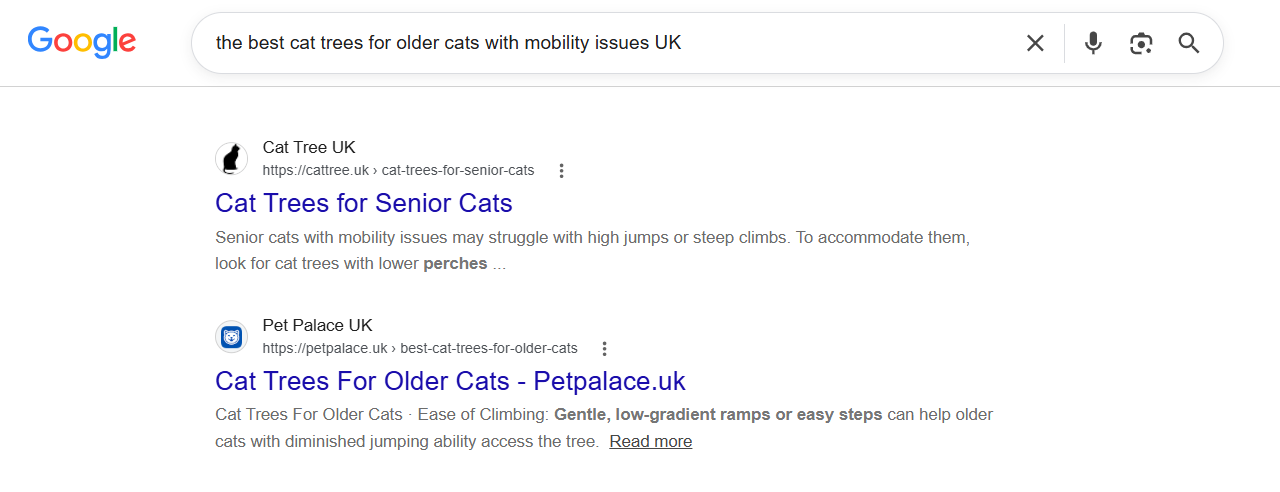
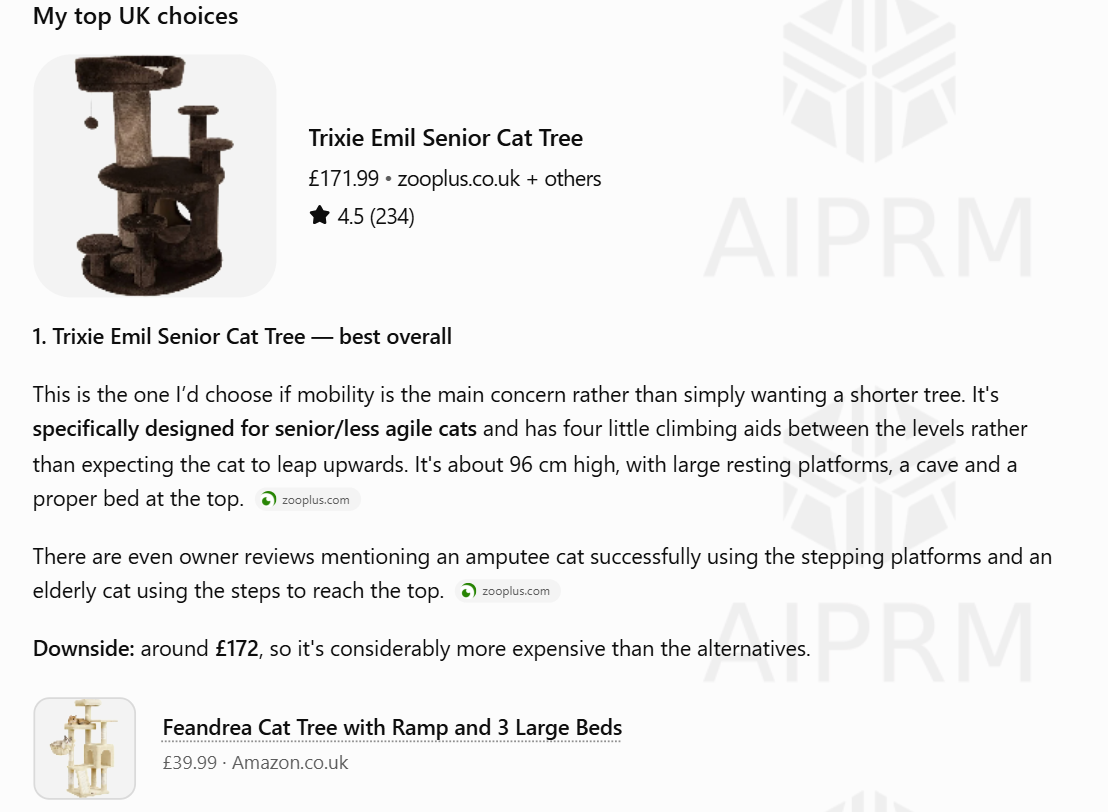
However, the AI search features now mean that Google can provide information for complex queries that match the user's intent. For example, let's take a look at a complex search term like "the best cat trees for older cats with mobility issues UK".
The traditional search engine results pages show commercial intent guides that focus on senior cats:
Meanwhile, the AI Overviews directly address the query and show product recommendations:
The Opportunity for Ecommerce Businesses
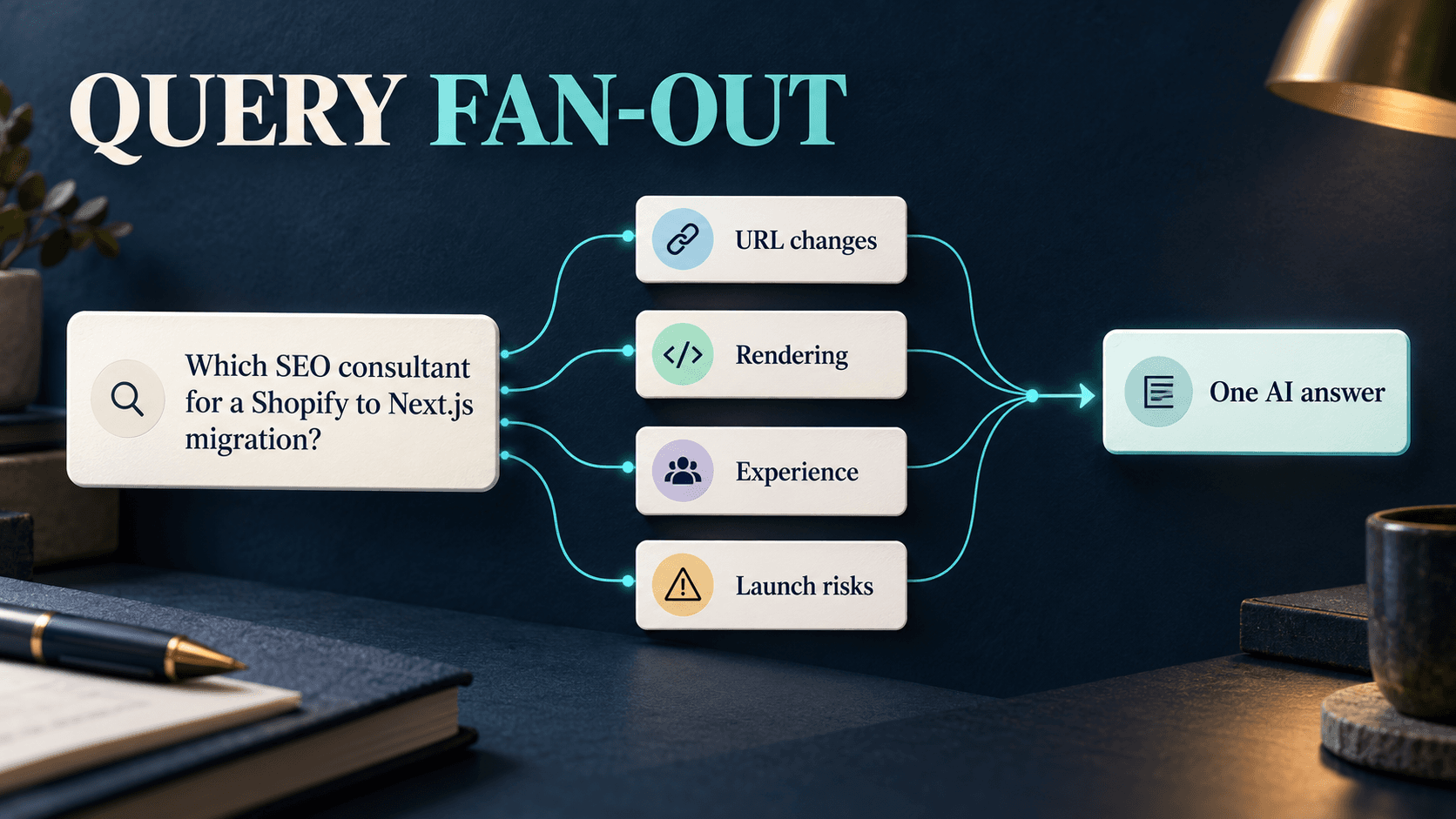
Both ChatGPT and Perplexity show that you don't need to secure top-ranking positions to gain citations, which gives smaller brands the opportunity to attract more sales. The key is knowing how to write for AI without compromising user experience:
Focus on long-tail keywords and conversational style searches.
Detail a product's use case, features, and benefits.
Provide comparisons in table or list format.
Clearly explain who the product is suitable for.
Provide size guides when applicable.
Create detailed FAQ sections.
Remember, it's not about optimising for AI; it's about providing the information potential buyers care about.
2: Traditional SEO Isn't Dead
Despite some social media "influencers" saying traditional SEO is dying, it's still a core part of any Ecommerce marketing strategy. People shopping online still use Google to search for specific products and recommendations.
It's also important to remember that the platform's AI Overviews look at ranking pages when deciding which information to cite.
Whether it's Google Search, AIOs, or Google Shopping, the platform needs to find, crawl, understand, and rank your website for it to appear across these touchpoints.
The fundamentals of SEO are still vital. These include:
Technical SEO
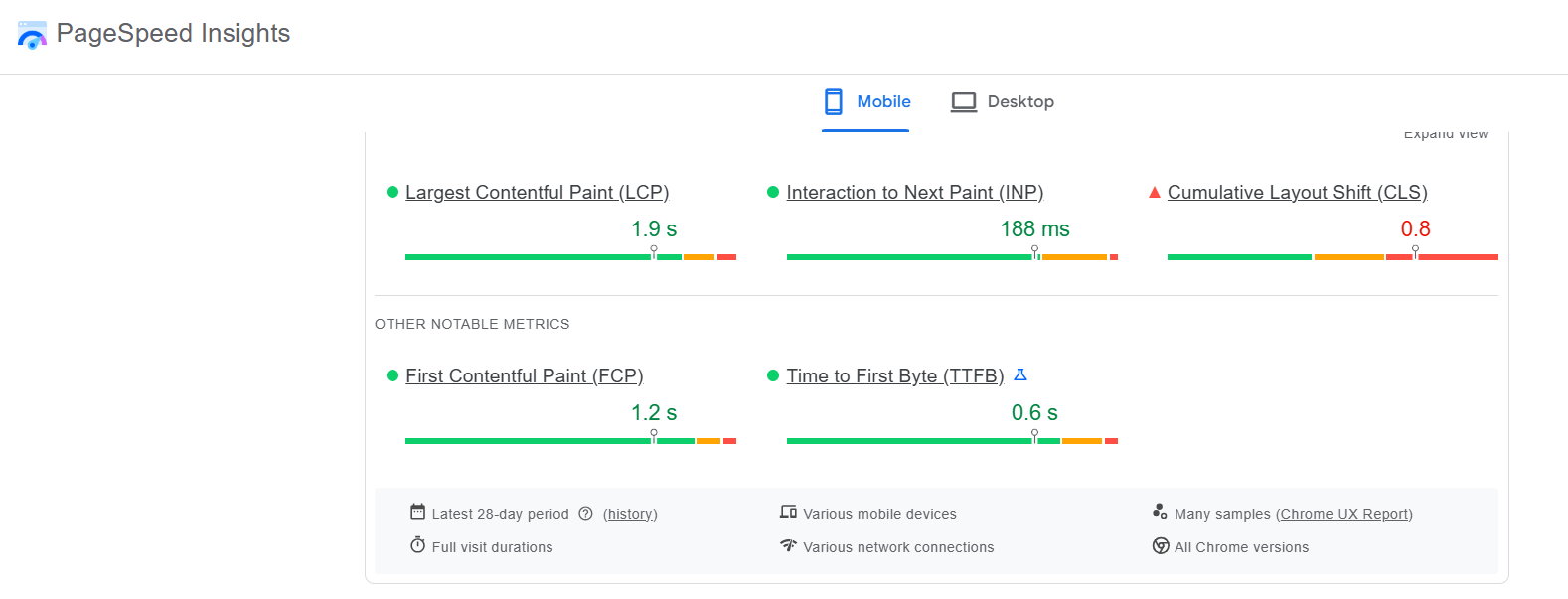
Your website's SEO performance depends on its technical elements, including loading speed, mobile optimisation, and architecture. If your site performance doesn't align with Core Web Vitals, it impacts your ranking and can even influence AI citations.
Research shows that page speed can directly influence sales. According to FastSpring, a 1-second delay can decrease conversions by 7%, which can add up quickly.
Using a free tool like PageSpeed Insights can help you identify potential issues.
URL Structure and Site Architecture
Ecommerce sites are notorious for technical challenges due to their size.
For example, when you have multiple product pages with different sizes, colours, and other options available, it creates a huge number of URLs. If these URLs aren't managed correctly, they'll drain your crawl budget and prevent search engines from indexing and ranking your core pages.
Working with a professional technical SEO agency eliminates these issues and ensures a seamless experience for both the search engines and potential customers.
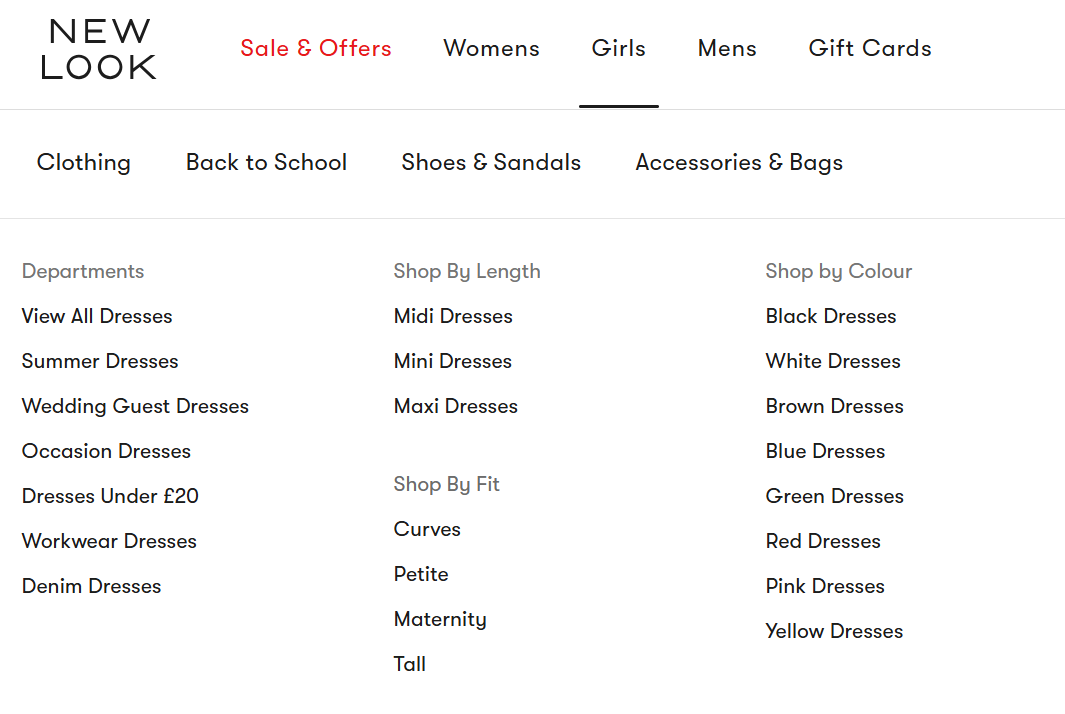
The customer journey plays a significant role in conversion rates, with logical website architectures playing a vital role in whether someone stays on your website or chooses a competitor:
SEO Strategy is Becoming Broader
The days of finding suitable keywords, adding them to a page, and watching your rankings grow are over. While keywords are still part of the process, the customer journey in 2026 has changed from: keyword → page → ranking to Customer need → useful content → visibility → trust → sale.
Converting a target audience into buyers involves three different pillars:
Context and Intent: Natural language and user intent are replacing traditional phrase matches. The Ecommerce brands that optimise for "the best maternity jeans for the third trimester" will win over those that focus on "the best maternity jeans".
Information Gain and Topical Authority: In a world full of AI-generated content, brands that establish topical authority and provide valuable insights have a strong chance of appearing higher on the SERPs and being cited in AI.
Multiple Touchpoints: Today's consumer behaviour isn't just about reading some reviews on your website. They'll actively check AI, Reddit, YouTube, social media platforms and other touchpoints before making a decision. This means that your brand's presence has to be visible across these touchpoints to establish its authority.
3: Category Pages Deserve More Focus
It's natural to focus on product page SEO because that's where conversions often happen. But category pages can bring in large amounts of organic traffic, and there's one clear reason: consumers want choices.
Category pages help potential buyers find suitable product pages and explore their options. They're navigational in nature and can significantly simplify the shopping experience.
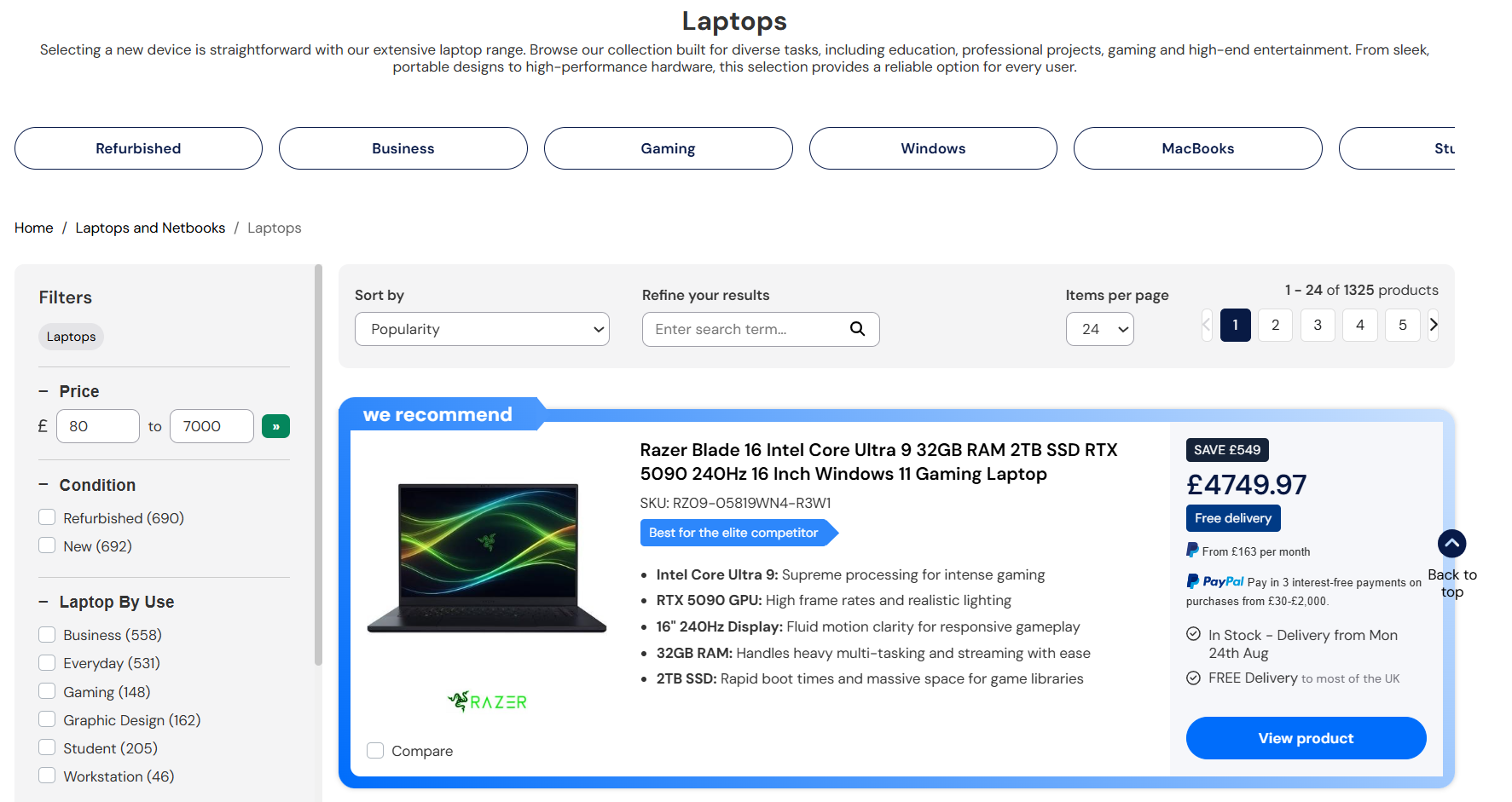
When creating category pages, you should focus on clear titles, introductory copy, and filters. It's also important to use internal links that help visitors access different product pages.
The smoother the experience is, the longer they'll stay on your website. As you can see from this Laptops Direct example, the laptop category page has accessible options at the top, a dedicated filtering section, and also features a recommendation.
4: Unique Product Content Addresses Customer Pain Points
Managing an Ecommerce website is hard - particularly when you have hundreds or thousands of products to sell. One of the most common issues we see is websites using the manufacturer's product description instead of writing their own.
For example, this product description for Nike Revolution 8 Trainers appears on six different websites - all of which are major retailers.
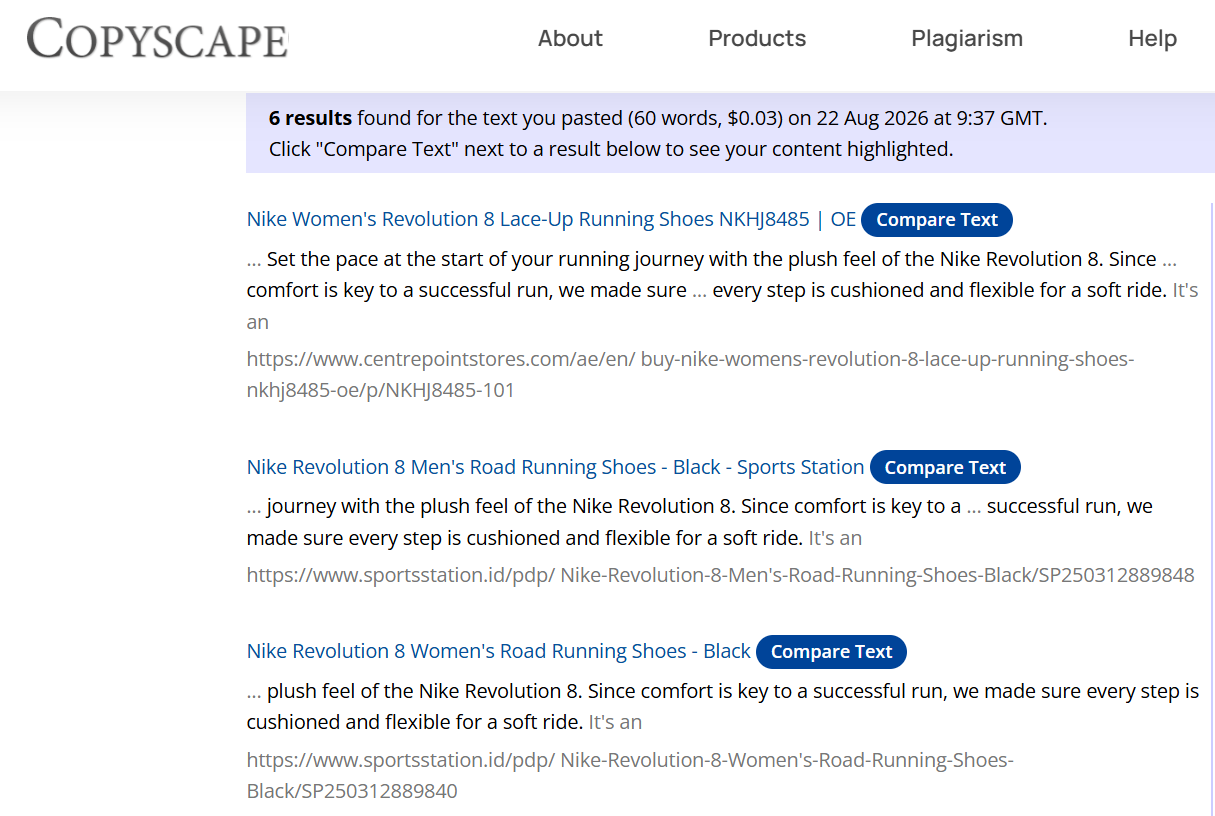
This means that people looking to buy this specific pair of trainers will see the same description across multiple websites, leaving no room for differentiation.
But when you create descriptive product pages that clearly outline the benefits and address common questions, it gives potential buyers more context and can help you secure more AI citations.
5: Google Shopping is More Visual
Technology has transformed shopping online, with mobile shoppers enjoying an immersive experience. One of the most popular features is Google Lens, which lets users take a photo of real-world objects to find similar products online.
According to SQ Magazine, Google Lens processes 20 billion visual searches a month, an average year-on-year increase of 140%. The Shopping Graph has over 60 billion listings and provides real-time data for shoppers, including pricing, visual updates, and other information.
AI technology also simplifies the decision-making process. More retailers are turning to Visual Try On features that let people see what clothing, accessories, and make-up products will look like from their laptop or mobile device.
The Takeaway
The takeaway for your Ecommerce digital marketing strategy is simple here: high-quality images matter. But these images aren't just about lighting or clarity; you should showcase products from different angles, use 360 representations, and focus on real-world use.
Image optimisation is also vital, because it enables the search engines and AI to discover your products.
6: Structured Data is a Necessity
If you want your online store to appear in the search results, the search engines need to be able to access and understand it.
This is where structured data becomes a necessity, because it helps the search engines understand important information, including your product descriptions, pricing, availability, and ratings in a machine-readable format.
Schema markup can be more complex for Ecommerce businesses due to their size, but syncing your data with accurate product information means you have a better chance of appearing in online searches.
7: Ecommerce SEO and CRO Should Be a Partnership
SEO isn't just about making sure your website appears in Google searches; it's about turning views into website clicks, and those clicks into conversions.
A website that increases its organic traffic by 50% isn't really achieving anything if that traffic doesn't translate to sales.
Conversion Rate Optimisation techniques include structuring your e-commerce site for user experience and creating copy that turns each product into a compelling offer. Tools like Google Analytics 4 and Microsoft Clarity let you see where users are exiting.
This helps you optimise site performance, ensuring online shoppers have a smooth experience.
8: Customer-Led Experiences
You can optimise your website for the SERPs, voice search, and AI-powered search, but if you don't consider what a customer needs to know and feel before they make a purchase, you're missing out on conversions.
Once you know this information, you can optimise your content for the search queries they'll naturally use. A massive challenge faced by Ecommerce businesses is creating unique content, but this is where customer loyalty and engagement come in.
User-generated content such as reviews, photos, and videos can simplify the decision-making process and set realistic customer expectations, which enhances your brand's authority.
Final Thoughts On E-Commerce SEO Trends
Ecommerce SEO still relies on many of the same principles, but it's evolved in recent years.
The fundamental elements are still the same, including mobile-first design, optimising for technical and local SEO, and focusing on providing helpful content, but organic search rankings are just one piece of a growing puzzle.
The Ecommerce businesses that get it right don't just see different strategies that might yield results; they understand how each strategy links to the others.
SEO brings customers to your website, LLM optimisation techniques add a completely different layer of visibility, helpful content and compelling product pages build trust, and CRO enhances sales.
If you're ready to develop a strategy that grows and scales with your brand, our specialists take a holistic look at your website, search trends, and conversion rates to ensure our Ecommerce SEO services keep you ahead of the curve.
Please book a free proposal to learn more.