









Industry Specialism
Fintech SEO
At Assertive Media, we provide a top tier SEO service for Fintech businesses looking to grow further via organic search. We cover Google, Bing and other search engines as well as AI platforms and LLMS.
- Increase New Customers
- Increase Sign Ups
- Drive Brand & Platform Awareness
Trusted by ambitious brands






















Fintech SEO
The fintech marketplace has been growing consistently year on year and is a hyper-competitive market for SEO. The global fintech market valuation hovers around $395bn and is set to continue growing. Growth rates (CAGR) is expanding at 15%-18% over the last decade with forecasts reaching over $1.3tn by 2034.
In the UK, the market size is substantial with values over £14.3b in 2025 according to Mordor Intelligence. With such demand comes increased competition organically.
At Assertive Media, we provide a top tier SEO service for Fintech businesses looking to grow further via organic search. We cover Google, Bing and other search engines as well as AI platforms and LLMS.
We support all fintech businesses with growing their organic footprint across SEO channels and search engines such as Google,Bing, Baidu and other regional search engines. We have in-depth knowledge of fintech, from dealing with compliance to the roadblocks of getting implementation done quickly due to multi-layer management.
Available balance
SEO Case Study
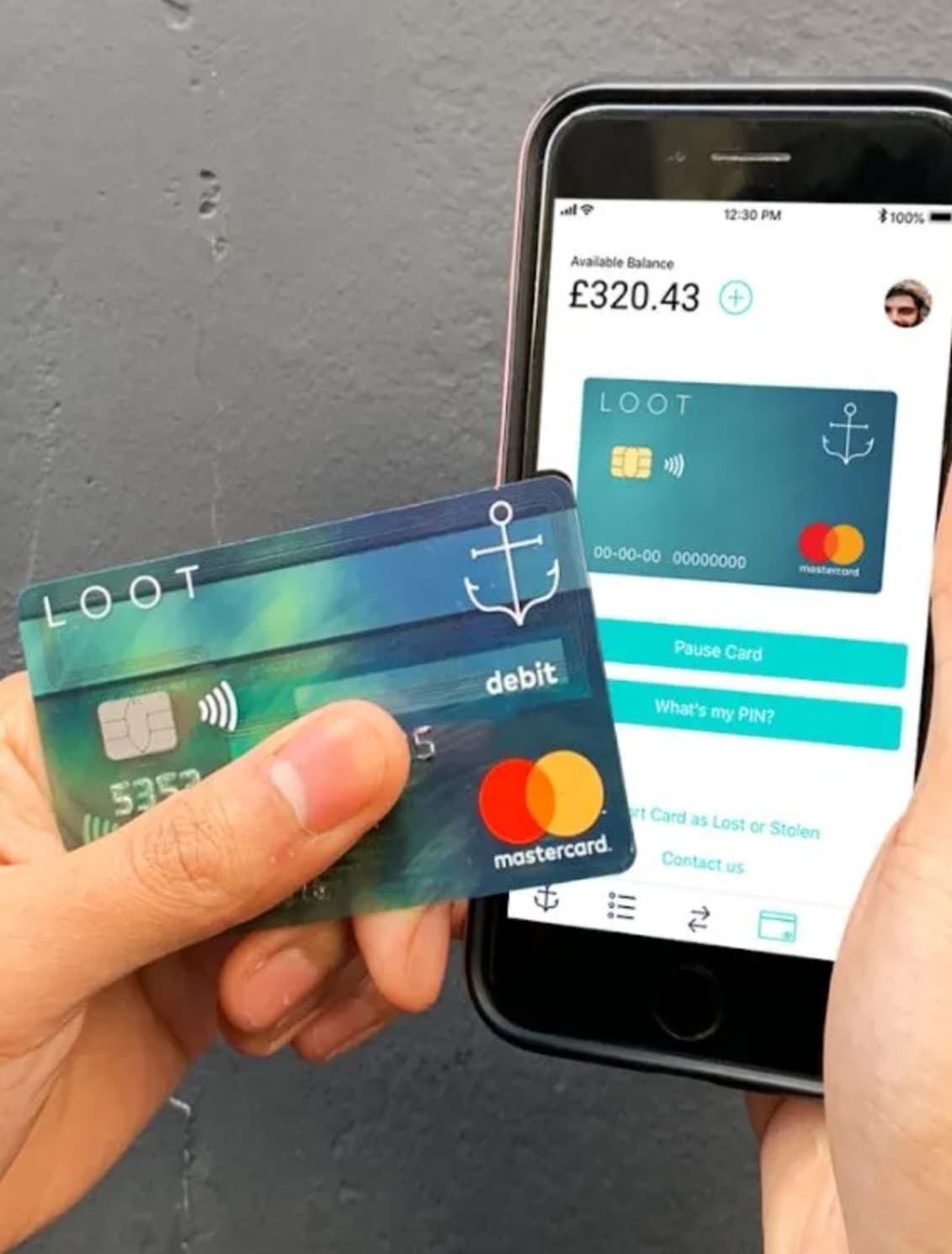
Assertive worked with Loot to help increase new customer sign ups. We delivered a fully fledged SEO & CRO strategy to help drive up new customer sign ups.
Loot is a digital bank / emoney provider like Wise, Monese, ANNA, Thinkmoney - they provide digital money management for customers, allowing easy internal transfers, savings pots & other bank-like services through their app. Assertive delivered an SEO strategy for the RBS backed eMoney business to help increase brand awareness via organic search and to ultimately increase the volume of users overall.
- 150%
- Traffic Increase
- 3.8×
- Customer Sign Ups
- 14 mo
- to Results
WHAT WE OFFER
We offer professional, high quality fintech SEO services to businesses across the fintech sector covering but not limited to payments & money movement such as payment service providers, FX companies and BNPL (buy now pay later) businesses. We also cover digital banking and infrastructure supporting neobanks & challenger banks, BaaS (banking as a service), lending & credit tech, wealthtech & capital markets, Insurance technology, Enterprise fintech and more.
Whether you are a digital challenger bank like Monzo or Starling, or a payment processor like Stripe - we can help. We have extensive SEO experience in the fintech sector, helping to drive brand visibility growth for keywords that convert in organic search.
The core service offering for fintech brands includes:
- 01
Fintech SEO Audits
Technical SEO, core web vitals, indexing, content and links reviewed end to end, with a prioritised roadmap.
Learn more - 02
Fintech SEO Strategies
Growth strategies built for digital banks, payment processors and B2B/B2C platforms.
Learn more - 03
Fintech Content Strategies
We find what your market is searching for, then win it with content designed to convert.
Learn more - 04
Digital PR & Link Building
High-quality link earning and digital PR that builds domain trust and brand credibility.
Learn more - 05
Competitor Research & Analysis
See what rival fintechs do across technical SEO, content and links, and where you can beat them.
Learn more - 06
Customer Acquisition Strategies
SEO-led acquisition using Search Console, Trends, GA and third-party competitor data.
Learn more - 07
Conversion & User Behaviour
Behavioural and CRO analysis that turns the organic traffic you already have into signups.
Learn more Not sure which of these you need?
Tell us where your fintech brand is losing organic ground and we'll come back with a prioritised plan, not a generic pitch.
What each service covers in detail
Fintech SEO Audits
we audit your fintech website, looking at your technical SEO, core web vitals, page indexing, organic performance, content, links and more. Our SEO audits give a comprehensive overview of your fintech brand website performance, content performance and user engagement along with SEO recommendations and strategy.
Fintech SEO Strategies
whether you are a digital bank, a payment processor or you offer a platform for businesses in B2C/B2B we can help. We develop fintech SEO strategies to help increase visibility and new customer acquisition
Fintech Content Strategies
we help brands to capitalise on the search marketplace, we find all the things people are searching for in relation to your offering/solution and we go after that traffic with captivating, engaging content that’s both helpful and designed to convert. Are you a challenger bank looking to increase new customer acquisition? Are you a payment processor looking to compete with Stripe or PayPal? We can help
Digital PR, Link Building & Brand Building
we can help strengthen your domain and brand trust / credibility with high quality link building and link earning strategies
Competitor fintech research and analysis
we can audit your competitors to see what they are doing from a technical SEO, content and link building perspective to understand what your brand should be doing better and more of
Fintech customer acquisition strategies
we can help leverage the power of SEO to find your business new customers + get them to convert. We do this using google search console, google trends, google analytics and third party competitor data via AHREFS, SEMRUSH, SERANKING and more
Service 7
Fintech user behaviour and conversion optimisation analysis
WHAT IS FINTECH?
Fintech (short for Financial Technology) refers to any software, mobile application, or digital technology designed to automate, improve, or replace traditional financial services for businesses and consumers.
At its core, fintech integrates technology (such as cloud computing, APIs, artificial intelligence, and blockchain) into financial operations to make processes faster, cheaper, more accessible, and more secure than traditional paper-and-branch banking.

The core pillars of fintech include:
Accessibility
Removing physical branches and friction so users can manage money 24/7 via mobile apps or web portals (e.g., neobanks, mobile wallets).
Efficiency & Automation
Replacing manual paperwork, slow bank clearing times, and human underwriting with algorithmic processing (e.g., instant loan approvals, real-time cross-border payments).
Unbundling
Allowing specialized platforms to focus on doing one financial service exceptionally well, such as international transfers or expense management, rather than relying on a single traditional bank for everything.
Embedded Financials
Integrating financial tools directly into non-financial platforms, such as paying for a ride-share inside an app or getting point-of-sale financing at an e-commerce checkout.
WHAT FINTECH SEO SERVICES DO WE OFFER?
We offer a full SEO service for Fintech businesses along with PPC and CRO/UX/Conversion. The most common services we provide for Fintech businesses include:
 01
01SEO audits
 02
02Technical SEO support, consultancy and implementation
 03
03Resolution of page indexing issues
 04
04New customer acquisition strategies via content and link building
 05
05On-site SEO enhancement (core web vitals, HTTPS, page structure, structured data)
 06
06Content strategies (content gap analysis, weak/dead content identification, new content)
 07
07Content production (new content for platforms, solutions, products, features, blog, articles)
 08
08Link building (building brand authority and trust, link building, digital PR)
 09
09Fintech coverage analysis (product quality, platform, feedback, reviews, distribution, brand vs non brand, offering comparison, pricing comparison)
 10
10Knowledge hub analysis - opportunities to earn new customers via webinars, educational content, guides, strategies, comparison content
HOW LONG DOES FINTECH SEO TAKE
This varies from business to business and it wholly depends on the pre-existing organic performance, brand authority and more. Typically the Fintech clients we work with see results in the first 6-12 months, some sooner, it depends.
We assess your Google search console data to understand where your pre-existing impressions and clicks come from, we segment out your fintech brand searches, we then segment by pages and queries to understand where the opportunities exist.
Fintech SEO has some complexity to it, primarily because a lot of it really boils down to brand establishment and brand search volume and then the non brand side of things - how much of that traffic is high quality or potentially qualified for conversion?
A lot of Fintech SEO strategies look at highlighting how their platform is a superior choice, often followed by self-promotional content or listicles - which is a dying strategy as Google and LLMS clamp down on it.
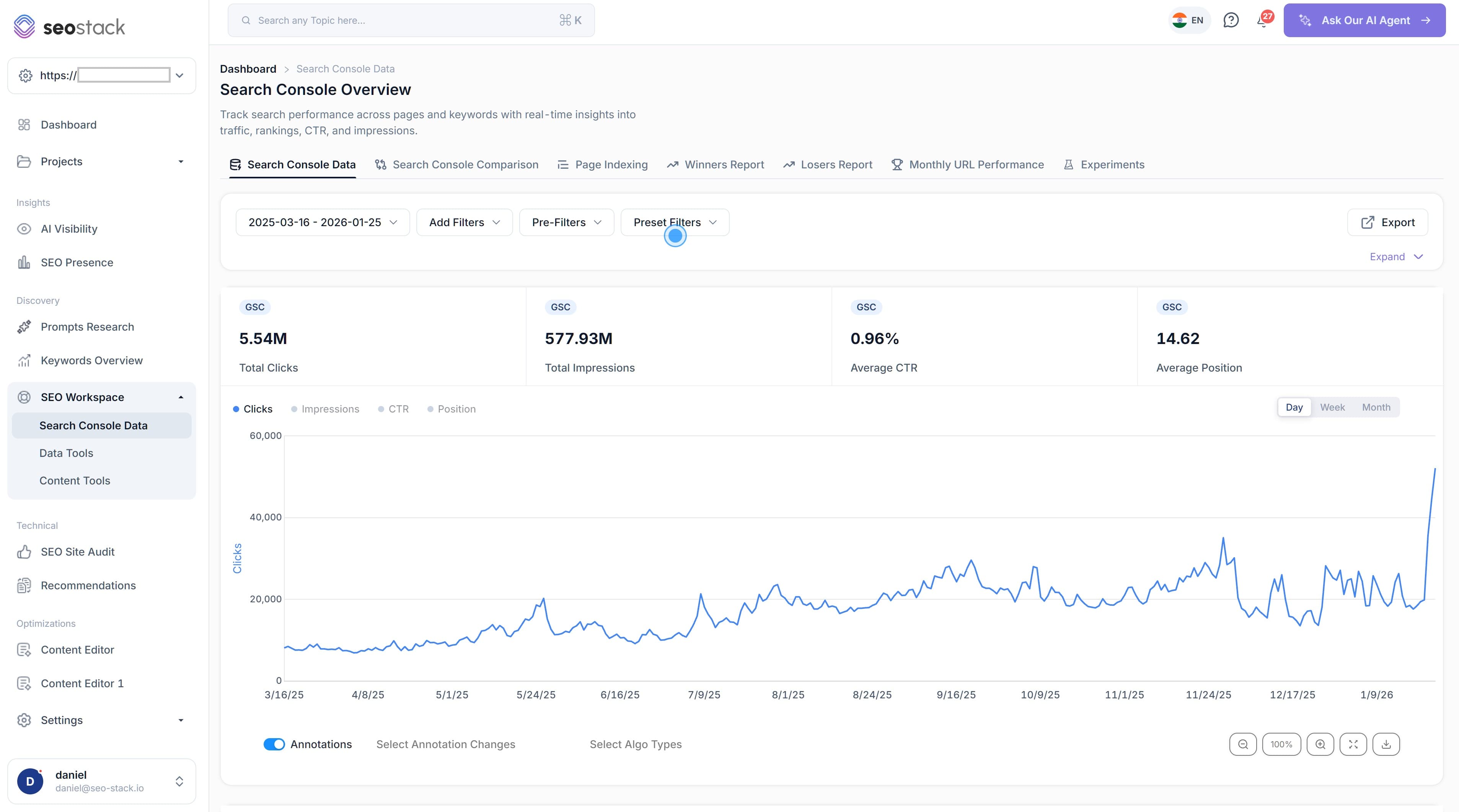
We Get Strong Results for Fintech Brands in Organic + AI Search
Assertive has been established since 2007, we're serious when it comes to getting results for Fintech clients & we also understand the challenges from marketing spend and results through to compliance challenges.
We increase rankings, traffic & growth.
WHAT ARE COMMON CHALLENGES FOR FINTECH BRANDS?
There are lots of challenges, primarily competitive markets + that many fintech brands are in the process of growth with investors breathing down their necks. Usually a lot of VC backed fintech’s have to be careful with investor money - so naturally marketing is one area where cash can be burned quickly, we understand that.
The biggest challenges for fintech and challenger brands includes:
- 01
Breaking into highly competitive / saturated markets, for example young fintech challenger banks looking to acquire new customers from established banks
- 02
Large TAM but large investment required to reach that TAM
- 03
VC / Angel backed investment means marketing spend is heavily scrutinised on results where SEO can take time
- 04
Bespoke website builds - a lot of fintech brands tend to not use mainstream CMS solutions like Wordpress, Webflow, Squarespace, Wix, Sitecore etc. many fintech brands have website built on custom tech-stacks, often JS/NextJS based, making website changes and edits harder or slower (because of approval
- 05
Regulatory requirements - Fintech brands operating in regulated markets can be subject to far more stringent approval processes for things intrinsic to SEO such as content, digital PR etc.
- 06
Lack of brand authority - so smaller, newer fintech brands may have a much bigger uphill struggle to build authority and reputation, not just from link building but review collection
These challenges can make SEO more challenging, not impossible but more challenging, especially if results are being measured on much shorter timeframes.
HOW WE HELP FINTECH BRANDS TO NEGATE THE CHALLENGES
When we work with Fintech brands we size up the brand, the marketplace, the target audience and marketplace before we do any SEO work. We understand the mechanics of the business first - from SEO implementation and technical SEO recommendation implementation sign offs through to getting content through regulatory compliance.
We don’t miss-sell SEO or set unrealistic expectations, we’re always very honest and open with Fintech brands about the scale of SEO work and that the impact of SEO is heavily conditional on not only the willingness to get things implemented through to complex approval processes.
What we tend to do to mitigate any SEO issues before they arise is:

We conduct an SEO audit to ascertain where the existing issues exist, where the gaps are and the strategic approach to getting things done
We learn about the business, the management, internal approval processes, website edits, content approval and more to ascertain how agile the business can be, this helps us to ensure we;re not onboarding clients who simply can’t get the things done and implemented as needed
We look at realistic budgets required to drive organic growth - SEO is rarely a straight line, so, we look at what opportunities exist (low hanging fruit) as well as looking at medium to longer term goals
We use the highest quality resource to ensure work quality is beyond expectation to minimise implementation or sign-off friction
At the outset, we’ll be honest about what is achievable and where investment is required.
WHAT TYPES OF FINTECH BRANDS DO WE WORK WITH?
1. Neobanking & Digital Banking
Digital-only banking solutions that bypass traditional brick-and-mortar setups. This niche is highly competitive as there has been a significant growth in new challenger banks + subsequently the banking industry is highly saturated and competitive.
If you are a fintech banking platform looking for SEO support we can help.
- Sub-niches: Business challenger banks, consumer mobile banking, fee-free accounts, high-yield savings apps.
- Examples: Chime, Revolut, Monzo, Mercury, Wise.
- High-Intent Keywords: "best business bank account for tech startups," "fee-free digital bank," "how to open a challenger bank account."
2. Payments & Digital Wallets (PayTech)
Infrastructure and consumer apps facilitating digital transfers, merchant processing, and cross-border payments. Predominantly companies that offer functionality and services similar to Stripe + PayPal.
Again, a highly competitive sector but one ripe for a professional SEO strategy.
- Sub-niches: Payment gateways, Buy Now Pay Later (BNPL), peer-to-peer (P2P) transfers, POS software, cross-border remittance.
- Examples: Stripe, PayPal, Square, Klarna, Wise.
- High-Intent Keywords: "best international payment gateway for ecommerce," "BNPL software for small business," "low-fee cross border transfer API."
3. Wealth Management & Investing (WealthTech)
Platforms that democratize access to stock trading, asset management, and financial planning. These industries are also highly competitive and are littered with their own SEO challenges that we help clients to negate.
- Sub-niches: Robo-advisors, micro-investing apps, fractional share trading, automated portfolio rebalancing.
- Examples: Robinhood, Betterment, Acorns, Wealthfront.
- High-Intent Keywords: "best robo advisor for beginners," "automated stock trading app," "micro-investing platforms compared."
4. Alternative Lending & Credit Tech (LendTech)
Technology platforms providing access to personal loans, SMB financing, and peer-to-peer lending. Generally regulated niches subject to target countries i.e. FCA in the UK. We have extensive experience working with financial brands and those involved in lending & finance.
- Sub-niches: P2P lending, AI credit scoring, invoice factoring, revenue-based financing, BNPL.
- Examples: SoFi, Affirm, Upstart, Pipe.
- High-Intent Keywords: "instant business loan application," "AI alternative credit scoring," "revenue based financing vs traditional debt."
5. Corporate Spend & B2B Financial Operations
Software platforms built for CFOs, finance teams, and business owners to manage company capital.
- Sub-niches: Spend management, corporate cards, automated bookkeeping/accounting, payroll software, treasury management.
- Examples: Brex, Ramp, Gusto, Rippling, Intuit QuickBooks.
- High-Intent Keywords: "corporate card with high limit," "automated spend management software," "best payroll software for remote teams."
6. Insurance Technology (InsurTech)
Tech companies using data, telemetry, and AI to modernize policy underwriting, claims processing, and distribution.
- Sub-niches: Usage-based auto insurance, peer-to-peer insurance, parametric insurance, instant term life platforms.
- Examples: Lemonade, Root, Metromile, Policygenius.
- High-Intent Keywords: "instant approval life insurance," "pay-per-mile car insurance," "best peer to peer insurance platform."
7. Regulatory & Compliance Tech (RegTech)
B2B software platforms enabling financial institutions to comply with legal regulations efficiently.
- Sub-niches: Know Your Customer (KYC), Anti-Money Laundering (AML), fraud detection, automated tax compliance.
- Examples: Plaid, Persona, Chainalysis, ComplyAdvantage.
- High-Intent Keywords: "automated KYC verification API," "real time AML transaction monitoring," "fintech fraud prevention tools."
8. Digital Assets, Blockchain & Crypto
Platforms facilitating web3 finance, cryptocurrency transactions, and decentralized financial products.
- Sub-niches: Crypto exchanges, decentralized finance (DeFi) protocols, stablecoin issuance, custody solutions.
- Examples: Coinbase, Circle, Ripple.
- High-Intent Keywords: "institutional crypto custody solutions," "best stablecoin yield platform," "secure crypto exchange API."
WHY IS FINTECH SEO IMPORTANT?
Because it helps to facilitate growth where required be it new customers, sign ups, leads or revenue. For most fintech brands, growth is key and usually, it’s driven by a mix of paid ads, social media, traditional marketing, e-mail marketing and SEO.
SEO often drives a huge chunk of the opportunity for growth because a majority of people searching the web go to Google, so, being present in Google’s AI overviews, sponsored results and traditional SERPS is absolutely key for maximising growth.
SEO offers compounding growth opportunities where the net cost per acquisition per client or net cost per sale falls and often becomes one of the highest value channels (lowest cost for highest return) - but, this can and does take time - and this is what separates a good SEO agency from a bad one.
+ AI visibility across LLMs
- Fintech SEO can offer some of the largest growth opportunities in terms of impressions, clicks and conversions
- Growth is usually compounding so the benefits improve over time
- SEO allows for cross-market & international reach
- It can be one of the lead sources for revenue with one of the lowest cost per acquisitions (subject to niche, conversion performance etc)
- It can help support brand awareness and pre-purchase consideration
- SEO done properly can support visibility expansion in AI Search + LLMS
Ultimately it’s important because it’s a key revenue driver for businesses around the globe. Every day your competitors invest into their SEO strategy where yours sits dormant is another day of lost opportunities.
SEO is important for ensuring your brand gains its fair market-share of search + has growing visibility for sustainable onward growth.
Want to grow your fintech brand?
Tell us about your business and we'll respond within 1-2 working hours.