











At its core, real estate is a local business. Even if someone's planning to relocate, their searches are still locally focused. But the way people search for properties today makes real estate SEO essential for local visibility.
Research shows that 93% of homebuyers research properties online, using Google, AI tools and platforms like Rightmove to find a home (Development Finance Today).
The takeaway is simple: if you're waiting for people to stroll into your physical office, you're missing buyers and renters who are actively looking for a property.
In this post, we'll explain why real estate SEO is vital for local visibility and cover some useful tactics.
TL;DR: How Does Real Estate SEO Support Local Visibility?
Real estate SEO helps estate agents and property businesses appear in location-specific searches, attract buyers, sellers and renters, and generate qualified enquiries. While national agencies and property portals dominate broad searches, local SEO gives smaller businesses opportunities to compete.
Target high-intent local searches: Focus on keywords that combine property services, types and locations to attract relevant audiences.
Optimise your Google Business Profile: Keep business details accurate, add genuine photographs and encourage customer reviews to strengthen local visibility and trust.
Create valuable location pages: Develop unique content for the towns and neighbourhoods you serve, including local property insights.
Optimise property listings: Use descriptive titles, relevant features and location details to attract specific property searches.
Strengthen website performance: Improve internal linking, mobile usability, page speed, indexing and structured data.
Build local authority: Earn relevant backlinks from local publications, businesses and community organisations.
Measure conversions, not just traffic: Track local rankings, organic clicks, enquiries and conversion rates to understand whether your SEO strategy is generating business.
The bottom line: Real estate SEO is a long-term investment that helps agencies build local authority, improve visibility across traditional and AI search, and turn relevant website visitors into valuable leads.
What Is Real Estate SEO?
Real estate SEO is a set of processes that improve your search engine rankings, attract website visitors, and turn those visitors into clients.
It involves different strategies that compound into real results over time. These include:
Website structure
On-page optimisation
Local SEO
Technical SEO
Content creation
Internal linking
User experience
Google Business Profile optimisation
The Importance of Local SEO for Real Estate Services
While local SEO often becomes part of a larger strategy for national and Ecommerce brands, it's the core of any successful real estate marketing plan. People rarely do broad searches when looking for property, so your strategy should be hyper-focused.
High-Intent Searches
Think of it like this: If someone's searching for a new home, they don't type "Buy a home in the UK" into Google search. They focus on the area they're interested in, with informational, commercial, and transactional terms all being hyper-focused on local terms.
For example, someone might ask "Average property prices in Milton Keynes", "Estate agents in Bristol", or "Apartments for rent in South London".
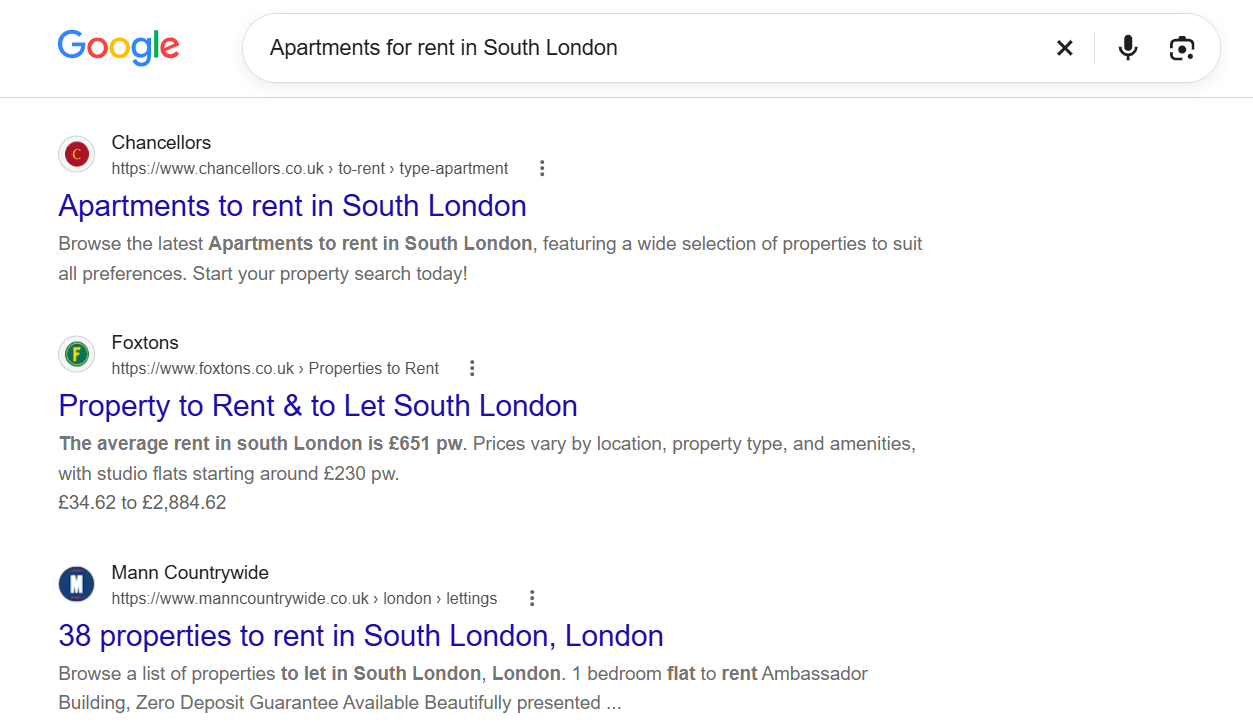
These searches are almost always high intent, because your target audience is actively looking for solutions or considering an area.
Local Map Packs
Because real estate searches are almost always geographical, Google will show local results, including maps and GBP (Google Business Profile) listings.
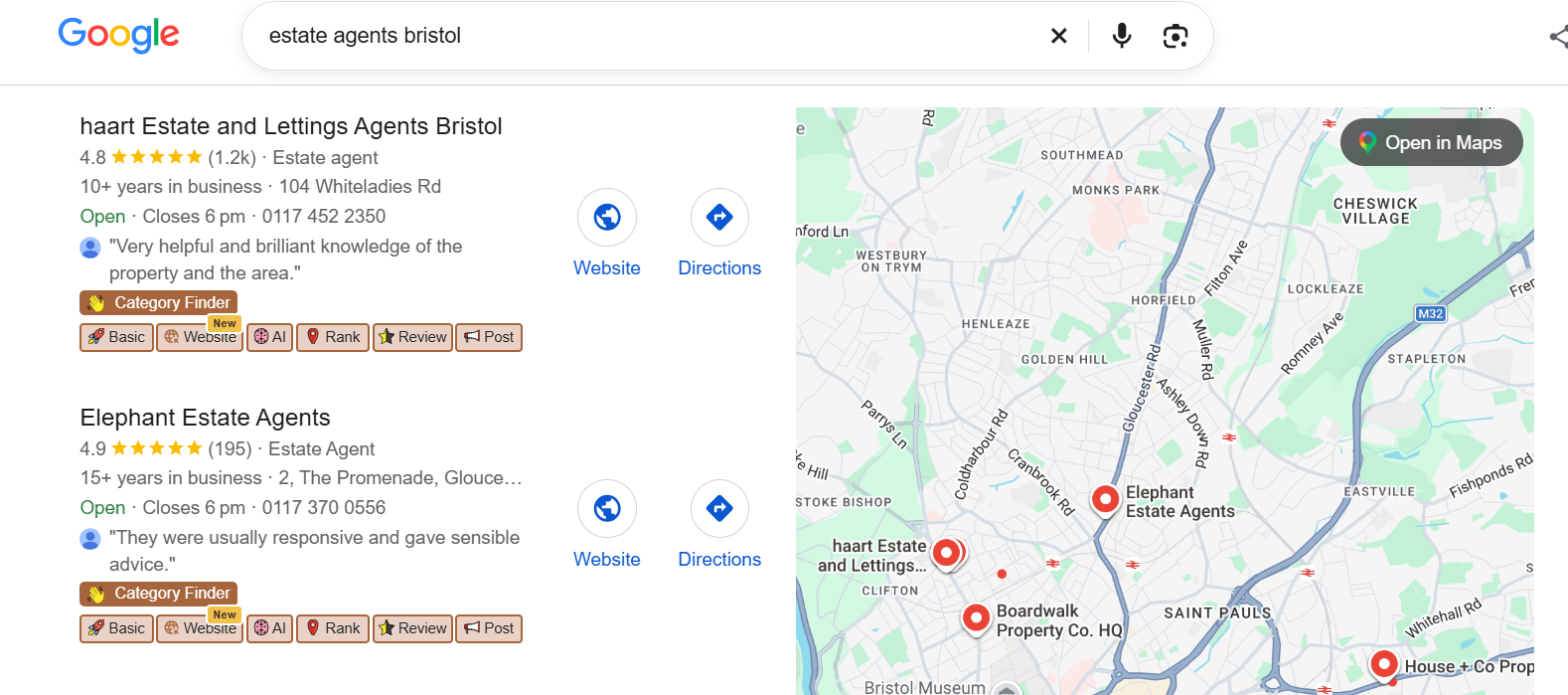
Businesses that appear at the top of these results are more likely to attract organic traffic and turn it into leads. According to Search Engine Land, 60% of traffic comes from the top three map results, highlighting the importance of local SEO.
Authority With Local Audiences
Local real estate agents face ongoing struggles when competing against national agencies. You'll often notice that large agencies and third-party tools like Rightmove and Zoopla dominate search results, but hyper-local SEO can build authority with local audiences.
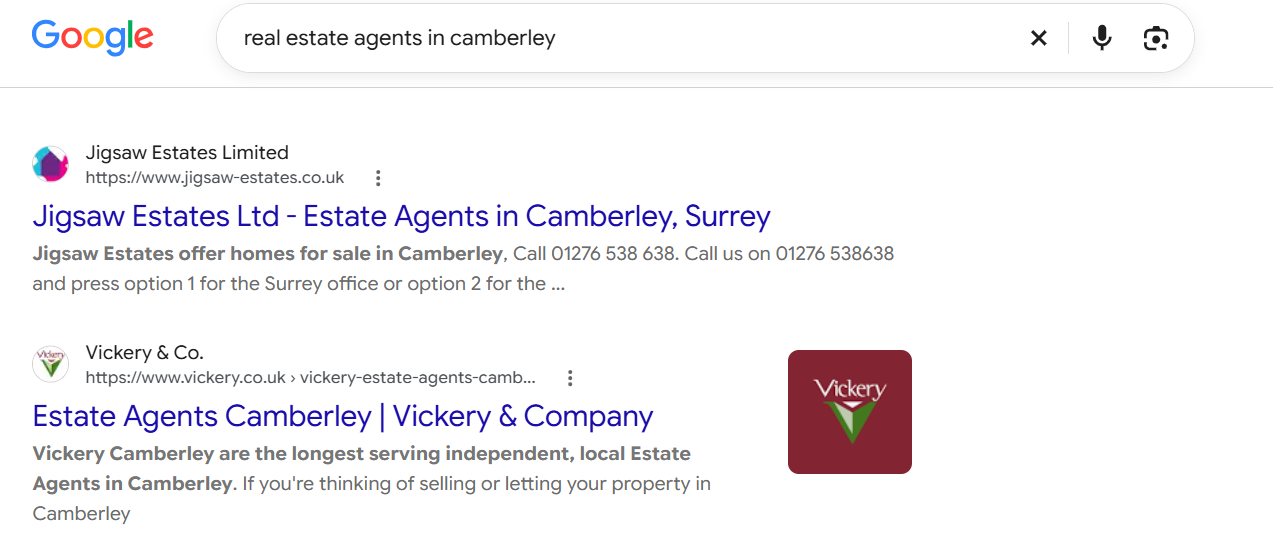
For example, a search for real estate agents in Surrey brings up options like Savills and Waterfords, but niching down to real estate agents in Camberley shows smaller agents that have local expertise.
It's Cost-Effective
SEO is an ongoing investment, but competing with real estate industry giants will naturally increase your spend. Optimising for local searches is more cost-effective in the long run and can deliver higher ROI.
You're targeting high-intent audiences focused on the local real estate market, which means the pool may be smaller, but the conversion potential is higher.
Local SEO Strategies for Real Estate Marketing
Strengthen Your Google Business Profile
Google Business Profile is a must-have for real estate providers, as it provides visibility for real estate websites. The problem? Most aren't utilising their GBP correctly. It needs regular updates, accurate information, and content that helps target audiences understand your services.
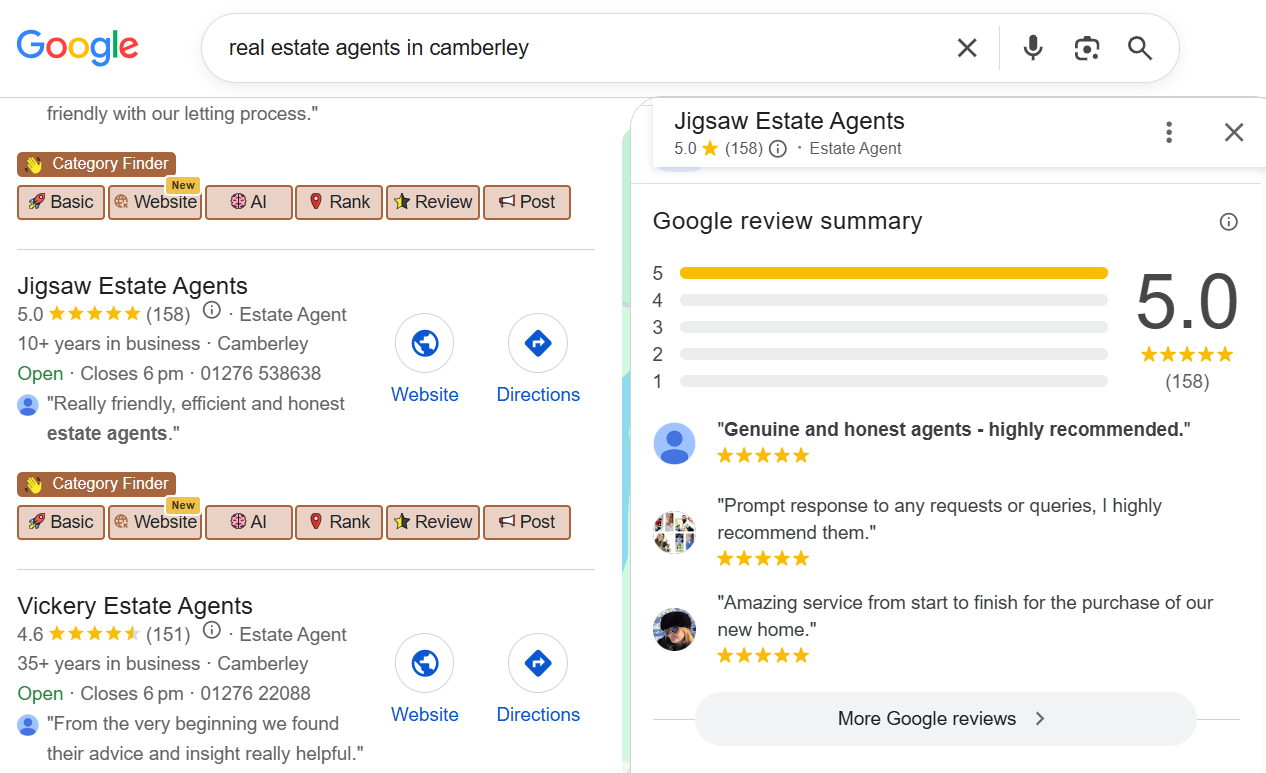
Genuine photographs of your office and team build trust, while reviews give prospective sellers, buyers, and renters peace of mind.
Remember, every real estate business relies on building trust with its target audiences, and established reviews are one of the best ways to do that.
Create Hyper-Local Pages
Another important consideration is your operating areas and whether each has sufficient coverage. Instead of targeting a single city or county, splitting pages by location can strengthen your ability to appear in search results while also giving audiences a personalised experience.
For example, instead of focusing solely on Manchester, creating individual location pages for areas like Didsbury lets you offer audiences local market information, including average prices, the neighbourhood, schools, and other features.
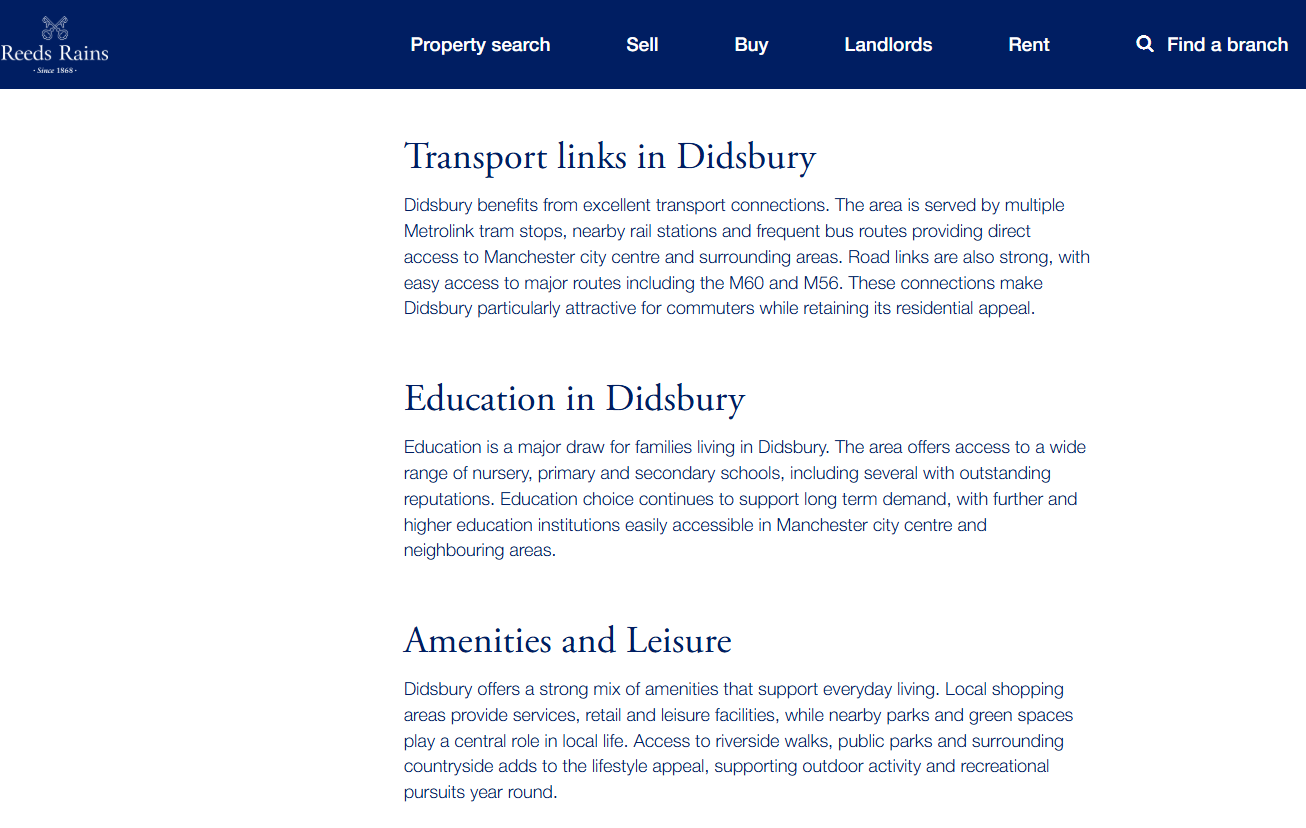
Delivering Genuine Value With Location Pages
There's a stark contrast between creating valuable location pages and duplicating location content, then just changing the name. Google is clear about its focus on helpful content, which means that each page should be unique and focus on the area.
Remember, you don't need to list every single town; just the ones that your agency actually serves.
Optimise Property Listings for Organic Search
Property listings often take a backseat when you're focusing on your real estate SEO strategy, but they're important for attracting specific searches. For example, someone looking for a home might have a certain type of property in mind, such as "two bedroom home in Milton Keynes with a large garden".
Google scans its database for relevant keywords, and listings that use these terms have the best chance of attracting traffic and enquiries.
When creating property listings:
Add a descriptive title
Incorporate information including the number of bedrooms, property type, and location
Add key features that prospective buyers and sellers might be looking for
Mention information such as schools and transport connections
Avoid keyword stuffing - the description should still be human
Create Local Content
Today's focus on AI Overviews means that generic topics rarely attract clicks. Research from Ahrefs also confirms that informational blog posts tend to have the highest rates of AIOs, because they typically focus on questions.
Instead, target commercial terms that serve niche and local audiences. This increases your chances of appearing in search results and getting clicks through to your website.
While searches like "best areas for families to live in Cambridge" may still trigger AIOs, audiences are more likely to click on organic results because they want more information.
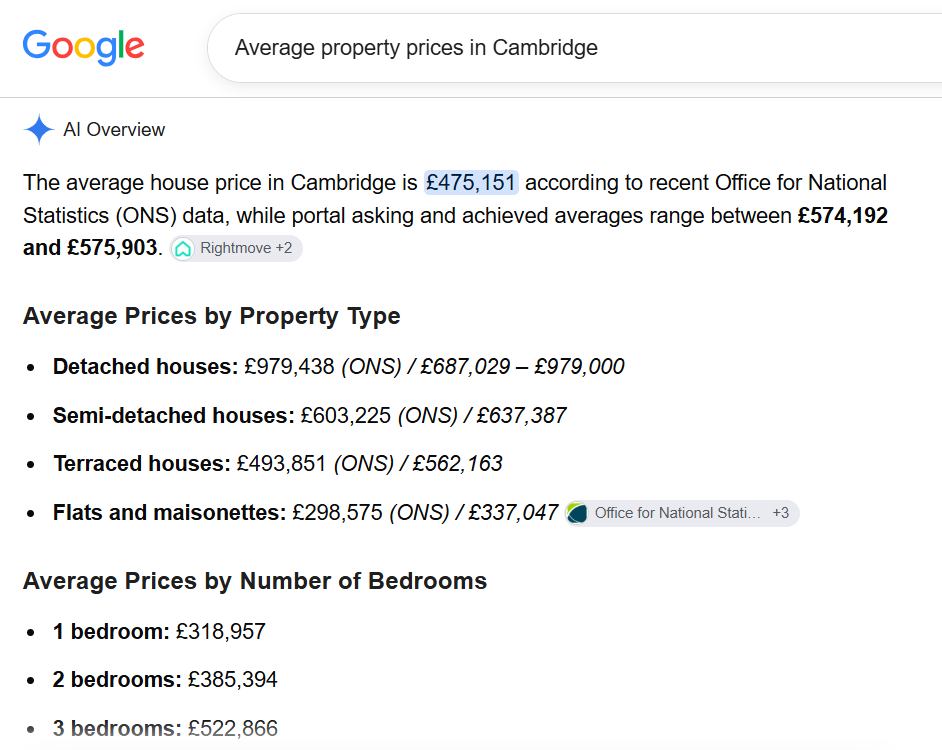
In contrast, a search like "Average property prices in Cambridge" rarely gets the click today, as Google's AI Overviews answer the question.
Refine Your Website Structure and Internal Linking Strategy
Website structure is essential for both search engines and audiences to understand the connection between your locations, property listings, and services. Each page should connect to a higher purpose, which strengthens the entity relationships between them.
If you offer services in multiple locations, separate them by area, content, and intent. Let's say you have offices in both Liverpool and Manchester:
The Manchester pages - including area information, property listings, and guides - should all link to each other. Not only does this support your organic visibility, but it also keeps users on your site for longer and can boost conversion potential.
Remember Technical SEO
Technical SEO can be challenging for real estate websites because of the numerous property filters, internal search options, and listings that frequently change. The large number of URLs - even for smaller websites - means that even small technical issues can cause significant problems.
Because real estate technical SEO is complex, a professional service can help, as it's an ongoing process.
Your site will need to be regularly audited and optimised for:
Mobile Usability: Property listings, including enquiry forms, must work across all devices.
Page Speed and Loading Times: Ensure page speed and loading times by aligning your website with Google's Core Web Vitals.
Indexing: Address any indexing issues so vital property pages and guides are discoverable.
Canonical Tags: Manage duplicate URLs from property filters and sorting options.
Structured Data: Implement schema markup to help search engines understand your property information.
Build Authority with Backlinks
If you want to compete with other real estate companies, you'll need to build authority. Do this by giving potential clients the information they're looking for and appearing high in search engine rankings.
Instead of focusing on building backlinks from national publications, you can capitalise on your local community by appearing in local news outlets and business associations, or partnering with relevant services.
When it comes to local SEO efforts, a relevant link from a trusted publication can offer more value than a low-authority link in a national publication.
Does Real Estate SEO Support AI Search Visibility?
Absolutely. Google may still be the world's largest search engine, but AI tools are becoming a popular way to search for information and services. The main benefit of tools like Perplexity and ChatGPT is their ability to provide direct answers to conversational searches.
Ask Google "Which areas near Liverpool have good transport links, more affordable family homes and investment potential?" and you'll get search results that address some of the question:
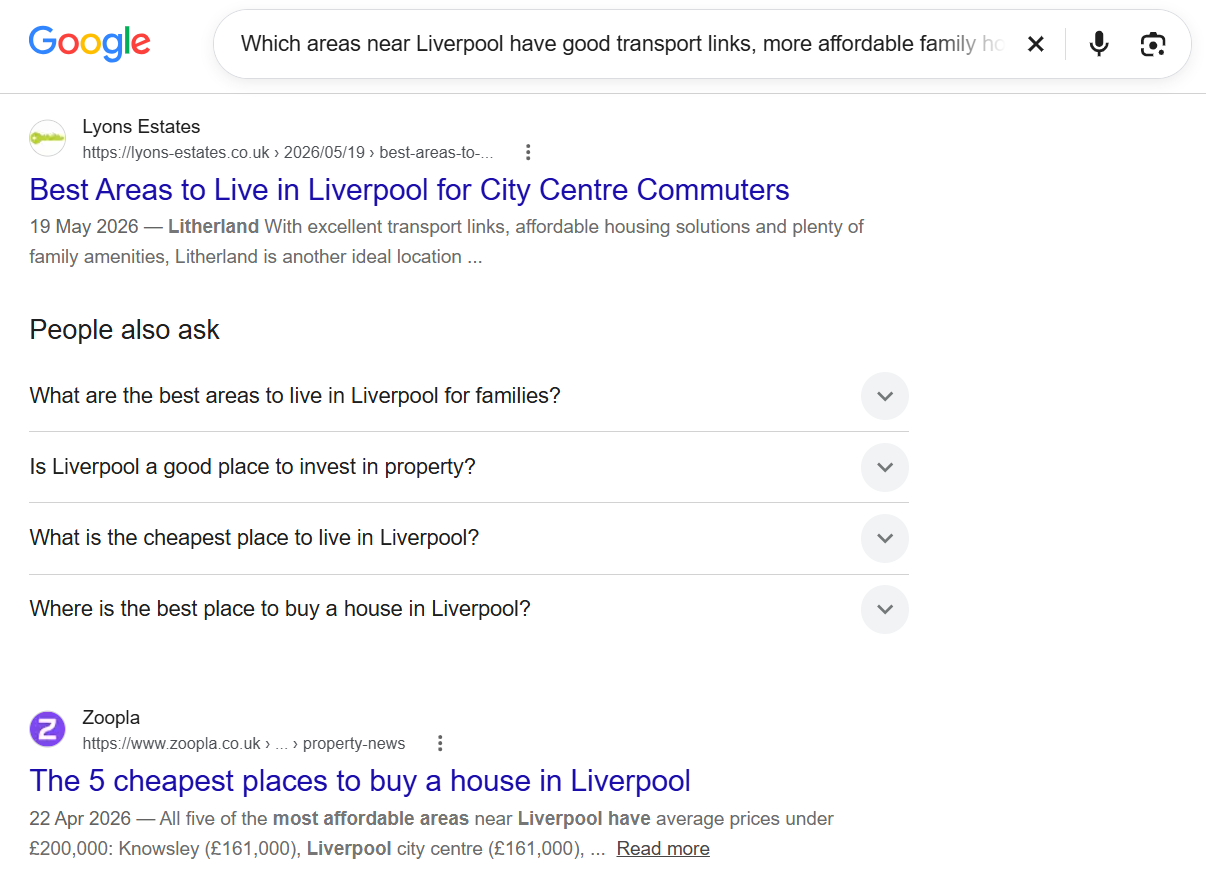
However, an AI tool like Perplexity is able to combine information from different sources to create a clearer answer:
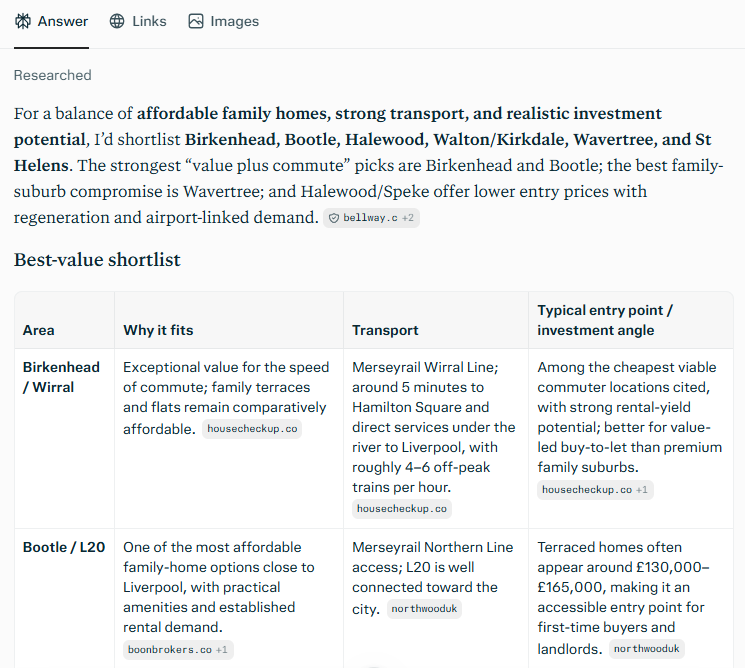
When you create accurate, well-structured content, you have a better chance of ranking in both Google and AI searches.
Measuring Local Real Estate SEO Performance
Organic traffic and search rankings can give you a general idea that your property SEO strategy is working, but if that traffic isn't turning into enquiries, your efforts aren't driving real improvements.
Tracking the following metrics can also help you monitor your performance against other real estate websites.
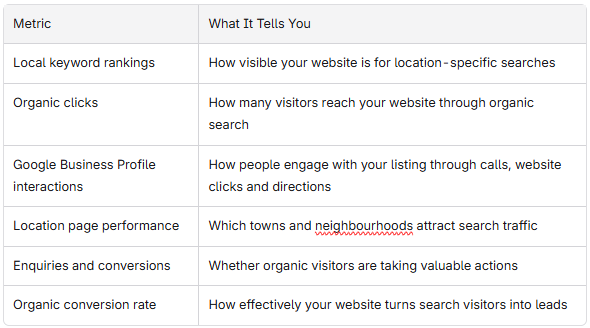
Check whether your real estate listings attract relevant audiences, and assess the commercial value of your traffic.
For example, if you're trying to attract clients in Surrey, UK but are attracting visitors from Surrey, BC, you'll need to refine your strategy.
The Bottom Line
Real estate SEO ensures your agency is visible to the right audiences and appears for location-focused searches. When both happen, you have every opportunity to attract people to your website and move them from casual viewers to engaged leads.
While property portals and national estate agents often dominate broad searches, a local SEO strategy can help your agency succeed.
Most importantly, SEO is a long-term opportunity that can attract relevant visitors and turn local authority into lasting business growth.
Assertive excels in creating bespoke SEO strategies that drive growth and deliver positive ROIs. Please get in touch with us today for a free consultation.