










Programmating & Scaled Content Abuse - Don't Do It!
Programmatic content can be useful when used in the right context, with some human in the middle and a well-built template/content architecture that can help people compare products, explore a large catalogue or find genuinely different local services or perhaps just to find answers to questions. But, as with anything that is done at scale with minimum effort, the problem starts when content starts getting generated at scale with no thought, no effort, just content pumped out for the sake of "clicks" or to try and influence increase LLM citations.
Welcome to "scaled content abuse", this is becoming even more of a hot topic since Google's clearly putting its foot down with people spamming indexes with low effort content, much of which is already a re-hash of content that already exists.
In fact, I thought I would make a video about it.
Also, worth a read of these when you get the time - lots of useful information here:
Google documentation
Programmtic / scaled content generation as an approach is becoming a serious risk for websites, Google’s policy is not “AI content is banned” and AI content itself isn't a problem, its the context of how the content was created, whether it adds value and if its factually correct that really matters.
Google's concern is content produced at scale primarily to influence rankings, where the pages are unoriginal and provide little or no value to people - which, isn't hard for Google to find in the modern era, gotta remember rank brain et al. It does not matter whether those pages were produced by AI, scraped from other sources, written by people, or made through a mixture of methods.
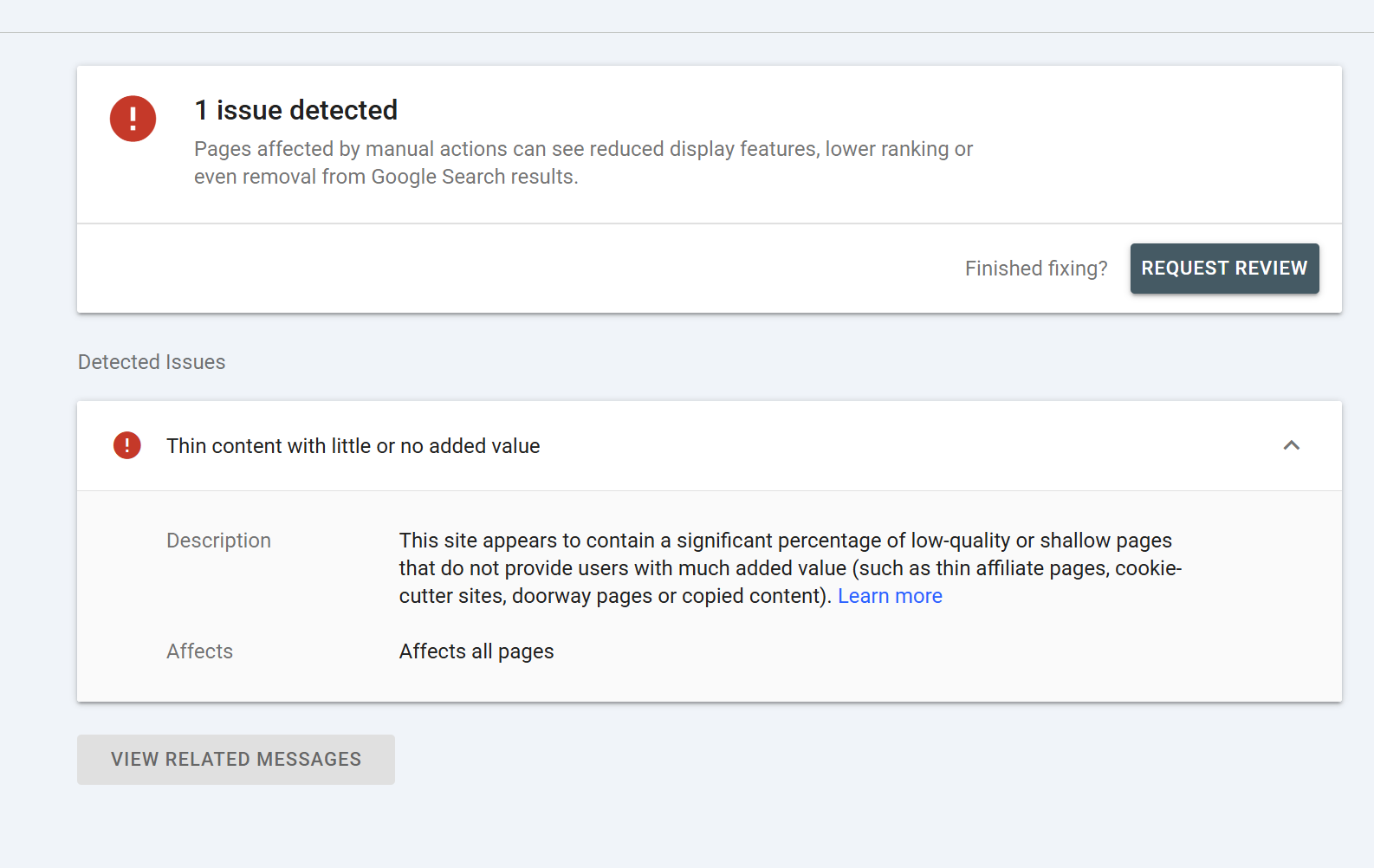
I’m seeing more websites built around content automations, including WordPress plugins, Shopify and Webflow integrations, and custom “vibe-coded” publishing tools. In the video above, I look at an example of a site that received a manual action for thin content and explain why a hands-off publishing workflow can create a much bigger problem than a few underperforming articles.
And to make it abundantly clear, this is a minor example - I've seen lots more of these, many SIGNIFICANTLY worse!
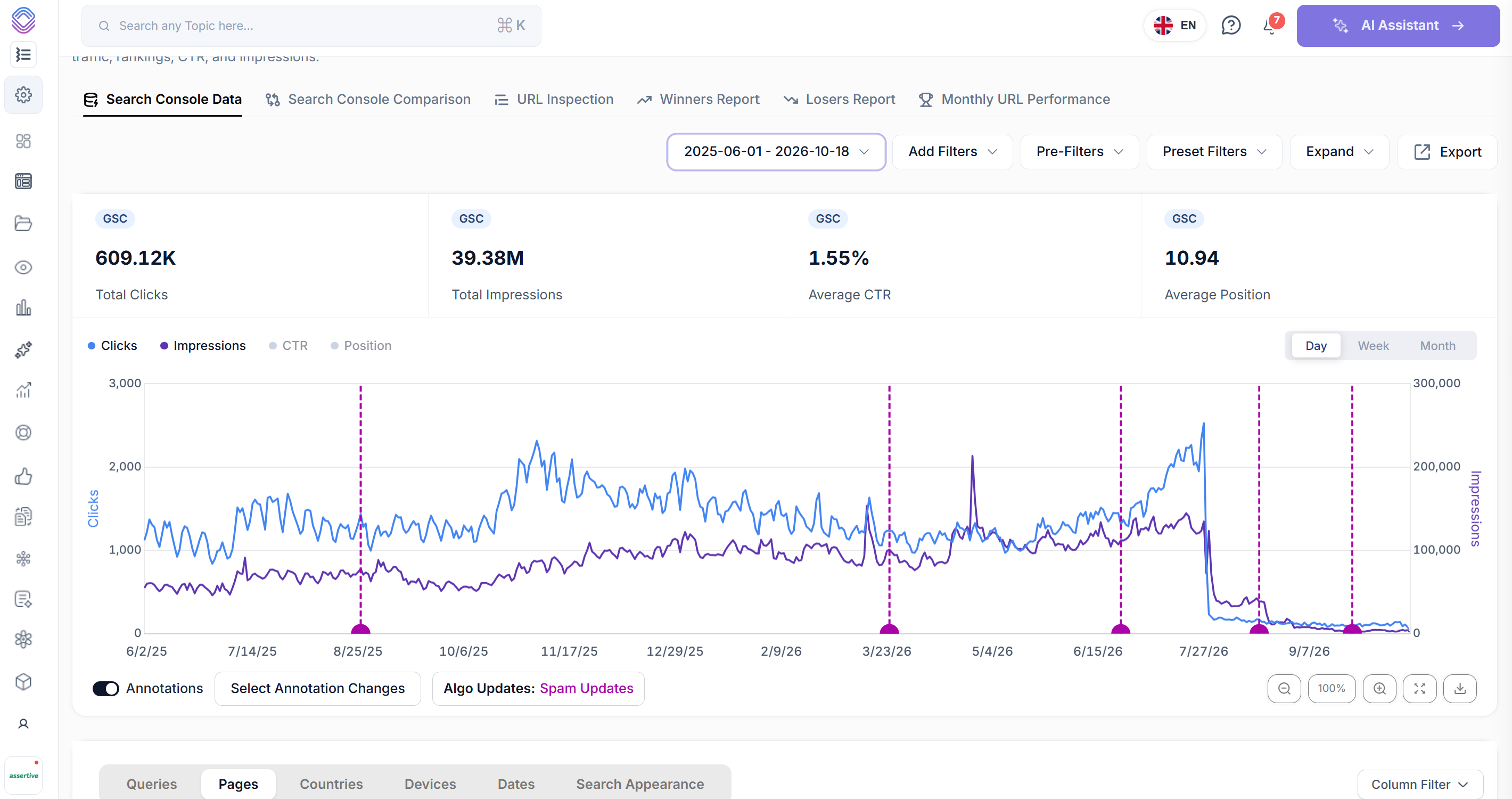
if you are or have been down the route of programmatic content generation, I would highly suggest pausing content efforts and consider a programmatic content detox / content audit to clean up anything that could lead to one of these:
Google’s guidance has become much more specific
Google has had a scaled content abuse policy since March 2024 and longer running spam policies, (you can read here: https://developers.google.com/search/docs/essentials/spam-policies) When it introduced the policy, Google said it was targeting the behaviour of producing content at scale to boost search rankings, whether automation, people or a combination of both were involved.
Here is one key snippet:
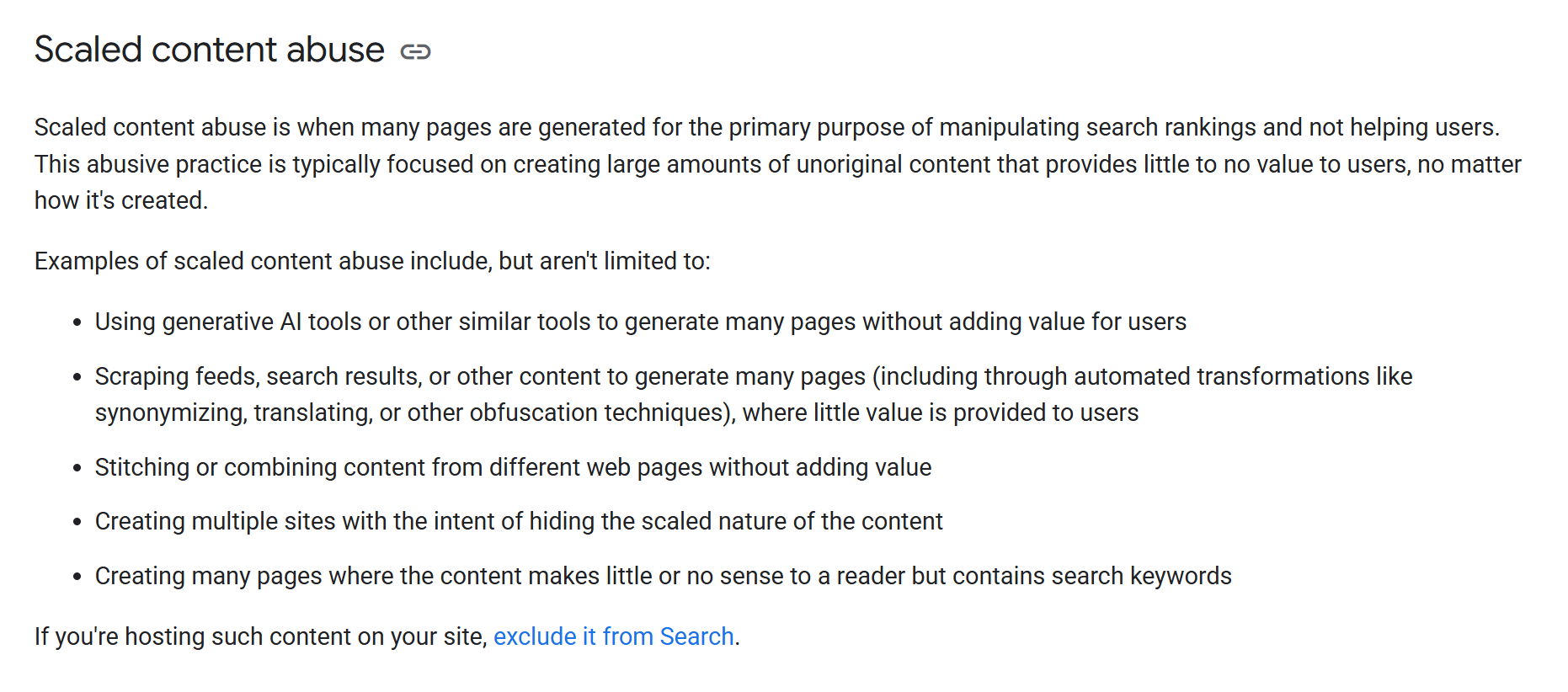
The scaled content abuse distinction matters because a site cannot make a low-value publishing strategy safe simply by adding a human name to the byline or lightly editing an automated draft, or faking E-E-A-T or trying to re-spin content numerous times to lose any hidden watermarking (fingerprinting) or to give it the impression of appearing unique.
The wording has since become more direct and no doubt will continue to change as we go through into the last Q of the year. On the 1st October 2026, Google updated its guide to using generative AI content and added references to two sections of the Search Quality Rater Guidelines: 1 on scaled content abuse, and another on main content created with little to no effort, originality or added value.

Google’s updated guidance also says generative models predict likely sequences of words rather than retrieve facts, so outputs can be inaccurate. It says AI-generated content must be manually fact-checked and reviewed for accuracy and trustworthiness before publication, that review applies to metadata too, including titles, descriptions, structured data and image alt text.
The thing is, anyone utilising programmatic / scaled content strategies aren't generally going to take the time to fact check and cite all sources, and even if they do, there's still the fact that the content LIKELY doesn't have much unique added value.
Google is not saying that using AI automatically breaks its rules, It simply says AI can help with research and adding structure to original work. But it is asking site owners to think harder about what the tool contributed, what a person contributed, and whether the final page offers anything worth a visitor’s time.
And this is why you need to be UBER careful of all these tools promising to grow your traffic on auto-pilot
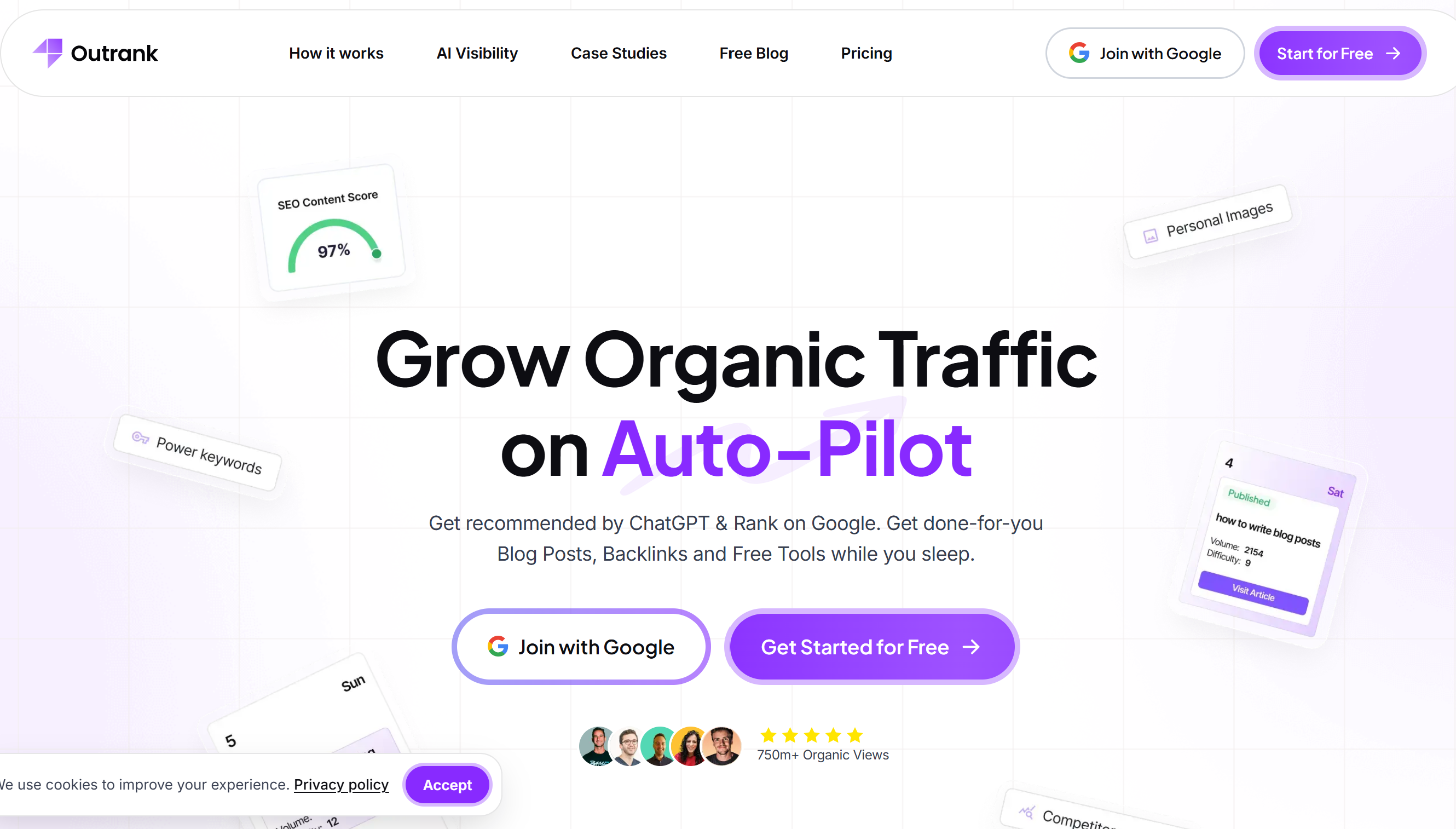

Because, ultimately WHAT GOES UP must come down at some point - moreso IF you entrust these tools to effectively "deliver" content at scale with no effort at a low cost.
But, what might save you money and time now could be the thing that costs you a lot more in the short to medium run i.e.
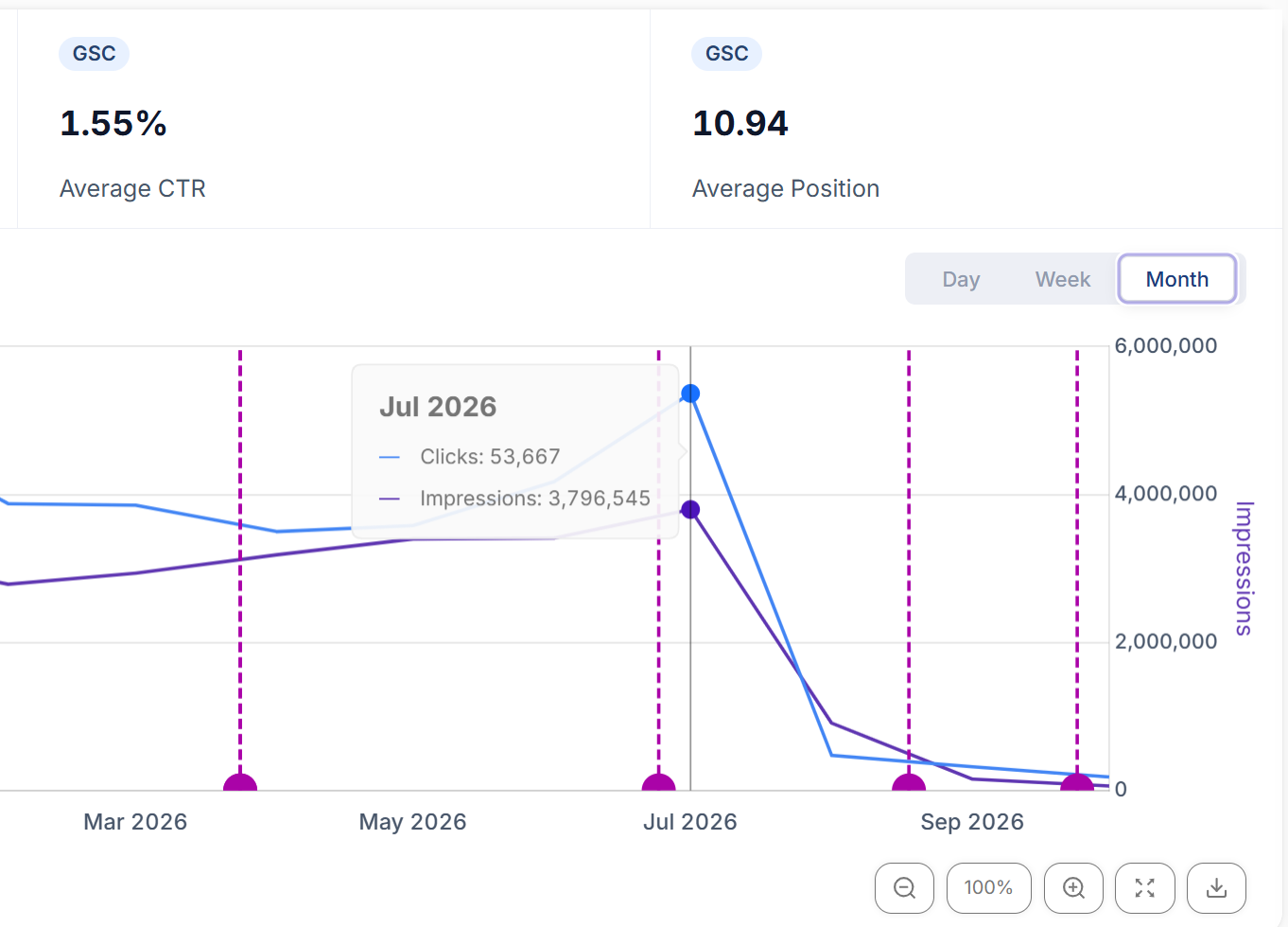
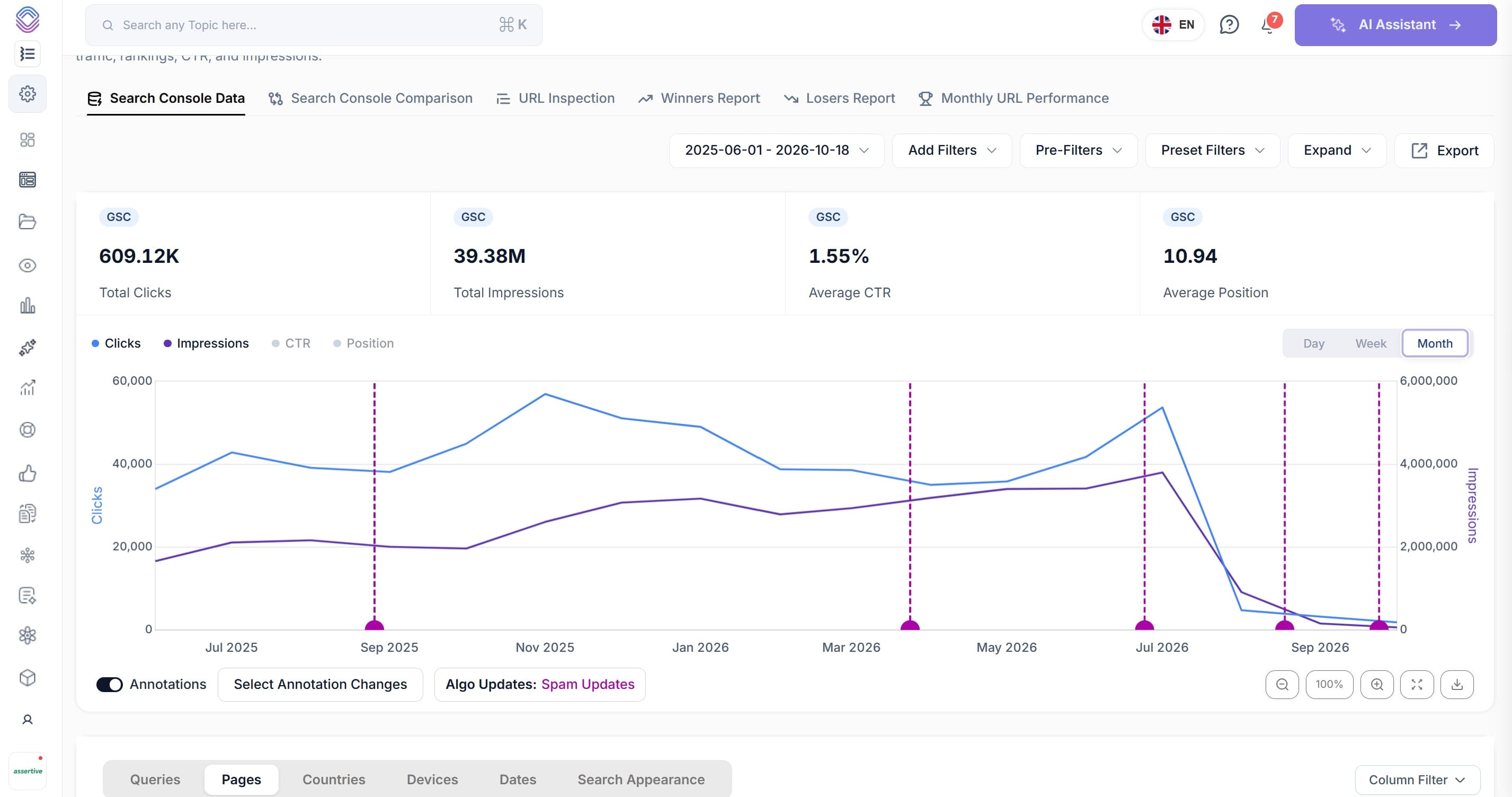
From 53K clicks a month to:
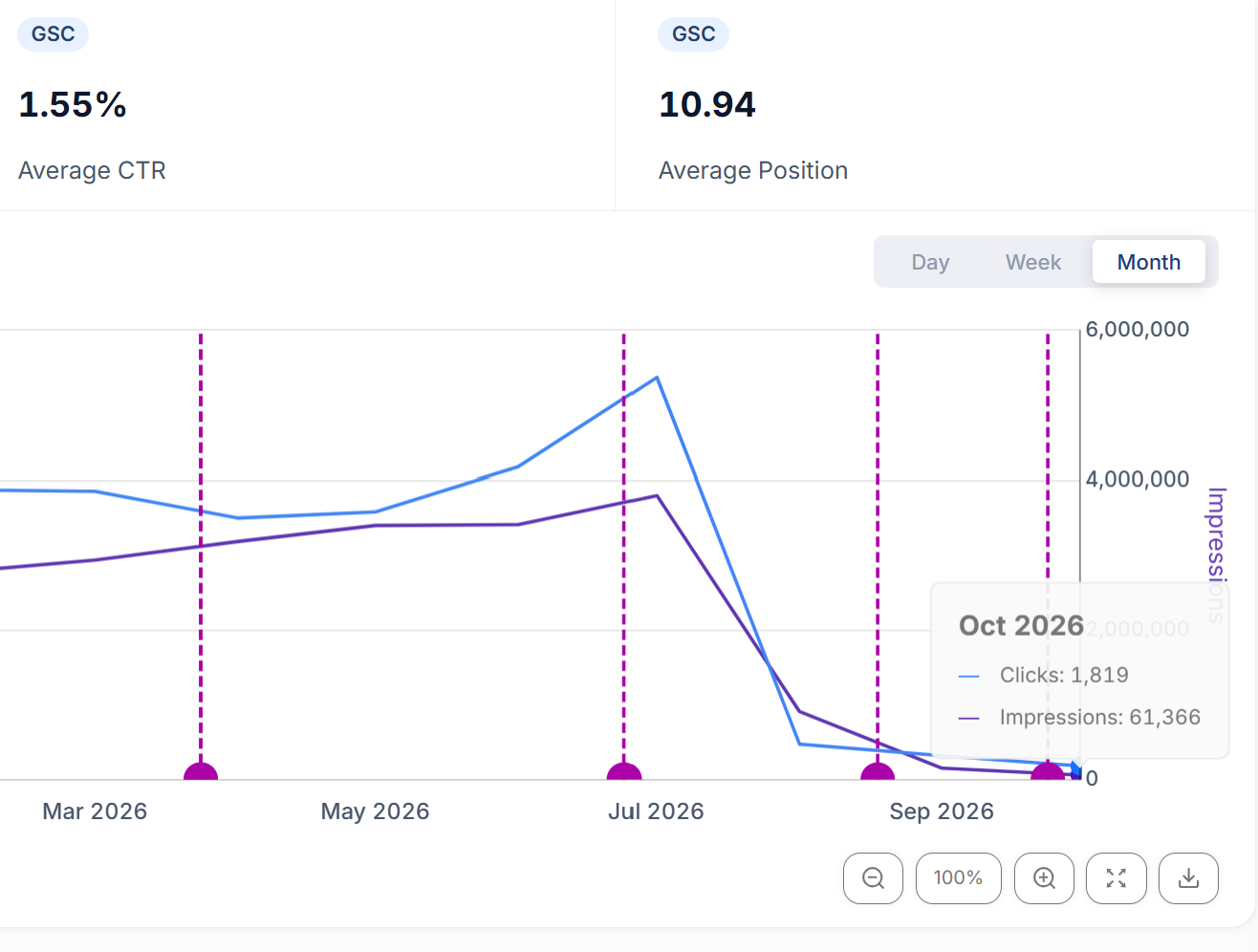
1819 clicks a month.
Is it really worth it?
The problem is the publishing model and automation itself
The risky workflow usually looks something like this:
Find a large list of keywords, locations or product variations.
Send each one through the same prompt or content template.
Publish the results automatically, with little or no editorial review.
Repeat until the site has hundreds or thousands of new URLs.
Changing the keyword, town, product name or a few data fields does not necessarily make each page meaningfully different. A page can be grammatically good and still repeat the same advice, examples and claims found across dozens of other sites. If the page leaves a visitor needing to search again for a useful answer, the word count has not rescued it.
Just remember - it's not just about content variation for keywords, it's also about producing an article for every keyword, FAQ, question search - often to maximise long-tail capture and potential inclusions in LLMS (which spam content is targeting too).
Google’s own people-first content guidance flags extensive automation across many topics, producing lots of pages in the hope that some will rank, and summarising other sources without adding much value as warning signs - also, if you are doing this, people will see it and, well, it's not great for brand image.
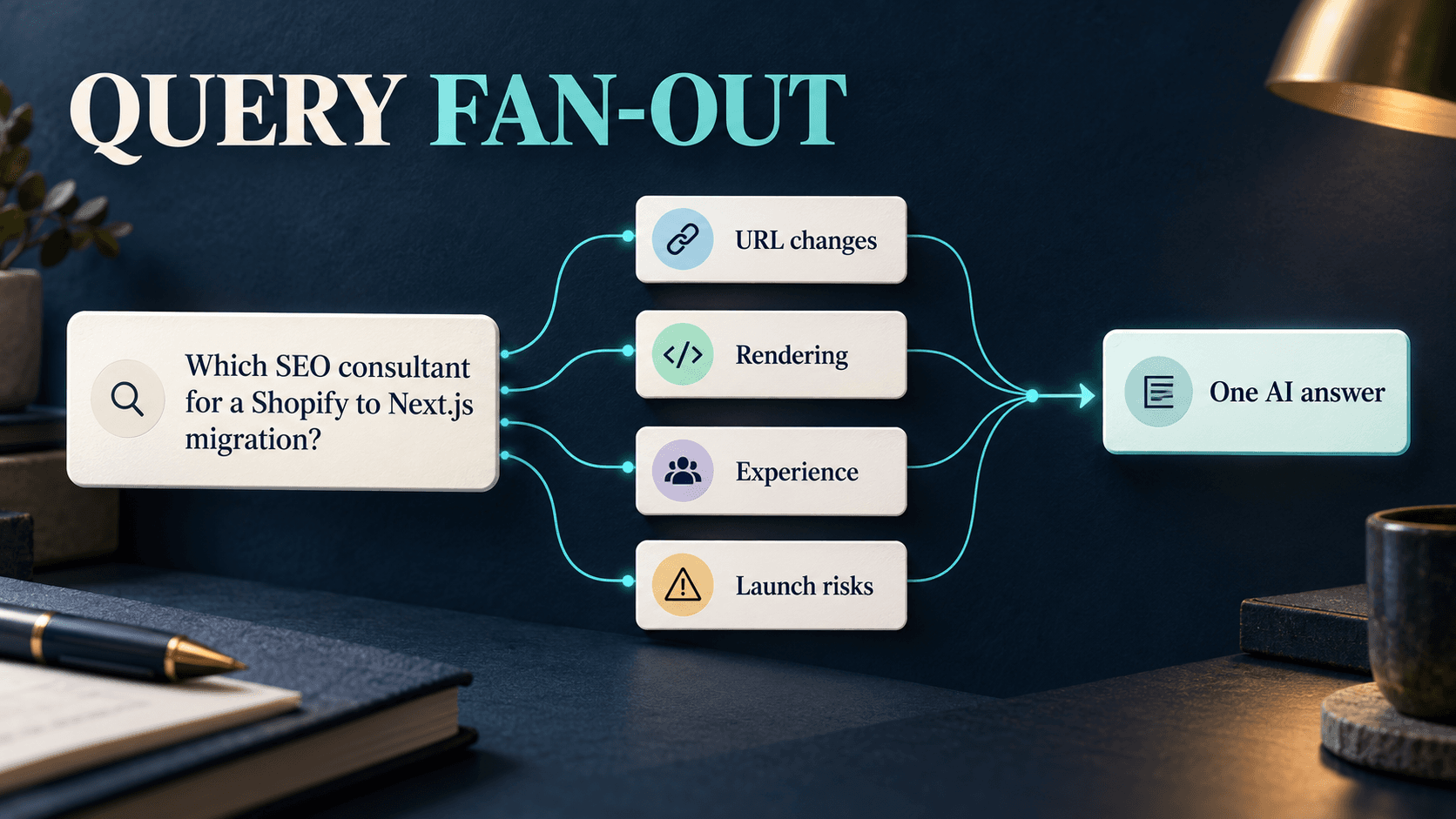
Google's 2026 guidance for generative AI search makes the same point in a newer context and that's creating a separate page for every possible query variation, including related or “fan-out” queries, to manipulate rankings or AI responses falls under the scaled content abuse policy.
That makes the common “publish a page for every keyword variation” pitch difficult to defend. Google’s systems are designed to understand relevant pages even when they do not exactly match a query. A larger pile of near-identical pages is not automatically a stronger topical footprint.
Why mass-produced pages can hurt a site
They add URLs without adding useful information
Every page should have a reason to exist beyond targeting a phrase, If 10 pages answer the same question with the same generic information, visitors do not get 10x the value, the site gets 10 URLs to maintain, while its readers get the same answer repeated and often not in a way that engages them.
Remember IT'S NOT JUST THE TEXT OUTPUT, it's also the page itself, pushing out tonnes of articles at scale just based on walls of text are hardly going to help helpful content assessments.
They miss the experience and evidence that make content distinctive
Automated copy can explain familiar concepts, but it cannot independently test a product, inspect a client’s data, visit a location or report what happened during a real project - and, let's not forget hallucinations here, AI/LLMs do hallucinate which is often why fact checking is crucial. People can bring value to the pages, but when they do not, the result often reads like a rearrangement of information already available elsewhere - I explain this in the video re indexing performance.
Google’s current quality guidance asks raters to consider effort, originality, skill and accuracy when evaluating main content. It gives large amounts of AI text produced without manual oversight or curation as an example of little or no effort. Google's QRG (Rater assessments) do not directly determine individual rankings, but the guidance is a clear statement of the content qualities Google wants its systems to reward.
Errors multiply faster than you can correct them
AI tools can produce confident inaccuracies, invent details or apply a general answer to a specific product, service or location where it does not fit. If 1 draft contains a mistake, an editor can correct it. However If an automation publishes 800 versions, the same mistake can become a site-wide problem - and that's where things get messy and harder to fix when a reconsideration request is required.
That is why your "human in the loop" review cannot mean a quick glance at the opening paragraph, you need to check facts, claims, sources, examples, titles, structured data and other relevant media descriptions. For sensitive subjects or niches (YMYL) such as health, finance, legal advice or safety, accuracy and appropriate expertise matter even more - and, let's not forget, faking E-E-A-T here won't help.
The pages can compete with each other
When many URLs cover nearly identical intent, they can overlap in search results and make it harder to decide which page should be prominent, which can complicate internal linking, reporting and future updates. The answer is not to force every variation onto a separate URL but more to decide whether the audience needs a distinct page at al for each specific search query.
A manual action can turn a content experiment into a site-wide clean-up
The example in my video is a reminder that thin or low-value content can become a manual action issue. A manual action is not the same thing as an ordinary ranking fluctuation. Google reports it in Search Console, and the site owner needs to address the stated problem before requesting reconsideration - and, this CAN sometimes take weeks depending on the size and scale of your content abuse.
The remediation can take far longer than the automation did to publish the pages, so you may need to audit whole sections, consolidate overlapping URLs, rewrite pages with real evidence, or remove pages that have no useful purpose. The review should consider the site as a whole; a page being written before an AI workflow was introduced does not automatically make it strong enough to keep.
I have seen cases where removing the obvious batch was not enough and further content work was needed before a reconsideration request succeeded. That is my experience, not a claim that every site will face the same outcome. The practical point is simpler: once a large content footprint has damaged confidence in a site, the clean-up can be extensive, and traffic-generating pages may be caught up in the work.
This is not about detecting AI fingerprints
There is no need to build an SEO strategy around claims that Google is identifying every AI-written sentence through a watermark or a hidden detector. The public policy already explains the risk and thats scaled, unoriginal pages that exist mainly to manipulate rankings and do not help users can violate the spam rules, however they were produced.
The more useful question is not “Can Google prove this paragraph came from AI?” It is “What does this page offer that a visitor could not get from the many pages already online?” If the honest answer is “not much”, changing the model, prompt or publishing plugin will not fix the underlying problem.
How to use AI without turning your site into a content farm
Use AI to speed up the parts of content work that benefit from assistance such as brainstorming angles, organising research, preparing a brief, extracting themes from first-party data, checking a draft for gaps or helping an editor create a first outline. Then have someone with relevant knowledge add the reporting, analysis, examples and judgement that make the finished page worth publishing.
Before a page goes live, ask:
Who is this page for, and what task will it help them complete?
What original information, experience, data or analysis does it add?
Is every factual claim checked against reliable sources or first-hand evidence?
Is this genuinely a separate user need, or just another keyword variation?
Does the page give a satisfying answer without sending the reader back to Google?
Would we still publish it if search engines did not exist?
Programmatic publishing can work when each generated page serves a distinct purpose and is backed by useful, accurate information - but this requires effort, and, a lot of sites using programmatic content generation aren't generally concerned about effort.
Getting creative with content helps............
A product database that lets users compare live specifications is different from 100s of spun product descriptions or a location finder with unique opening hours, service coverage and local details is different from swapping a town name into the same generic article.
The standard is not “never use automation”. It is that the automation must support a useful product or a genuinely helpful page, and the editorial process must protect quality as the site grows.
The shortcut can cost more than the content
Automating publication can make a content operation look efficient, but publishing is the cheap part. The real cost arrives when pages fail to earn visibility, compete with stronger pages, mislead users or need to be removed and rebuilt after a manual action - or in many cases, where Google doesn't even bother indexing them at all.
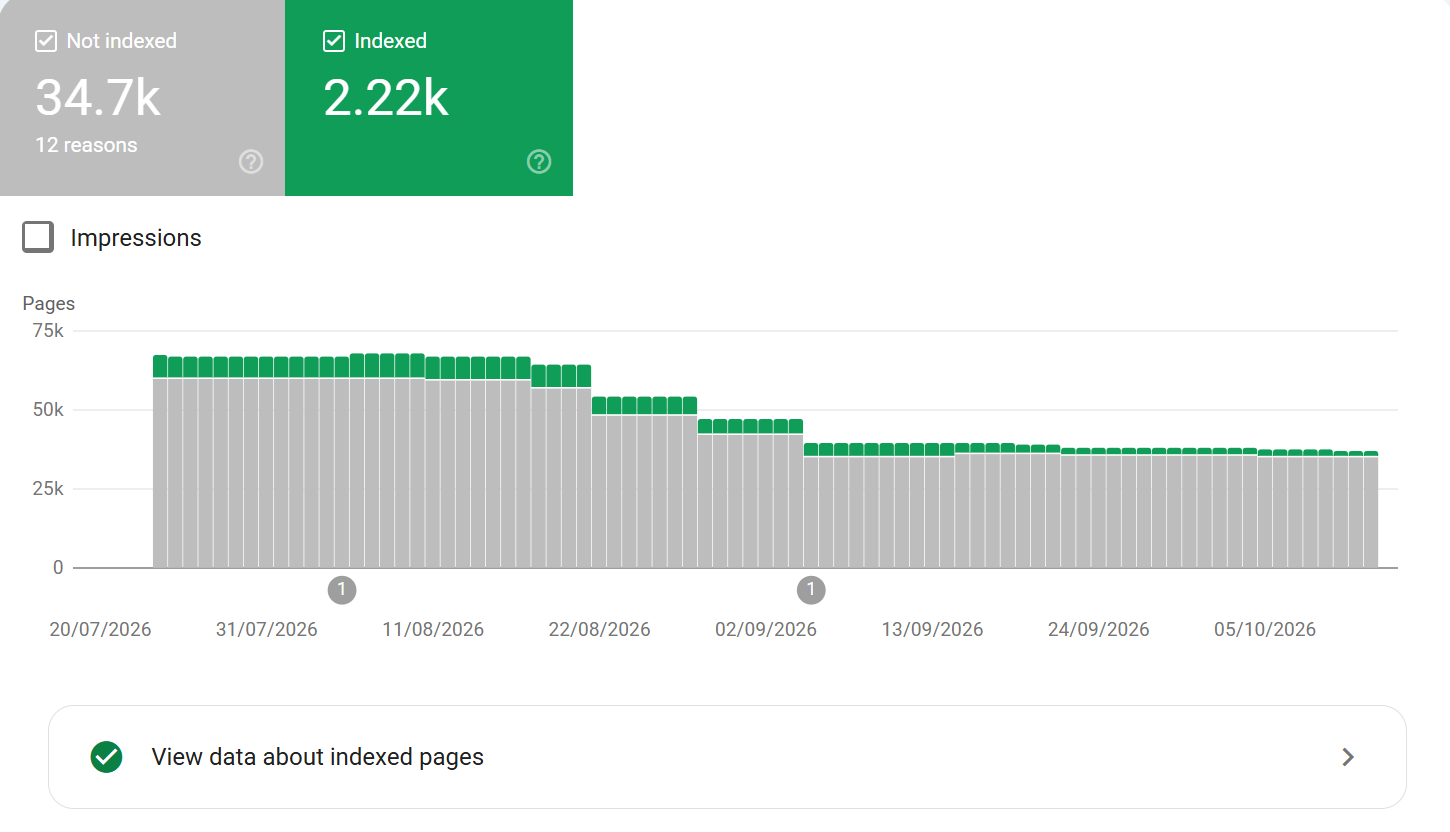
Lots of sites I have looked at pushing out AI generated content often struggle to get most of it indexed, they have to create content at volume to get anywhere.
Google’s updated documentation makes its direction clearer: effort, originality, accuracy and user value matter, and AI-generated content needs human fact-checking. If a workflow is designed to produce more pages than your team can meaningfully review, that is a warning sign. Use AI to improve the work. Do not let it decide that your website needs another thousand pages.