










If you're an accountancy firm, trust can be the difference between attracting a loyal client base and getting lost in the crowd. And one of the best ways to build that trust is through SEO.
From disclosing sensitive financial information to concerns about managing their finances, clients need confidence and peace of mind before they choose you. In the past, word-of-mouth recommendations were the biggest driver for accountants, but AI and changing search behaviours have changed that.
Today, even word-of-mouth recommendations are only the starting point of the typical client journey, with Google searches, AI queries, and verified reviews as core factors in the decision-making process.
That's why SEO is an essential investment for accountancy firms. In this guide, we'll explore why SEO matters for accountants and top strategies for sustainable growth.
TL;DR: Why Accounting Firms Need SEO to Build Online Trust
Trust: Clients need confidence in your expertise before trusting you with sensitive financial information.
Visibility: Accountancy SEO helps your firm appear when potential clients search for accounting services, specialist expertise, or local accountants.
Credibility: Strong rankings, reviews, qualifications, useful content, and consistent business information reinforce your firm's authority.
Better leads: Targeting specific services, sectors, and locations helps attract potential clients who are a better fit for your firm.
Local SEO: Google Business Profile optimisation, reviews, citations, and relevant backlinks can strengthen your visibility within your local market.
User experience: Technical SEO ensures your website is fast, accessible, easy to navigate, and able to turn visitors into enquiries.
AI visibility: Modern SEO also helps accounting firms establish the clear entities, expertise, and content structure needed for visibility across AI search.
Long-term growth: Combining technical SEO, high-quality content, trust signals, and ongoing optimisation builds authority over time rather than relying solely on referrals.
Why Is Trust Vital for Accountancy Firms?
Someone searching for an accountant has very different motivations than a person looking for a new top. It's not an instant decision or impulse purchase; clients are thinking about which accountants are the safe choice.
With just under 30,000 accounting firms in the UK, failing to demonstrate credibility and trust can impact your ability to attract and onboard new clients (IBISWorld).
When someone's searching for a new accountant, they're asking themselves these questions:
Does this firm understand my business?
Are the accountants experienced and qualified?
Can they resolve my specific problem?
Do they understand accounting and tax requirements?
Do they communicate complex financial information clearly?
SEO helps you become the answer to these questions, making potential clients more likely to trust you with their finances.
Visibility in Organic Search Results
Every accountancy firm needs visibility in search engine results pages (SERPs). But that visibility depends on your target audience. For example, if you work only with local clients, appearing for "accountant near me" searches is vital.
At the same time, if you specialise in supporting clients in different sectors, then SEO can help you appear in searches like "accountants for tradespeople".
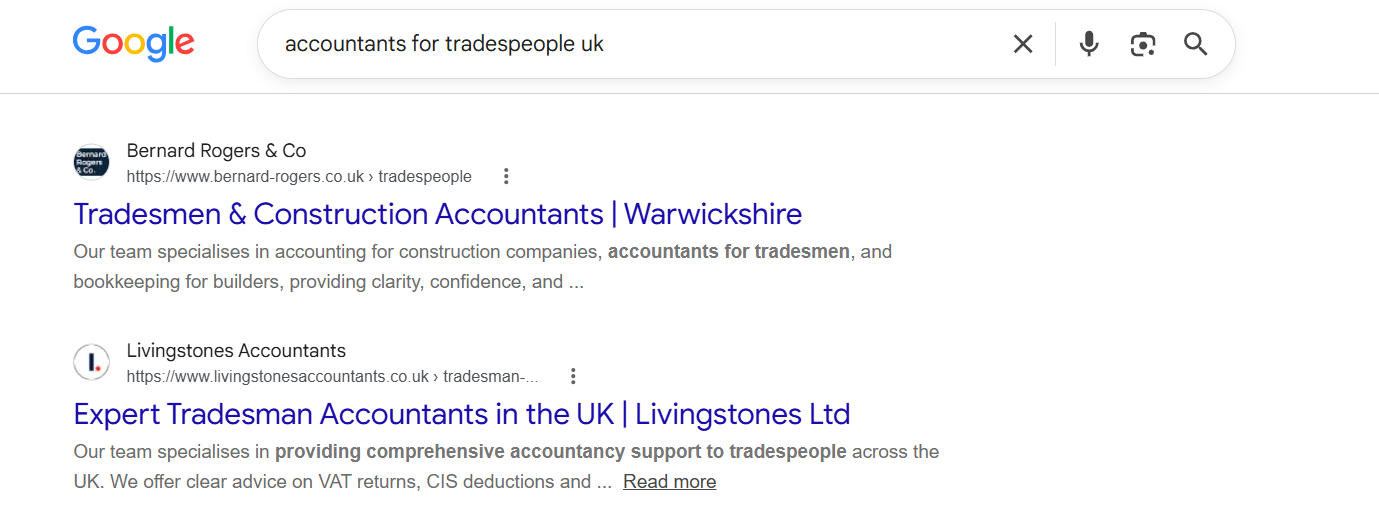
Instead of relying on generic services pages, you can build pages that align with your audience's core needs. Research shows accountancy service pages have a CTR (Click-Through Rate) of 3-6% because of their high commercial intent (SEOProfy).
So, think of SEO as a core part of your brand positioning strategy, not just a way to generate traffic.
Better Fit Leads
50,000 website visitors each month might seem like an achievement, but what if none of those visitors become leads? There's a significant difference between general visibility and relevant traffic.
On-page SEO tactics, including creating conversion-focused meta titles and meta descriptions and implementing an internal linking strategy, can help you attract the right leads, instead of random traffic.
For example, if your meta title and description are general but you specialise in certain sectors, creating and optimising content that emphasises your positioning attracts better leads.
You may get only 500 visits a month, but if 2% of those visitors turn into clients, that's far better than high traffic with no leads.
E-E-A-T and YMYL Alignment
Every website today must demonstrate Experience, Expertise, Authoritativeness and Trustworthiness (E-E-A-T) to rank organically, attract traffic, and generate leads.
But accountancy businesses must also follow YMYL (Your Money or Your Life) guidelines, because advice can affect a person's finances and future stability.
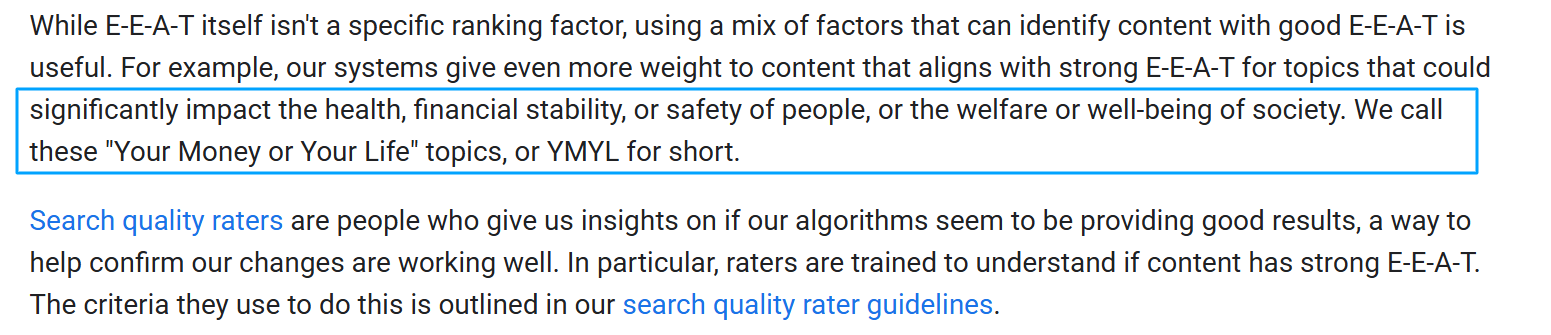
Inaccurate advice or untrustworthy content can erode trust with potential clients and damage your online visibility.
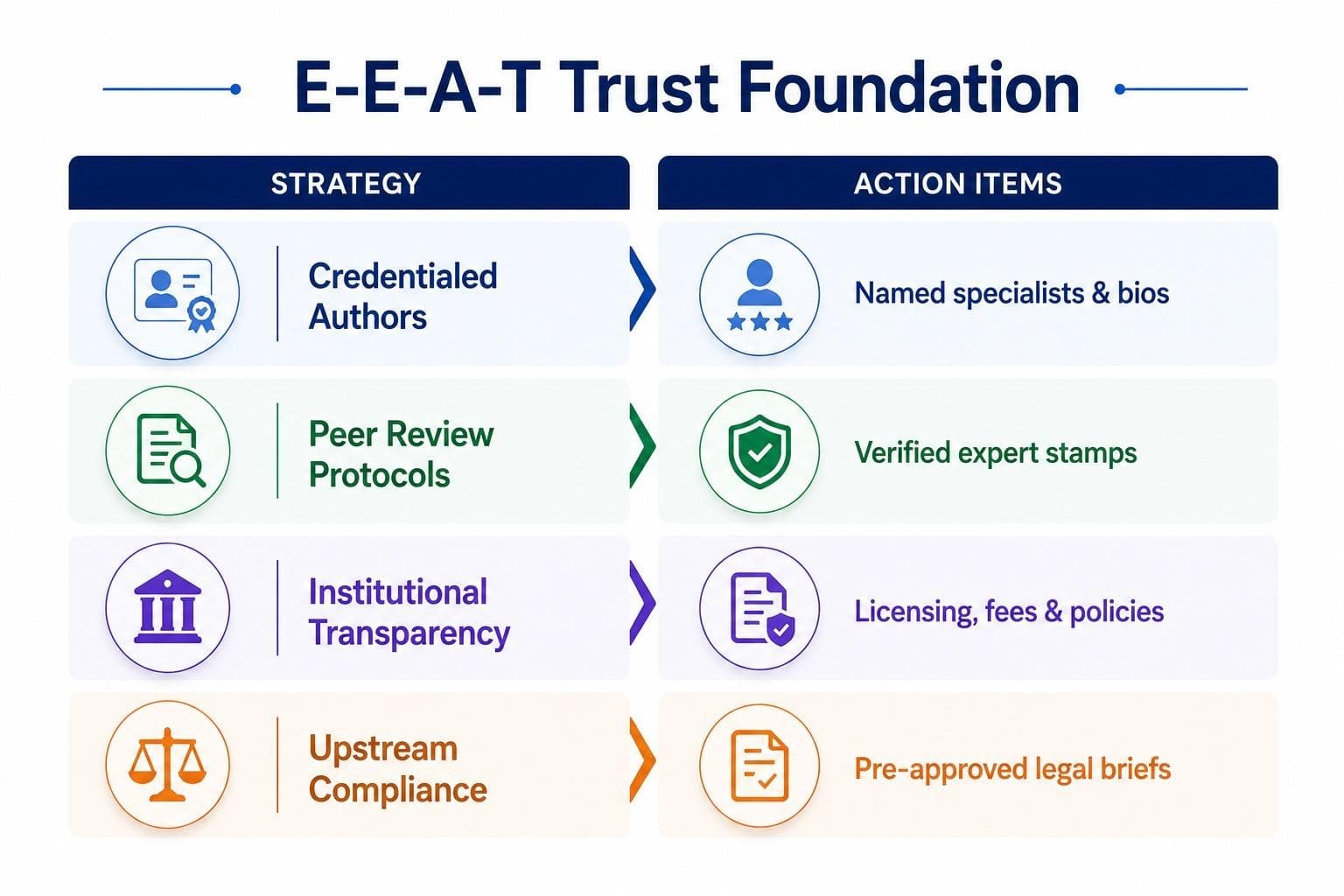
Google has clear guidelines for accounting firms, and effective SEO strategies can help you align with them. These include:
Displaying credentials and certifications across the website.
Using a certified accountant to review and verify all content.
Highlighting compliance with regulations.
Displaying other trust signals, including verified reviews and consistent business information.
SEO Reinforces Credibility
Imagine someone is looking for an accountant and asks friends and family for recommendations. Two firms are mentioned, so the individual heads to Google for more information.
One website has consistent rankings, clear service pages, and reviews on third-party platforms, while the other has a limited search presence, a basic homepage, and a couple of testimonials on the website.
Potential clients will usually choose the first firm because it comes across as more credible. This doesn't mean that referrals are no longer important, but 87% of consumers will search Google after receiving one (Ahrefs).
That's why word-of-mouth referrals are more of a starting point in today's customer journey.
Building Trust Over Time
Search engine optimisation has multiple elements, but each reinforces the other. For example, a potential client might find your website after clicking a blog post. They read that post and follow the internal links. Then they click onto a service page, like what they see, and decide to fill in a contact form.
Appearing in organic search results can bring you leads, but what happens on your website determines whether those leads turn into paying clients.
When you implement an effective SEO strategy that addresses clients at every stage of the decision-making process, you can build trust over time, resulting in long-term stability.
Local SEO Helps You Generate Leads
Many accounting firms rely on local SEO because it connects them with clients in their local community.
Small businesses may trust a local firm more than a national one, allowing independent and small accountancy practices to build authority.
Plus, smaller firms often get lost in the crowd during national searches, but they become more visible in local areas.
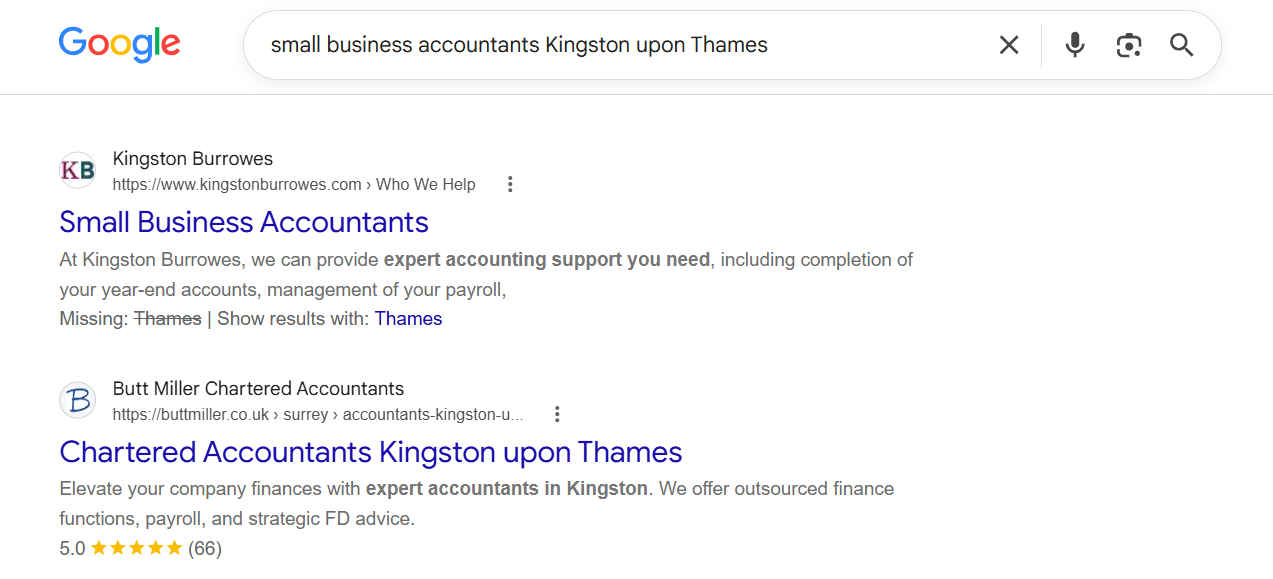
For example, the term "small business accountants UK" brings up these results:
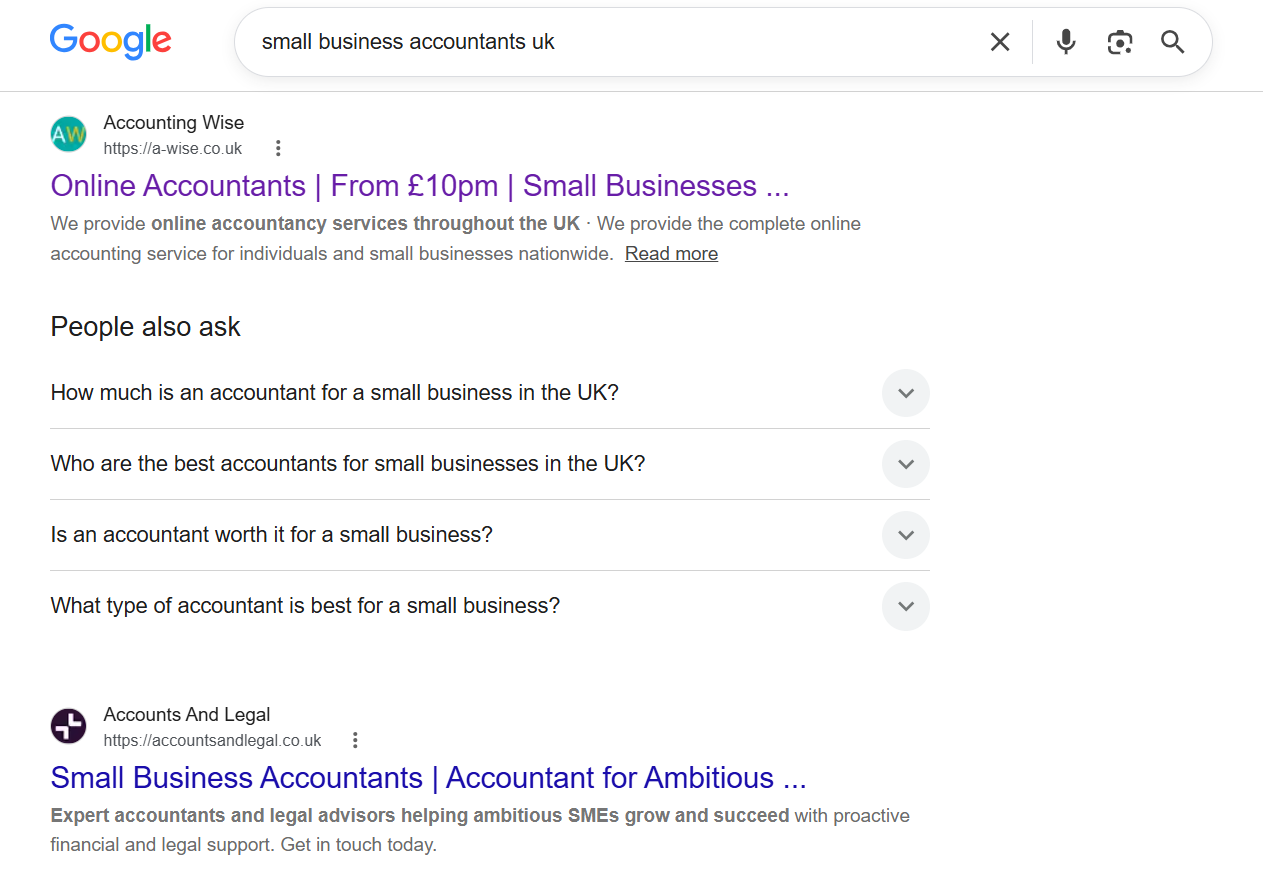
But when we niche down to a local area such as "small business accountants Kingston upon Thames", local firms appear.
Google Business Profile Optimisation
Every accounting website should have a Google Business Profile, as it serves as a hub for local audiences to find suitable services, while also building authority.
The core elements of GBP include:
Ensuring NAP Consistency: Name, Address, and Phone Number consistency ensures that your business information is the same across all platforms.
Photos: Using genuine photos of your team and office establishes more reliability than generic stock images.
Updates: Many people forget to post updates from GBP, which can impact visibility.
Reviews: Reviews are vital for GBP, but simply attracting them isn't enough. Instead, you should aim to respond to both positive and negative reviews.
While more reviews can make some profiles more visible, Google confirms that profiles with high review counts aren't guaranteed higher Map Pack rankings, as it also depends on profile quality, optimisation, and completeness (Google).
Directory Citations and Link-Building
Appearing in local search results helps you attract potential clients, but not all backlinks are equal.
Accountancy businesses that focus on building backlinks in relevant publications, including local newspapers, non-profit organisations, and accounting industry magazines, build more authority than high-volume links that appear in low-authority or irrelevant publications.
The same goes for local and industry directories. You don't need to be listed in every one, but choosing relevant or trusted local directories can enhance your online visibility.
Technical SEO Ensures a Better Website Experience
It doesn't matter how much high-quality content you produce or how many high-authority backlinks you have. If your accounting firm's website delivers a poor user experience, you won't convert visitors into leads.
Technical SEO is a complex process that ensures your website's behind-the-scenes elements work properly.
If someone lands on your website and it doesn't load properly or the navigation is unclear, it can lead to higher bounce rates. Research also shows that poor technical SEO can affect your search engine rankings (Search Engine Land).
Technical SEO is an ongoing process that requires in-depth expertise and frequent optimisation. Professional technical SEO consultants can manage your website and ensure it continues to perform.
It's No Longer Just About Search Engines
Perhaps the most important takeaway from this guide is the importance of optimising for AI - because more people are turning to Google's AI Overviews and LLMs for information.
SEO performance is still vital, but AI optimisation should be an integral component of your digital marketing strategy.
When someone uses a standard search engine, they might enter terms such as "Best small business accountants in Manchester". But AI search allows for more nuanced queries, such as "Is Accounts and Legal or SQK Accountancy better for small businesses in Manchester?"
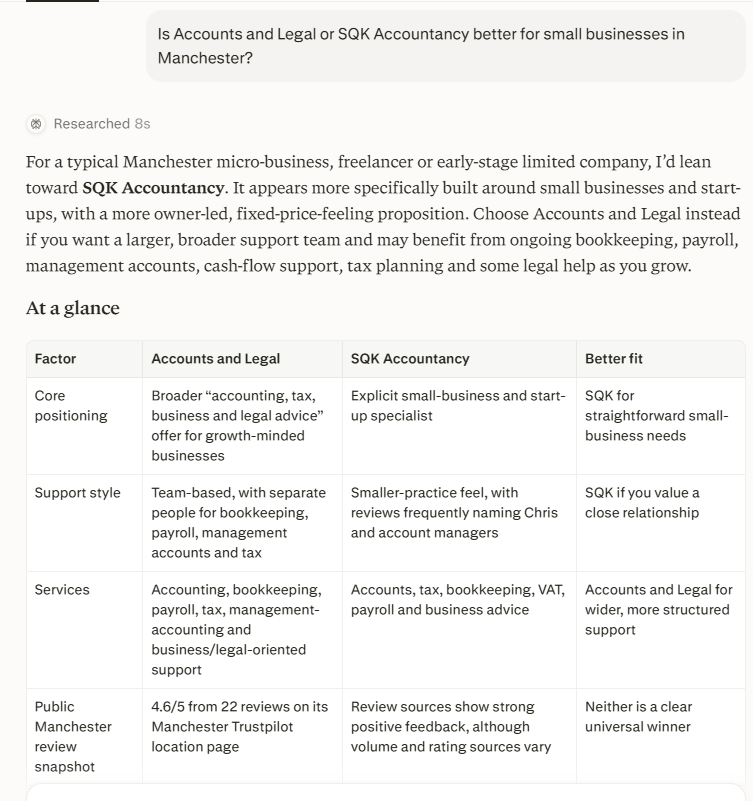
To appear in AI-generated answers, provide consistent information about your services and optimise your content for LLM extraction.
Instead of focusing only on keyword research, Generative Engine Optimisation and Answer Engine Optimisation involve entity matching, semantics, and structuring content so AI models can extract and cite it.
Read Our Guide on Traditional SEO vs LLM Optimisation
What Does A Trust-Focused SEO Strategy for Accountants Include?
Every accounting firm is different, and your strategy will depend on multiple factors, including whether you're a new business, have a local or national presence, and if you work with a specific client group.
There are four key areas to focus on when establishing and building online trust:
Technical Foundations: Ensuring that search engines can crawl, understand, and index your accounting firm's website. This includes optimising for mobile devices, crawl budget management, page indexing, site speed, and site navigation.
High-Quality Content: Attracting organic traffic and traffic from AI models requires high-quality content that aligns with E-E-A-T and YMYL guidelines. Your service pages should be clear and target the right audience, while guides and blog posts should answer questions users search for.
Trust Signals: Everything from backlinks and reviews to NAP consistency, team profiles, and editorial guidelines signals to search engines, AI engines, and potential clients whether they can trust you.
Measuring and Refinement: SEO is part of a wider digital marketing strategy that requires continuous improvement, refinement, and monitoring. Tools like Google Search Console and Google Analytics 4 (GA4) can be invaluable.
Enquire About Our Scalable SEO Services for Accounting Firms
At Assertive Media, we understand the unique challenges accounting services face when building online trust and turning that trust into clients.
With a multi-skilled team of experts, we build custom SEO strategies that meet your business where it is and take it to where it wants to be.
Please book a free discovery call today to discuss your requirements.