










An optimised Google Business Profile for a healthcare business builds trust, attracts website visits, and can drive more patient bookings because people want peace of mind that they're getting the best possible care and treatment options.
But with high patient expectations and competition that spans beyond local search results, what can you do to improve your Google Business Profile and attract more patients?
In this post, we'll explore the importance of GBP for healthcare providers, and how to optimise yours for long-term visibility and conversions.
TL;DR: How Google Business Profile Optimisation Drives More Patient Bookings
Google Business Profile is essential for local patient acquisition. An optimised profile helps healthcare providers appear in relevant Google Search and Maps results, increasing visibility among patients actively looking for services and enhancing your SEO strategy.
Trust plays a major role in booking decisions. Positive reviews, authentic photographs, accurate information, and clear service descriptions help prospective patients feel confident about choosing your practice.
Optimisation goes beyond basic business details. Choosing relevant categories, keeping contact information consistent, highlighting specialisms, and regularly updating your profile can strengthen your local search presence.
Make it easy for patients to choose you. Highlight appointment availability, accessibility features, and services using language patients understand rather than complex clinical terminology.
Focus on bookings, not just rankings. Track calls, appointment enquiries, website visits, and conversion rates to understand whether your Google Business Profile is attracting new patients.
The bottom line: Google Business Profile and your healthcare website should work together to turn local search visibility into patient enquiries and confirmed appointments.
Why Is Google Business Profile Important for Patient Acquisition?
Google Business Profile matters for patient acquisition because it matches how people search for local services. Think about the last time you searched for a local business: you probably typed your query into Google and looked at the options that came up.
Healthcare searches are no different. Someone types in "GPs in Bristol" and Google's Map Pack will show local search results:
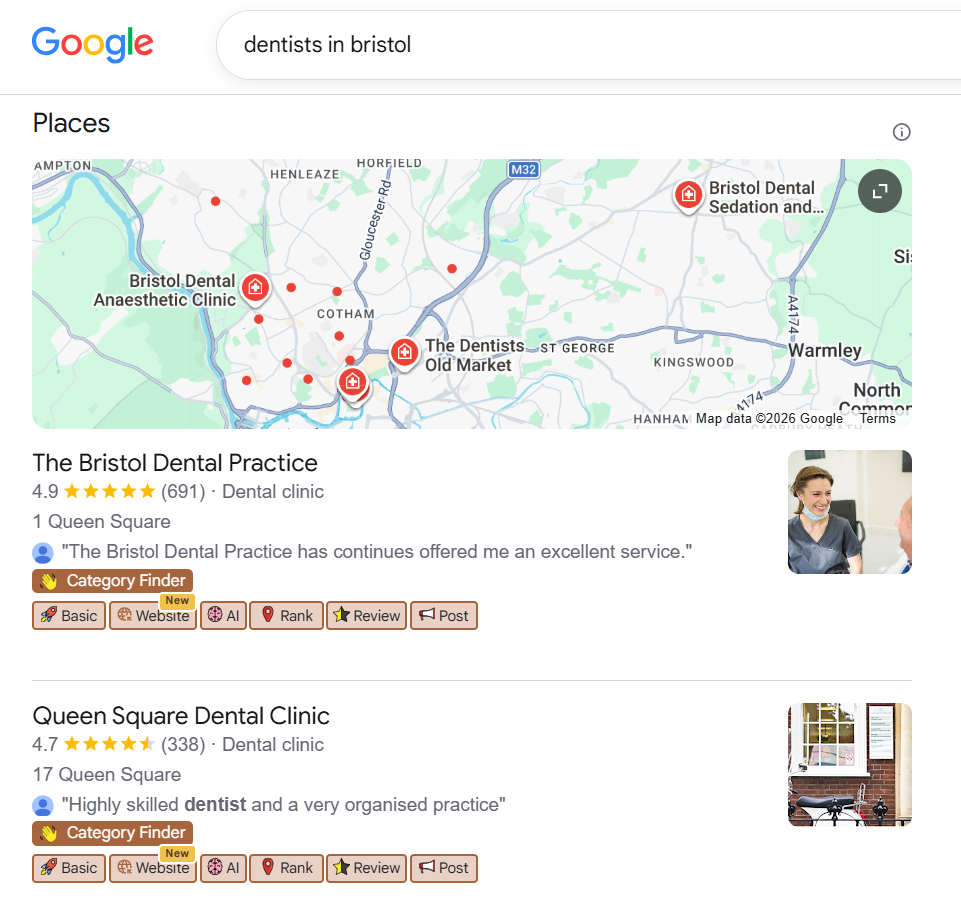
Prospective patients then review the results, and 44% click the top three results (SmartData Collective).
When they click on your profile and learn more about your practice, they decide whether to complete a booking.
But there are other reasons why GBP is so important for patient acquisition:
More Accessibility = Higher Competition Levels
There was a time when finding a new GP, dentist, therapist, or other healthcare service involved looking at the closest option and filling out a form. But the internet changed how people search for and access healthcare providers.
The digital transformation in healthcare has made it easier to onboard patients and provide a better standard of care (NIH). But accessibility also means that being the closest option is no longer enough to fill your practice.
Today, prospective patients can explore online services which give them more options, and you more competition.
So, the people who are performing local searches expect more - and it's your profile's job to give them what they want.
Healthcare providers also need to understand how changing AI trends might impact their long-term visibility. Read our guide on How AI Search Is Changing Medical Website Visibility.
Google Business Profile Matters for Local SEO
An active and optimised GBP is one of the strongest local SEO signals. Google decides which healthcare providers appear in local search results by analysing three factors:
Relevance: Does the business match the search terms and intent?
Distance: Is the business close to the user's location?
Prominence: How established is the business?
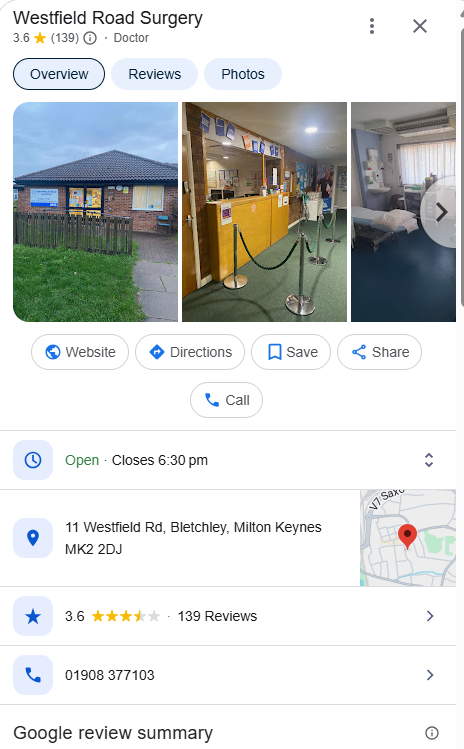
For example, let's look at GP surgeries in Bletchley, Milton Keynes.
The top-ranking result has 139 reviews, clear information, and photos of the surgery and consultation rooms.
The lowest-ranking Map listing has one review and one photo.
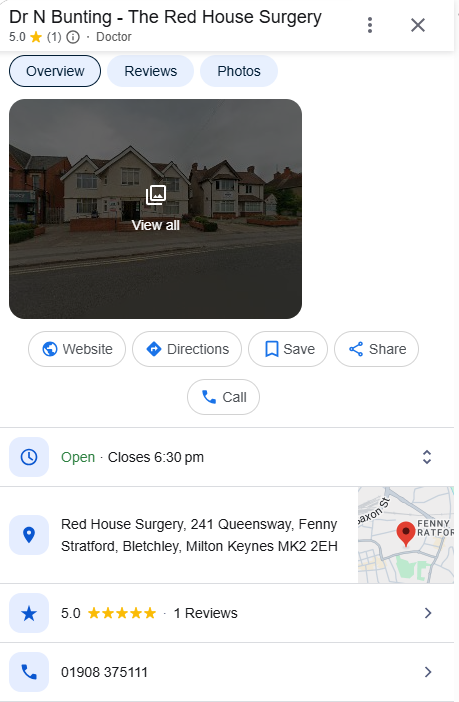
An optimised Google Business Profile lets you not only appear in results, but also attract patients.
How GBP Optimisation Turns Searches into Bookings
It Connects You With High-Intent Patients
When prospective patients search for healthcare providers, they usually have specific needs. For example, instead of searching for "autism healthcare providers", someone might use "private ADHD assessments".
The key takeaway here is that patients generally search based on their needs, not on the service. A GBP category should be the foundation of your profile, but the services you choose should reflect how people search.
It Simplifies Decision Making
Local search lets prospective patients find suitable services without clicking through multiple websites. A well-planned Google Business Profile can give people the information they need upfront, which simplifies their decision.
For example, if someone is searching for counselling services in Manchester, they'll see a list of results in Google's Map Pack. If some results offer basic information, but one covers opening times, services, and posts regular updates, it removes obstacles from the decision-making process.
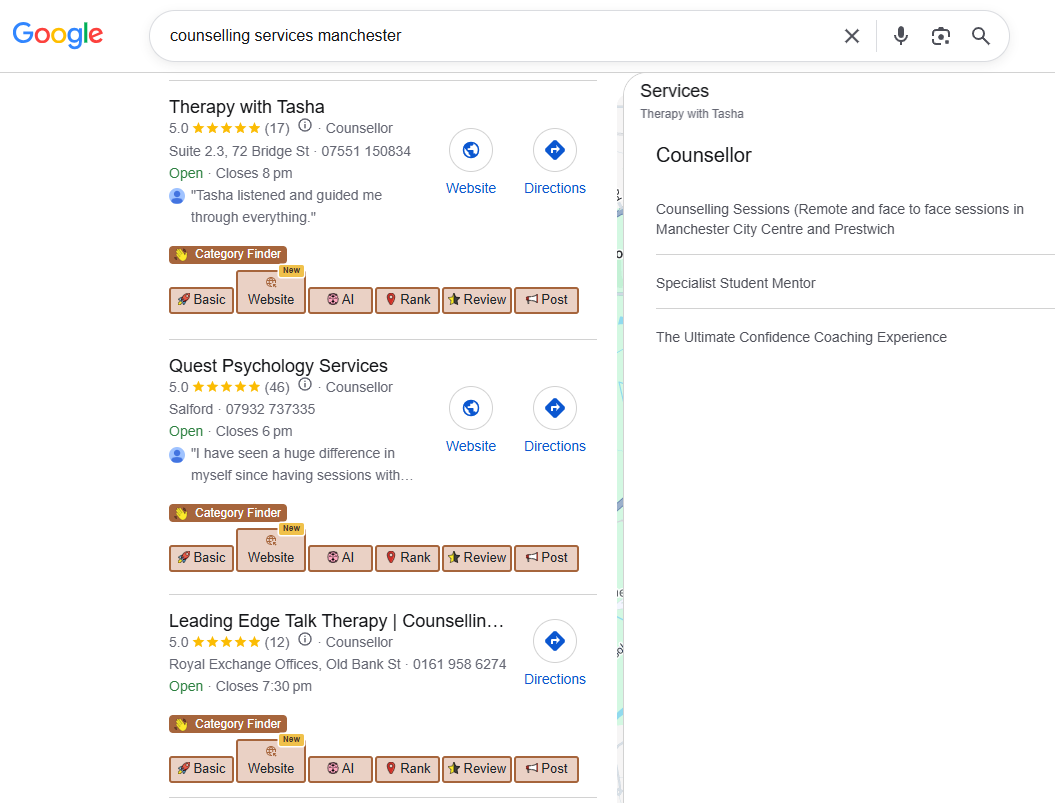
This is especially important if someone's looking for instant support or doesn't want to spend ages looking through websites.
It Builds Confidence
One of GBP's most important features is the reviews, which give prospective patients peace of mind. While this isn't always the case, Google states that profiles with positive reviews are more likely to rank higher in the results - although other factors like optimisation matter (Google).
If previous patients had a good experience, it increases their confidence, which means fewer barriers to booking.
Differentiation
Healthcare providers can't use aggressive marketing campaigns due to compliance regulations, which can make it hard to stand out. Luckily, prospective patients don't want false promises; they want to know that they're accessing the best provider for their needs.
Simple things can make a big difference, including letting people know you offer evening appointments, offering accessibility for individuals with disabilities, and highlighting your specialisms. These things might not seem exciting, but they make a difference to your clicks and bookings.
Google Business Profile Optimisation Tips
So, now that you've seen how Google Business Profile supports patient acquisition, it's time to look at effective optimisation tips.
Fill Out Everything
When you create a Google Business Profile, you need to fill out everything. The algorithm may flag an incomplete profile as low quality, which can affect your map position. Vital information includes your business name, address, phone number, website URL, and service areas.
NAP Consistency
Name, Address, and Phone Number consistency is vital across all of your digital channels. For example, if your GBP phone number differs from the one on your website, it can impact trust signals. Also, as AI searches grow, NAP helps AI models identify which entities belong to your practice.
Categories and Business Description
The primary category for your business description is simple: it's what you do. However, a BrightLocal study states that profiles with subcategories can achieve higher rankings. If you add secondary categories, make sure they fit your business.
For example, a GP surgery might use General Practitioner as its primary category, then Urgent Care, Family Practice, and Paediatrician as its additional categories.
Adding relevant secondary categories can help potential patients find you, based on the services they're actually looking for.
Simplify Your Services
A common mistake clinics make is listing clinical terminology instead of the terms patients search for. For example, a counselling service could list "CBT-informed interventions" when patients are looking for "support for anxiety".
Google Business Profile isn't a replacement for the service pages on your website, but it can give patients a reason to click on a Google Search result instead of looking through other online listings.
Use Relevant High-Quality Photos
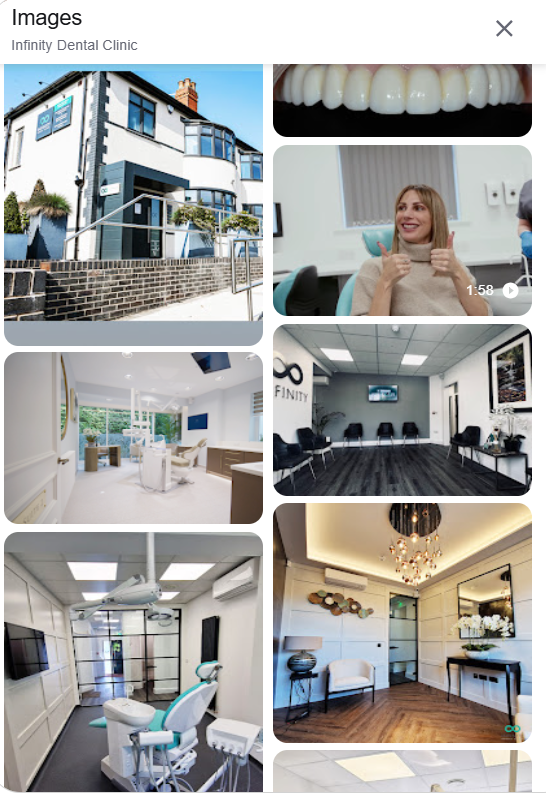
Your Google Business Profile shouldn't look like a professional photo shoot with magazine-style images. Trust is everything for healthcare providers, so focus on clear photos that are relevant to your services.
Show high-quality images of your practice, staff, and treatment rooms so patients can get a sense of your facilities. This builds trust and can help prospective patients feel comfortable booking an appointment.
If you want to display patient photographs, including before-and-after photos, always get permission and ensure you meet professional standards.
Add Google Posts
Remember, Google Business Profile is less like a directory and more like a social media platform. It's not a one-time task, as regular updates keep the profile fresh. If your opening hours change or you add new services, make sure to add them to your profile immediately.
Posting frequent updates can also improve your discoverability. For example, if one profile has accurate information but no updates, and another posts once a week, the profile with updates shows it cares about its online presence.
Again, all healthcare providers posting on GBP should follow GDPR rules, including protecting patient confidentiality and avoiding photos or reviews without the patient's express consent.
Google Business Profile optimisation shouldn't be treated as a task you complete once and forget.
Turning Searchers into Clinic Patients
Increasing your visibility is just one step in Google Business Profile optimisation, because the main results come when visibility turns into patient bookings. That's why you shouldn't rely solely on GBP performance metrics.
The Google Business Profile Performance section shows when and how people interact with your profile, but to understand the commercial impact of your effort, focus on calls, appointment link clicks, and whether visitors become patients.
It's important to distinguish between Google Business Profile and other platforms when assessing the impact of your optimisation.
Evaluating the Success of Your GBP Involves:
Using UTM parameters to track which website visits come from your GBP, then evaluating how your appointment enquiries and bookings change over time.
Asking new patients how they discovered the practice when they fill in onboarding forms.
Focusing on enquiry quality. For example, how many enquiries turn into patients.
The Bottom Line
Google Business Profile isn't just a listing that can enhance your visibility: it's a critical part of your local marketing strategy.
When you have an optimised profile that aligns with what potential patients want to see and know, you have every opportunity to turn website traffic into appointment bookings.
Having a Google Business Profile boosts your local search visibility, and Google Maps makes it easier for local patients to find you and get directions. When you collect Google reviews and the sentiment is positive, it encourages patients to learn more.
All of these things can result in direct bookings or high-intent website visits. It's not about choosing one over the other, as both have their place. However, when your website and GBP work together, it's much easier to attract more local patients.
Assertive specialises in SEO for healthcare providers. Whether you want to strengthen your local search presence or you're just starting, our team of experts is here to turn visibility into consistent patient bookings.