









AI Overviews trigger on 88% of healthcare searches, and top-result clicks have dropped by up to 58%.
Ranking first no longer guarantees a citation, only 17-38% of AI Overview citations come from the organic top ten.
Entity trust (consistent name, credentials, reputation across the web) helps improve citing chances.
YouTube out-cites hospitals and journals in health AI Overviews in some cases, despite ranking 11th organically.
Local searches still rely on traditional local SEO since AI overviews mostly step aside there
Site speed, clean HTML, and stable URLs matter more now, since AI crawlers are far less forgiving of heavy JavaScript and complicated structures than Google's own crawler.
AI Overviews have given dangerously wrong medical advice, so named reviewers and structured content help signal a trustworthy page.
For years, medical websites competed for one thing, earning a high position in Google search and turning rankings into patient enquiries. Rank higher, get more visitors, simple as that. Not anymore though. AI search changes how people find health information now, and a lot of the time the search engine just gives you the answer instead of sending you to a healthcare website.
This shift hits healthcare harder than almost any other industry, largely because health questions are exactly the kind AI search handles well. Google AI Overviews now trigger on 88% of healthcare search terms, and the click rate on the top organic result has fallen by up to 58%. So someone looking up symptoms often gets a detailed answer directly from Google's AI Overview or an assistant such as ChatGPT or Perplexity, without ever clicking a link.
Search visibility is being measured differently as a result. The sites earning attention now are the ones AI systems trust enough to cite, summarise, and recommend, regardless of where they sit in the rankings.
AI Search Is Separating Visibility From Website Traffic
One of the biggest changes involves rankings and traffic no longer moving together. Search impressions stay steady or even increase, and average positions barely move, yet organic traffic falls, because AI answers satisfy the question before a site visit becomes necessary.
People click a normal search result 8% of the time when an AI summary sits above the listing, compared with 15% when no summary appears, and a mere 1% of searchers click the citation links embedded inside the summary itself.
So the better question is not whether a page ranks first but whether the page becomes part of the AI's answer.
YouTube Is Beating Hospitals and Journals for Some AI Citations
Video is turning into one of the biggest sources AI models pull from, and it's actually beating out written articles in some categories. There's a study that looked at over 50,000 health searches in Germany, and it makes the point pretty clearly.
You'd think the most cited source in those health AI overviews would be a hospital, a government health portal, or some peer-reviewed journal. Instead, YouTube took the top spot.
YouTube made up 4.5% of every citation in the whole dataset, ahead of the country's biggest public broadcaster and ahead of established medical reference sites, while academic research and official health institutions combined only hit about 1%. And here's the wild part, YouTube only ranked eleventh in regular organic results for those exact same searches. So there's a huge gap between how the platform does in classic search and how heavily the model actually leans on it once it's generating an answer.
The lesson here is to stop treating video like an afterthought. When a physician answers a common patient question on camera, with a full transcript and some descriptive text right next to the clip, that gives a generative model two formats to pull from instead of one.
Technical Site Quality Affects AI Visibility
Google's traditional search infrastructure handles complex healthcare websites well at this point, but many AI crawlers stay far less forgiving since heavy JavaScript, slow loading pages, large image files and complicated page structures all make content harder for an AI system to process efficiently.
Medical organisations investing in fast page speeds, server-side rendering, clean HTML and logical page structures improve traditional SEO performance and AI search visibility at the same time. The same principle applies to URLs, because content that changes location often, or breaks existing links, risks disappearing from AI references, particularly since language models rely on previously indexed information, so stable URLs and proper redirects grow more valuable every year as AI systems keep building long-term knowledge from trusted sources.
Healthcare SEO typically starts any AI visibility audit right here, since these technical fixes tend to move both traditional rankings and AI citations together.
AI Search Rewards Content That Answers Immediately
A lot of medical sites still write the old way, several paragraphs on anatomy or history before they get to the patient's actual question halfway down the page. That worked fine back when search engines mainly ranked whole pages and people just scrolled through the whole thing to find their answer.
Generative AI shifts things for a lot of searches, but it's not one uniform rule across the board. Chat based answer engines built on retrieval and similar assistants pull specific passages out of a page to build their answer. Testing across hundreds of thousands of AI responses found real gains from leading with a direct answer and keeping each section self-contained, and that's separate from how well the page is actually written. A section that leans too heavily on the paragraph before it risks getting skipped entirely, since a passage pulled out on its own loses its meaning without that surrounding context. Google plays this differently with its own AI search features though.
Google's actually said content doesn't need artificial chunking, since its systems read the full page and pull out the relevant section regardless of where it sits. Clear structure still helps there, but the benefit comes from readability, not some strict rule that every answer has to sit right at the top.
But to be safe, just answer the questions directly.
Brand Consistency and Expertise Drive AI Citations
The instinct says whoever ranks first organically gets pulled into the AI summary automatically, and following that instinct has cost medical marketers a real amount of wasted budget, because only around 17-38% of pages cited inside Google AI Overviews come from a page sitting in the organic top ten for the same search, and five out of six citations come from somewhere else entirely, sometimes from page four or five of the regular results, sometimes from a domain barely visible in Google's normal index.
Entity trust decides the citation instead, since generative systems build an answer by pulling from several related searches at once, then stitching the pieces into one response, and a brand showing a clean, consistent identity across the web, the same practitioner name, the same credentials, and the same clinic address repeated on every directory and profile, gets pulled into that stitched answer far more reliably than healthcare brands with fragmented digital footprints, regardless of how many backlinks the domain has collected.
AI evaluates healthcare providers across the wider web to measure consensus and gauge real-world reputation, rather than relying on a single website alone, so consistent physician profiles, recognised qualifications, patient reviews, citations from respected healthcare organisations and mentions across authoritative publications all reinforce confidence in a medical brand.
Getting your clinic organically discussed in an active community forum helps too, since these models read independent conversations and synthesise them into their recommendations, so securing mentions on third-party lists, comparison sites and patient discussion boards signals real trust to the algorithm.
AI Overviews Can Get Medical Facts Dangerously Wrong
This citation behavior creates a genuine problem in a category where accuracy carries life or death stakes, because a language model predicts likely next words based on the volume of text it absorbed during training, and no built-in mechanism weighs a peer-reviewed study against a healthcare marketing blog written by an industry with a financial stake in the outcome. Ask a traditional search engine about a scientifically contested treatment, and sceptical, well sourced institutional voices surface near the top, but ask a generative model the same question and the answer sometimes reflects whichever position produced more total text across the open web, regardless of which position holds up under scrutiny.
Google's AI Overviews told pancreatic cancer patients to avoid high fat foods at one point, advice running directly against what oncologists recommend for patients needing calorie density during chemotherapy, and alongside that, the same feature generated fabricated reference ranges for liver function tests, ignoring basic patient variables like age and sex, which is why Google pulled AI Overviews from specific sensitive medical queries in response.
For a medical site owner, the practical takeaway sits in structured data, since coding author credentials, review dates and a named medical reviewer directly into a page's schema gives a generative system a machine readable trust signal plain prose never offers and gives Google a concrete reason to keep surfacing a page even where the wider topic has drawn caution.
Local and Urgent Patient Searches Still Favor Traditional SEO
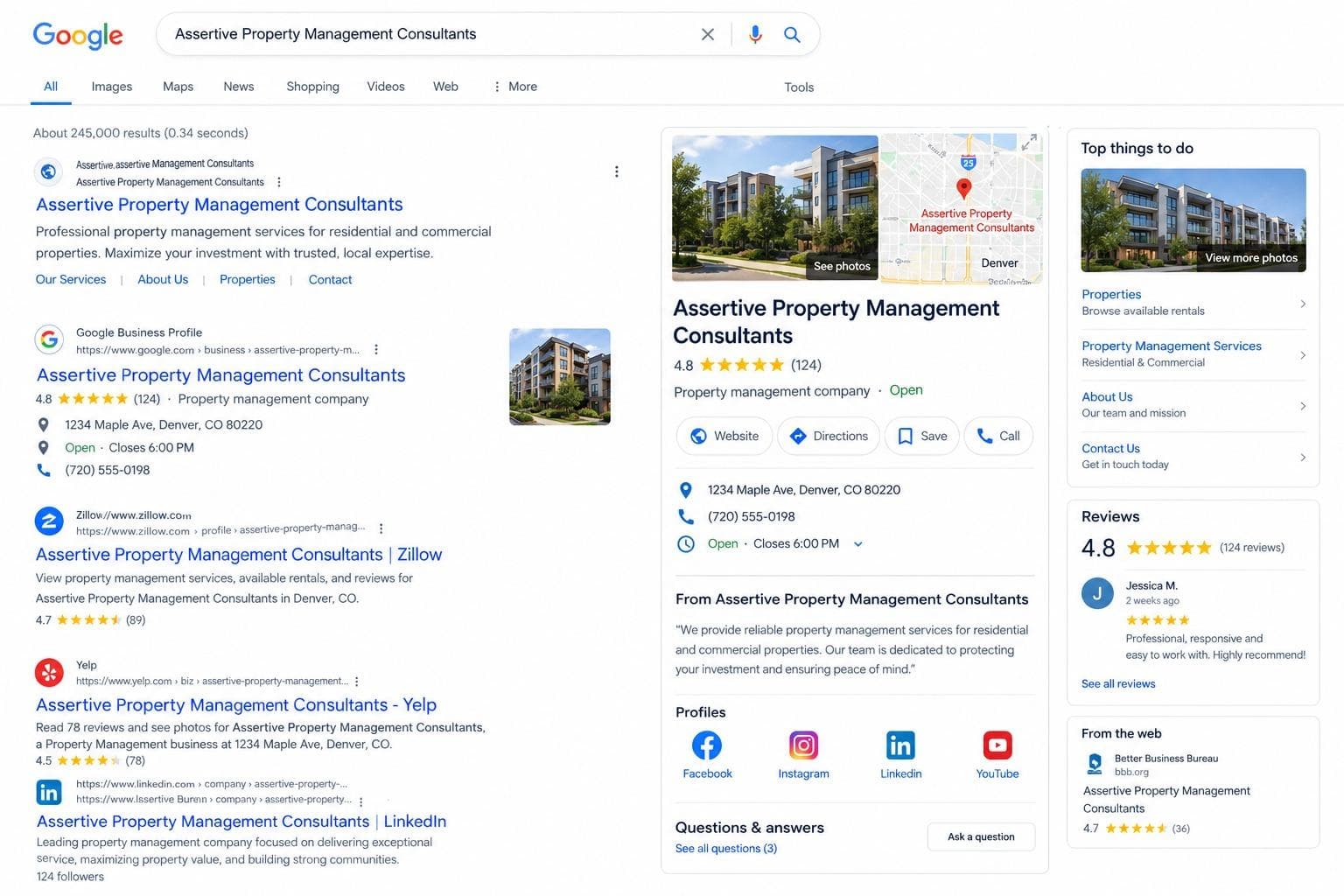
Search engines deliberately pull back their generative features once a patient shows immediate commercial intent, so when someone searches "urgent care open now" or "local paediatric dentist", the AI overview typically steps aside because the search engine reads the moment correctly and knows to skip the long explanation and surface a map, a phone number and real patient reviews right away.
Traditional local search mechanics still govern these bottom of funnel searches, so medical practices need flawless directory profiles and localised landing pages built entirely around conversion, featuring clear appointment booking tools, accepted insurance lists and direct contact methods.
The chances of converting these visitors run higher too. By the time a patient clicks through an AI assistant's recommendation and lands on a clinic's website, the research phase has already wrapped up, and these visitors book appointments at rates up to 23 times higher than traditional organic searchers.
How Healthcare Websites Are Winning at AI Search
First, they answer the main question right away and directly, instead of building up to it slowly or giving some vague, hedge everything kind of answer.
Second, they move past the broad health topics. General advice on stuff like diabetes or migraines is already dominated by the big medical institutions, so competing there barely pays off. More specific content does a lot better, pages on how one particular clinic approaches treatment, who a procedure actually suits, what to expect before an appointment, how recovery works after surgery, that kind of thing gives AI information it can't easily swap out for some generic answer.
Third, go back to that entity consistency point from earlier and actually build it out properly, matching your exact name and credentials across Wikidata, Healthgrades, and every speciality directory your field uses. One tactic beats mass directory submissions every time, and that's landing a single mention on a university health department page or a state medical association resource list, because a generative model weighs a link from a domain with real editorial standards way higher than a stack of low-tier business directory listings.
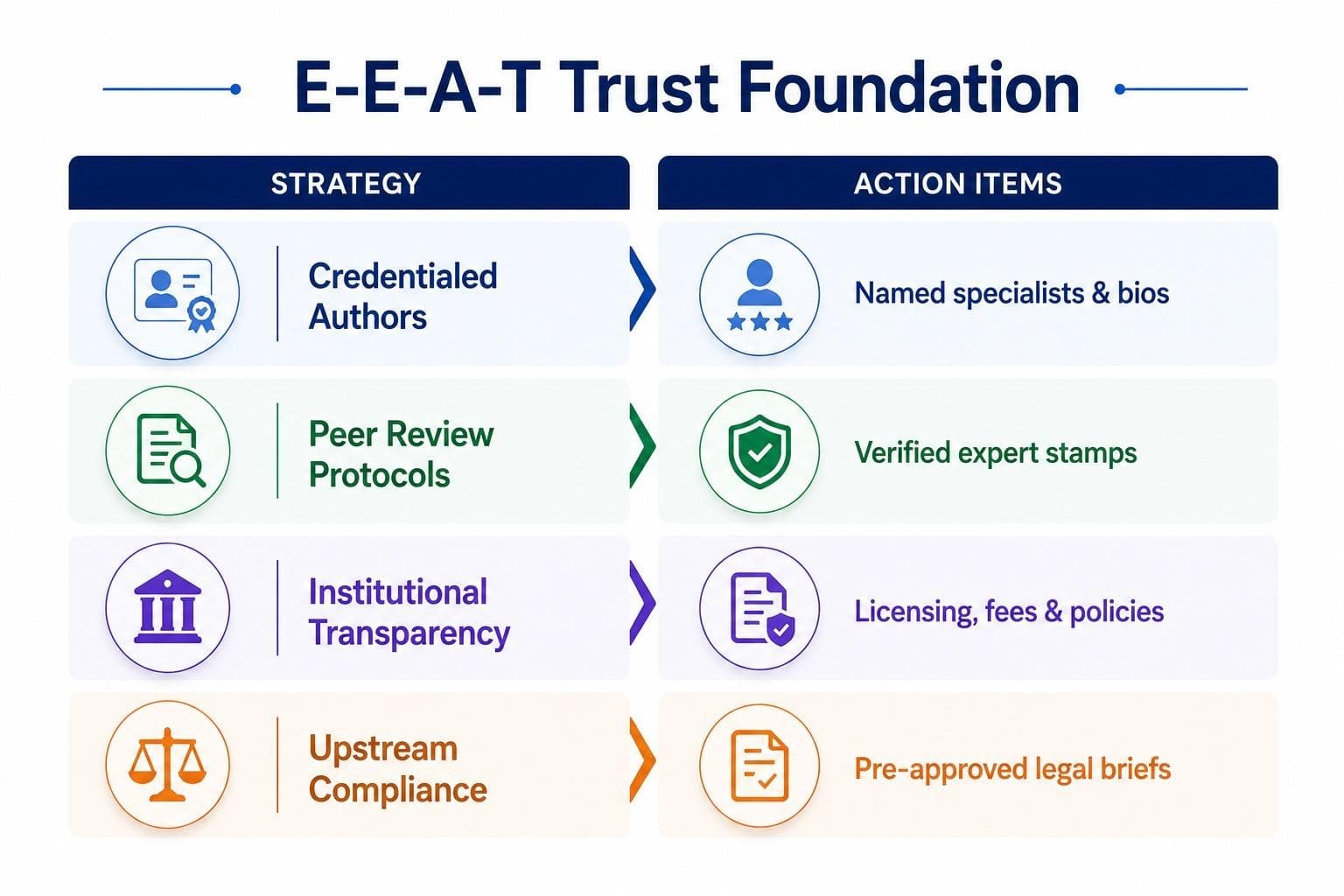
Fourth, work on evidence and transparency. Medical articles need a qualified reviewer named, solid clinical sources cited where it makes sense, and clear publication and review dates, since all of that helps patients and AI systems both judge whether the information's actually trustworthy and current.
Finally, pay attention to structured data. Schema markup doesn't guarantee you show up in an AI generated answer, but it does make your information a lot easier for an AI-powered search engine to understand, and medical organisation schema, physician schema, FAQ schema, and article schema all define how your content, authors, and services actually connect. Skip chasing file formats built specifically for AI crawlers though, something like llms.txt does nothing for Google's generative features.
None of this replaces anything fundamental though. Healthcare search engine optimisation has always run on trust, accuracy, and authority, and AI driven search hasn't changed those principles one bit.
Getting there today takes more channels covered at once, entity signals, structured data, and video, sitting alongside the usual on-page work. Our Healthcare SEO team shows exactly where a clinic stands in AI Overviews and organic results right now, then builds the technical foundation, entity trust, and structured content needed to close the gap.
Call 0207 965 7623 or get in touch online to start with a full visibility audit.