












Private health clinics can no longer guarantee new patient enquiries simply by setting up in the 'right' location or relying on word-of-mouth recommendations. With so many choices available to discerning clients, including online health services, private clinics wanting to generate more patient enquiries need to market strategically.
Word of mouth recommendations have given way to Google searches, with the platform processing over 50 million health-related queries each year in the UK. And, 8 out of 10 people begin their journey to find healthcare providers on search engines (Smart Data Research).
SEO for healthcare providers is, therefore, an essential investment. Because if you're not showing up in these searches, you're missing out on patients who are actively seeking support.
In this guide, we'll explore just how SEO helps private clinics generate more enquiries. Whether you're a private GP, therapist, dental practice, or any other healthcare provider, this is information you need to know to stay competitive.
TL;DR - The Need to Knows
Most patients now begin their search for healthcare services online, making SEO essential for attracting new enquiries.
Local SEO helps private clinics appear in searches such as "counselling near me" or "private GP in [location]", putting you in front of people actively seeking support.
SEO targets patients at different stages of the decision-making process, from researching symptoms to booking appointments.
An optimised Google Business Profile, local citations, and location-specific content can significantly improve local visibility.
High-quality content helps establish trust, demonstrate expertise, and keep your clinic top of mind when patients are ready to take action.
Healthcare SEO isn't just about rankings; it's also about creating a fast, user-friendly website that encourages visitors to become patients.
Smaller and independent clinics can compete effectively by focusing on local searches and niche healthcare topics rather than broad national keywords.
Unlike paid advertising, SEO continues generating visibility and patient enquiries long after the initial investment, making it one of the most sustainable growth strategies for private clinics.
How Patients Search for Private Healthcare Services
There have been many changes in how people search for and choose healthcare services over the past decade.
Today it's no longer a case of choosing the closest provider or opting for the healthcare service a friend or family recommended, because the internet opens up different possibilities.
The question is, how do people search for healthcare information online?
Well, it depends on where they are in the journey. For example, if someone is experiencing symptoms, they might type in a question like "What causes lethargy and headaches?"
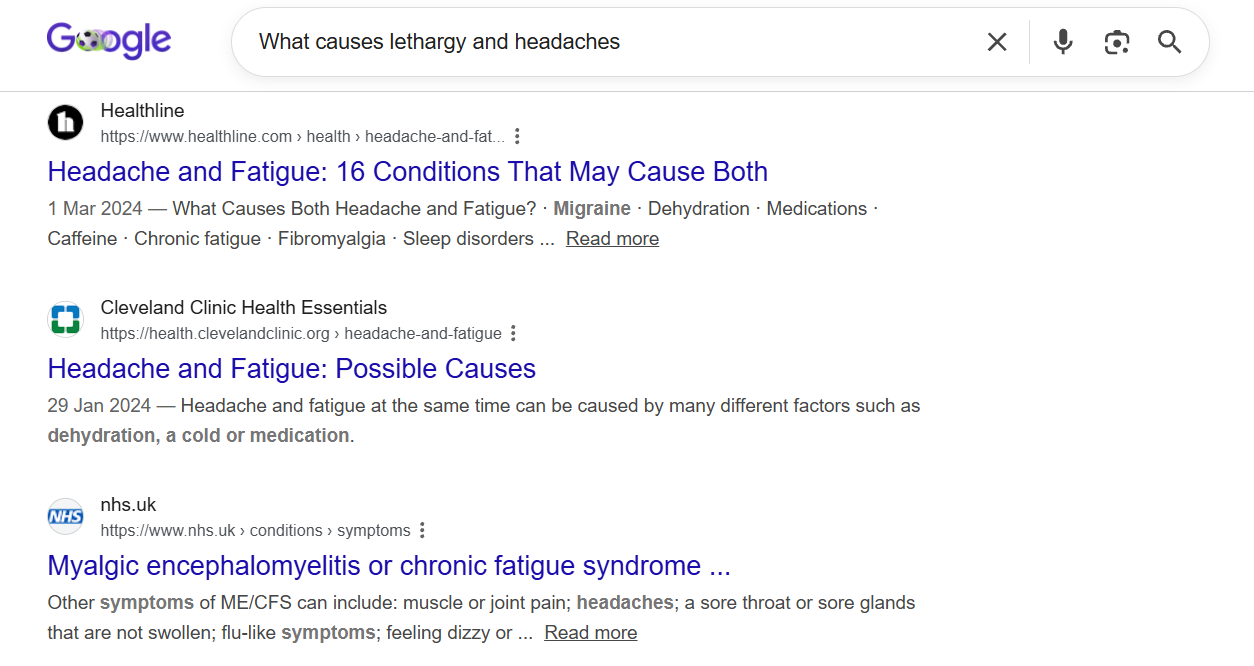
As you can see from the results, the healthcare providers that appear in these searches are internationally known. And that's one of the biggest mistakes private clinics make. Because you spend ages creating content that will get buried in Google's search results pages.
High-Intent Searches
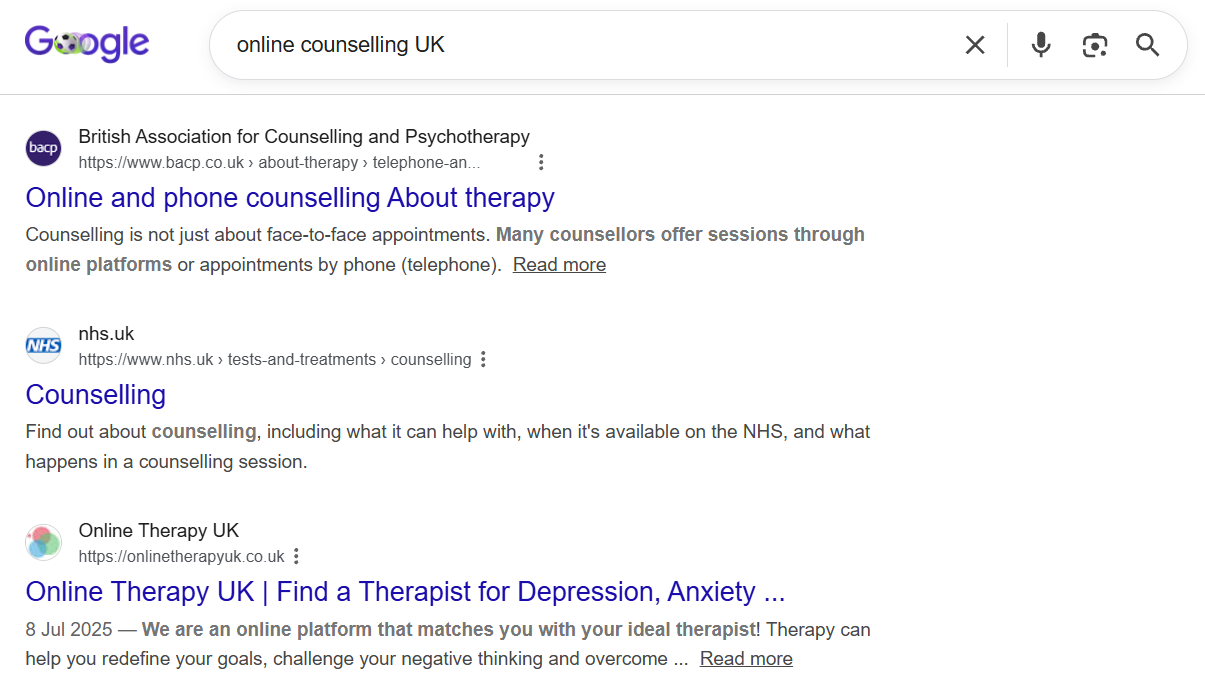
High-intent searches are when someone is actively looking for support. They're beneficial for private clinics with a national or online presence.
For example, if someone is looking for mental health support, they might type in "Online counselling UK".
Or UK private GP appointments.
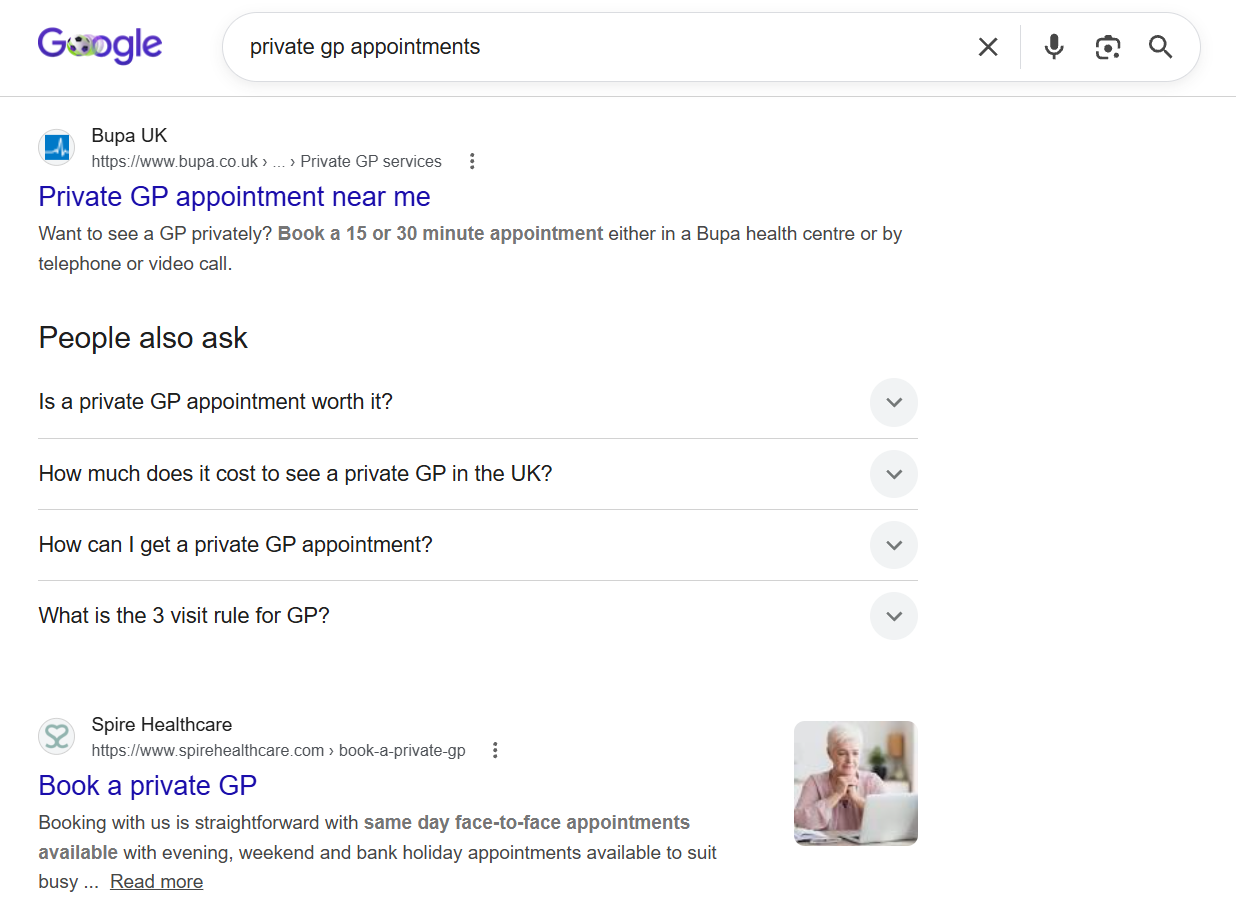
These searches can help larger private clinics attract new patients, but local clinics can still struggle to gain traction because they're national searches.
Local Search
Local healthcare SEO is one of the most valuable investments private clinics can make. When someone is searching for support in their area, smaller, independent providers have a good chance of appearing in these results.
For example, if someone searches for "counselling near me", we begin to see local and independent mental health services appear in Google's Map Pack.
If your clinic isn't appearing in these searches, you're relying on word of mouth. And in this day and age, that's not a strategy.
What is a Healthcare SEO Strategy?
SEO (Search Engine Optimisation) is about improving your website's visibility in search engine results. It has a simple goal: to ensure your clinic ranks among the top results when people search for applicable services.
The process involves everything from keyword research and content creation to technical SEO and building high authority backlinks.
When you work with a healthcare SEO specialist, they'll leverage different techniques to not only ensure that your website gets clicks, but that those clicks turn into patient enquiries.
Here's how SEO increases your patient acquisition rates.
It Targets People When They Need You
When people use search engines, they have a goal in mind - also known as search intent.
Informational intent is usually about checking symptoms or prognoses, and navigational intent is when a person is searching for a specific page or provider.
Both can be useful, but commercial and navigational intent are where you can target patients who are actively searching for support.
When you appear in searches like "The best private physiotherapy clinics in Manchester" or "private autism assessments near me", you attract clicks, which can then turn into patient acquisition.
Local SEO Levels the Playing Field
Local SEO isn't just about appearing in geographic searches; it also involves leveraging Google Business Profile, building backlinks, and creating high-quality, locally focused content.
Research shows that 60% of all healthcare-related searches have local intent (IHP). These strategies enhance your local presence, which is essential considering the number of people using location-based keywords.
Google Business Profile
Google Business Profile is usually the first thing people see when they perform a local search, but many private clinics treat their profile as a directory listing. It's not. GBP requires optimisation and regular updates to appear in the top results.
As with traditional search engine results pages, most people won't scroll or click past the first results.
That's why it's important to optimise and maintain your profile.
Location-Based Content and Citations
Creating dedicated service pages for different towns and cities helps search engines understand your service areas and increases the likelihood of appearing in local results.
One of the most useful things you can do is build local citations by listing your practice in reputable directories. Focusing on a local PR strategy is also beneficial, as it makes you more visible in your area and sets you apart as a reputable service.
Dedicated service pages targeting individual towns and cities help search engines understand where you operate.
Building Credibility and Trust
Healthcare decisions aren't made on impulse; they're incredibly personal. Patients care less about discounts and creative copy because they're more interested in peace of mind that the service they choose is reputable.
When a healthcare provider appears higher up in search engine results pages, people see them as more credible and trustworthy (Clutch).
Why? Google has strict criteria that define where it ranks healthcare providers. YMYL (Your Money Your Life) is a key ranking factor because healthcare is a deeply personal decision that can significantly impact an individual's life.
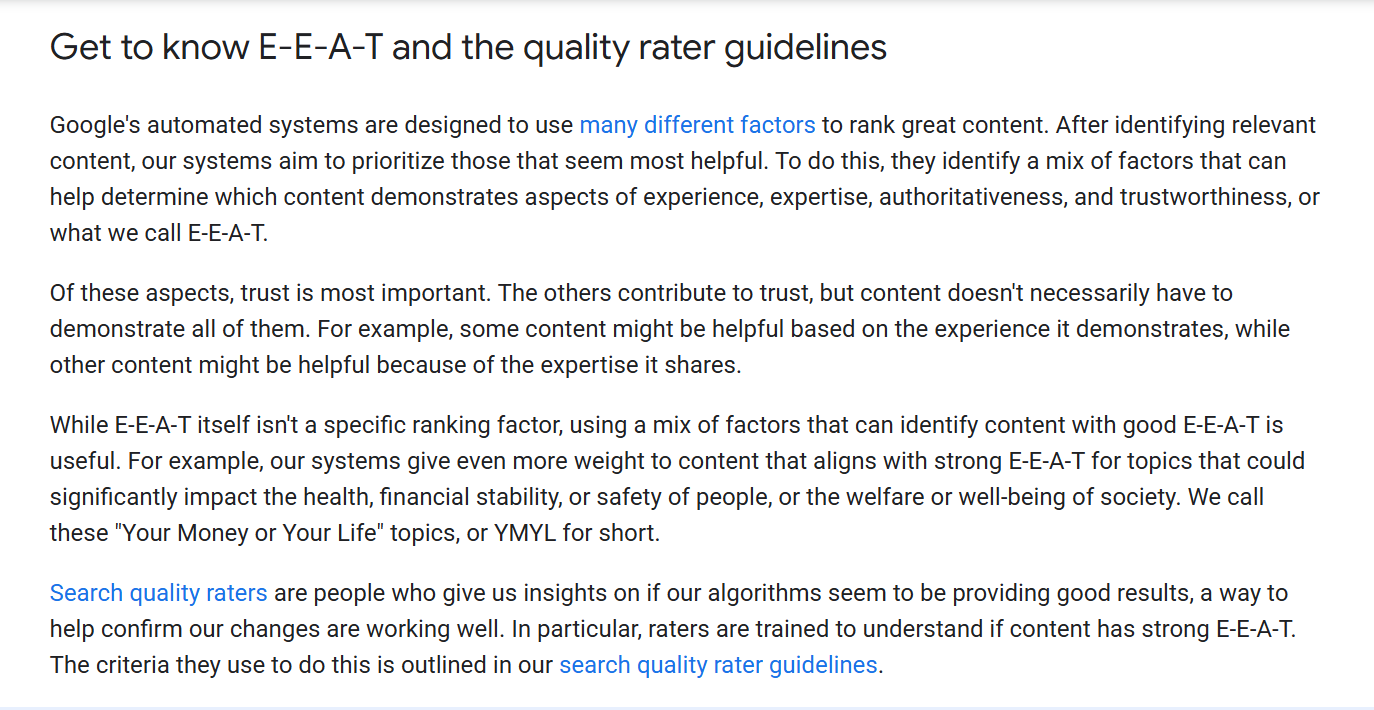
Healthcare services that follow YMYL and E-E-A-T guidelines are more likely to rank higher in the SERPs because they demonstrate experience, expertise, authoritativeness, and trustworthiness.
Using Your Online Presence to Attract New Patients at All Stages
We spoke about search intent before, highlighting commercial and transaction searches. However, informational content still has its place, as it can reach patients earlier in their journey.
Potential patients may want to evaluate their symptoms or explore different treatment options, which often leads to an informational search.
If you can provide high-quality content that answers these questions and positions you as an authority, prospective patients are more likely to remember you when they're ready to make a decision.
Creating Helpful Content
Educational content should answer questions that people are asking search engines. For example, they might ask Google about the signs of ADHD in adults, or which type of mental health therapy is best for them.
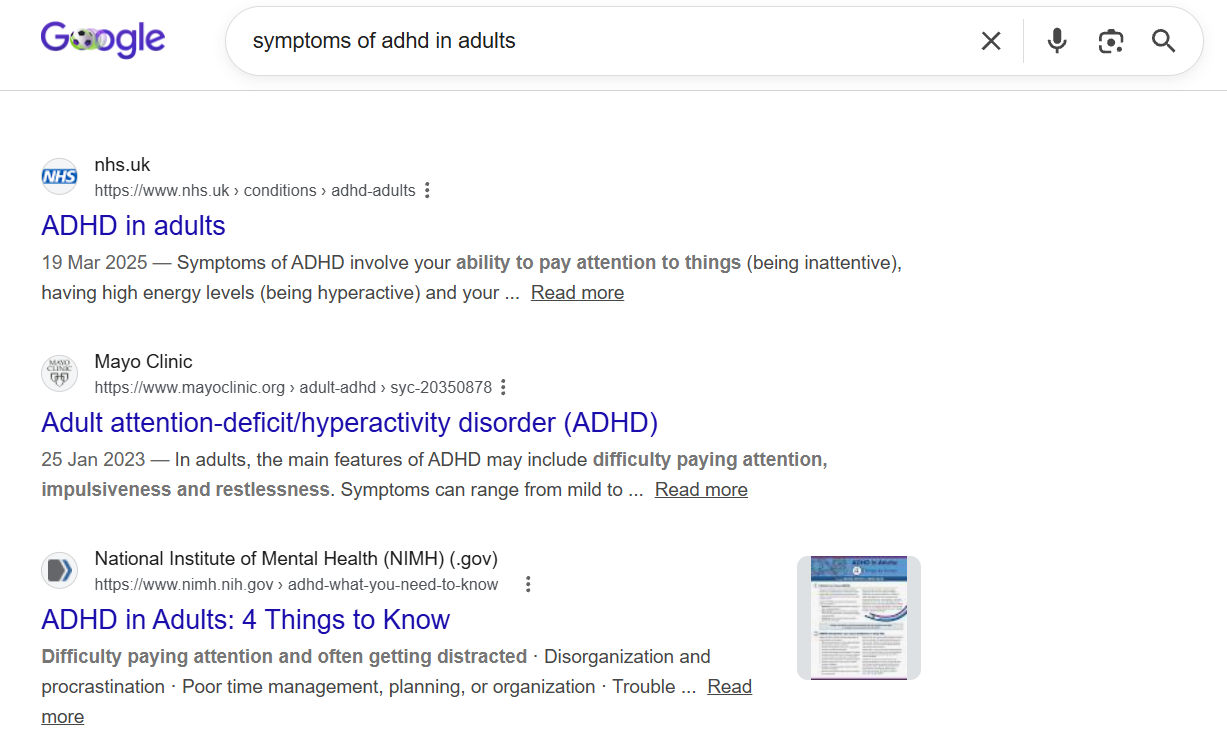
Using long-tail keywords to find less competitive yet high-intent terms helps you connect with prospective patients and guide them through your website.
Ongoing Patient Enquiries
SEO is one of those marketing strategies that requires time and patience. It's not going to generate results overnight, but once you have an organic presence and attract consistent traffic to your website, that traffic can turn into stable patient enquiries.
It's about optimising your website to align with the typical patient journey. Let's take private medical practices, for example.
If a person types "Why do I feel tired and dizzy all the time?", the search results will focus on information content, as you can see from this Spire Healthcare blog post.
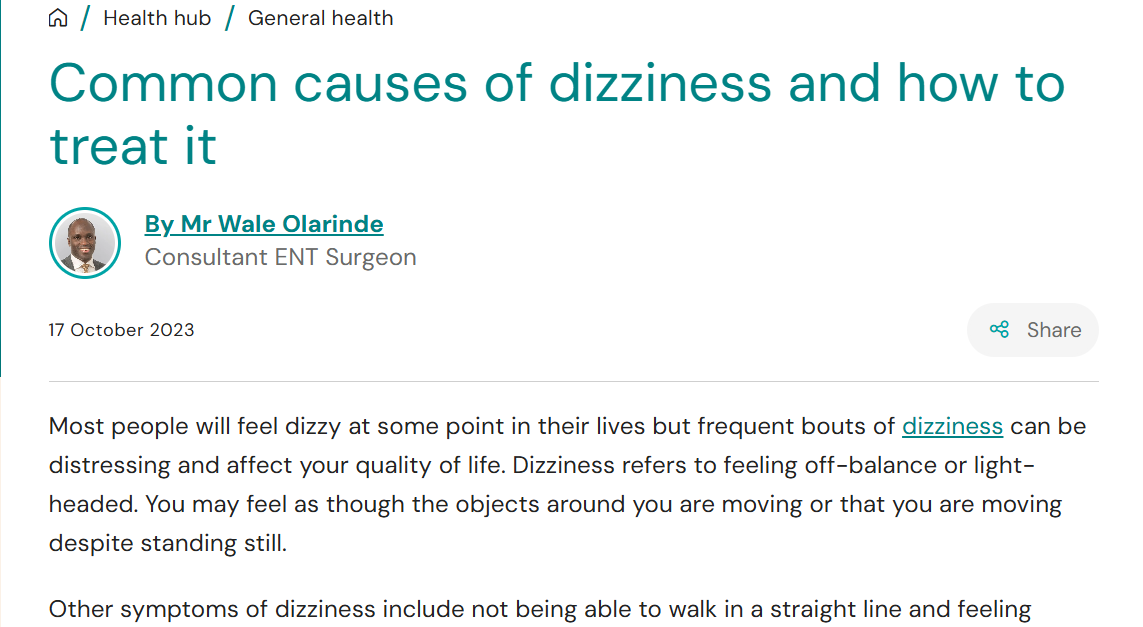
The person can read about the potential causes and then decide on their next step. The blog post's CTA clearly points them toward booking an appointment, which means a casual reader can now become a new patient.
And this is exactly how SEO can enhance your patient acquisition rates over time.
Building Patient Trust Through Experience
Modern SEO is no longer just about ranking high in local search results; what happens after someone clicks your website determines whether they become a patient.
Technical SEO for healthcare providers is equally important, as it ensures a seamless experience for visitors.
Research shows that up to 53% of website visitors will leave a page if it takes more than 3 seconds to load, and almost 90% won't return to a website after a bad experience (Forbes).
Every single element of your site should align with Google's Core Web Vitals best practices, including:
Website speed
Mobile usability
Navigation
Content quality
Structured data
Accessibility
Competing Against Larger Healthcare Providers
While achieving search visibility for national and international queries is hard, local SEO gives smaller and independent healthcare providers every opportunity to compete.
Healthcare websites that focus on local medical content creation and use long tail keywords can appear in niche searches and attract new patients.
With the right strategy, you can use SEO to generate a positive return on investment and grow your practice sustainably.
The Right SEO Strategy Takes You From Fighting for Attention to Attracting Ready to Book Patients
SEO is a long-term strategy that compounds over time. In an age where prospective patients turn to Google, AI tools, and online directories to find healthcare support, your visibility isn't optional; it's essential.
Once you begin appearing in online search results, prospective patients will click through to your website. Then, if they have a good experience and feel that you can solve their problems, they'll begin the patient onboarding process.
If you'd like to attract more patients and build a successful practice that doesn't rely on constant ad spends, our experts are here to create a tailored SEO strategy.
Please get in touch with us for a free proposal.