










Why invest in SEO support to get your solicitor practice competitive in local search?
It doesn't matter whether your law firm operates within one area, has a national presence, or plans to scale to new countries, because appearing in local SEO results is vital.
Discover how it helps you compete with other solicitors, attract new clients, and ensure that you can build a successful legal practice.
TL;DR: Key Takeaways
Local SEO helps solicitors appear where prospective clients are already searching for legal support.
By optimising your Google Business Profile, earning genuine client reviews, building consistent local citations, creating location-specific service pages, publishing valuable local content, and maintaining a fast, mobile-friendly website, your firm can improve its visibility in local search results.
While SEO is a long-term strategy, it can generate more qualified enquiries, strengthen your reputation, and help you compete with larger firms in your local area.
Why Is Local SEO Vital for Law Practices?
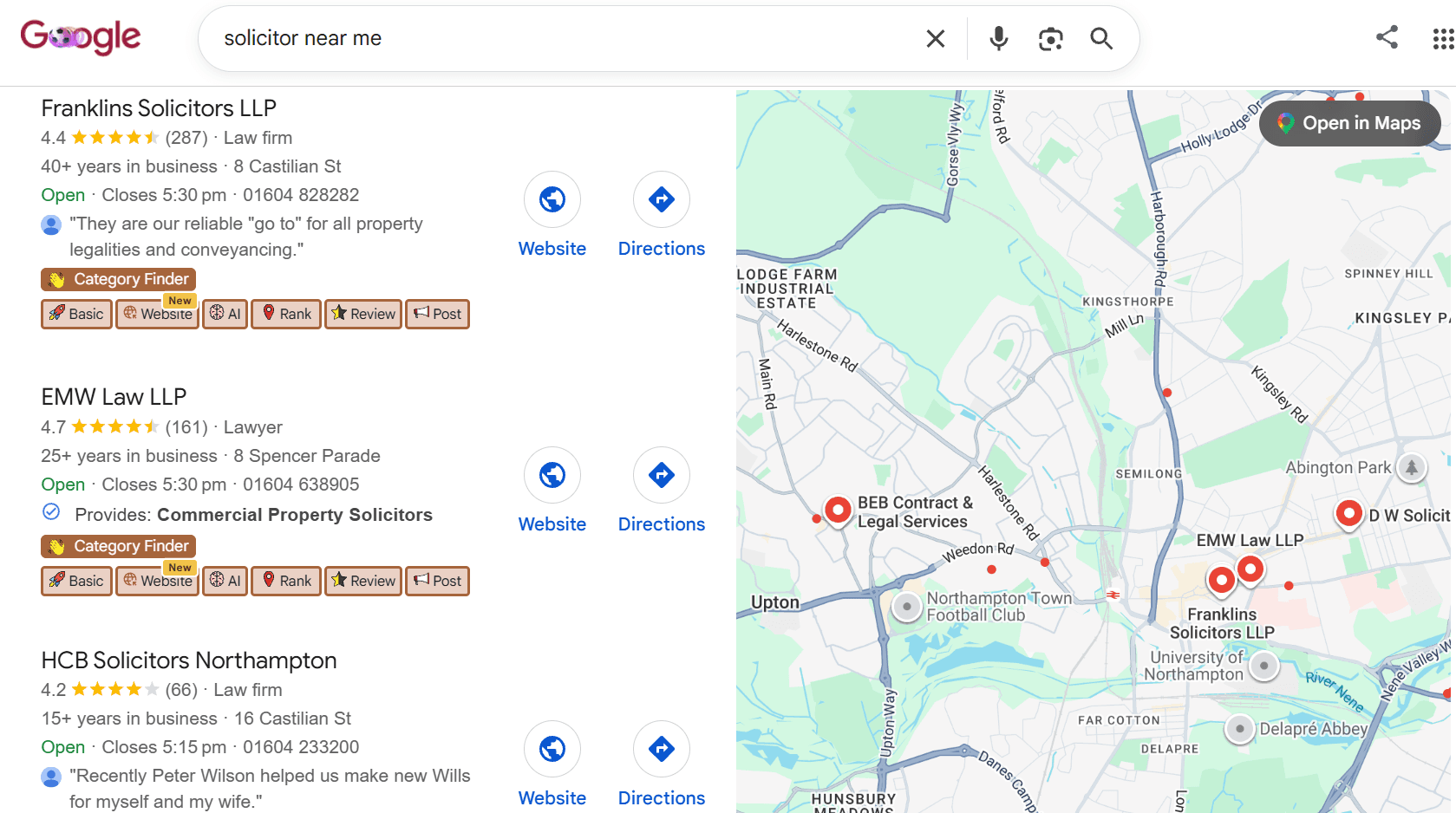
People search for legal services near them because they need support. You'll notice this when you type certain terms into Google. For example, the phrase "wills and probate solicitor" brings up local results in Google Maps.
That's because they're more likely to choose legal support in their local area, rather than comparing national results.
Research shows that results in the top three Map Pack positions receive 126% more traffic and 93% more calls and emails than businesses in organic positions 4-6 (SEMRush).
So, if someone looking for legal services sees your firm appearing in the top three Map positions, you're more likely to attract enquiries.
Which Local SEO Strategies are Most Beneficial for Law Firms?
There are many components of local SEO, but some strategies are beneficial for law firms to connect with prospective clients in their areas. These include using Google Business Profile, attracting customer reviews, and creating content for local audiences.
Google Business Profile
Google Business Profile (GBP) is one of the most important aspects of your law firm's local presence. It defines whether potential clients can find you and determines your position in the Map Pack.
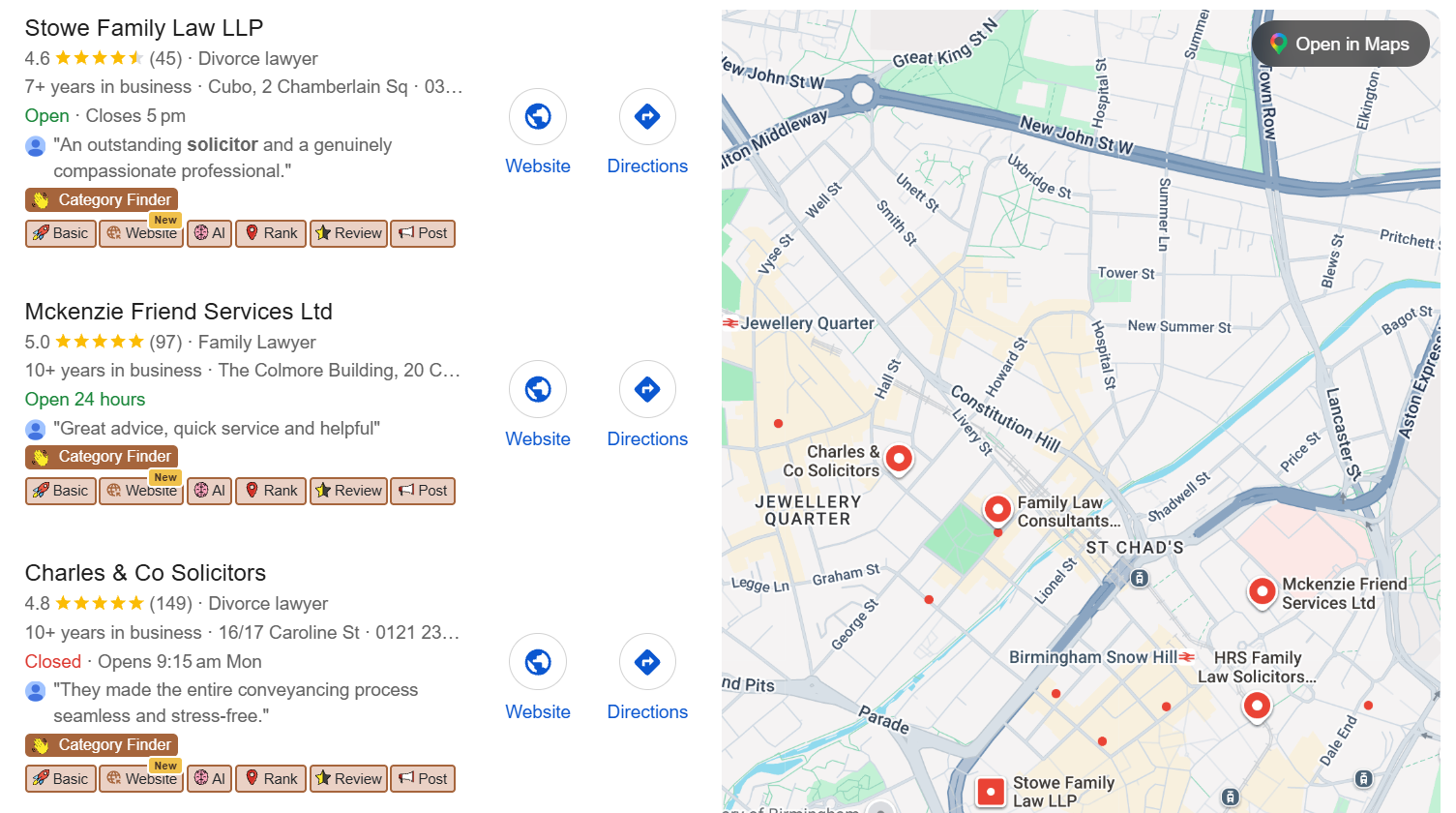
For example, if someone searches for a divorce solicitor near Birmingham, the top three results will generate the most clicks:
Your GBP listing should include:
Business Information: Your profile should include your business name, phone number, and address, exactly as they appear on your website and in directories.
Categories: Google Business Profile lets you choose primary and secondary categories. The more specific you are, the better. For example, instead of just saying "solicitor", you can choose "personal injury lawyers" if that's your main focus.
Service Listings: Each service should have a description that clearly explains what you do.
Updates: GBP isn't a static listing. You should update it regularly with posts and genuine photos of your office, team members, and any local events you attend.
Client Reviews
Law services aren't a luxury service or something people necessarily want; they're a need. For this reason, first impressions are everything.
Research shows that potential clients care about reviews and frequently visit comparison sites when seeking legal support (SRA).
While testimonials on your firm's website can be beneficial, reviews on third-party platforms like Trustpilot and GBP hold more weight.
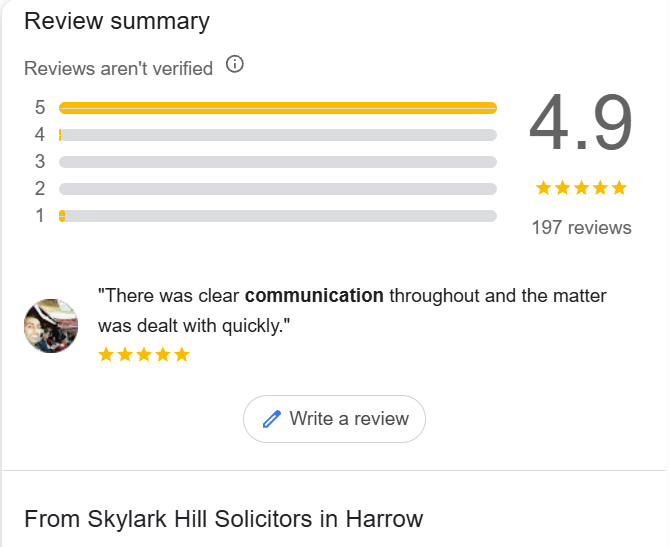
The number and quality of your reviews can affect where your law firm appears in local search results (Search Engine Journal).
Responding to both positive and negative reviews also makes a difference as it shows that you care about all feedback.
Citations Building
Citations are a core component of local SEO for law firms, as they ensure your firm is listed on relevant local and legal directories. Law firms listed in directories like Yell can appear in local searches, increasing online visibility.
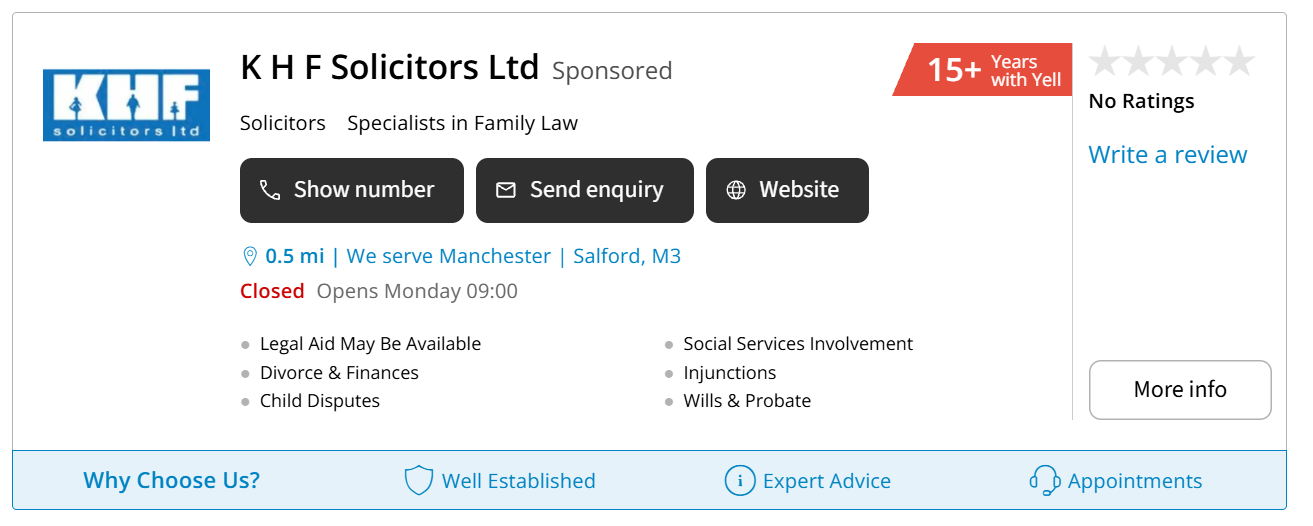
Remember, you don't need to list yourself in every directory, but choosing the right mix of legal and local directories can help you build your credibility.
It's essential to ensure NAP (name, address, and phone number) consistency across all of your profiles, including your website, social media pages, and directories.
Location-Focused Landing Pages
If you want to reach local audiences, consider creating dedicated pages. While many law firms do this for different services, they often forget about locations, which doesn't really improve search performance.
Audiences and search engines respond more to dedicated pages for each service and location.
For example, instead of having simple contact information for each office, creating a page about the location, team, and other relevant information can help you rank higher in local search results and connect with your target clients.
Creating High-Authority and Local Content
When it comes to legal services, search engines expect your content to be highly accurate, relevant, and valuable. Solicitors work in a high-trust sector, which means everything you create should align with Google's E-E-A-T and YMYL criteria.
While many law firms utilise content to explain legal concepts and answer questions, they frequently miss out on location-focused content.
For example, local courts may have different processes, and law firm websites that provide useful information to audiences in specific areas will be seen as more trustworthy.
Ensuring Your Law Firm's Website Offers a Seamless Experience
Search engine optimisation isn't just about creating high-quality content and building backlinks, because technical SEO is a core part of any online strategy for legal websites.
If your website doesn't load quickly and offer a flawless user experience, your target audience will go elsewhere.
Today, around 76% of legal searches in the UK are conducted on mobile devices. If your website isn't responsive across mobile devices and tablets, you're missing out on valuable clients.
It's also important to add structured data (schema markup) to your website, as it helps search engines crawl, understand, and index your content.
The Bottom Line
Solicitors need a combination of local, technical, off-page, and on-page SEO to compete organically and appear in local searches.
No standalone tactic will offer instant results, but by creating content that builds topical authority, optimising and continuously updating your Google Business Profile, building local citations, and ensuring a seamless user experience, you can grow your online presence.
Whether you're a national firm that needs to refine its presence across multiple locations or focused on your immediate area, leveraging local SEO can result in more clicks and enquiries.
If you'd like to improve your local SEO strategy and reach high-intent clients online, please get in touch with us for a free proposal today.