










Law firms face intense competition, and generating website traffic isn't enough. You need to attract the right traffic.
Sounds easy enough...but there's a difference between a visitor with a general legal question and one who's actively looking for legal services and is ready to make a decision.
Attracting high-intent legal leads requires a different SEO strategy than you'd use to attract website visitors. But with the right approach, you can significantly improve your conversion rates and build a successful law firm.
We'll cover the best SEO strategies that consistently generate high-intent legal leads in this post.
TL;DR
Generating high-intent legal leads requires more than ranking on Google.
By targeting commercial keywords, strengthening your local SEO, creating dedicated service pages, and optimising your website for conversions, you can attract potential clients who are actively searching for legal support and turn more visitors into enquiries.
Key Takeaways
Focus on commercial keywords that signal hiring intent.
Create dedicated service and location pages to increase visibility.
Optimise your Google Business Profile to generate local enquiries.
Publish content that addresses real client problems and concerns.
Improve conversions with strong CTAs, trust signals, and accessible contact information.
Support rankings with backlinks, technical SEO, and AI search optimisation.
Get support from a professional law firm marketing agency.
What Are High-Intent Legal Leads?
When someone types a query into a search bar, they're either looking for information, assessing their options, searching for a particular product/service, or trying to find a specific web page.
The intent behind each search defines whether you attract low or high-intent leads.
For example, if someone is searching for general information, they might type "How long does a divorce take in the UK?"
As you can see from the results, most point towards blog posts.
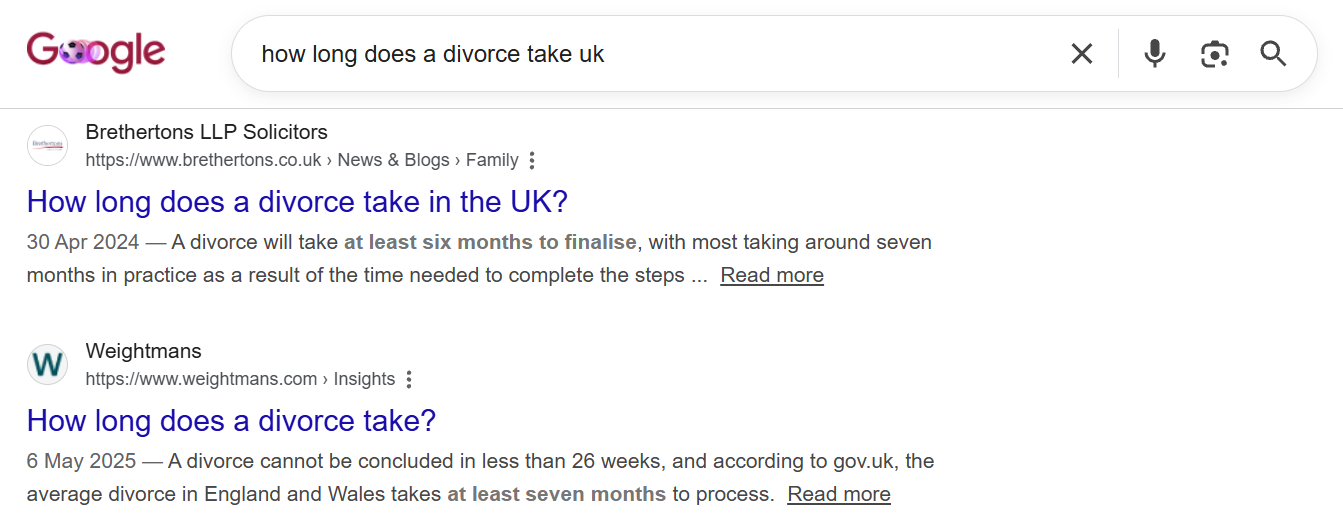
There's nothing wrong with this, but someone at this stage isn't interested in finding a lawyer. They could be considering a divorce, a student looking for information, or someone writing a blog post.
They're low-intent leads.
High Search Intent
If someone is actively looking for a divorce lawyer, they'll run a high-intent query. It could be "divorce lawyer free consultation" or "divorce lawyer near me".
As you can see, the results differ between these searches.
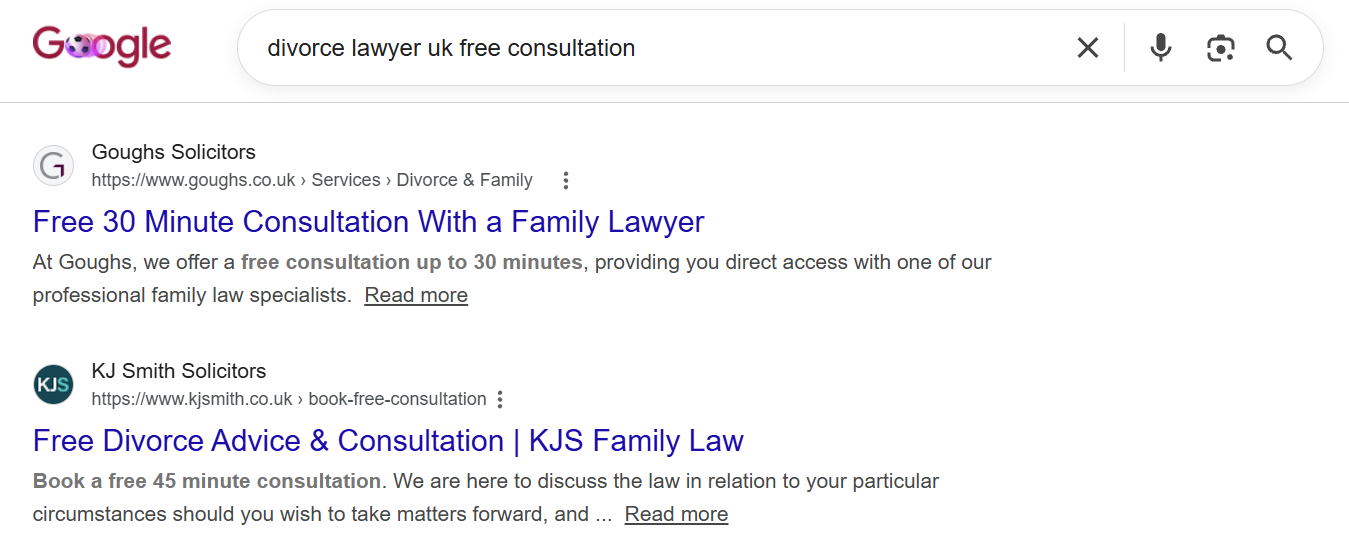
So, if your website shows up, the visitors you attract will be actively looking for legal support.
How Law Firms Can Generate High-Intent Leads
According to a PwC report, UK law firms are among the largest contributors to the economy, which means there's a lot of competition for local and smaller firms to stand out.
Meanwhile, national and international firms rely on consistently generating high intent leads to maintain their position.
Whether you specialise in criminal defence, personal injury lawyers, family law, or anything else, law firm SEO is vital for growing your practice.
Prioritise Commercial Keywords
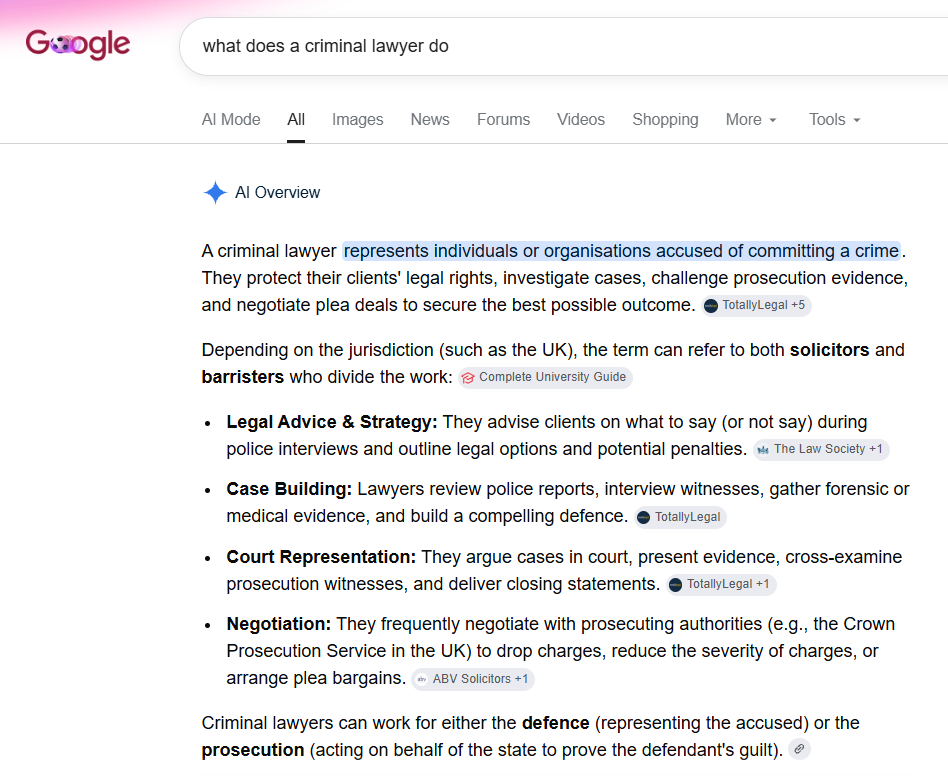
There was a time when focusing on informational keywords was a vital part of any strategy. But Google's AI Overviews are changing how people find information.
When someone inputs a query into Google, it generates a summary that answers it. For this reason, around 60% of searches don't result in any clicks (Search Engine Land).
Focusing on informational keywords might help you appear on the search engine results page, but you're investing time and energy into content that probably won't turn into leads:
Commercial Keyword Research
Commercial keywords are more likely to generate clicks because people are actively reviewing their options.
When you use a keyword research tool, filter the results for each keyword by commercial and transactional intent to find terms that will generate clicks.
Create Dedicated Service Pages
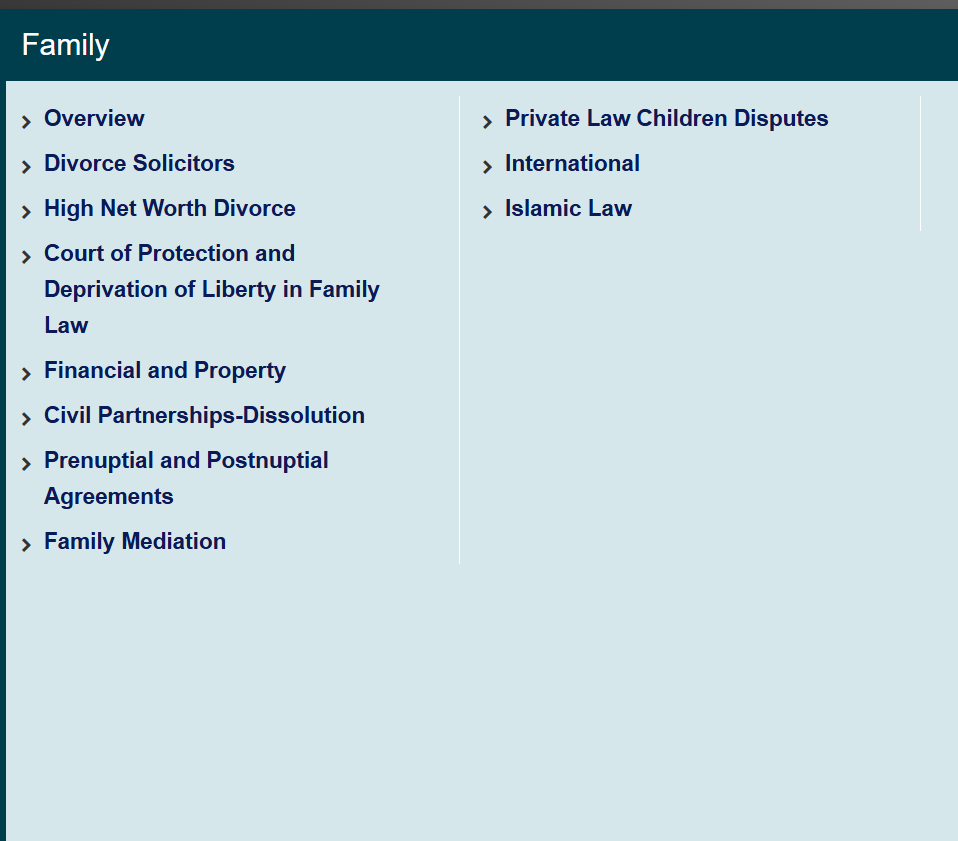
Creating dedicated service pages is one of the most useful things you can do for your SEO strategy. For example, instead of creating one family law firm page, you should split each main service page into niche pages.
So, if you offer family law services, you'd have supporting pages like:
Divorce solicitors
Family custody arrangements
Prenuptial and postnuptial agreements
Family mediation
Duncan Lewis Solicitors is an excellent example of how to maximise reach through creating dedicated service pages:
Create Landing Pages for Your Practice Areas
Independent law firms are often at a disadvantage. They can't afford to compete with cost-per-click ads - especially as legal services are highly competitive. But that's where dedicated practice area pages come in.
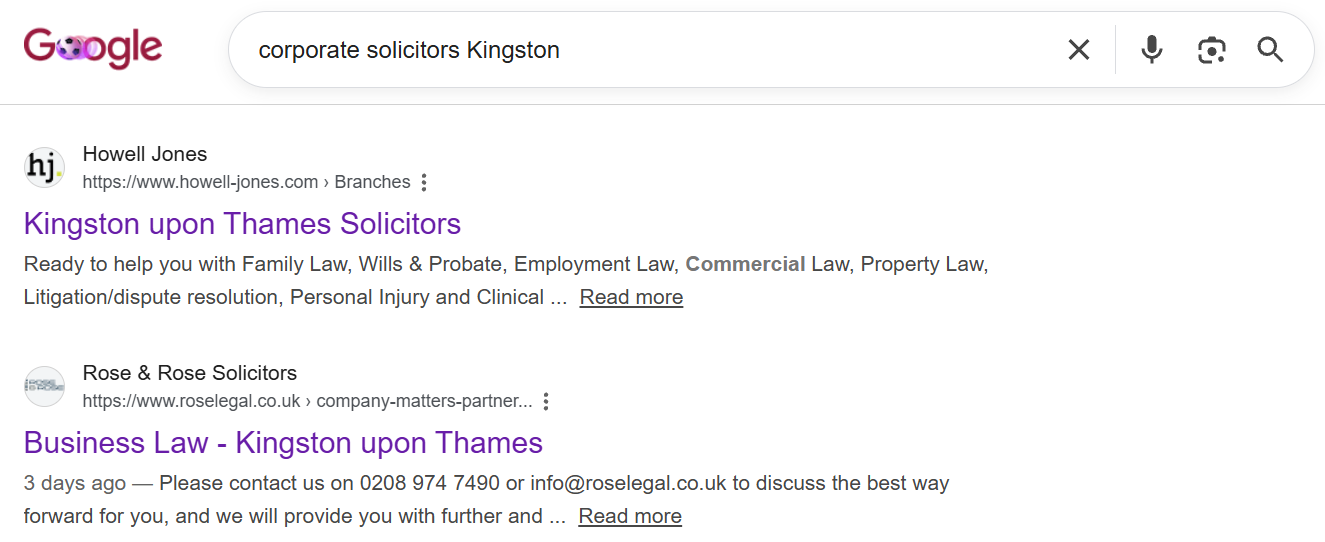
Instead of competing with national giants, you can attract high-quality leads in your local area. For example, if you operate in London, you'll find it hard to compete with larger law firms.
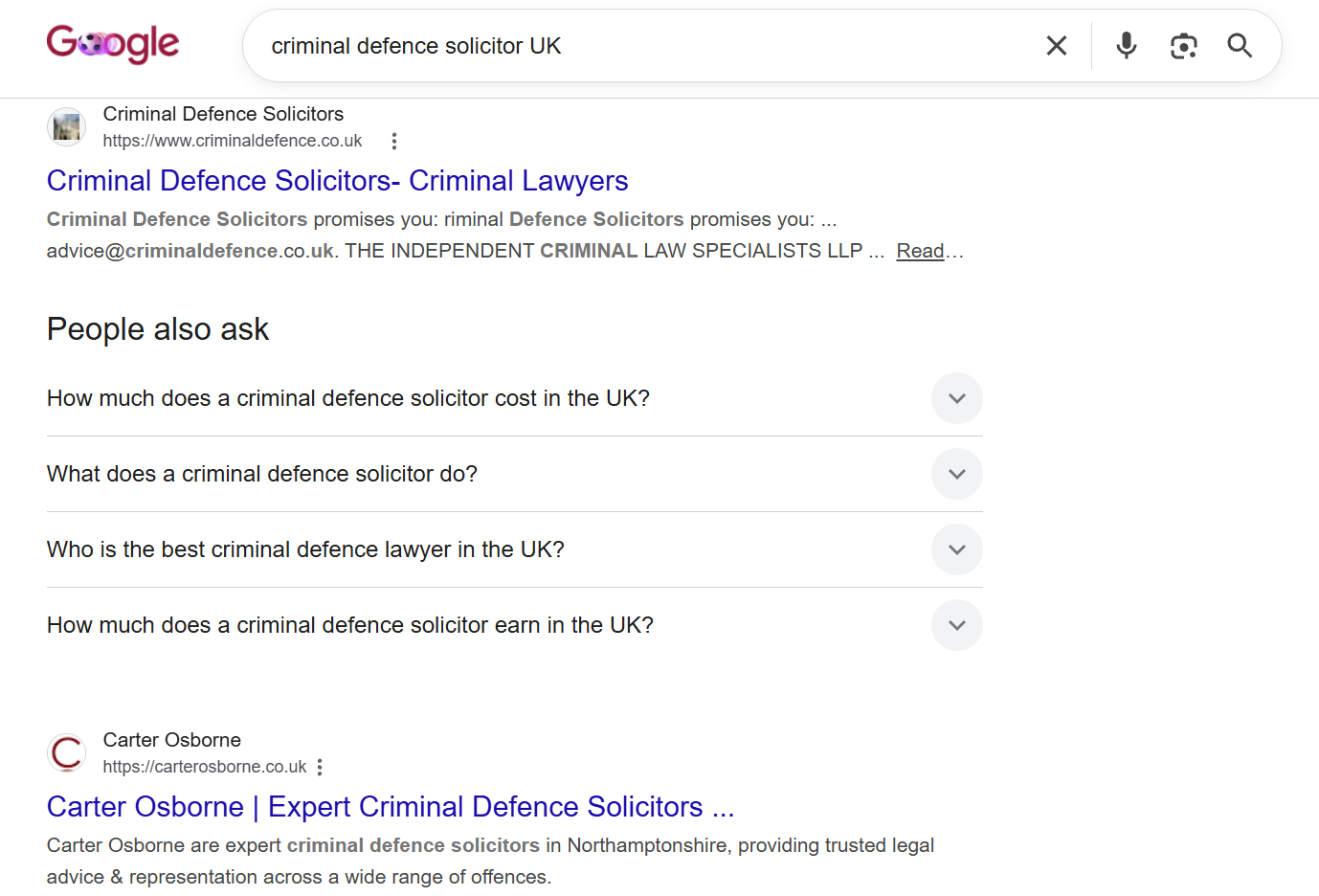
As you can see from this search, most are highly established national firms:
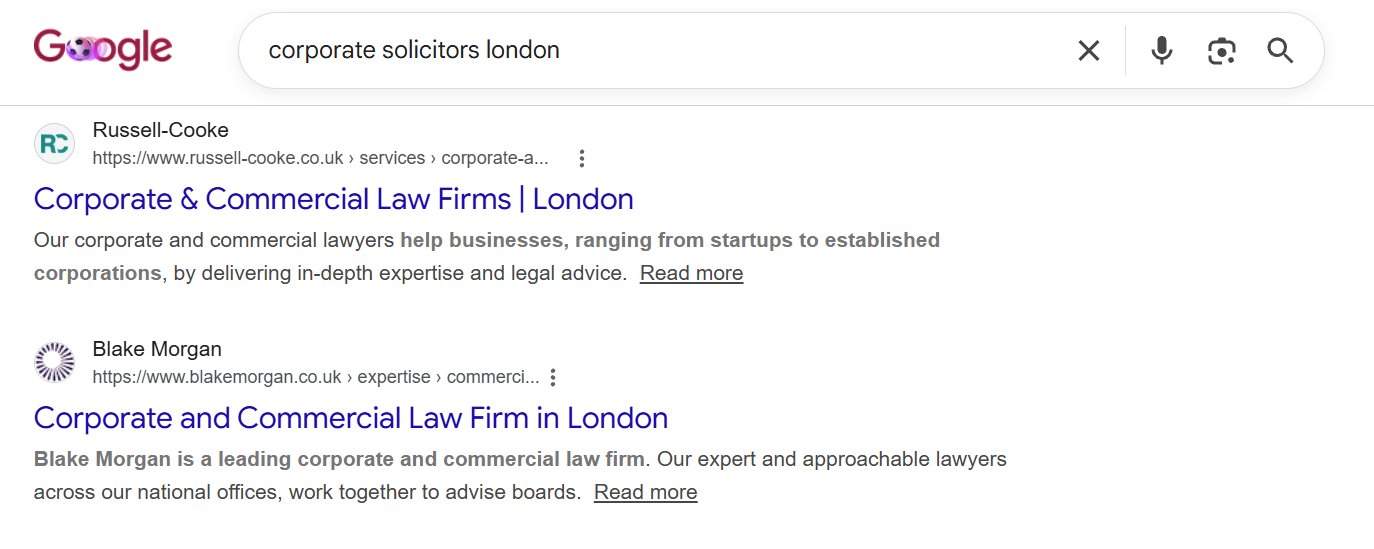
But when we narrow the search down to Kingston, we see independent firms without a national presence appearing:
Focus On Your Local SEO Strategy
Around 60% of local business leads come from Google Business Profile, making it an invaluable resource for law firms (SQ Magazine).
But one of the biggest mistakes we see is people treating their profile like a standard directory listing. It's not.
GBP is an active profile that requires frequent updates, client reviews, and clear information. The law firms that treat it similarly to social media will appear high in Google Maps results and generate qualified leads.
Make sure your profile includes:
Accurate business information
Legal service categories
Opening hours
Professional photographs
Regular updates
Positive client reviews
Create Problem-Focused Legal Content
When people are actively searching for legal support, they're trying to solve a problem. While service pages are important, you should also focus on creating content that aligns with what your audience is searching for.
For example, instead of searching for information like "What does a personal injury lawyer do?", you can save time and resources by creating content like "How much compensation can I receive for an injury in the workplace?"
Appearing high in organic search results demonstrates your expertise and supports lead generation.
Aligning Your Legal Content With E-E-A-T and YMYL
The legal industry is a high-trust sector, which means that your content marketing strategy must align with Google's quality standards.
This means creating content that meets YMYL criteria. Using a professional legal content marketing service can help you deliver high-quality content that turns visitors into clients.
Optimise for AI Searches
More people are searching for legal support through LLMs. ChatGPT and Perplexity searches continue to increase, and failing to appear in citations means you're leaving money on the table.
For example, if someone uses Perplexity to ask about how much personal injury compensation they might receive, it will scan relevant content and cite resources.
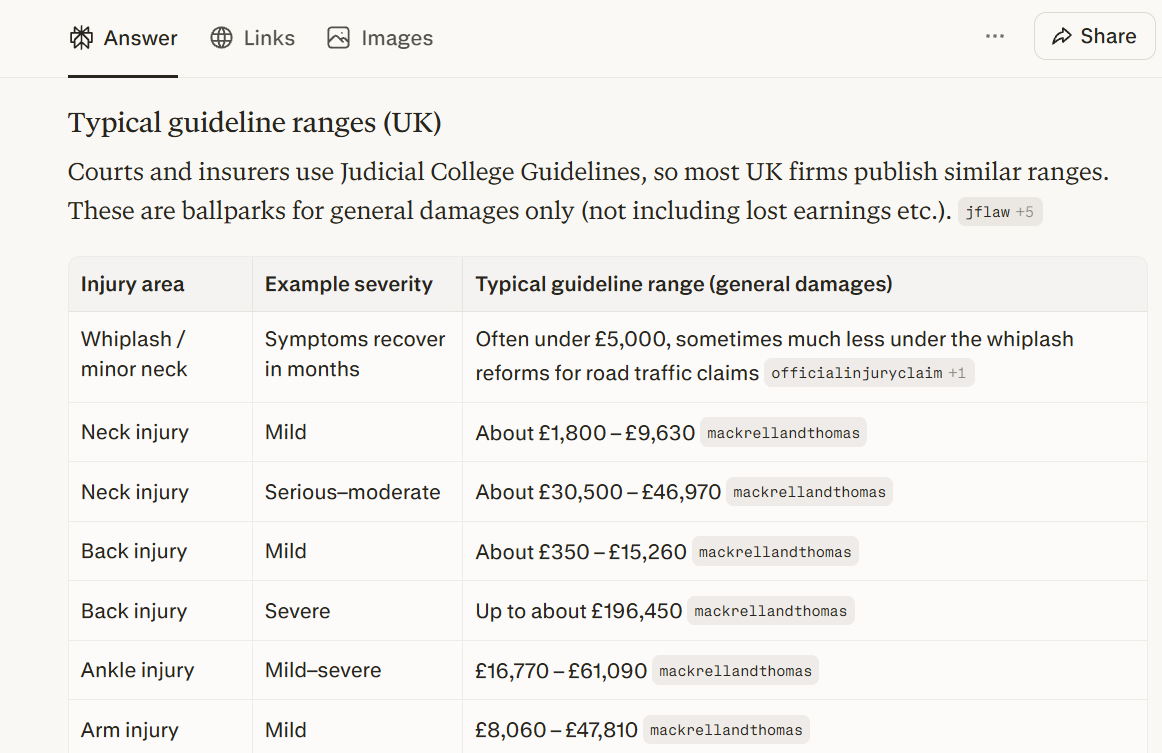
Appearing in these citations helps attract website visitors who are actively considering applying for compensation. That's why LLM optimisation is a key component of any modern marketing strategy.
Organic Search is Just One Piece of the Puzzle
So, we've covered how to attract the right leads to your website... but that's just one small piece of a larger puzzle. Because you'll also need to think about how to turn potential clients into long-term working relationships.
This involves applying law firm marketing techniques like conversion rate optimisation (CRO) and off-page SEO.
Improving Your Website Conversion Rates
Website traffic is a vanity metric. It shows that your base strategy is working, but the real results come from turning visitors into paying clients.
CRO is vital for client acquisition, but many legal SEO strategies focus on visitors and forget the importance of those prospects taking action.
Improving your conversion rates involves:
CTAs: Clear calls to action, such as "book a consultation" and "get legal advice"-not "learn more."
Contact Information: Ensuring it's easy to view and access your contact information via forms and direct links to email and phone.
Trust Signals: Clearly displaying your accreditations, reviews, testimonials, case studies, and other trust signals.
Off-Page SEO
Off-page SEO builds your reputation and ensures that people view you as a trustworthy provider. For example, when high authority legal websites link to your website, it demonstrates your professionalism.
Building backlinks can be hard, but a reputable digital PR agency can support you through the process. You can also use legal directories, the Chamber of Commerce, and local business directories to build citations.
Technical SEO
Technical SEO is often overlooked because it's behind the scenes. However, user experience directly links to client acquisition rates.
For example, if someone lands on your website but it's not responsive on their mobile device, has poor navigation, or loads slowly, they are more likely to click away and choose a competitor.
Simple things, such as measuring your website against Google's Core Web Vitals and running regular audits to identify any issues.
Consider Investing in Legal SEO Services
A successful legal SEO strategy requires continuous monitoring and optimisation to stay competitive.
As one of the UK's longest-running digital marketing agencies, we specialise in helping law firms attract high-intent leads by assessing progress and making changes to your strategy.
Whether you want to enhance your local search presence or scale to new practice areas, our specialists can consistently help.
Please get in touch for a free proposal today.
Frequently Asked Questions
Why is Local SEO so important for legal practices?
Even if you're a national or international firm, the fact is this: the majority of high-intent legal searches are local. Research also suggests that Google's Local Pack accounts for 44% of law firm clicks, and firms in the top three pack results receive 93% more action.
When you have an optimised Google Business Profile, you can improve your local visibility, leading to more enquiries.
How long does it take to see results from law firm SEO?
SEO isn't an instant thing; most strategies take 6-12 months to show meaningful results. However, it's more affordable than Google Ads for increasing your visibility and can generate regular high-intent leads.
Which types of legal backlinks hold the most weight?
Instead of targeting general publications, you should focus on building links from authoritative sites in the legal and educational sectors (.edu domains). Listing your law firm in legal directories also builds authority.