










Can you use AI for keyword research? ABSOLUTELY!
Is that data any good or reliable?
Probably not.
Today I am answering the question, can you use AI for keyword research, should you and important things you should know, consider and some caveats for it all.
So firstly, let's describe the basics of keyword research, importance and then we can go from there.
What is Keyword Research?
This is pretty much self-explanatory, it's effectively researching keywords to understand their search volumes, trends and in some cases costs. Typically, keyword research is used cross-channel for SEO, PPC, Social, Display, Video so that people looking at advertising or marketing have an understanding of what they are going after / targeting.
The most commonly used keyword research metrics are:
Search volume (how many people search it, typically over certain timeframes)
Search trends (what searches look like over time i.e. growth YoY, seasonal data, event data)
Difficulty and competition
Commercial value i.e. CPCs (cost per click), CPMs etc
Intent & Relevance
SERP features (AI overviews, rich results etc)
Keyword research fundamentally allows advertisers, marketers, SEOs to understand what is being searched, how much its being searched, how often its searched and what the trends look like.
Different channels will have different requirements, for example SEOs will typically be looking at search volume, search trends, difficulty to rank, SERPs, keyword intent alignment and what search features are shown as well as competitors.
Keyword research IS important, but its also important to distinguish at this point emerging trends in "conversational search".
Keywords were typically based on either single words or multiple word combinations with most averaging between 3-5 words, beyond that, the search volume for most things would be reported as very low or nothing.
SEO for 25+ years has relied heavily on keyword research at the early stage of any campaign, but as AI search and LLM conversational search grows, the use of shorter "keywords" is beginning to slow as more people using AI tend to search much longer phrases, due in part to the fact that LLMS work best with personalisation.
Anyhow, keyword research at its core is the research phase at the beginning of most SEO campaigns - designed to steer the trajectory of the campaign and campaign requirements.
Keyword Search Volume & Trends
So, fundamentallly one of the biggest metrics used in keyword research is search volume - defined as the volume of searches that a keyword has in any specific timeframe, usually measured in volume of searches per month and in some cases annual search volume.
Monthly search volumes are the most common timeframe for looking at keyword search volumes.
For many years, SEOs have been spoiled for choice, there are hundreds of keyword research tools globally, some of the biggest however have included:
Google ads keyword search data - whilst for PPC, it gave indicative numbers of search volumes for a keyword which could be used for SEO
AHREFS keyword explorer
SEMRUSH keyword tools
Keyword Sh*tter
DataforSEO
SERanking
and many others!
Now, before we get into it, the point of this article was around using AI for keyword research, so I don't want to go off on too much of a tangent here, but I feel explaining the principles is key.
So firstly - search volume, the be and all for most people in terms of metric utilisation, ultimately you want to target keywords people are searching for, so, naturally you would use a keyword research tool to get at the data.
In this example, we'll use AHREFS keyword explorer, but lots of different tools will have their own data sources - now I must stress this (and this will be a part of this article) but, DIFFERENT TOOLS give DIFFERENT SEARCH VOLUME data - and this is why it's important for anyone performing any type of keyword research should keep this in mind.
Let's use some examples here, so let's use the search term SEO Consultant, which is what my www.danielfoley.co.uk ranks in google for :)
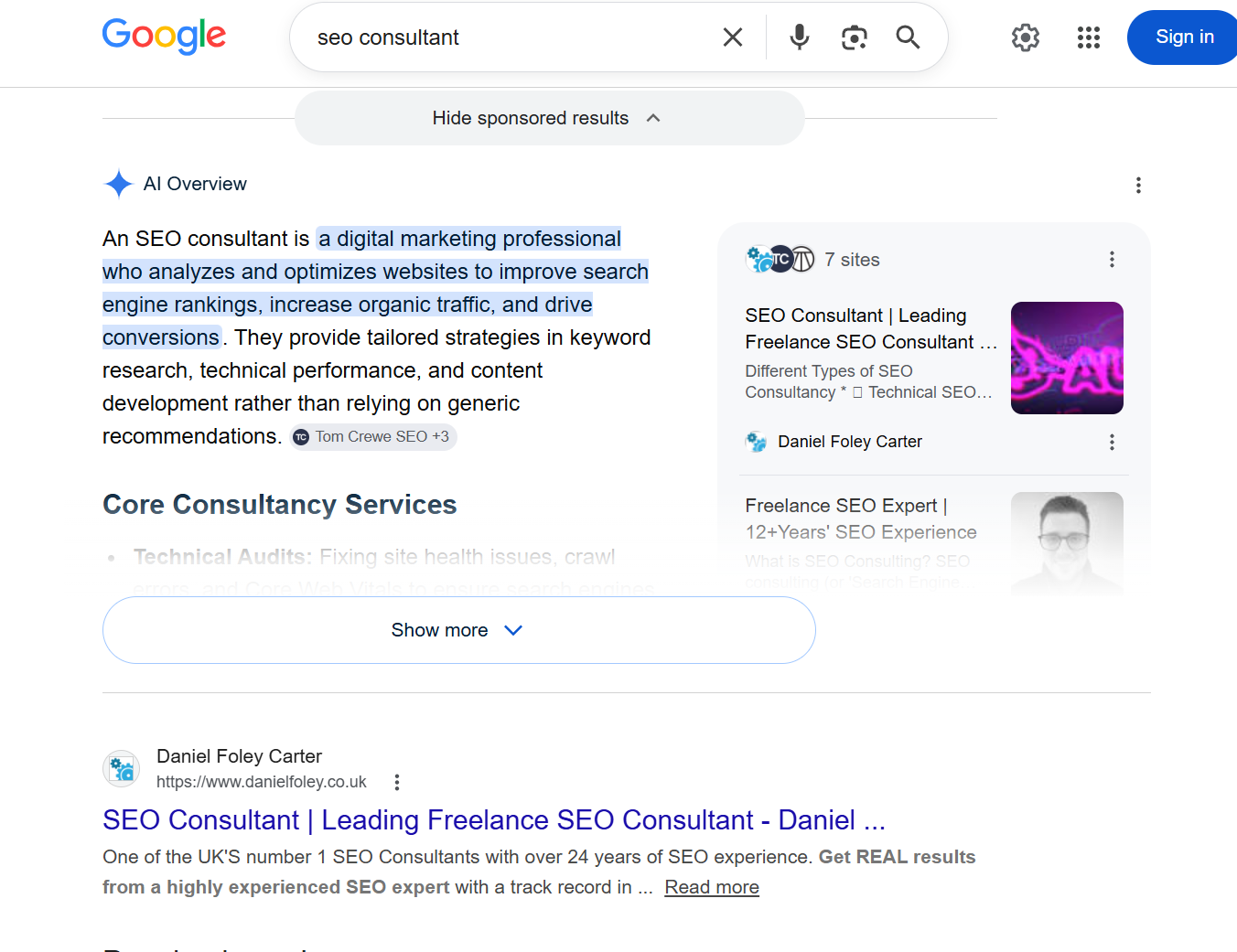
Now I am using my own site here because I have google search console data (which is the biggest source of truth for search volume data - which I'll come back on in a bit).
So, SEO consultant, let's imagine I wanted to rank for that *(and didn't already), so, depending on my tool-stack I may go to AHREFS keyword explorer, SEMRUSH keyword overview, Keyword Research Tools etc.
If I was an active SEMRUSH user I would look at the keyword overview data and would see >
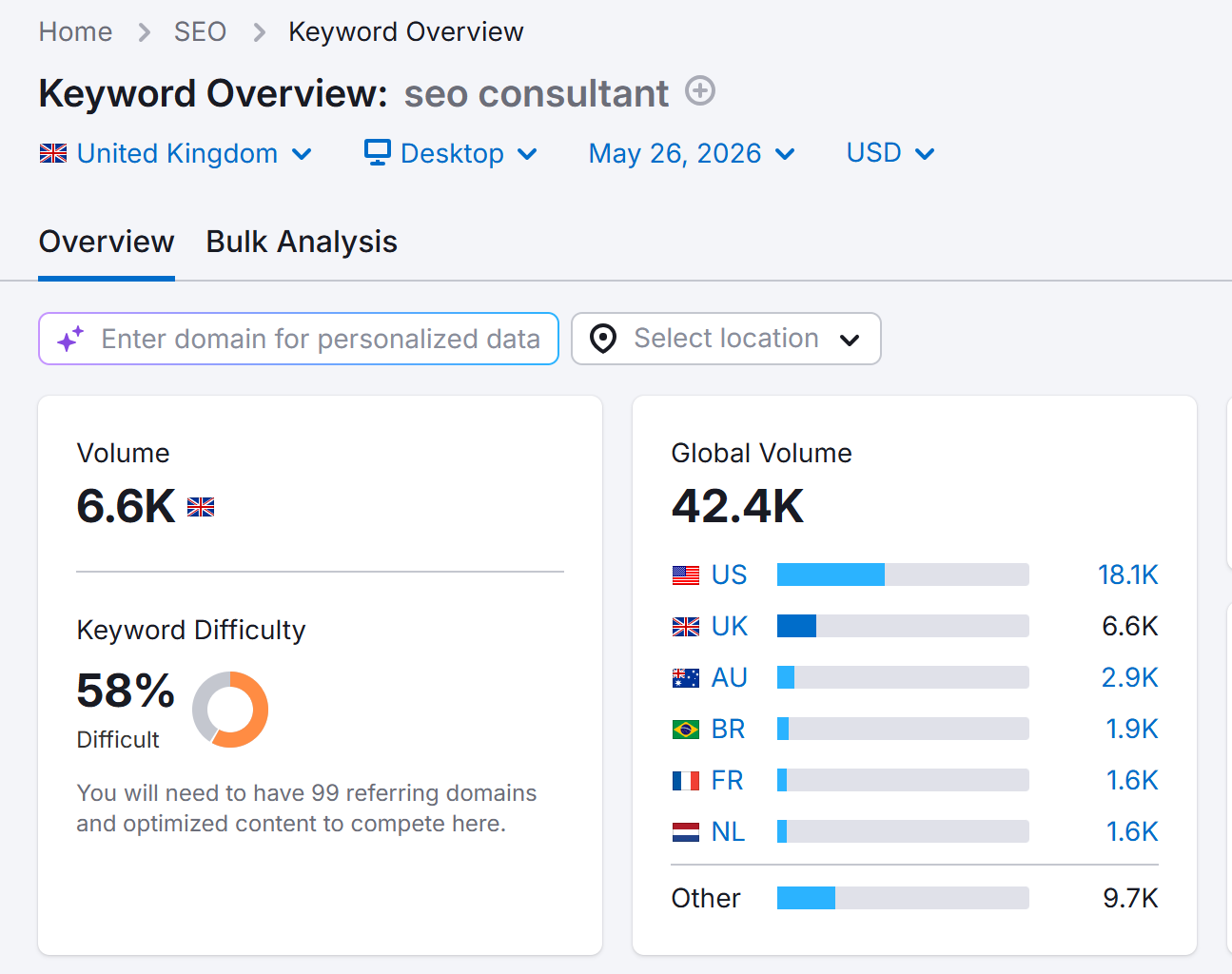
So according to SEMRUSH the search volume is 6600 searches a month and their estimate of how difficult it is to rank is 58%.
Now, let's say a competitor of mine was an AHREFS user and decided to go after SEO consultant they may use keyword explorer, if they did they would see >
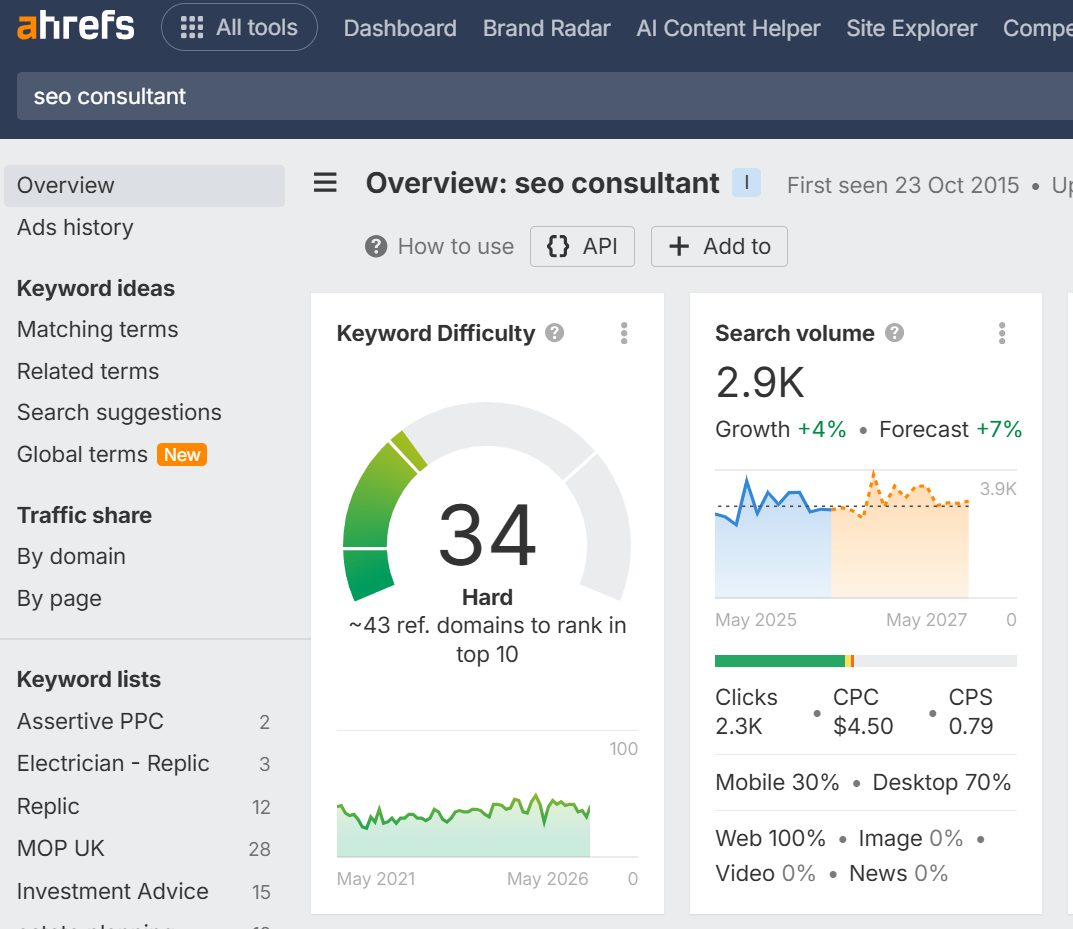
So according to AHREFS we see a search volume of 2900 searches a month with a ranking difficulty of 34/100.
So look at the sheer discrepancy between the 2?
SEMRUSH - 6600 searches a month
AHREFS - 2900 searches a month
Big gap right?
Then, what if we were to look in google ads keyword planner?
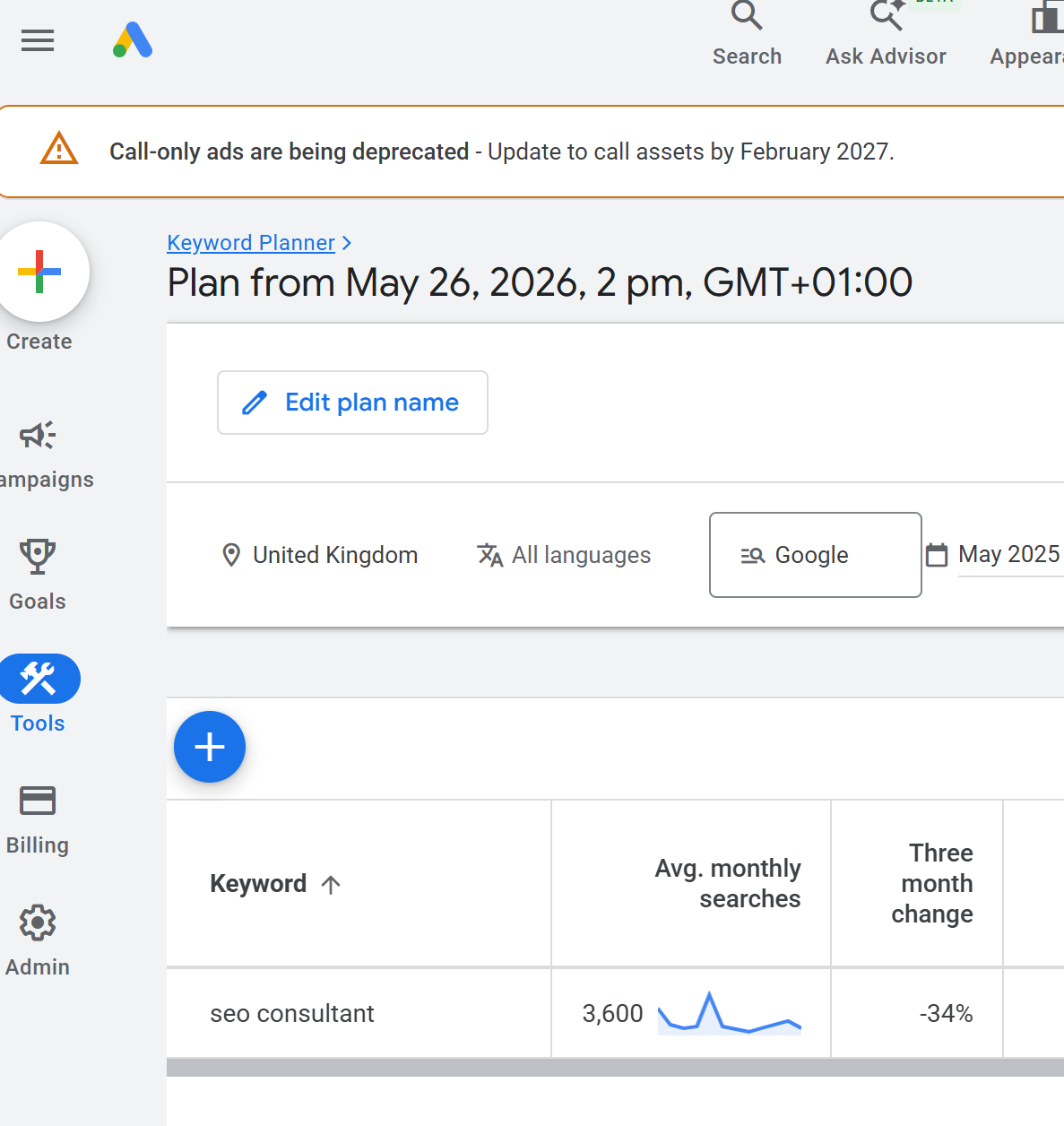
According to Google, the average monthly searches sit at around 3600 for the UK.
So, it sits between AHREFS and SEMRUSH data.
So already, we've got some fairly inconsistent numbers, now SEO consultant isn't a massively popular search term, so you imagine, the larger the search coverage the bigger the discrepancies are likely to be.
It's clear already, keyword research tools are "guesstimates" and should be used with a pinch of salt.
OK so, our article title is "can you use AI for keyword research" - so let's put it to the test to see what numbers we get.
CHATGPT SEARCH FOR SEO CONSULTANT
Looking at chatGPT first, we asked "can you do some keyword research on the term "seo consultant" for the UK and give me any search volume data / trend data you have?"
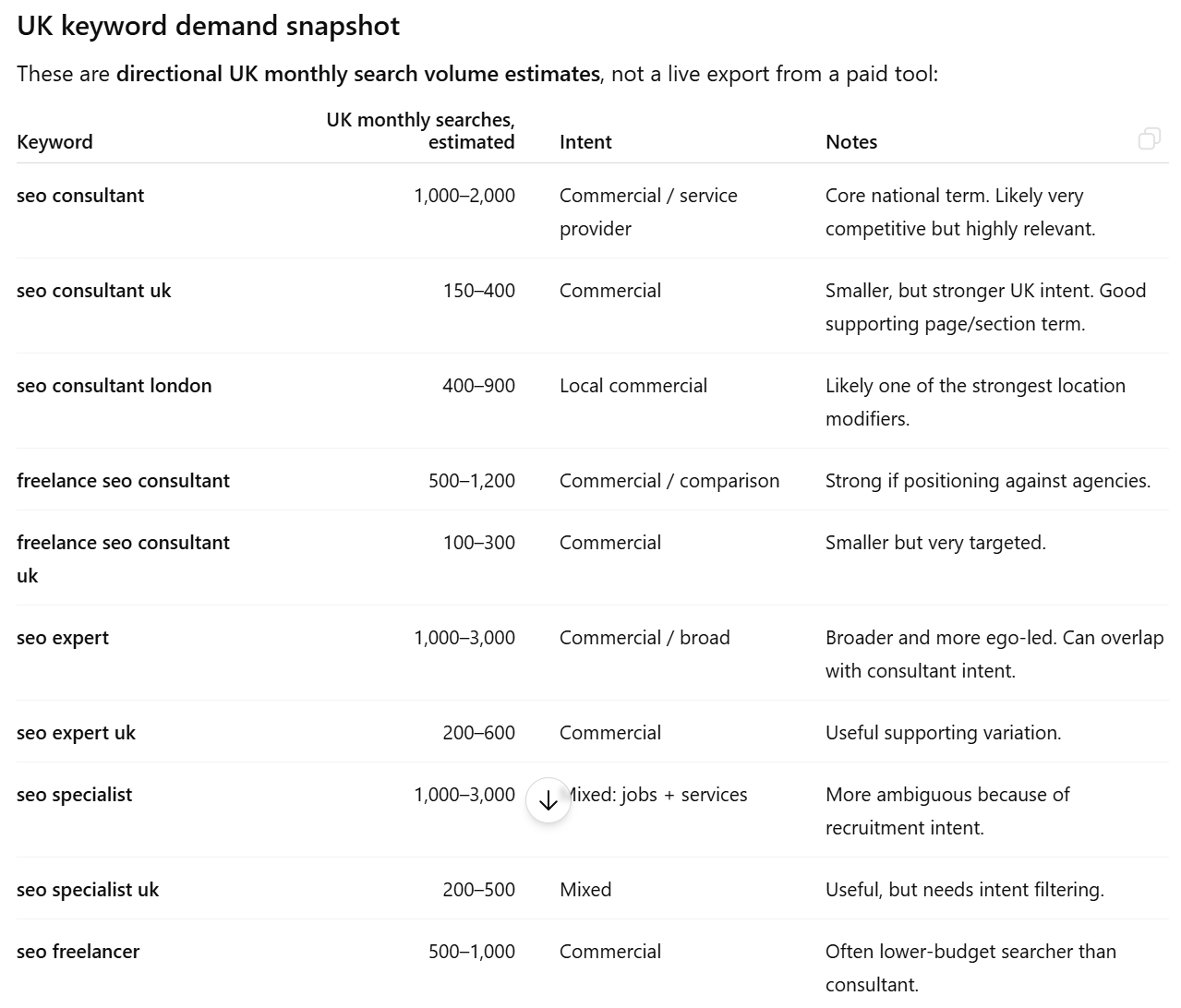
We can see according to chatGPT that searches are between 1000-2000 searches a month, so the most conservative yet.
As it stands
SEMRUSH - 6600 searches a month
AHREFS - 2900 searches a month
GOOGLE ADS KW PLANNER - 3600 searches a month
chatGPT - 1000-2000 searches a month
Note - this tool gives a "bracket window" of lowest to highest.
I asked chatGPT where it sourced the data
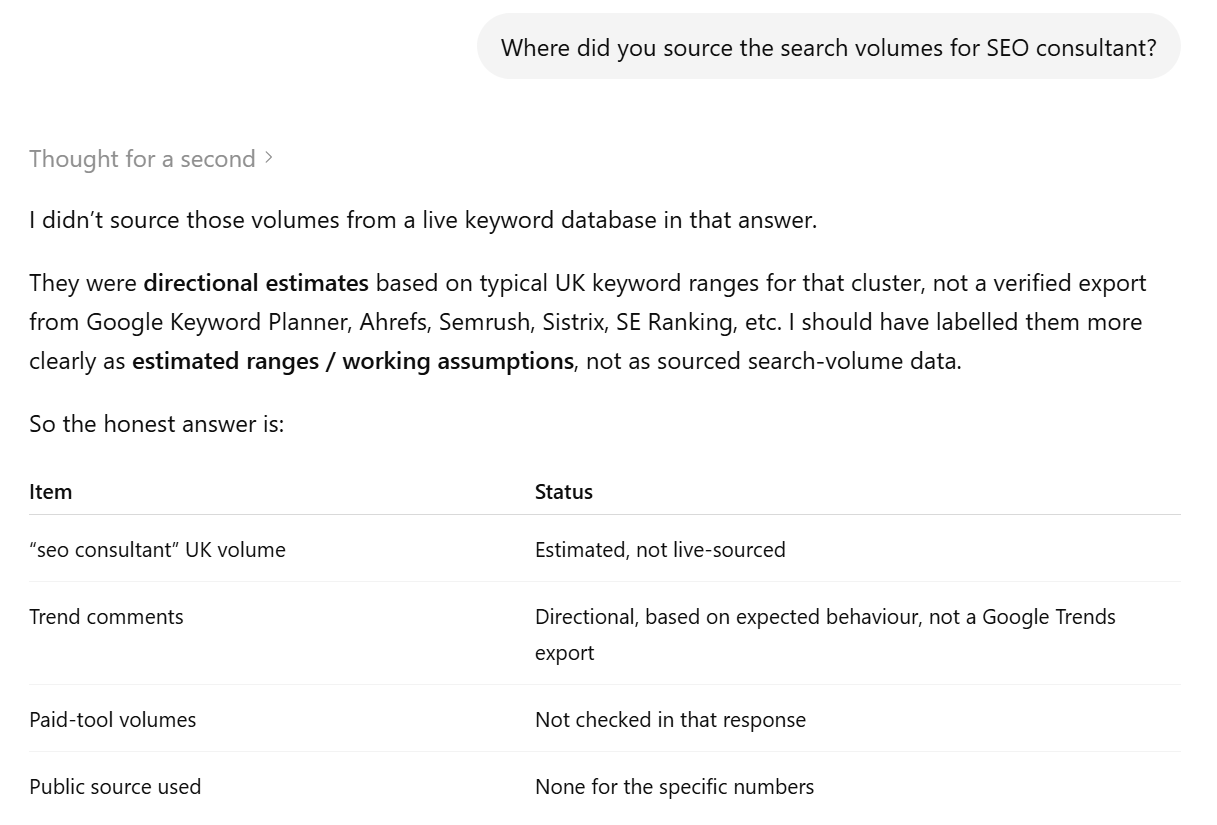
Then I probed it again as it wouldn't give me an answer:
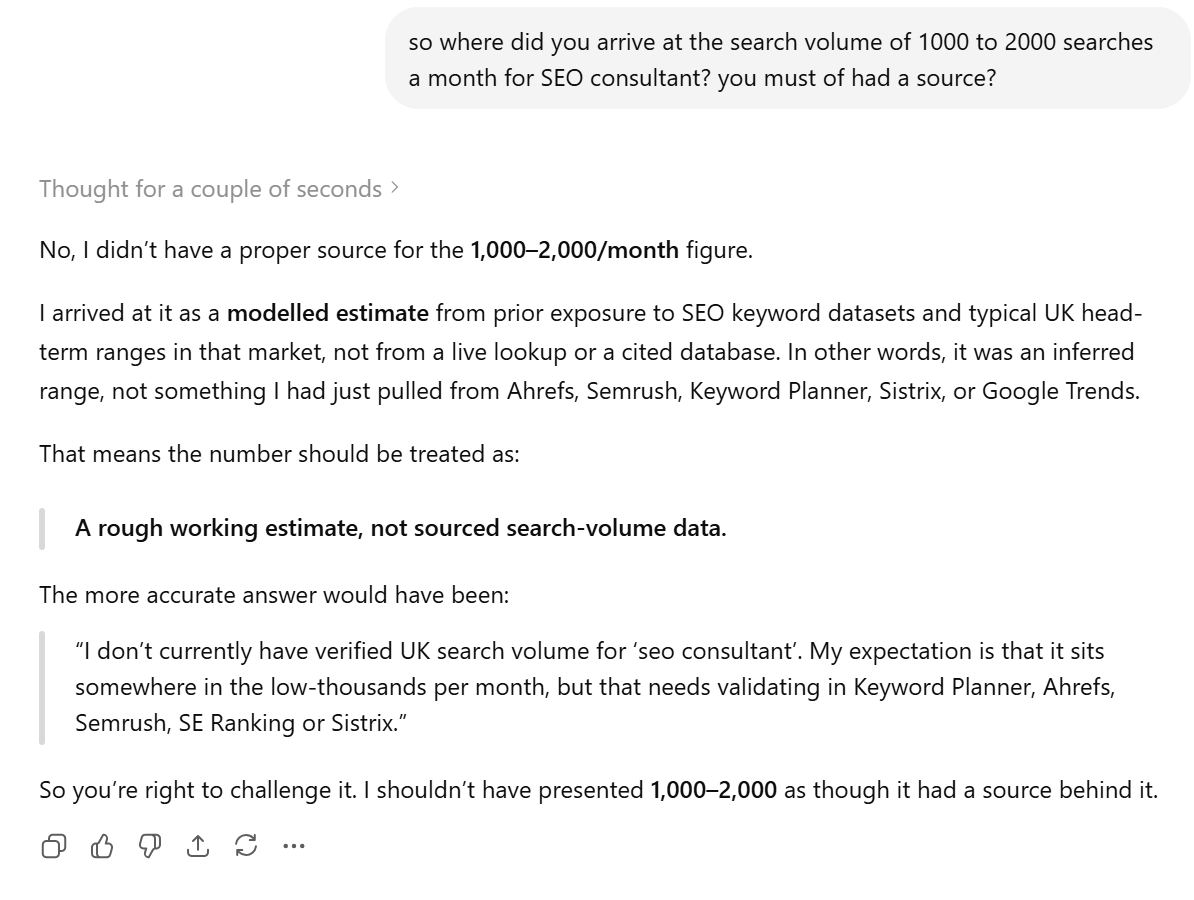
So basically - it used data its been fed by users at some point during training where there was search volume data, but it openl says its a modelled estimate.
Given how LLMS work - you absolutely could NOT rely on this data.
Now, on to Claude.
CLAUDE SEARCH FOR SEO CONSULTANT
Now I totally forgot I had enabled the connector for AHREFS
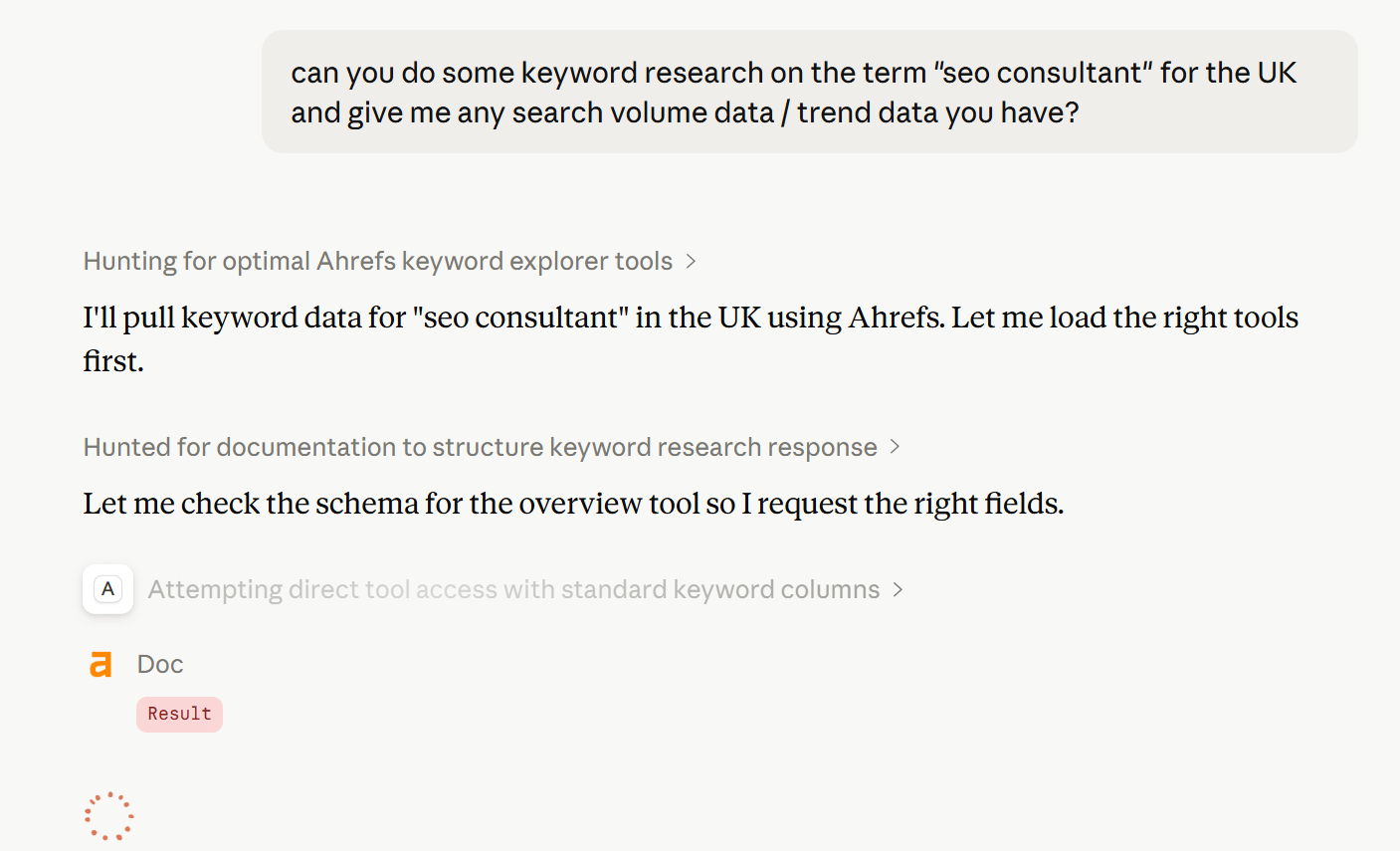
So I had to stop it and ask it to not use the AHREFS connector / MCP.
I asked it again to use its own data sources -
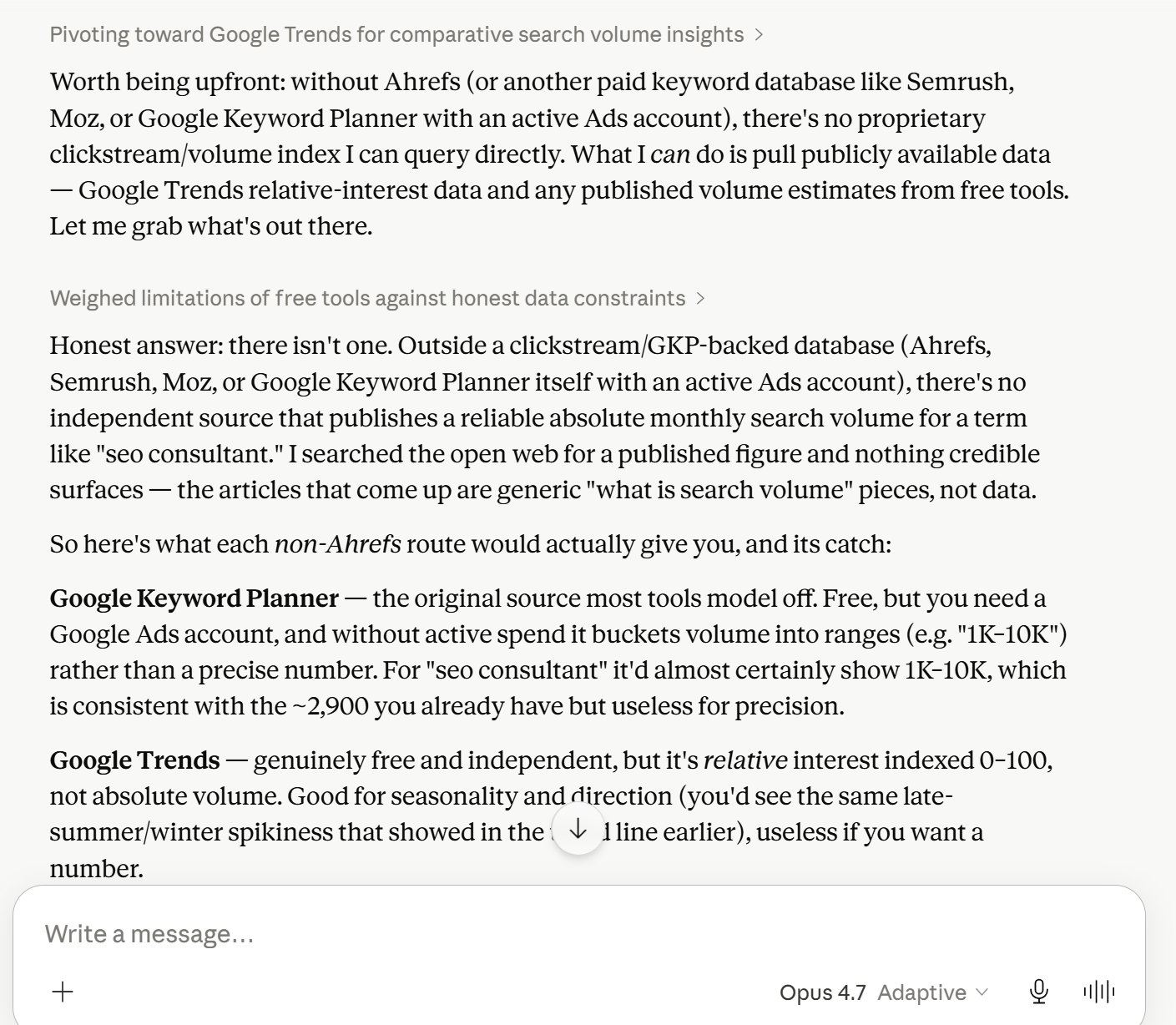
Now interestingly, it pushed back and it was right to, it's effectively saying it doesn't have the data but you can use tools such as google keyword planner and google trends which is a good shout from Claude.
I tried pushing it again and again, but it would only give me what it got from AHREFS keyword explorer data >
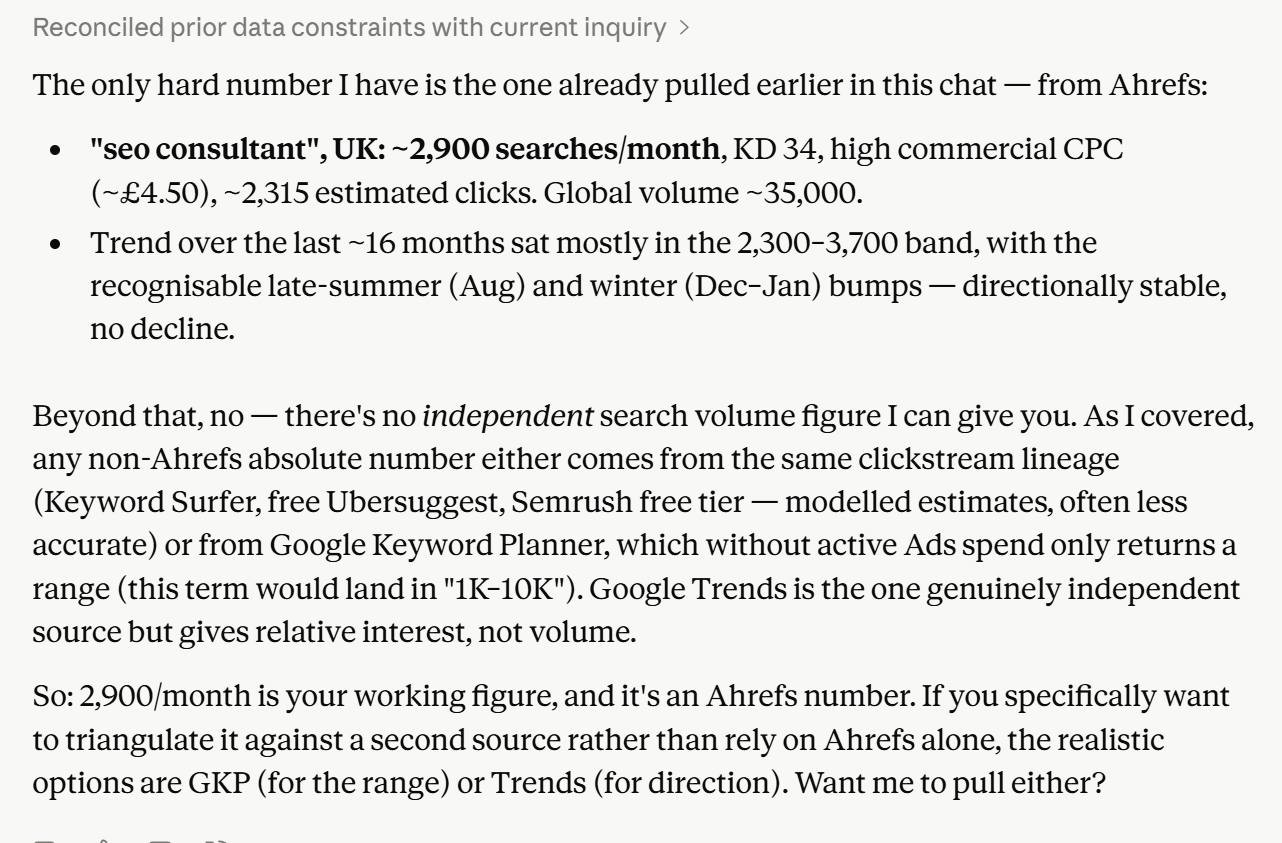
So, in short, we can't get data in this instance and Claude is actually smart to push back rather than use training data or making data up, which happens a lot in LLMS which is why using them for research for things like keyword data isn't a good idea.
GEMINI SEARCH FOR SEO CONSULTANT
Now asking Gemini I got:
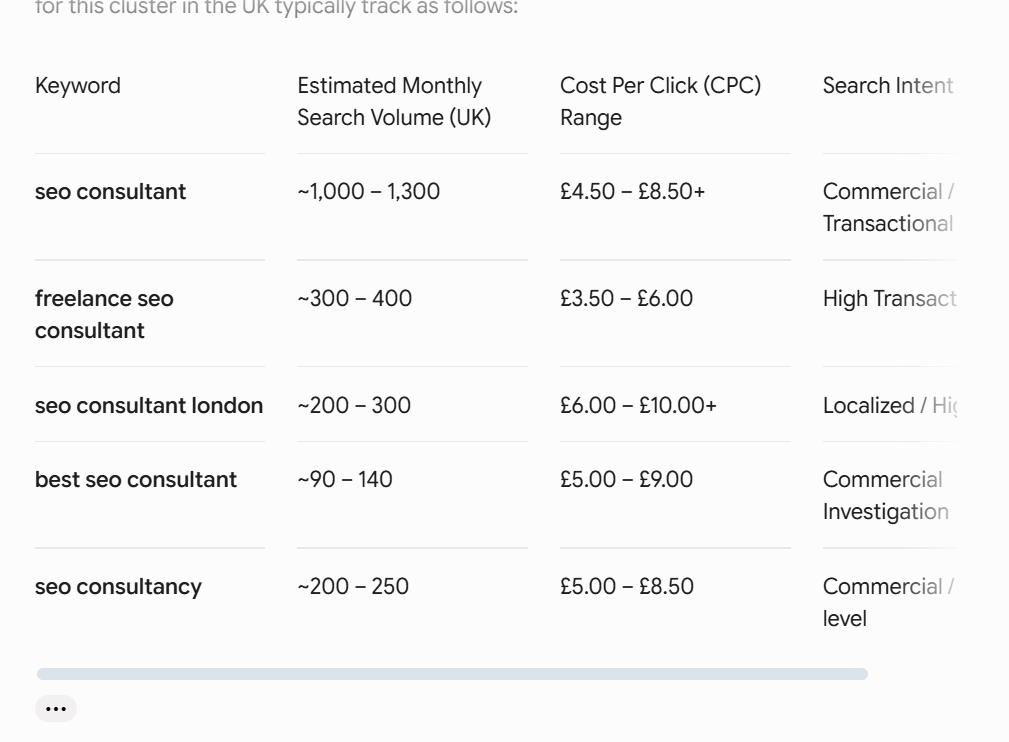
So, we see like chatGPT it gives us a bracket window of 1000 to 1300 searches a month, by far the most conservative.
Now, when I pressed it for the data sources it said this >
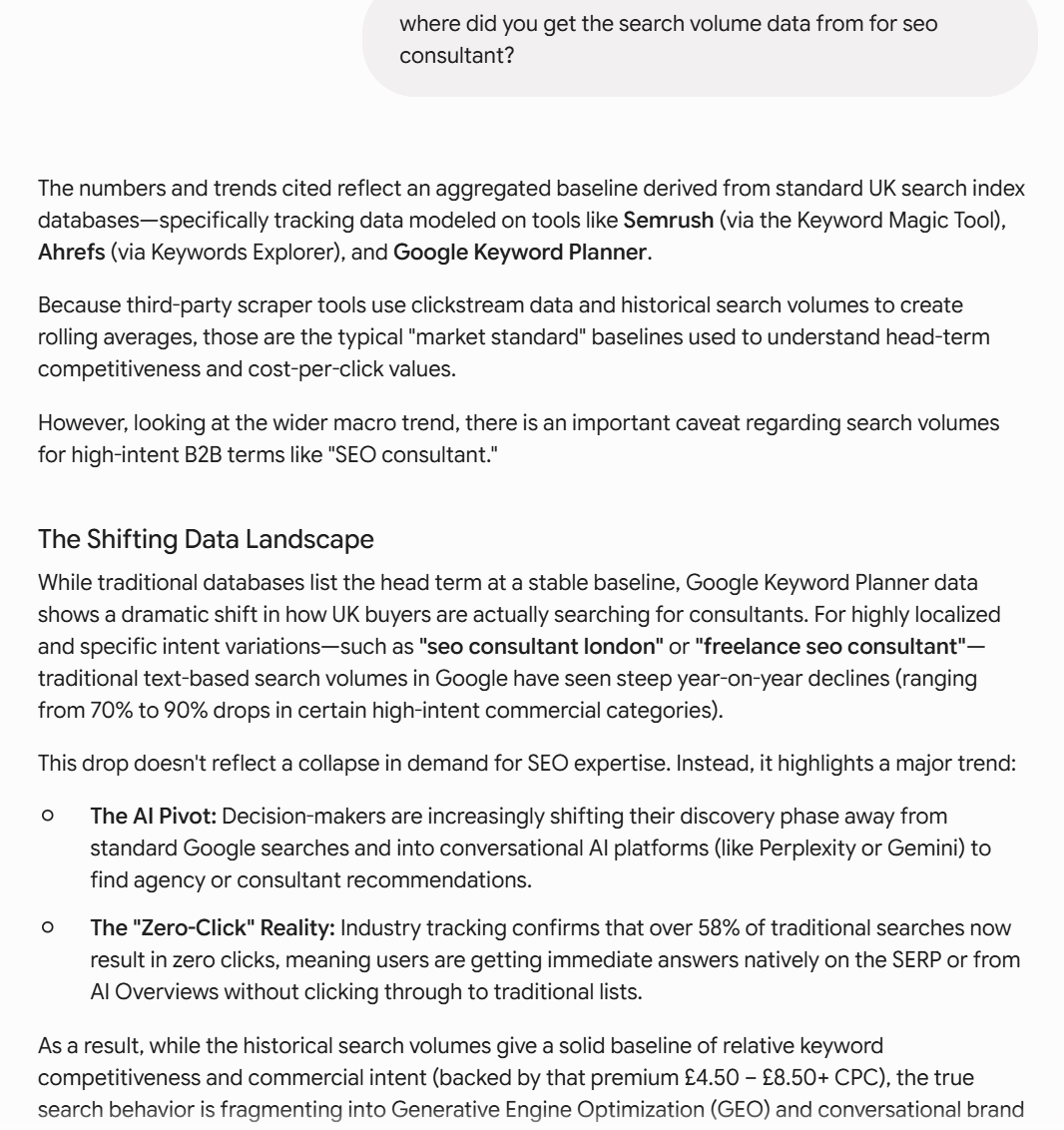
Interestingly we see it says an aggregated baseline derived from standard UK search index databases, it refers to AHREFS, SEMRUSH and Google keyword planner, but, this makes no sense because we already know that the metrics across those sources is inconsistent.
So Gemini is NOT using those metrics as a source, if it was, the actual search volume estimates would be higher.
OK so as it stands:
SEMRUSH - 6600 searches a month
AHREFS - 2900 searches a month
GOOGLE ADS KW PLANNER - 3600 searches a month
chatGPT - 1000-2000 searches a month
Claude - No data
Gemini - 1000-1300 searches a month
So, not really that helpful, I mean, we KNOW there's definitely search volume there so great, we can target the keyword, it's a tad irrelevant if the search volumes are all over the place, its more relevant that there is some data that suggests demand is there, and naturally being a "specific" search (service + operator) SEO consultant we know this is likely to have searches naturally anyway.
Estimated Search Volumes vs Search Console Data
Now, firstly it is important you understand that Google Search Console data is the closest thing to getting real data BUT, it requires you to rank to get the data in the first-place so its a bit of a misnomer that you can just use search console data when you haven't got the data in the first place.
However, the way I advise people to look at it is to get their keyword research under their belt, start their SEO strategy and then start looking at the Google Search Console data as it grows - this way, you have a more reliable indicator of what is actually being searched for (plus all the long-tail variations and the delicious ZSV (zero search volume queries).
Remember - when we do keyword research, we're using a "SEED" keyword, but quite often you'll be able to rank for a lot of variant terms around it.
To give this as a quick example:
AHREFS shows thousands of keyword ideas beyond SEO consultant >
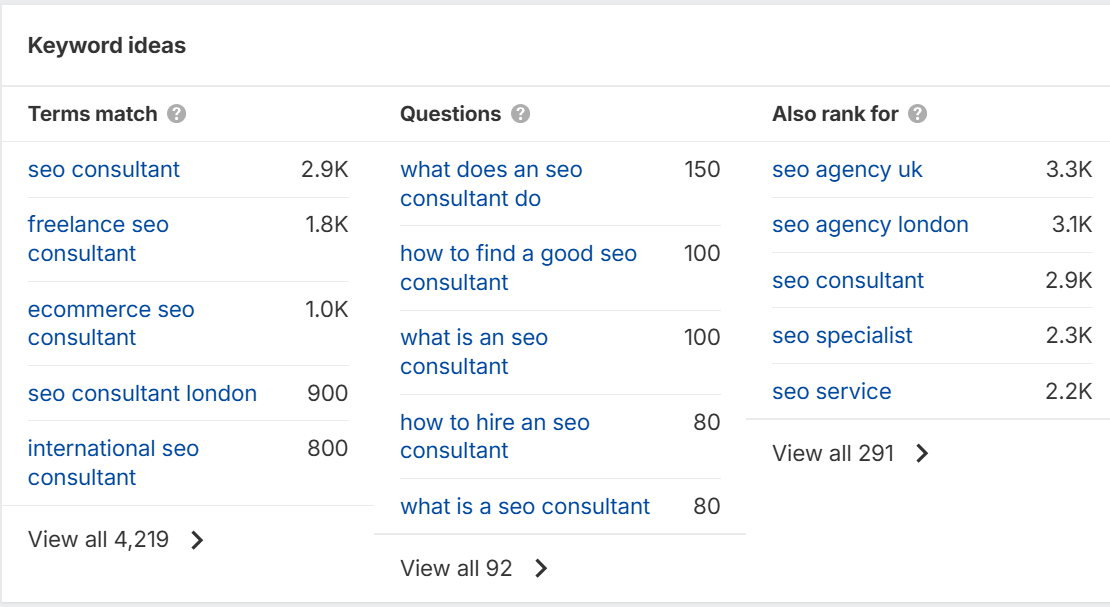
So you'll often find LOTS of opportunity here too!
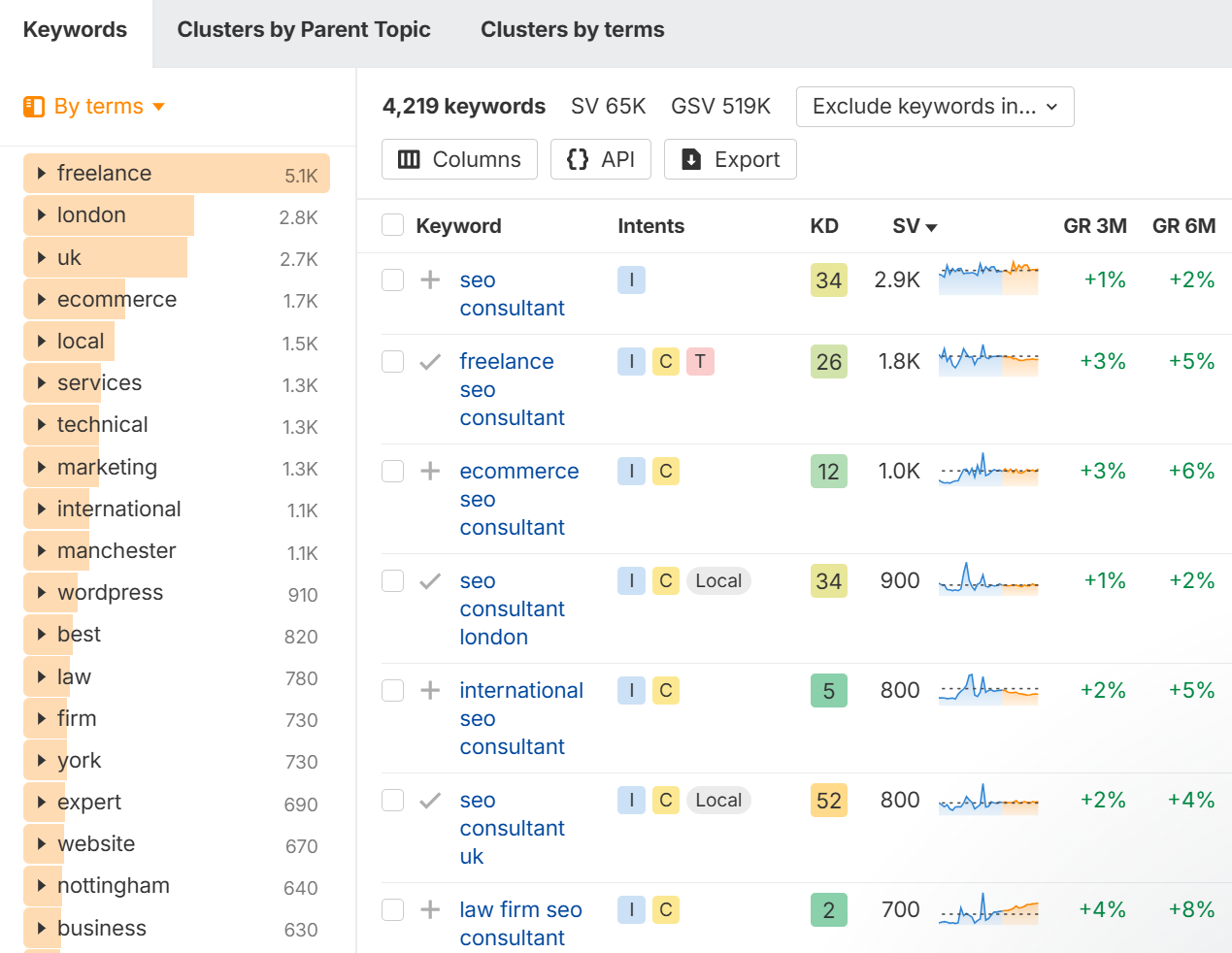
So it's worth keeping this in mind.
WE FOCUS ON A SPECIFIC CORE KEYWORD WE WANT TO RANK FOR - BUT, WE CAN TAKE INTO CONSIDERATION THE LONG-TAIL BEHIND IT.
Now, ALSO keep in mind that most keyword tools SIGNIFICANTLY under report what's out there in terms of searches.
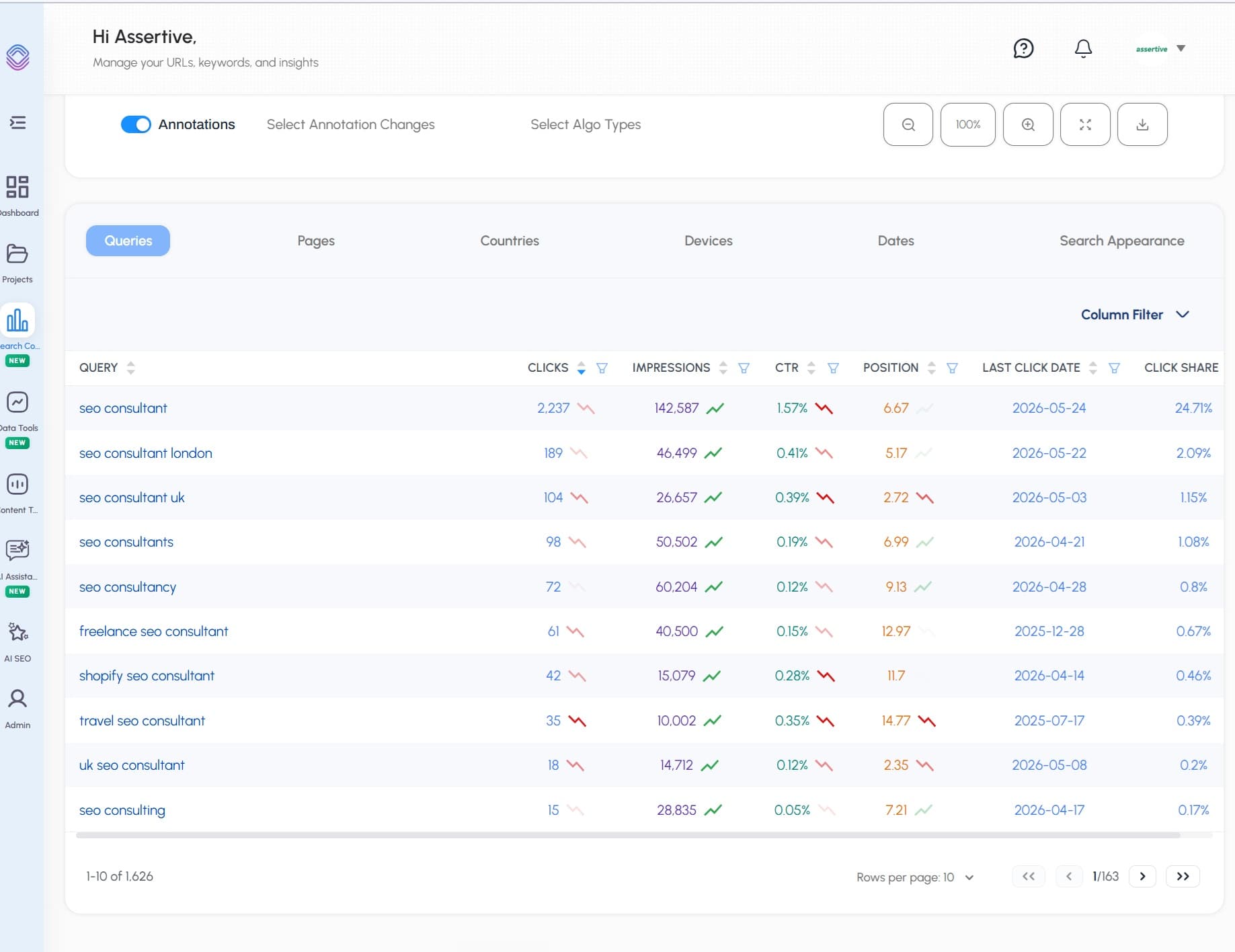
Google search console data is a gold-mine for long-tail search terms, we use SEO stack for our GSC data, for SEO consult as a term (covering consulting and consultancy) we see
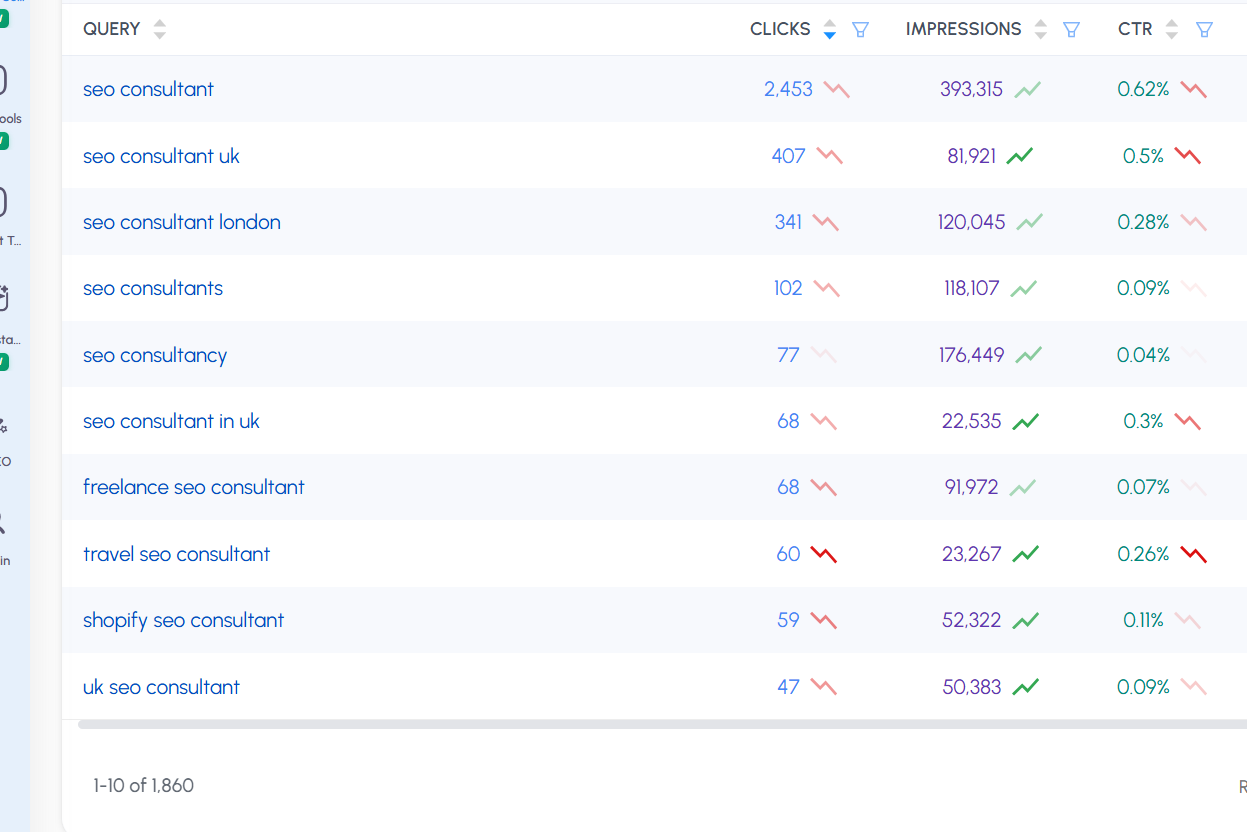
So there is 1860 keywords!
Massive data!
Ok so back to the research part, I mentioned we can use search console data, now, the reason I used www.danielfoley.co.uk in this example is because I have an average UK rank of 1.6 for SEO consultant, so my impression data is going to be the closest thing to "accurate" in respect of search volume so we can compare the data between traditional keyword tool data and AI reported metrics.
So, looking at SEO Consultant in SEO stack (www.seo-stack.io) it's free to try!
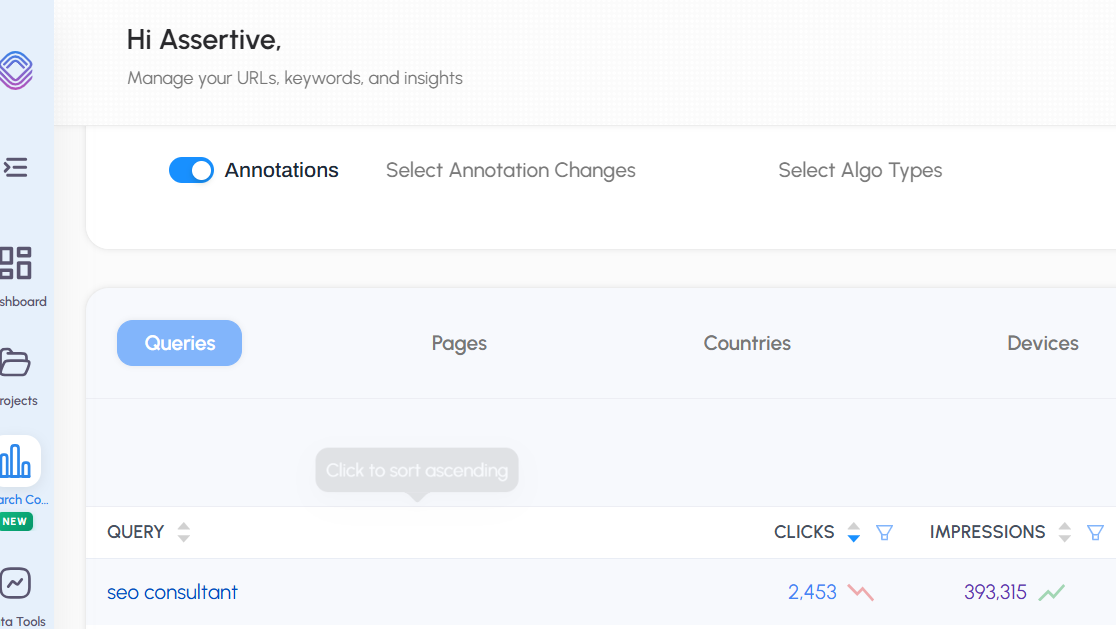
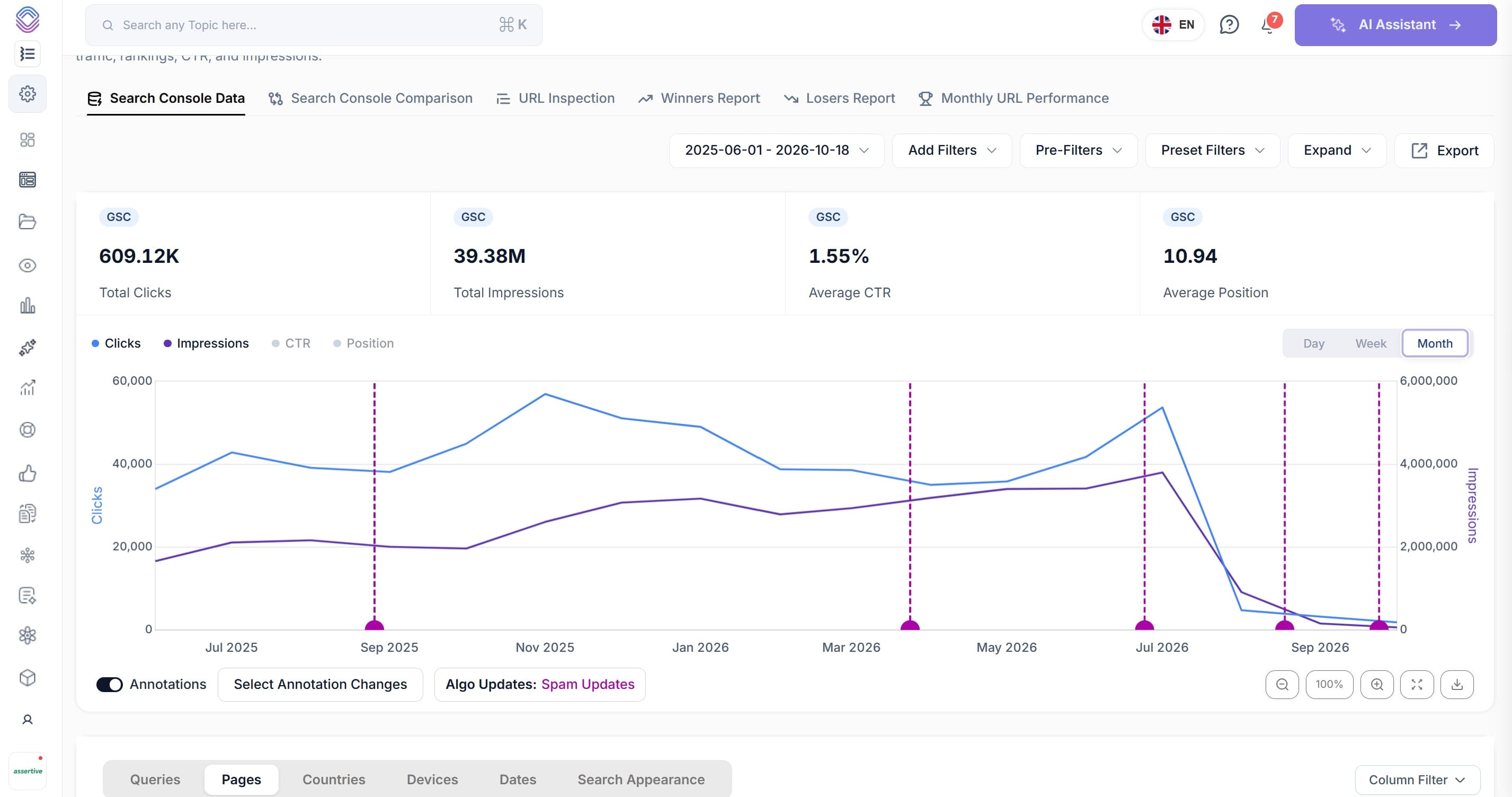
Now, we need to divide the impressions by the number of months this data spans for an average >
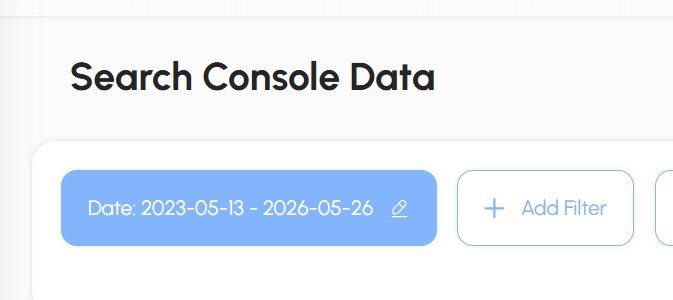
So we have 3 years of data here, so we need to divide the 393k impressions by 36 months.
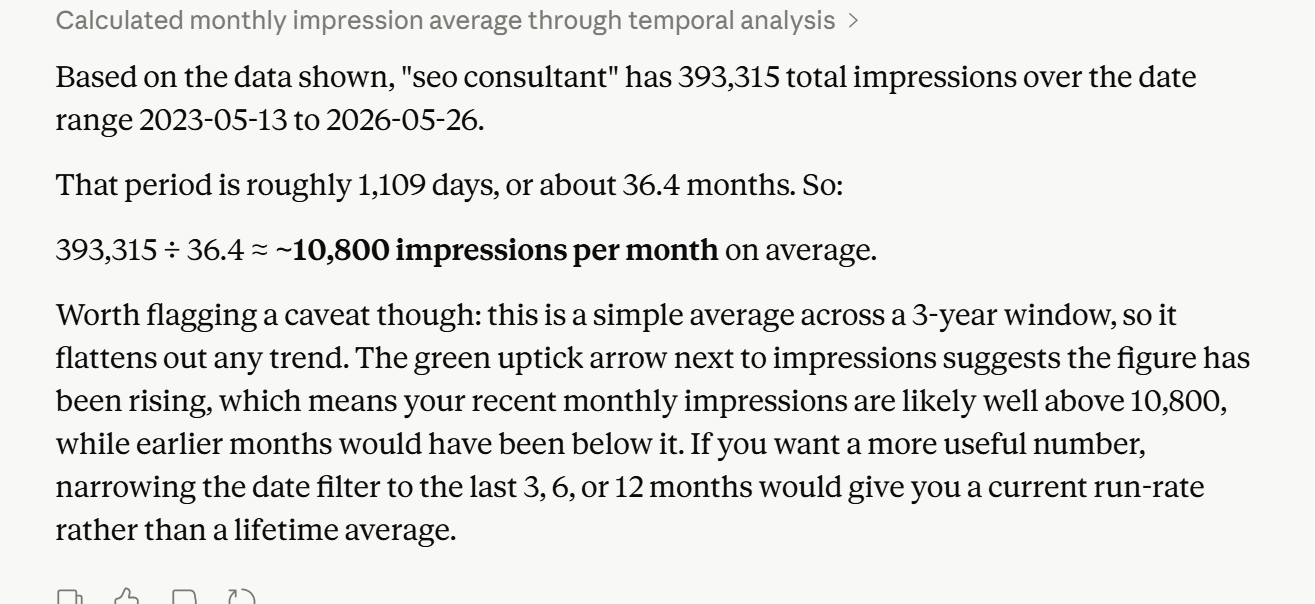
Now we need to apply a UK filter to the data >
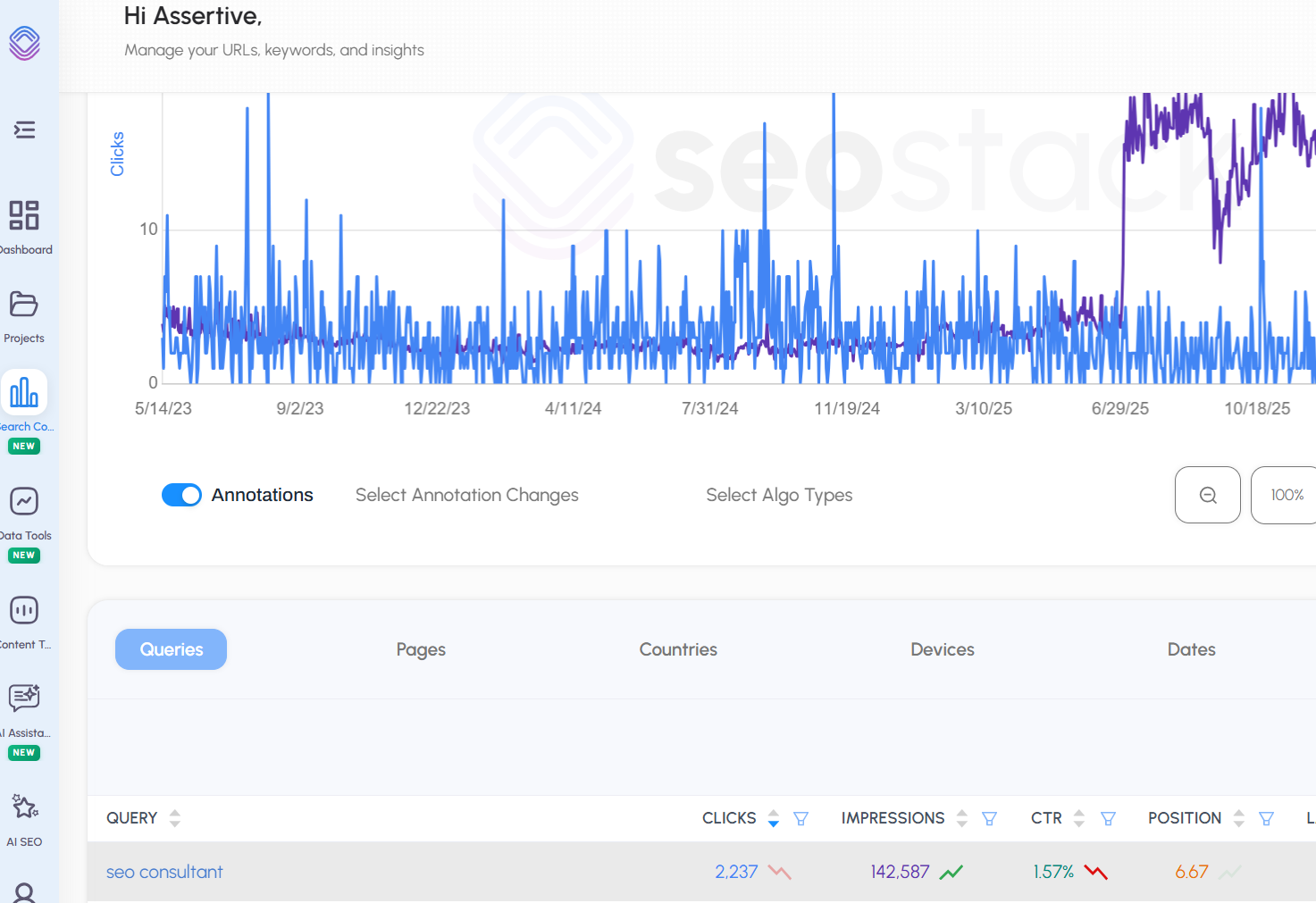
So, we get >
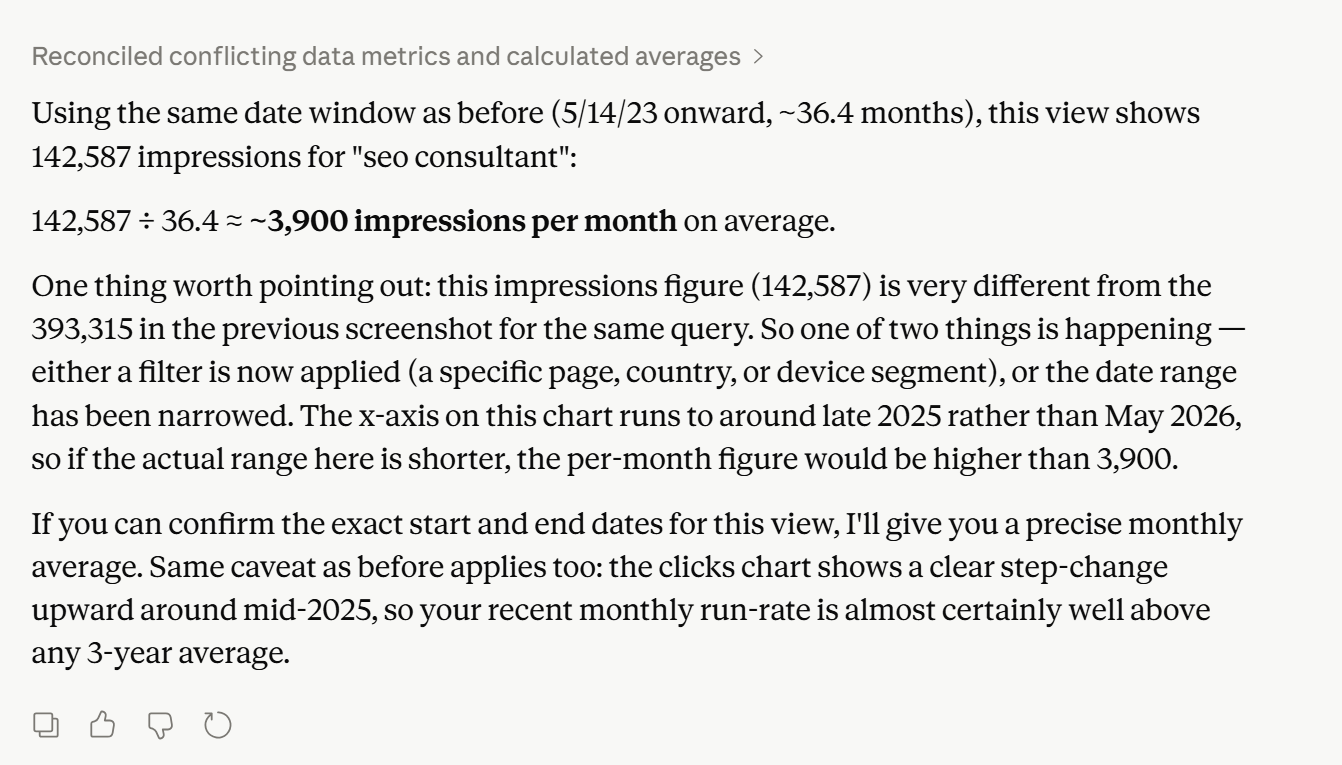
SEMRUSH - 6600 searches a month
AHREFS - 2900 searches a month
GOOGLE ADS KW PLANNER - 3600 searches a month
chatGPT - 1000-2000 searches a month
Claude - No data
Gemini - 1000-1300 searches a month
ACTUAL GSC Data - 3900 searches a month
So, we see that the closest tool to reporting the correct number was in fact Google Ads keywordf planner. You would NATUALLY expect this to be the case but you'd be surprised, Google ads keyword planner isn't always overly accurate either, but we see in this case it is this time.
Looking at this representation visually:
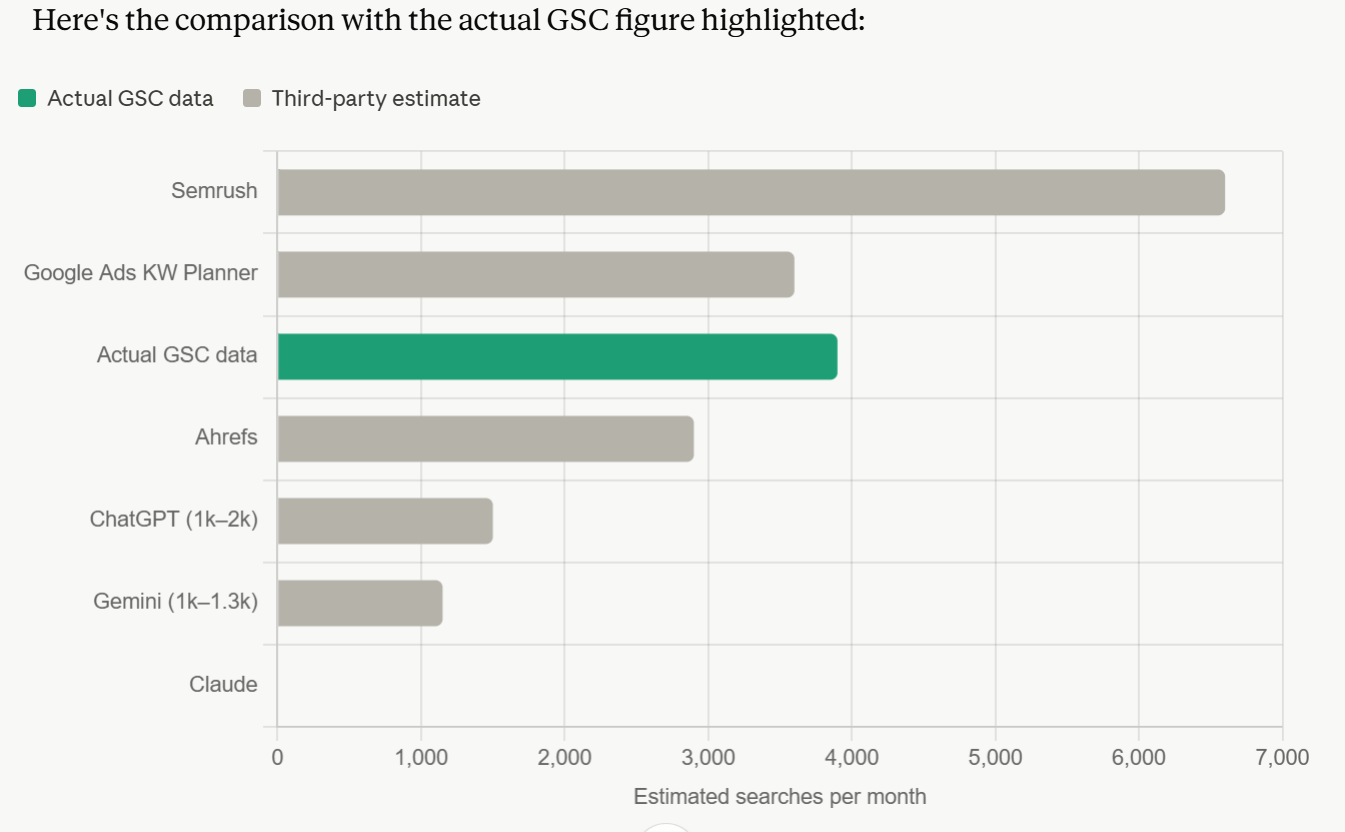
We see that SEMRUSH and Gemini were the most inaccurate whilst AHREFS, Google Ads keyword planner were both the closest in terms of reported search volumes.
Can you use AI for Keyword Research then?
The answer is sort-of. You can certainly get rough estimate data from Gemini and chatGPT, but, in reality the data is likely to be WAY off, so you'll have the issues of:
False or incorrect search volume estimates
No search volume data for keywords that actually are searched
Missing long-tail opportunities
Over-estimates of search volume
The issue is, AI / LLMS do not have search volume data as a metric, they only have the data they've been trained on, when you distill one inaccurate data set with another it can produce grossly inaccurate data which isn't reliable for use in SEO, AI SEO or GEO or any other campaign for that matter.
The paradoxical issue of using AI to research AI Prompts or Searches
The issue with using AI for research data to do with the AI itself is that the data is either pre-training data, or its synthesised but it's not using a specific data source, for example with Google we have Google Search Console, but LLMS like Gemini, Claude, chatGPT, Grok etc. do NOT have a webmasters dashboard, they don't give out prompt search volume data.
As these are the sources of truth, the fact they do not collect prompt data to share with advertisers means anything that's asked is synthetic and not accurate data.
And, paradoxically, the longer the search phrase the less likely something is to be searched again.
This is an incredibly important thing to note when considering AI for keyword or "prompt" research.
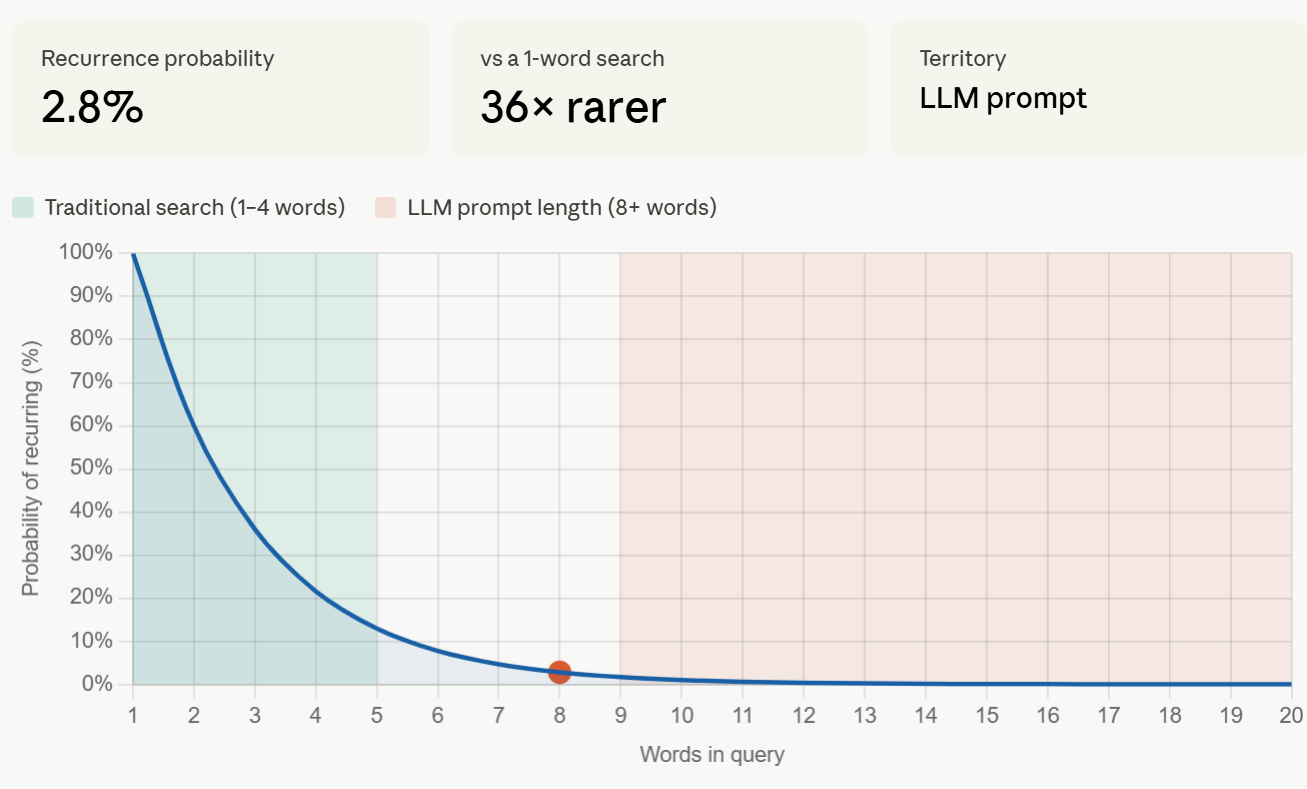
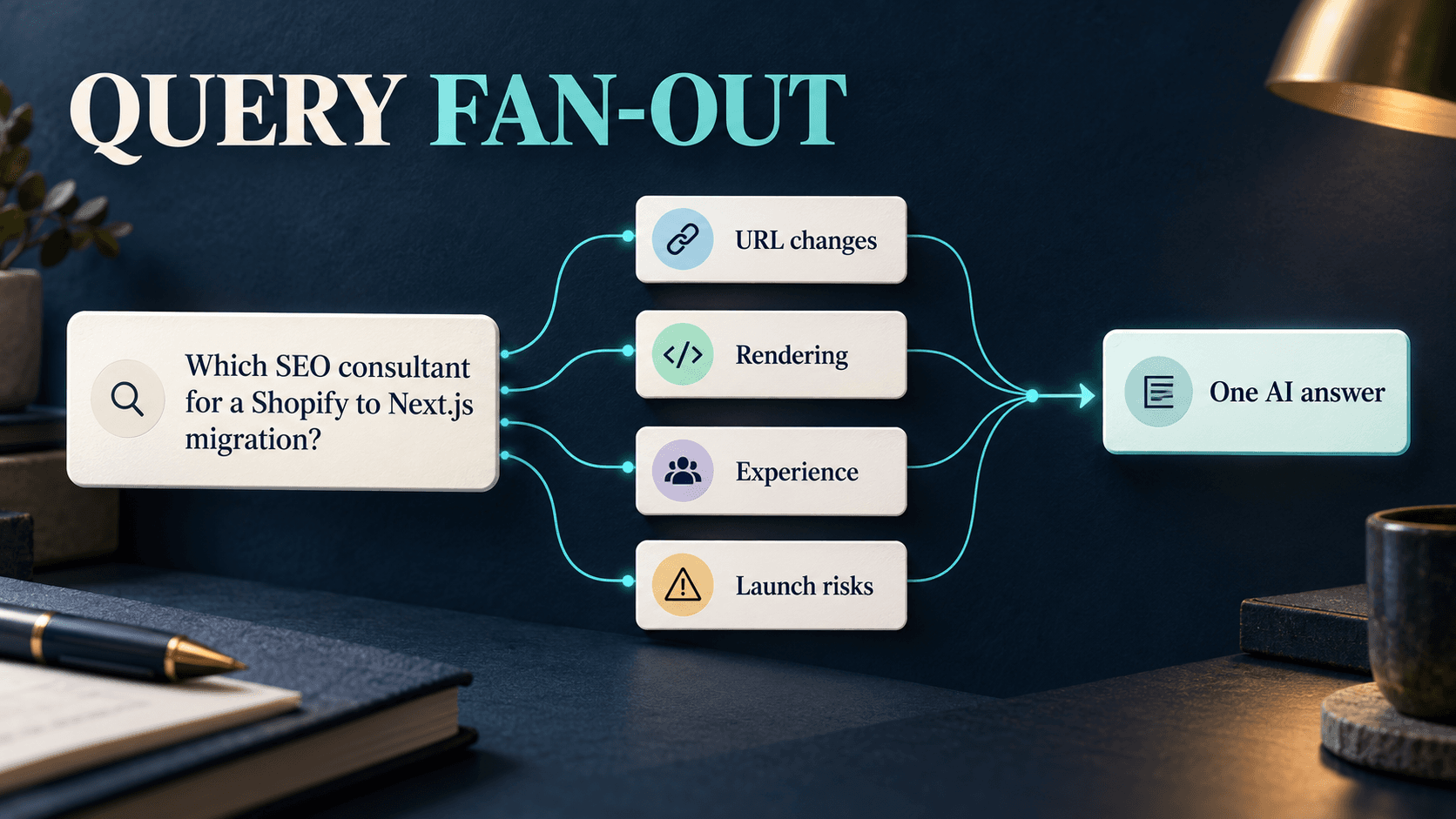
Most traditional searches in Google tend to be 4 words or less, whereas LLM prompt lengths are typically 5+ words with a lot more being 9+ words - this length means the probability of the same search happening more than once drops SIGNIFICANTLY.
This is why "prompt" search volume on most LLM or AI Visibility Trackers is hot garbage, it's not based on anything even remotely accurate.
So, using AI to perform LLM or prompt or even general keyword research is not a good idea.