










For decades, healthcare providers have relied on two things to build their practices:
Proximity
Word of mouth
But in recent years, we've seen a distinct shift in how people search for and select healthcare services. And there's no guarantee that a patient will choose your GP, community care, or other health service just because it's the closest to them.
Word-of-mouth referrals are no longer an end goal but a starting point in each person's journey to find suitable support.
There are more opportunities to reach and connect with prospective patients. But patient acquisition comes with higher competition levels.
All of these factors lead to one conclusion: SEO is vital for healthcare providers in 2026. And in this post, we'll reveal why it's a digital marketing strategy you can't afford to be missing out on.
TL;DR: Key Takeaways
Patient behaviour has shifted online. 83% of people use search engines to find healthcare providers, and 77% of patient journeys start online, making word of mouth and proximity no longer enough on their own.
Search visibility directly impacts patient acquisition. Providers ranking higher in Google results attract more clicks, whether patients are searching commercially ("online weight loss clinics") or informationally ("what happens during a private MRI scan").
Local SEO matters for both private and NHS providers. Patients still search for nearby services, and optimising your Google Business Profile helps smaller practices compete with national providers like Bupa.
Google holds healthcare to a higher standard. E-E-A-T and YMYL guidelines mean medical content must demonstrate expertise, accuracy, and trustworthiness to rank well.
AI is reshaping search. 88% of healthcare queries are now zero-click due to AI Overviews, so providers should prioritise commercial and transactional keywords, as well as structured content that LLMs like ChatGPT and Perplexity will cite.
SEO delivers strong ROI. Every £1 spent can return between £5 and £7.48, outperforming PPC in terms of trust and long-term results.
A complete healthcare SEO strategy covers multiple areas. These include local SEO, medically accurate content, and strong technical and off-page SEO foundations.
How Patients Search For and Choose Healthcare Services in 2026
Research shows that 83% of people use search engines like Google to find healthcare providers, and 77% of all patient journeys start online (Smart Data Research).
The numbers are clear: patients aren't relying on word of mouth anymore.
Here's what the patient journey looks like in 2026:
1: Search Engines
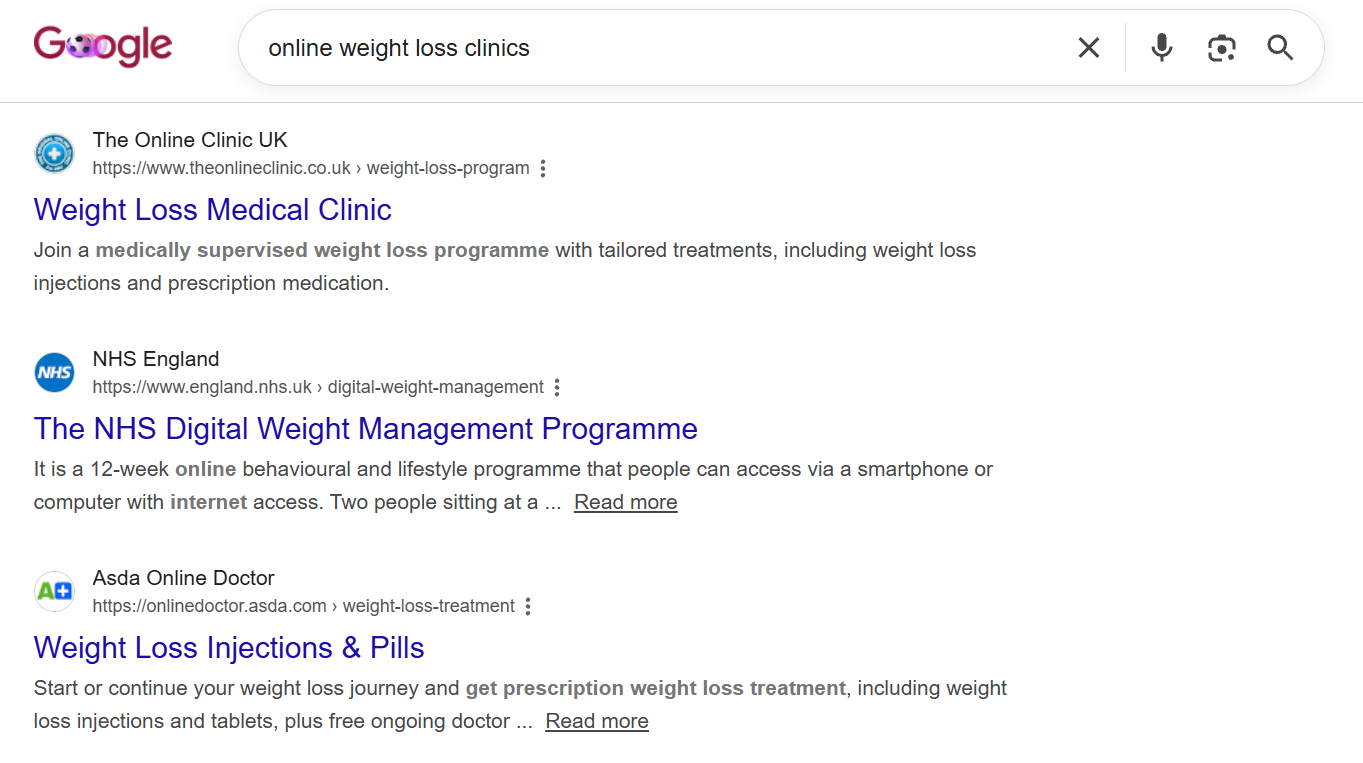
Most people look for healthcare providers through a search engine like Google. They'll type in a query and see which search results appear. For example, someone looking for specialist weight-loss support might type "online weight loss clinics".
And the providers higher up in the search rankings will get the most clicks:
But people aren't just using commercial terms; they're also seeking information and comparing their options.
These searches are an opportunity for healthcare providers to demonstrate their knowledge, which enhances their online reputation. Let's take "What happens during a private MRI scan" as an example.
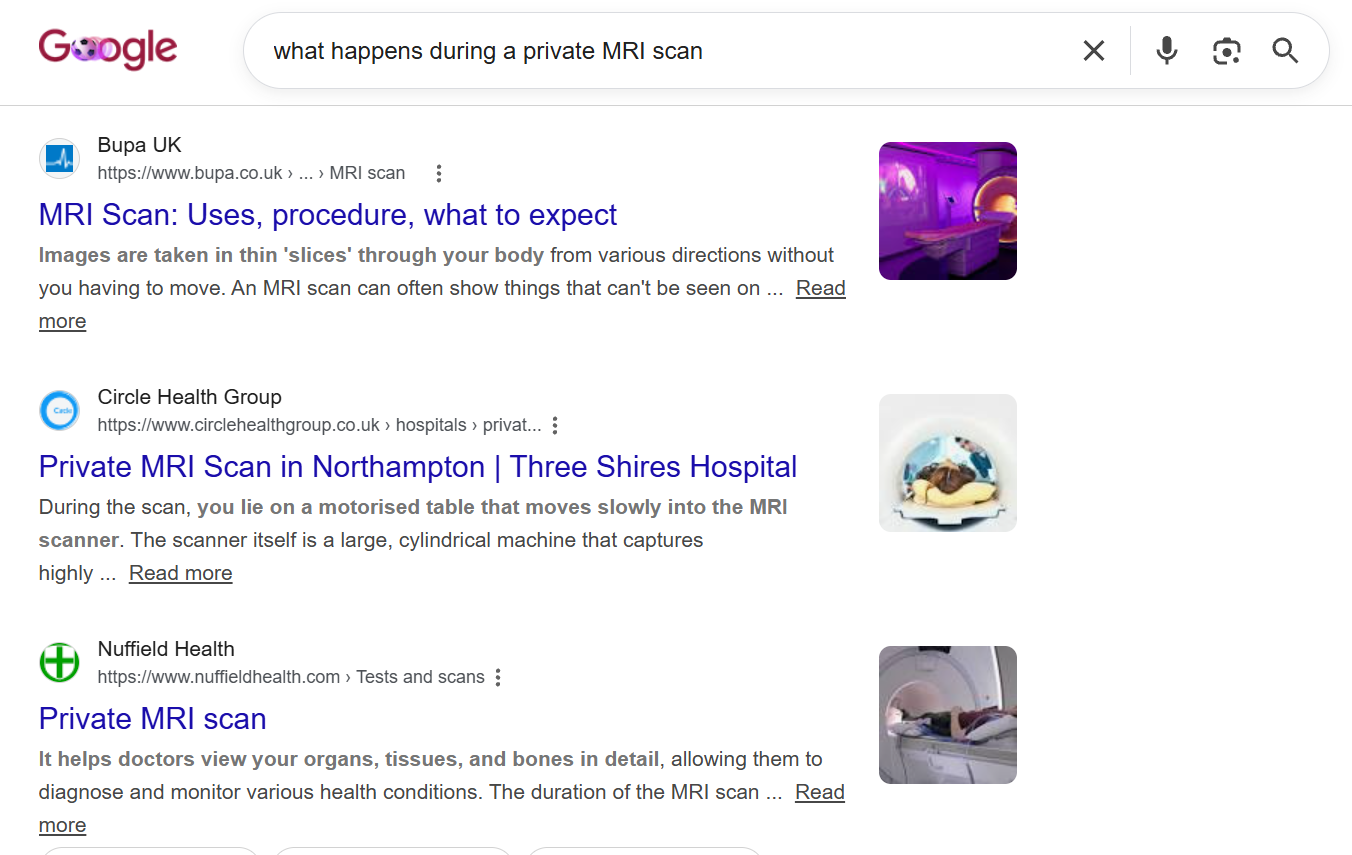
It's an informational search, but the results page displays private healthcare services that have answered the question.
Websites that don't appear during high-intent searches are missing out on potential patients.
2: Local Searches
Today, patients have access to both local and online healthcare providers, but many still use search engines to find support in their local area.
Independent practices that prioritise local SEO can generate consistent website traffic and turn visitors into patients. It's important to remember that NHS services also rely on local SEO, because it helps patients find convenient support.
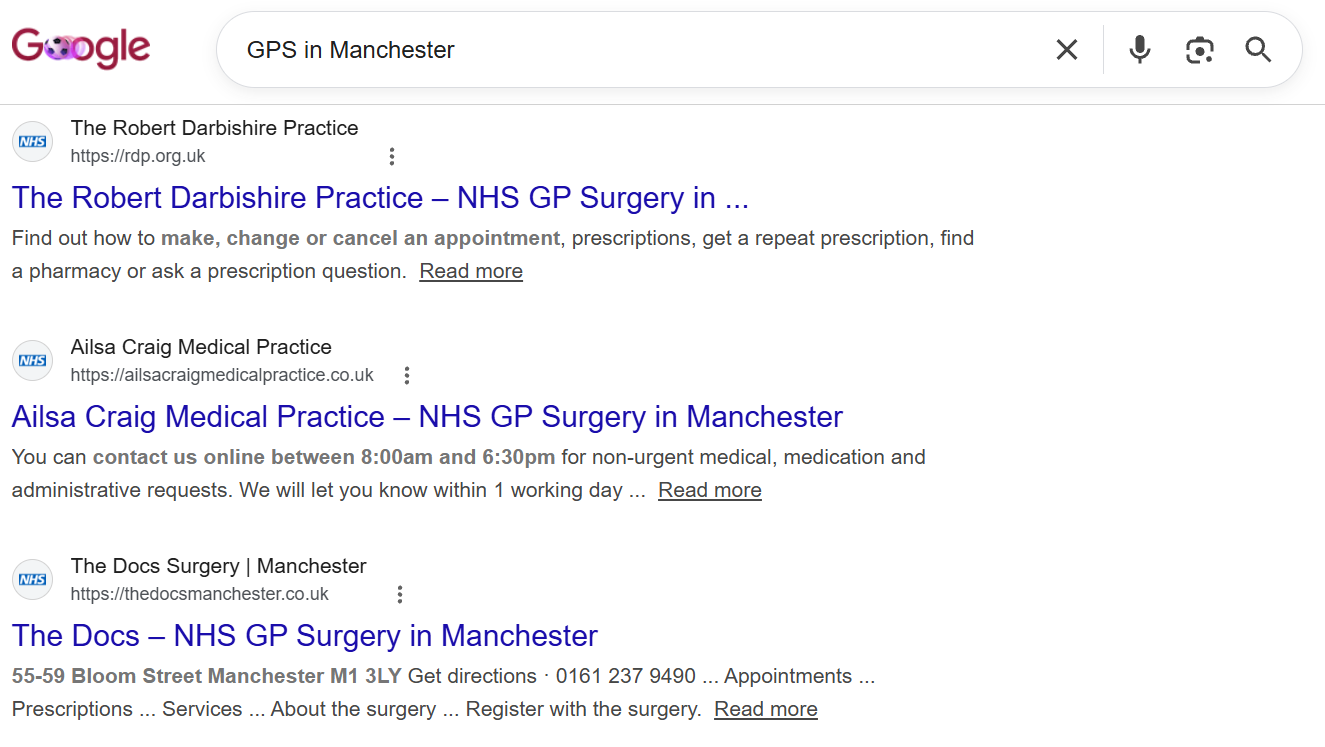
As you can see from this example, a search for GPs in Manchester is dominated by the NHS.
But if we add private to the query, independent GPs dominate the SERPs.
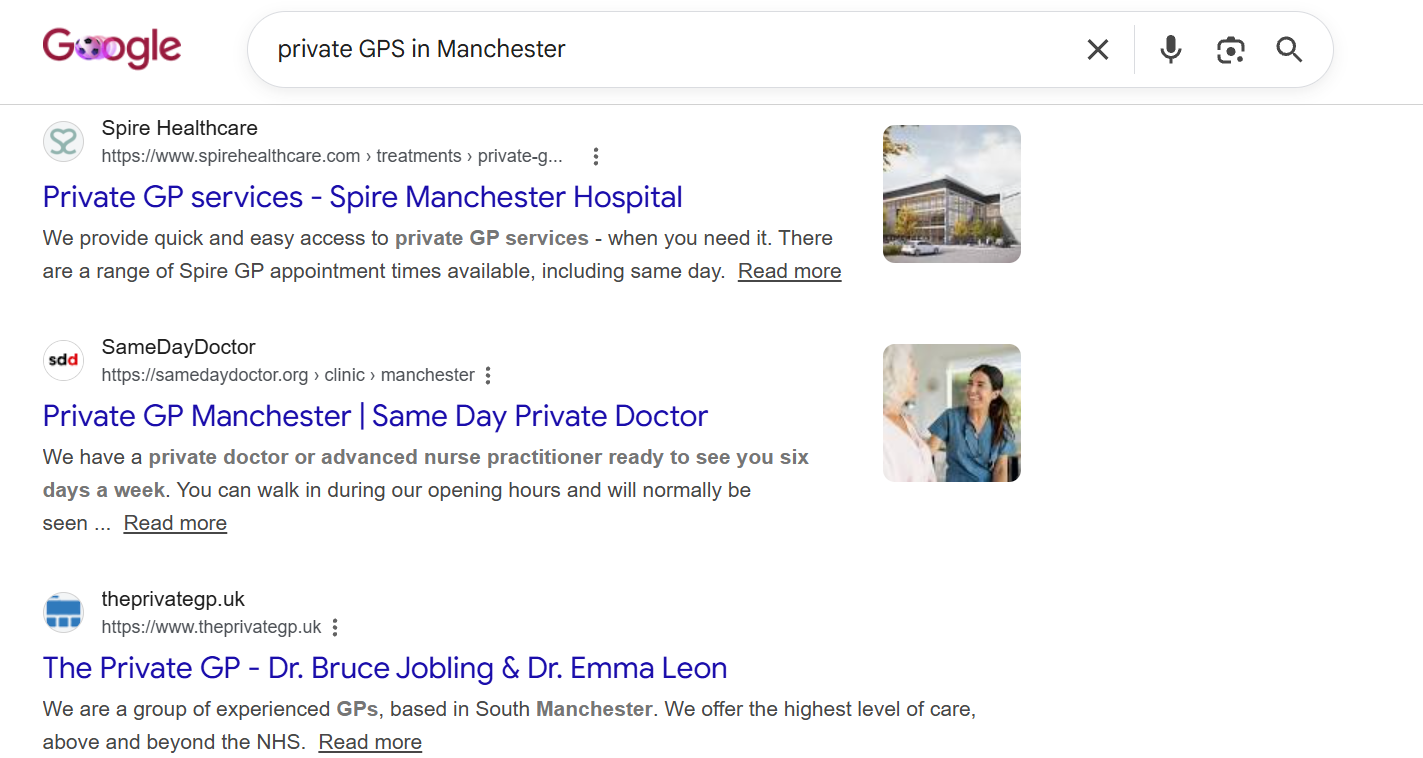
These might seem like small details, but they show how search intent shapes SEO for healthcare providers.
3: Quality and Reputation Are Non-Negotiable
Google's algorithm strongly favours healthcare websites that align with its quality guidelines. That means creating high-quality healthcare content that is medically accurate and demonstrates expertise. The websites that align with E-E-A-T and YMYL guidelines will always rank higher than those that don't.
E-E-A-T (Experience, Expertise, Authoritativeness and Trustworthiness)
Google's E-E-A-T criteria ranks content based on:
Experience: Whether the content creator has first-hand experience with the topic. For example, using previous case studies, highlighting medical experience, and offering insights.
Expertise: Showcasing medical credentials, clinician biographies, and linking to high-authority sources.
Authoritativeness: Showing that your healthcare content is valuable through high-quality backlinks from reputable publications.
Trustworthiness: All medical content must be transparent and accurate, with clear editorial processes displayed for readers.
YMYL (Your Money or Your Life)
Google holds certain industries to their highest standards based on the real-world consequences their content may have.
For example, healthcare decisions can affect an individual's physical health or mental well-being, so websites in the sector have much stricter rules than e-commerce websites.
AI is Changing Search Behaviours
AI search is significantly changing how people search for healthcare providers and information online.
Google's AI Overviews now mean that 88% of healthcare queries are zero click, because AI Overviews and knowledge panels provide answers immediately (Omnibound AI) - as you can see from this informational search:
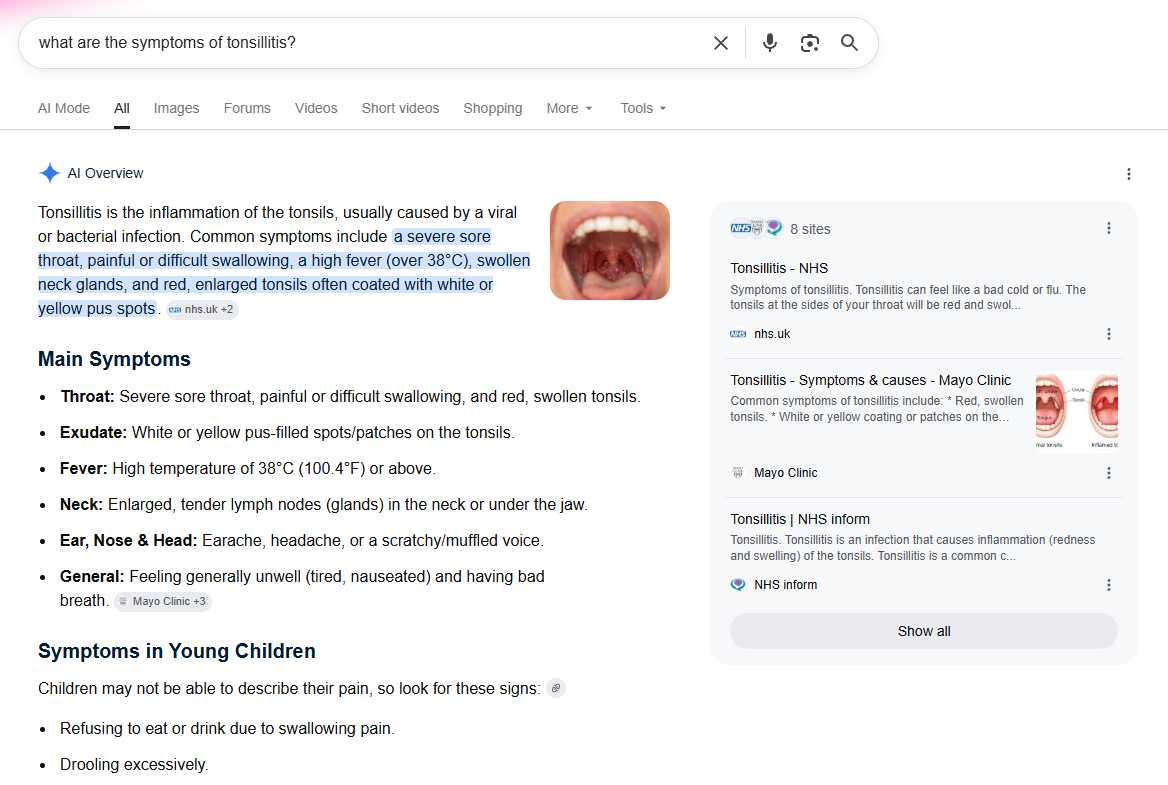
But the AI Overview also shows where it extracted information from. The websites that appear in these overviews are more likely to attract clicks.
We can also see that when the search intent is more commercial or transactional, the AI Overviews don't appear, suggesting your SEO strategy should focus more on these queries to drive clicks and consistent website traffic.
LLM Searches
Tools like ChatGPT and Perplexity are becoming more popular for online searches. But these tools work differently from traditional search engines.
Instead of scanning the entire page, LLMs look for websites that answer the user's query and use them as citations when answering questions.
So, healthcare organisations that use structured data and answer questions clearly are more likely to appear in search results. For example, a Perplexity search for private GP vs NHS GP brings up these results:
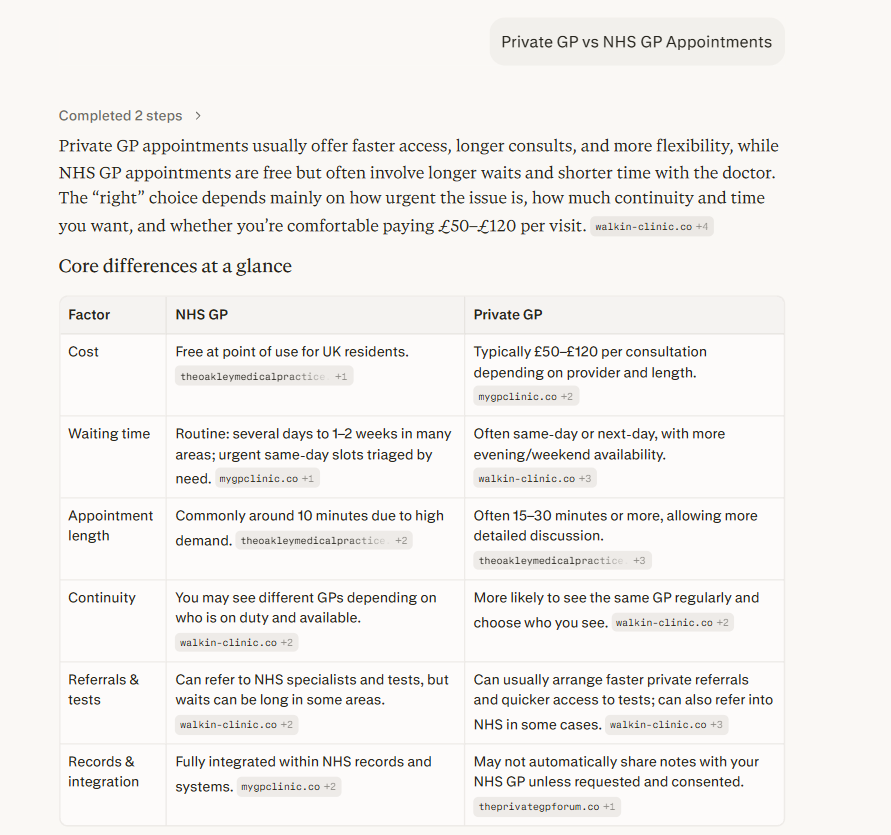
Click the first citation, and you'll see that the content is well-structured and answers the question instantly. The websites cited by LLMs are more likely to receive clicks and enquiries.
Which Type of SEO Strategy do Healthcare Providers Need in 2026?
Healthcare SEO isn't a nice-to-have. It's vital for patient acquisition and ensuring long-term loyalty. The fact is, your competitors are already investing heavily in SEO, leaving your practice at a distinct disadvantage.
While there are plenty of healthcare digital marketing strategies to explore, every £1 healthcare providers spend on SEO can generate returns of between £5 and £7.48 (Medesk).
PPC can generate instant website visits, but healthcare requires strong trust signals. Put simply, prospective patients will always trust the websites that rank organically over sponsored results.
In 2026, a healthcare SEO strategy should combine the following techniques:
Local SEO
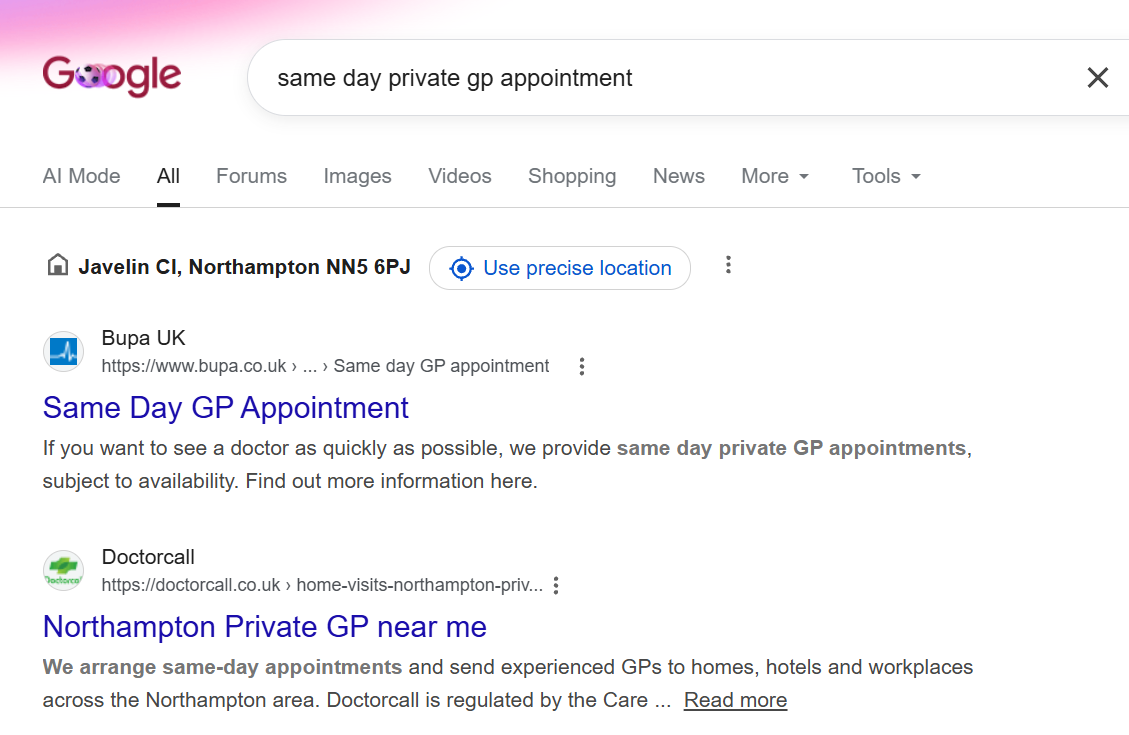
When people search for healthcare services in their local area, the websites that appear in map results and on page one of the SERPs will receive the most traffic. It's also the perfect opportunity for smaller practices to compete against national providers like Bupa.
Your Google Business Profile should be optimised for location-specific searches with online reviews and regular updates.
Health-Related Content Must Have Medical Accuracy
Whether you create your own content or work with a specialist healthcare content marketing agency, everything has to be fact-checked and medically accurate.
Implementing editorial reviews into your healthcare marketing processes ensures that you meet vital trust signals.
Off-Page and Technical SEO
Your website should also offer a seamless user experience, which means ensuring responsiveness across all devices, performing regular SEO audits, and measuring your site against Google's Core Web Vitals.
Backlinks are vital for building a strong online reputation, as they show that your website is a trusted resource. A specialist digital PR strategy can help you attract the right links from high authority publications.
The Bottom Line on Healthcare SEO in 2026
In 2026, healthcare providers who view SEO as a nice-to-have rather than an integral part of their marketing strategy will fail to generate a steady stream of organic traffic.
At the same time, providers that focus solely on traffic and neglect educational content creation and user experience will struggle to turn traffic into new patients.
From AI-generated overviews to traditional Google search results, patients today don't just rely on word of mouth or locality when choosing a service. They see which providers appear in the SERPs, read patient reviews, and choose the provider they consider most trustworthy.
If you're ready to invest in long-term practice growth, our bespoke SEO services are tailored to your clinic's goals. Please get in touch with us today for a free proposal.
You can also learn more about healthcare SEO with our complete guide on how it helps private practices generate more enquiries.