












Referrals have been the lifeblood of every law firm for decades...and they're great. When you support a client and give them a positive outcome, it's only natural for that client to mention you. But, in 2026, referrals alone aren't enough.
Can they still attract clients? Absolutely. Are they enough to not only compete but also grow your law practice? Probably not.
Find out why in this guide, as we explore the impacts of the referral trap and the steps you can take to generate consistent leads.
Referrals Aren't Enough to Attract Potential Clients
The internet is ingrained in every aspect of our lives, from Google searches to apps to AI. Back before the days of Google, a referral was probably enough.
Someone would recommend your law firm to a friend, family member or colleague. That person would pick up the phone, have a conversation, and become a client.
But things are different now. Here's why:
Word of Mouth Isn't A Guarantee
Even if a current or former client recommends you, it doesn't mean that person will reach out immediately. In fact, most will turn to your website first. They'll review your content and testimonials to assess your reputation.
Research also shows that up to 98% of potential clients look at reviews before investing in a service (Forbes). So, the recommendation won't turn into a client if your website and reviews aren't reassuring.
The Always-On Mentality
We all know that the B2C world moves quickly, but service businesses should also have streamlined processes in place to attract clients.
For example, many clients expect to find information and book a consultation immediately, rather than having to fill in forms and be signposted to different departments.
If a competitor makes it easy to ask questions, arrange a consultation and receive instant support, that referral might not be enough to ensure you're the go-to solution.
Referrals are Feast and Famine
According to AgentZap, 25-80% of new business for law firms comes from referrals, which is great when they're flowing in.
You're constantly onboarding new clients and considering expansion. But there are months when they dry up, and you don't know where the next client will come from.
Many law firms find that they're constantly in a cycle of feast and famine, which makes everything from resource allocation to operations confusing.
Why Digital Marketing is Essential for Your Law Firm's Long-Term Growth
Research shows that around 65% of law firms in the UK use digital marketing to enhance their online visibility and attract clients (LTHJ).
The fact is, if you're not using digital strategies, you're putting your firm at a distinct disadvantage. And other firms will capitalise on that.
It Enhances Your Online Presence
According to SEMRush, 75% of people search for local businesses on Google. A potential client will search for a particular service and view the results.
For example, let's say someone needs a commercial property solicitor. These firms appear on page one, which means they'll generate the most website visits.
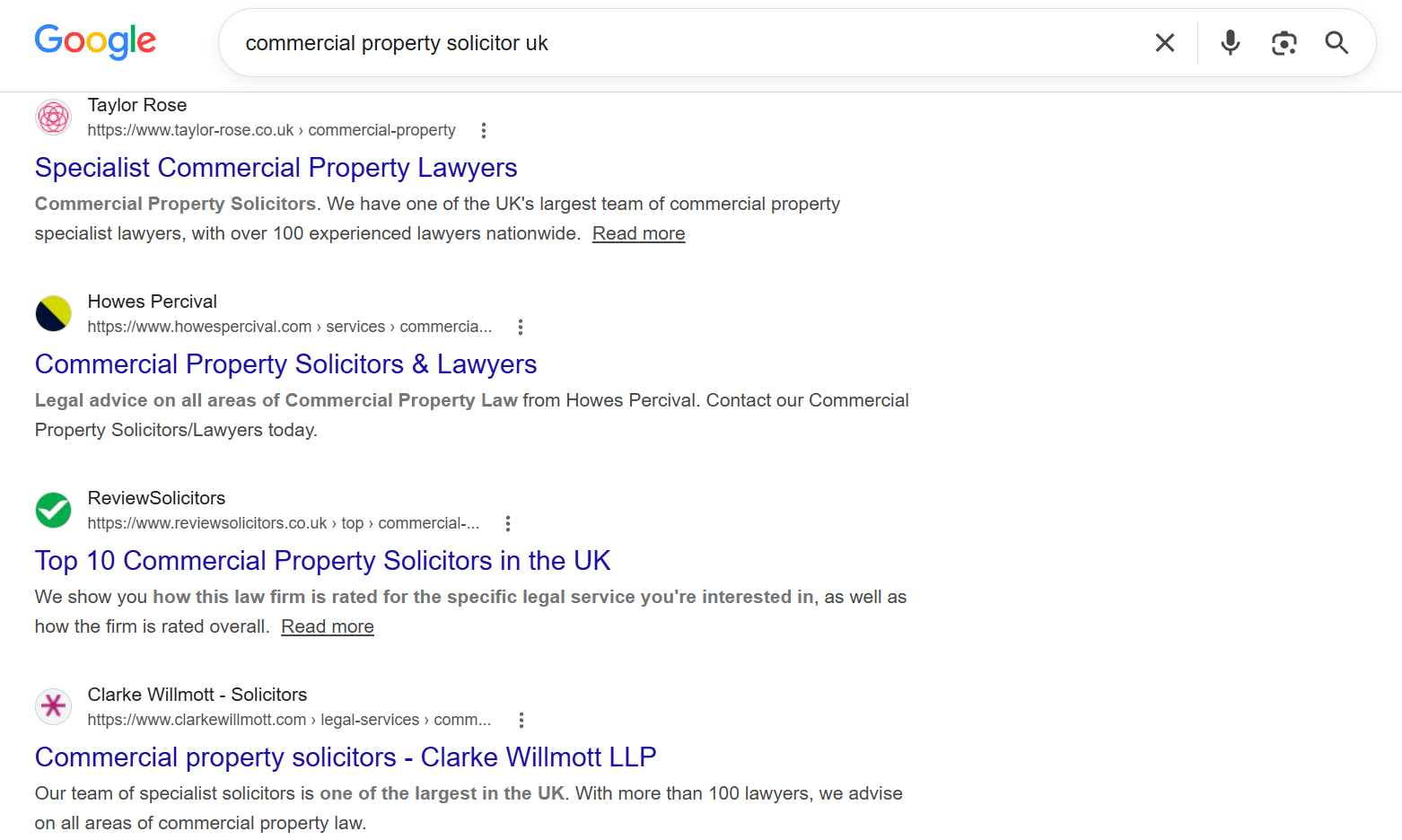
Firms that don't appear on the first page are more reliant on referrals because they're not as visible.
Younger Generations Aren't as Referral Focused
While older generations still rely on referrals to find services, younger generations are more likely to trust online reviews.
For example, Millennial and Gen-Z audiences trust online reviews more than older generations, which means simple word-of-mouth recommendations often aren't enough (ReviewDriver).
If your law firm has reviews on trusted platforms like Google Business Profile and Trustpilot, younger people will see you as a safer option.
Building Awareness Through Social Media
Social media isn't just influencers and low-ticket products; it's also where people can discover your law firm. From leveraging LinkedIn to attract corporate clients to advertising on Facebook and Instagram, social media is an awareness engine.
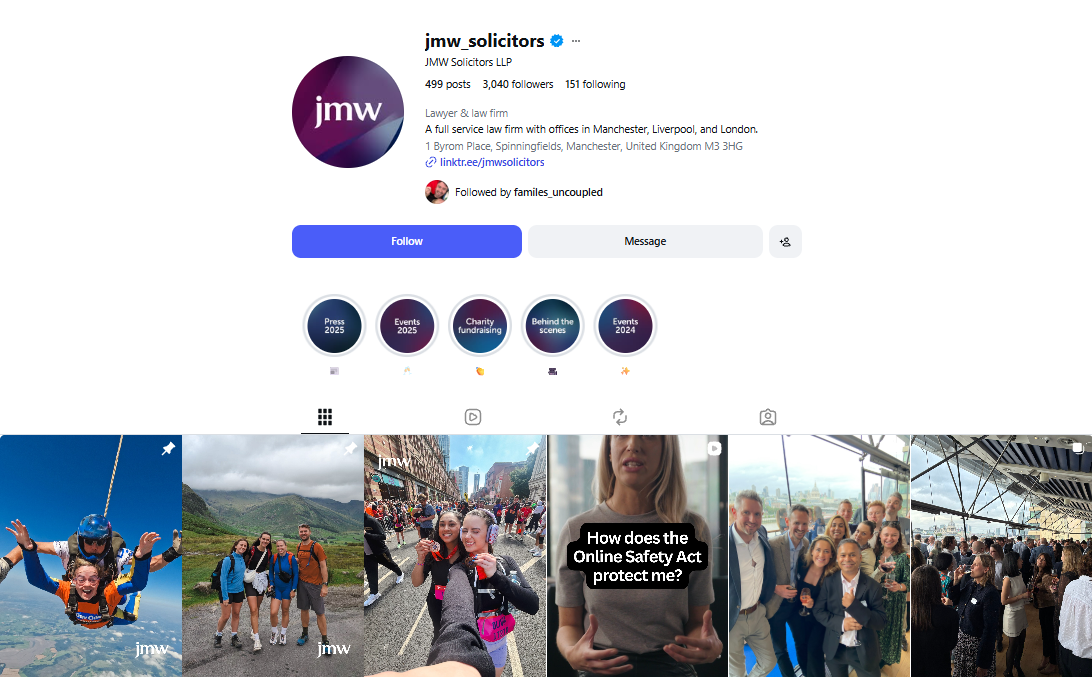
If you regularly update your profiles with useful content and engage with your audience, it can turn into consistent website visits and enquiries.
It Ensures You Can Compete
Many law firms struggle to complete, especially when it's a local practice competing against a national or international firm. Digital marketing levels the playing field by enabling you to target local audiences and build your authority.
For example, an independent law practice in Birmingham has the opportunity to show up in local Google searches, even if it doesn't in national searches.
The Most Effective Types of Digital Marketing for Law Firms
As a specialist law firm marketing agency, we support clients with all of their needs, including building an online presence, turning leads into clients, and scaling to new locations.
We leverage a range of digital marketing strategies to ensure you meet key goals, including:
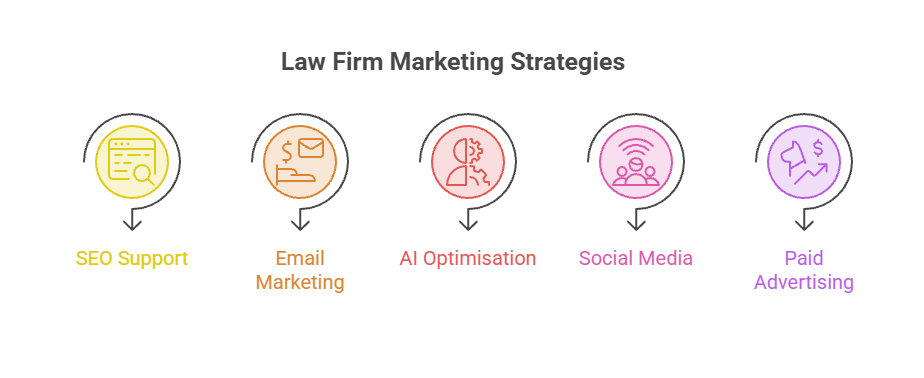
SEO Support
SEO is one of the most affordable ways to build your online visibility and generate consistent website visitors, as the results compound over time.
From optimising your content for the right terms to ensure people can find you to managing your website's technical elements and building high-authority backlinks, SEO is accessible for small practices.
Email Marketing
A big problem law firms have is turning leads into clients. When you use email marketing, you can nurture your audience by providing them with useful content. According to Nexl, the average ROI from email marketing is $36-42 for law practices.
It's also much more affordable than paid tactics with Google Ads or social media advertising.
AI Optimisation
AI searches are becoming more common, with 37-42% of users using LLMs like Perplexity and ChatGPT to search for services (Bain). Further to this, 60% of Google users rely on AI Overviews to find information.
Failing to appear in these searches can cost you significant amounts of traffic. While AI optimisation differs from SEO, it's becoming a must-have for legal marketing.
Using Social Media
Social media is an excellent place to demonstrate your legal knowledge, connect with potential clients, and showcase your work. LinkedIn is beneficial for corporate law firms to expand their network, while platforms like Instagram and Facebook help smaller practices build awareness.
Paid Advertising
While SEO is an ongoing strategy that shows results over time, paid ads offer instant visibility and growth. If you've relied on referrals for a long time and they dry up, PPC can be beneficial, as it sends people directly to your website.
However, the high ad spend often means that paid ads are best used as temporary marketing tactics rather than as part of your long-term strategy.
End the Feast and Famine Cycle Today
Whether you're an independent lawyer with a small practice, a local law firm, or want to scale to international audiences, we've consistently generated growth for our clients.
Referrals will continue to be important for law practices, but in today's ultra-competitive digital landscape, they're not enough to secure your long-term survival.
If you're ready to turn your website into a client magnet, please get in touch with us today for a no-obligation proposal.
FAQs
Why are referrals risky for law firms?
Referrals often mean you rely on third parties, which can cause problems if your relationship changes. For example, if they decide to move to a new firm, you'll likely lose a lot of potential business.
It's also important to remember that when peers give you inbound leads, they may not be the right fit for your target audience or profit goals. Digital marketing lets you target the right clients based on their location and budget.
How can my law firm attract younger clients?
Attracting young clients is beneficial because they can turn into long-term relationships. However, while older generations are likely to follow referral advice, young clients focus more on convenience and digital touchpoints.
It's essential to focus on attracting reviews from previous clients and creating useful content that your target audience will engage with.
Is PPC or SEO a more effective legal marketing strategy?
Both are highly effective, but they have different benefits. For example, PPC can generate instant leads, but it's an expensive strategy that most law practices can't afford for long-term marketing.
In contrast, SEO is more affordable and generates ongoing leads, but it takes longer to show results. Using both together gives you the option to attract more clients and maximise your ROI.