











A simple Google search can influence decisions about who to choose when it comes to mental and physical healthcare. Google trust signals matter for healthcare websites.
But trust signals go far beyond a nice website and content that targets the right keywords; they're about credibility, accuracy, professional expertise, and alignment with Google's E-E-A-T framework. Because beyond online visibility, healthcare providers operate in a strict environment where compliance is everything.
In this guide, we'll explore why Google trust signals matter for healthcare websites and how to strengthen them through medical SEO.
TL;DR
Healthcare websites fall under Google's Your Money or Your Life (YMYL) category, making accuracy, credibility, and trust essential.
Google's E-E-A-T framework focuses on Experience, Expertise, Authoritativeness, and Trustworthiness, helping assess healthcare content quality.
Strong trust signals include qualified medical reviewers, evidence-based content, professional accreditations, transparent policies, and genuine patient reviews.
Regular content updates, authoritative backlinks, and clear editorial processes help healthcare organisations strengthen their credibility.
E-E-A-T isn't a direct Google ranking factor, but demonstrating trust can support long-term organic visibility, patient confidence, and conversions.
What Are Google Trust Signals?
Google trust signals determine a website's legitimacy, credibility, and reliability to search engines and users. Sounds simple enough, but healthcare businesses operate in a high-stakes environment, where trust is earned - not assumed.
For example, say someone is looking for diabetes advice. One website covers symptoms and treatment options, but it doesn't include anything about the author, editorial guidelines, or references to authoritative sources.
Another website clearly lists all of the above, so both Google and audiences view it as the more trustworthy source.
But here's the thing: Google doesn't have a universal trust score. Instead, it has different signals that contribute towards a website's trustworthiness.
Why is Trust Essential For Healthcare Websites?
Healthcare websites fall under Google's Your Money or Your Life (YMYL) category because they contain information that may affect a person's general wellbeing, financial stability, and overall health.
Imagine someone's looking for information regarding symptoms they're experiencing, and the article or symptom checker tells them their symptoms are nothing to worry about.
So, instead of going to a GP, they ignore the symptoms and then develop a serious health condition. This decision affects their health and wellbeing and could even lead to serious harm.
That's why Google has clear guidelines for YMYL content, and they apply to a range of healthcare businesses, including:
Healthcare clinics and private hospitals.
Online pharmacies.
Local and online GPs.
Counsellors and therapists.
Physiotherapy clinics and dental practices.
General medical information websites.
While many websites focus on increasing their organic rankings, healthcare websites must establish trust before growth happens.
Google's E-E-A-T Framework
Google's E-E-A-T (Experience, Expertise, Authoritativeness, and Trustworthiness) framework matters for all websites, but it's vital for healthcare.
As part of the Search Quality Rater Guidelines, E-E-A-T helps human evaluators assess content quality and ensures healthcare providers can align their processes with the framework.

Experience
Experience is the knowledge behind the content. In simple terms, if a website publishes information about dental care, it should be authored or reviewed by someone with lived experience of the topic.
This part of the framework can also include first-hand experiences from patients, but they don't replace medical knowledge.
Expertise
Expertise is essential if your healthcare content covers symptoms, diagnosis, medication, and treatment advice. While expertise and experience are similar in many ways, expertise focuses more on the professional qualifications behind content.
For example, if you create content on dental health and procedures, a qualified dental professional should review it.
Authoritativeness
Authoritativeness refers to whether a website is a reputable and credible source of information. In healthcare terms, this means attracting backlinks from high-authority sources, being registered with professional associations, and demonstrating expertise in its topics.
For example, a counsellor might be an authority on general topics, but that doesn't mean it needs to be a source of psychiatric advice.
Trustworthiness
Lastly, trustworthiness is a core component of the E-E-A-T framework. Even if your healthcare website has high-quality content, authoritative backlinks, and a team of experts who regularly review it, small issues can still affect trust.
For example, commercially biased and misleading content can cause a range of issues for both Google and your audiences. You should always acknowledge the potential limitations of your advice, and ensure your entire website displays trust signals.
Signals Healthcare Organisations Should Focus On for Building Trust
So, now we've covered Google's E-E-A-T (experience, expertise, authoritativeness, trustworthiness) framework; it's time to look at 10 ways to build trust signals and maintain authority.
1: Using Authors and Reviewers With Real-World Experience
It might not be practical to have a medical professional write your content, but they should still review it. An anonymous article won't inspire the same trust as one reviewed by someone with real-world experience.

Establishing a clinical review process can help you monitor content quality. For example, one member from each department can review articles before they go live, which builds trust.
2: Accuracy and Reputability
All healthcare content should be factually accurate and grounded in evidence. The sources you cite also matter; high-authority sources include the National Institute for Health and Care Excellence (NICE), the World Health Organisation (WHO), and reputable medical journals.
3: Transparency
Patients want to know they're getting advice from a legitimate organisation, so list clear information about your business, its professional background, and any affiliations, including the General Medical Council (GMC) and Care Quality Commission (CQC).
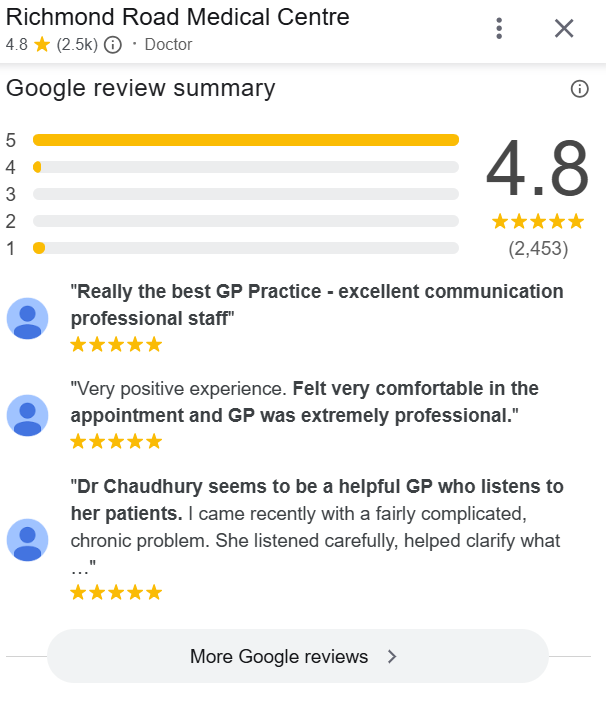
4: Genuine Online Reviews and Case Studies
According to Smart Money People, 84% of customers and service users trust reviews because they offer real perspectives from people, rather than the website claiming it offers all of those things.
However, in the healthcare industry, patient confidentiality is a core concern. Everyone has the right to privacy, and you should never publish reviews or case studies without consent.
Even with consent, it's still vital to avoid disclosing any personal information.
Platforms such as Google Business Profile can also build trust, as people leave reviews willingly rather than publishing them on your website.
5: Clear Policies and Compliance
Medical knowledge is constantly evolving thanks to research and medication updates. This often adds a layer of complexity for medical websites, as outdated information can cause a lack of trust. For this reason, you should update articles regularly to ensure your content aligns with the latest information.
Showing when you updated content and publishing clear editorial review processes help you build long-term trust.
You should also factor in GDPR requirements and clearly list your data protection policies.
6: Publishing High-Quality Content
Getting your healthcare content to appear high in search results can attract clicks, but it doesn't mean visitors will automatically trust it.
High-quality content should focus on accurate information and answer questions your prospective patients have.
The content you create should focus on user experience above everything else.
7: Building Quality Backlinks
Last but definitely not least is building high-quality backlinks from authoritative sources. These include links from healthcare publications, respected regional and national newspapers, and universities.
If you have doctors, researchers and other specialists, they may naturally attract backlinks by contributing to research papers, which enhances your website's authority.
How to Check Whether Your Website Has Strong Trust Signals
One of the best things you can do before investing in content is to audit your existing website to ensure that it meets Google's criteria. Here's how to simplify the process:
Check your service pages and articles to see whether they attract organic traffic and whether visitors stay on the page.
Read your homepage and about page to see whether the information you provide is clear.
Benchmark your current content against medical guidelines to ensure it's accurate and relevant.
Verify your accreditations and compliance to ensure that they're up to date.
Implement structured data, as it helps search engines understand your content.
Prioritise changes based on importance. For example, an update about your company is less important than a medical page.
Choose stakeholders to review content for quality and accuracy, then establish clear and transparent editorial processes.
The Bottom Line
Healthcare businesses across the web are competing for visibility, but showing up in search results means nothing if your audience doesn't trust you.
It's also vital to remember that trust signals go beyond Google search, spanning the entire web - including social media, email marketing, and other touchpoints prospective patients might use to find you.
Google emphasises helpful content because its main priority is user experience. When you align with each trust signal, you can strengthen your rankings and reputation over time.
Assertive specialises in healthcare SEO, providing bespoke, compliance-focused strategies that deliver sustainable ROI. Please get in touch with us today to book your free consultation.
FAQs
Is E-E-A-T a Google ranking factor?
No, E-E-A-T isn't a specific ranking factor, as its systems use multiple signals to determine whether the content you create demonstrates trust. Think of it as an indirect influence, but a vital factor in helping both search engines and audiences trust your content.
Do healthcare blogs need medical reviewers?
Not necessarily, as it depends on the information you're providing. For example, a general blog post about wellbeing tips doesn't really need a medical review, but content that includes information about prescription medicines, symptoms, and treatment options should be reviewed.
Does adding medical citations improve Google rankings?
It can do, as medical citations support factual claims and content quality. But adding references doesn't mean that your rankings will instantly improve.
How often should healthcare website content be updated?
It really depends on the risk levels associated with your content. For example, if treatment options, clinical guidance, or diagnostic frameworks change, you should update your content accordingly.
Can a healthcare website rank without strong trust signals?
Yes, it can, because Google rankings depend on many factors. There's no universal trust signal, so your website may still rank, even if it's slightly outdated.
But if you want long-term stability, then updating your website and ensuring it aligns with trust signals can make a significant difference to both organic traffic and conversions.