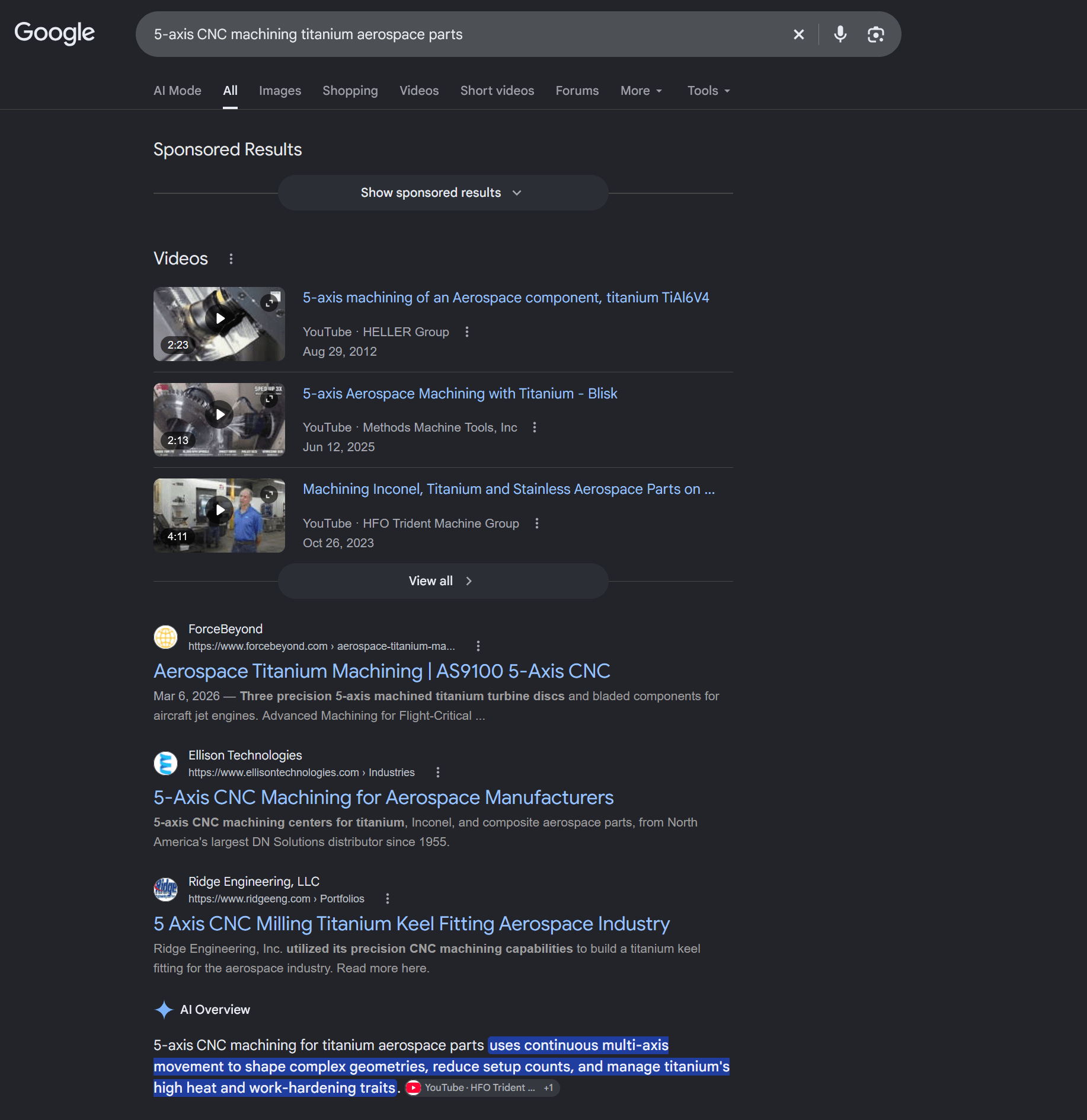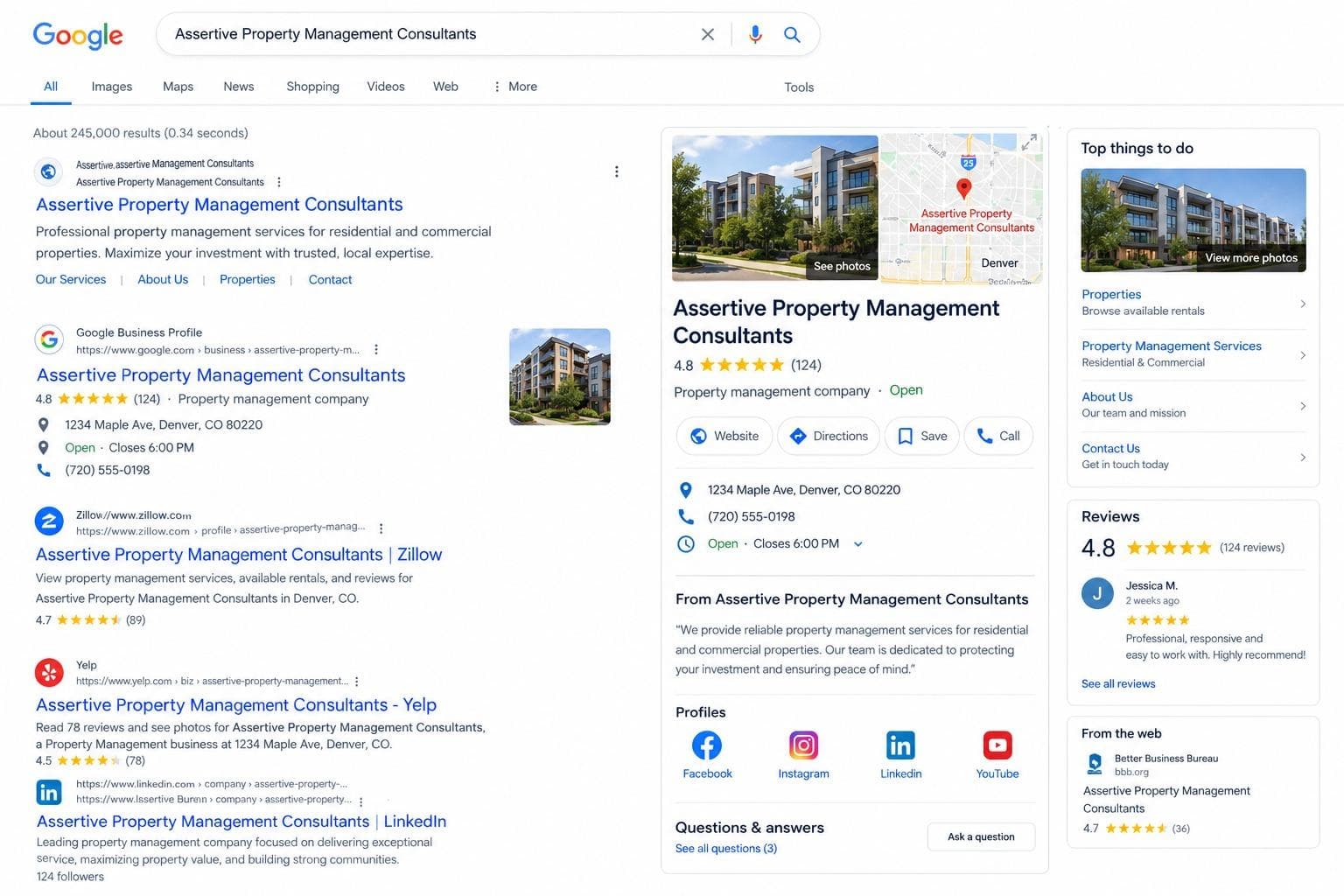












SEO is still a core marketing strategy for universities and training providers in 2026 looking to attract their next cohort of students. But the landscape has changed. Gen-Z audiences are tech-savvy, and many are turning to AI tools instead of traditional search to find their further education establishment.
According to research from Search Influence and UPCEA, around 50% of prospective students use AI tools at least once a week, while 79% read Google AI Overviews.
While SEO should still form the core of your search strategy, failing to optimise for AI will leave you struggling for visibility and enquiries in 2026 and beyond.
In this guide, we'll explore everything you need to know about SEO in 2026, including what works for universities and training providers.
TL;DR: SEO for Educational Institutions in 2026
SEO for universities and training providers in 2026 goes beyond traditional Google rankings. As prospective students increasingly use AI tools, education providers need to combine SEO with AEO and GEO to stay visible throughout the student journey.
Technical SEO remains the foundation: Large education websites need strong site architecture, fast performance, clean indexing, and accessible content for both search engines and AI crawlers.
Course pages should take priority: Clear entry requirements, fees, study options, modules, outcomes, and next steps help students make decisions while giving search and AI engines structured information to understand.
Evidence builds authority: Academic expertise, accreditations, student outcomes, testimonials, original research, backlinks, and brand mentions strengthen trust and visibility.
Think beyond traditional Google searches: Local, national, and international SEO should reflect how different students search for courses and institutions.
Measure visibility across the whole search ecosystem: Track rankings and impressions alongside AI citations, branded searches, forum/social mentions, and self-reported attribution.
The key takeaway: Successful higher education SEO in 2026 means being discoverable wherever prospective students research their options — from Google and AI search to forums, reviews, and your own website.
Why Does Search Visibility Matter for Higher Education Institutions?
While undergraduate student applications have remained relatively stable from 2021 to 2026, postgraduate applications and students choosing alternatives such as foundation degrees or HNDs have also decreased (HESA).
So, while universities and colleges have opportunities to attract prospective students, competition among learners has also increased.
However, students today have more options to compare universities and colleges online before deciding. Organic search engines send 50% to 75% of students to enrollment and program pages, but AI search is changing the traditional student journey.
AI Trends in the Education Sector
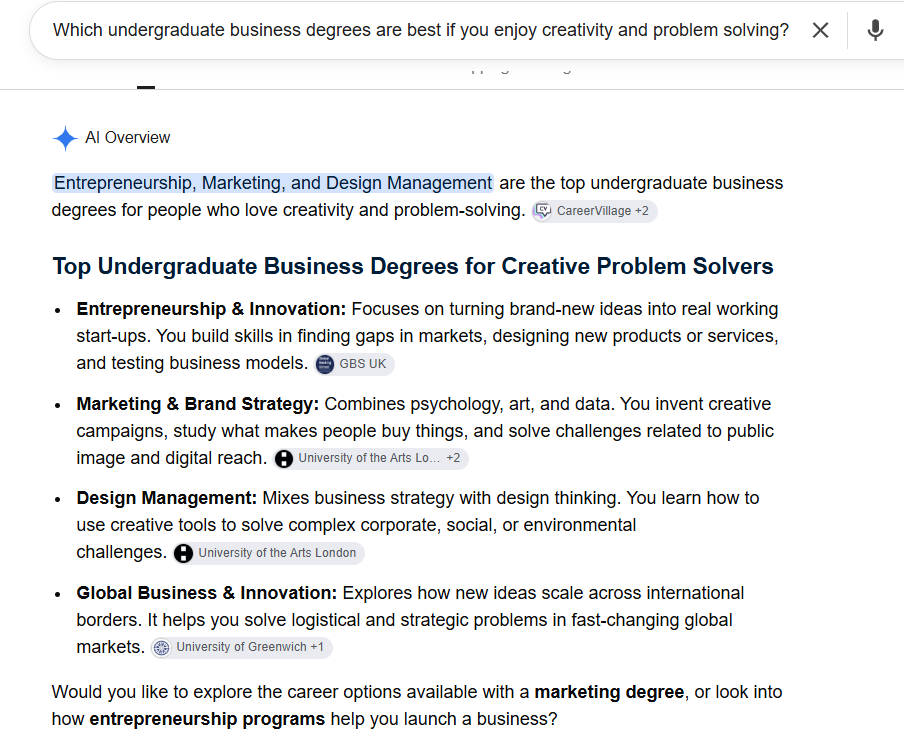
Instead of typing queries into Google such as "Undergraduate business degrees", students are using more nuanced searches with human language, including "Which undergraduate business degrees are best if you enjoy creativity and problem solving?"
As you can see, Google's AI Overviews return detailed results and links for learners to click on:
But students also use LLMs like Perplexity and ChatGPT to research potential educational institutions.
Searches like "Which UK universities are most LGBTQ friendly" are important factors for students deciding where they'd like to learn, and the cited sources are more likely to attract prospective students.
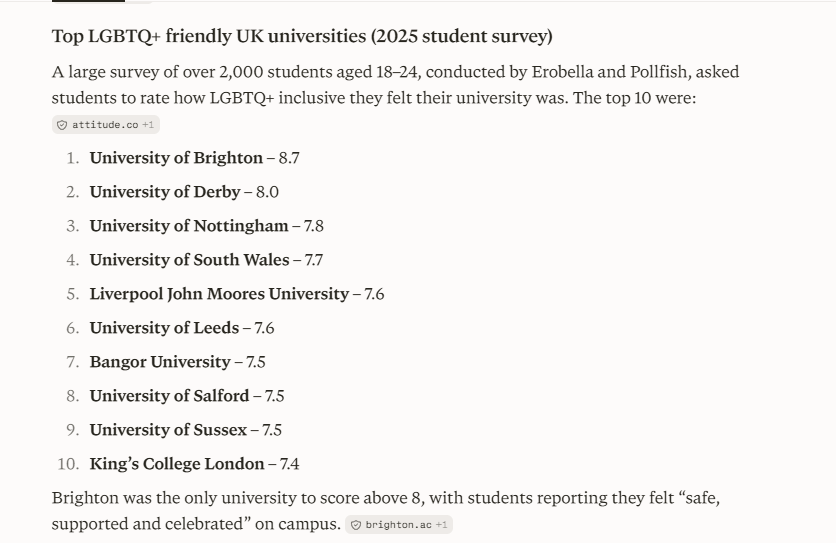
The Key Takeaway
The typical student journey is no longer typing a course into Google and visiting a university's web page; it could involve seeing an education provider mentioned in an AI search, reading Reddit reviews from students, and then visiting the actual website.
So, combining traditional SEO with AI search optimisation ensures your university aligns with how students look for and choose higher education options.
Focus on Your Website's Technical SEO
Technical SEO forms the foundation for website experience, and for education providers, it's often a huge job.
From pages full of legacy content to course pages and student areas, each website is often huge, making it harder to manage technical elements.
If AI engines can't successfully crawl and understand your website, it impacts your ability to appear in citations, making technical SEO essential for both traditional search and AI visibility.
The key areas large university websites should focus on include:
Outdated and Duplicate Course Pages: It's easy to forget the small things like a course or student intake form you ran last year, but failing to manage these pages can lead to cannibalisation.
Slow Websites: People expect pages to load almost instantly, and failing to align your site with Core Web Vitals can increase bounce rates. Other important factors are mobile optimisation and your overall site speed.
Subdomain Sprawl: Education providers often use subdomains and microsites. Unfortunately, this can lead to bloat, but internal links and a coherent architecture reduce these issues.
Indexing Issues: Make sure your robots.txt and CDN settings don't block AI crawlers, as they won't be able to access, extract, and cite your content.
High-Quality Backlinks Still Matter...But They're Just Part of Your Online Authority
Link building has always been a core SEO strategy, and that hasn't changed for universities and colleges. When you attract authoritative links, Google is more likely to trust your website, which means that it appears higher in the SERPs, but today's Digital PR strategies have changed.
AI is providing more opportunities for education sector providers to appear in searches without relying solely on backlinks for authority. For example, tools like Gemini, Claude, Perplexity, and ChatGPT look for brand mentions, such as people talking about you on Reddit or student reviews.
These mentions don't need hyperlinks, so you can build your reputation by staying visible across platforms.
Your Content Strategy Should Focus on Course Pages
Your course pages are the biggest opportunities for student recruitment. While blog posts can support your overall content strategy and build authority, prospective students decide whether to apply on your course pages.
For this reason, each course page should use compelling language while aligning with E-E-A-T and AI best practices.
Strong course pages should answer questions students commonly ask and contain structured information that AI models can extract, including:
Entry Requirements: A clear breakdown of the course's entry requirements, including UCAS points, equivalent qualifications, and routes for mature and international students.
Fees and funding: Fee structures for UK and international students, including whether apprenticeship or employer funding applies.
Dates and Study Options: When the course starts, how long it lasts, and whether students can study full-time, part-time, or via distance learning.
Course Information: Available modules, an assessment breakdown, and course outcomes.
Next Steps: Clearly outline the next steps, including how to apply, open day information, and calls to action.
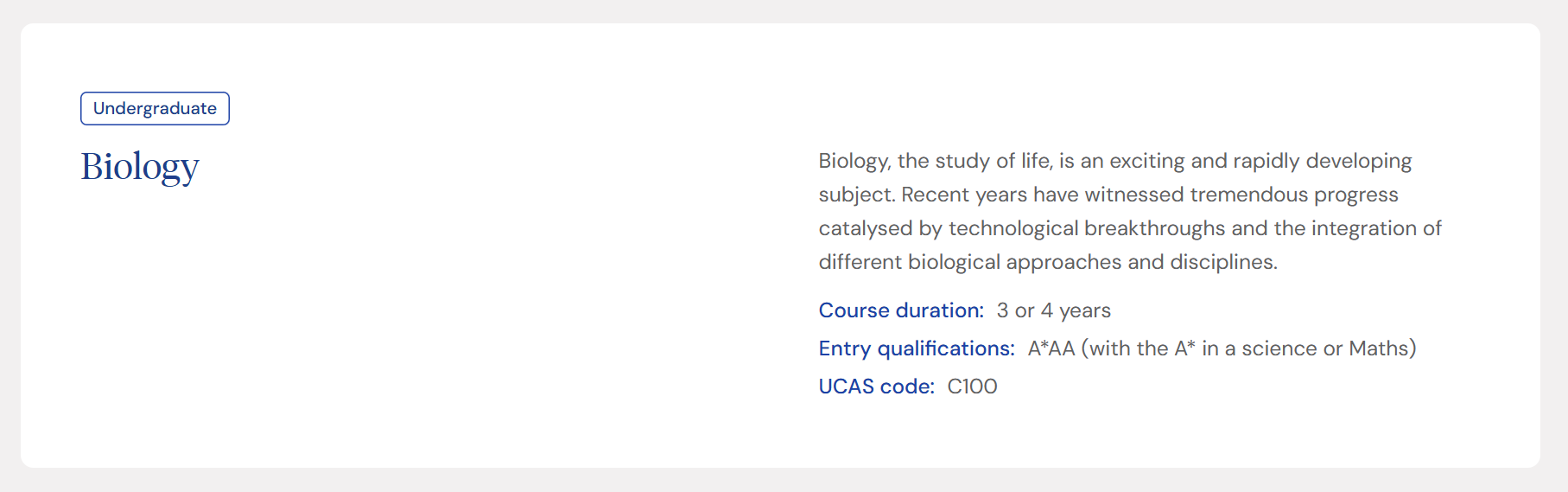
Structure Your Course Pages
Structuring course pages is also essential, as it maintains a logical hierarchy and ensures a seamless user experience.
Sites with a clear URL per course and established hierarchy are easier for both SERPs and AI engines to understand.
Important: While Google removed the Course Info rich result in 2025 and FAQ rich results stopped showing for most sites in May 2026, structured data remains one of the elements AI and traditional search engines use to understand a website.
Evidence Wins Students
AI tools and Google value evidence over fancy content - especially for universities and colleges. Experience, Expertise, Authoritativeness, and Trustworthiness (E-E-A-T) are particularly important here, because you're competing with other academic providers.
Every higher education course provider can say it provides world-class training and an excellent student experience, but as learners increasingly trust AI recommendations, cited providers have the best chance of attracting students.
Showcase Your Academic Team
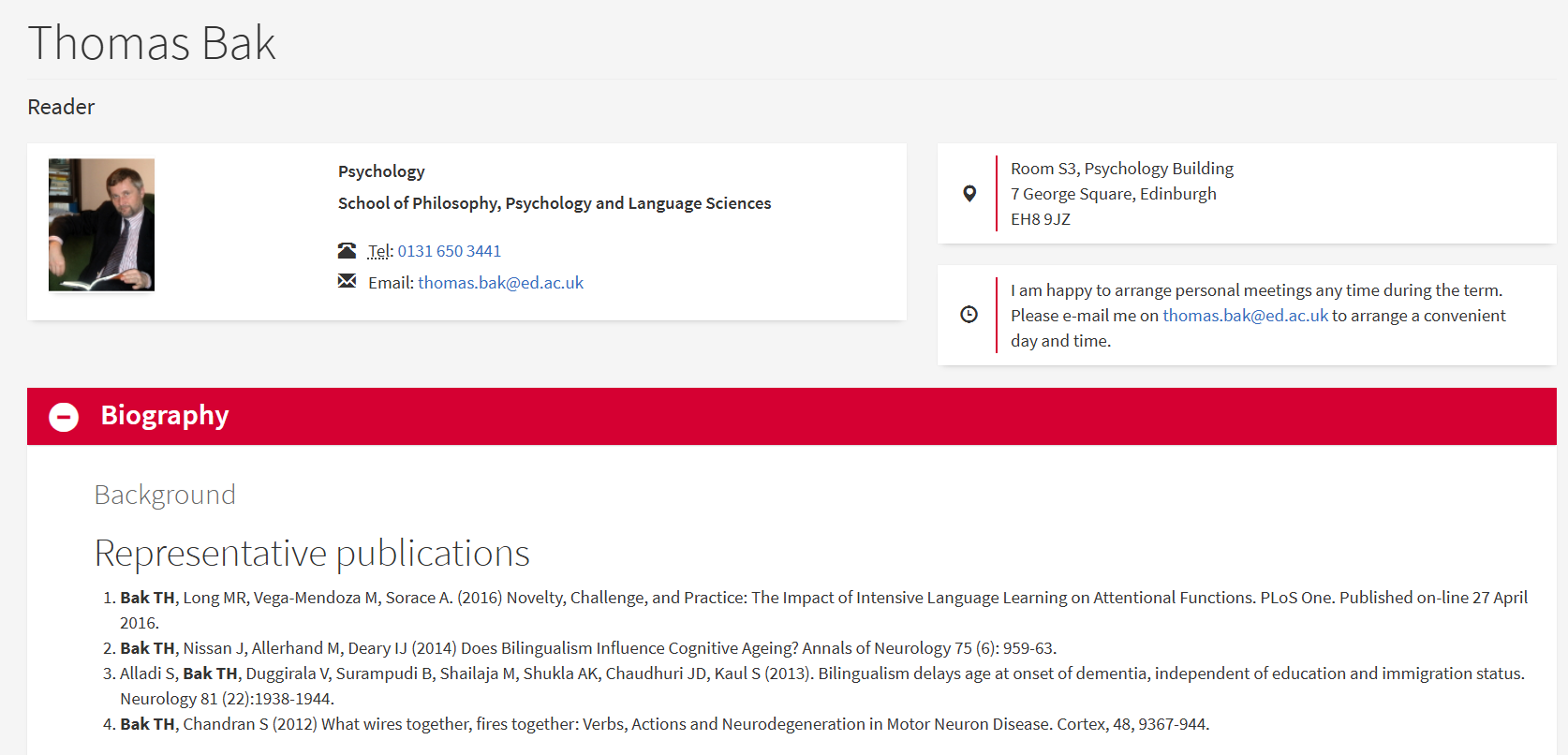
Each course page should have clear information about the professors and tutors, including their backgrounds, published work, accreditations, and any other vital information.
Publish Accurate Data
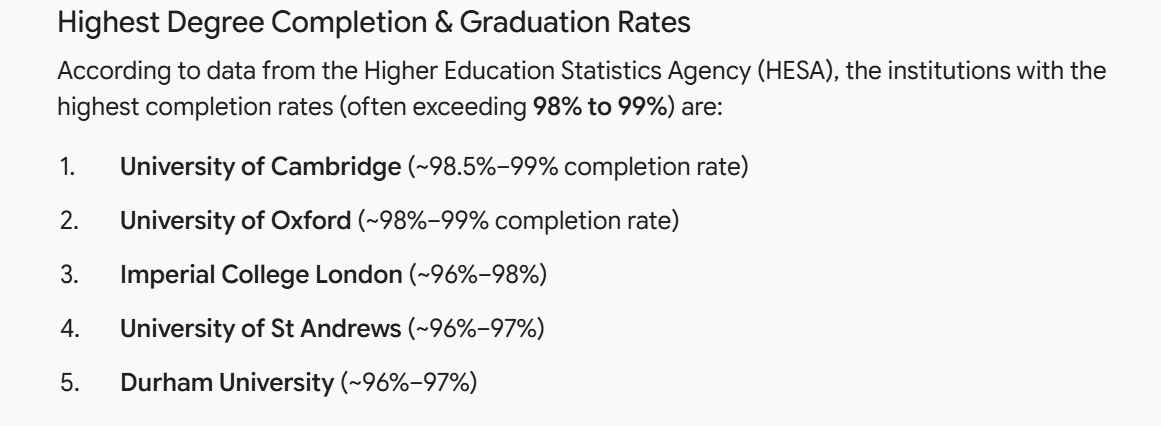
Students want to know that the university can help them reach their academic and professional goals. This means publishing realistic data such as pass rates, average grades, graduate employment rates, and progression information.
Students often use AI tools to search for this information, and publishing regular updates can improve your chances of attracting learners.
Accreditations and Recognition
Displaying your accreditations from professional bodies is also essential. This includes TEF and Ofsted ratings, along with awarding-body approvals.
Genuine student testimonials can also strengthen your reputation, and asking people to share reviews on platforms like Trustpilot and Google Business Profile can attract more students, as they trust these platforms.
Original Research
Universities have teams of professors and postgraduates who conduct original research. This research not only strengthens credibility, but also improves the chances of earning links and mentions from high-authority publications.
Combine Local, National and International SEO Strategies
While many students choose to attend a college or higher training programme in their local area, many university students move out of their area.
For this reason, your search strategy must combine local, national, and international SEO for maximum visibility.
Local Search Strategies
Local SEO strategies focus on "near me" queries, including "plumbing apprenticeships near me" or "part-time degree courses near me".
These queries have clear intent and are essential for attracting learners in your area.
A Google Business Profile gives prospective students information about your courses and improves your visibility in local search results. However, you should regularly update it with accurate information and new posts to increase engagement.
International SEO
Many universities and colleges rely on international student recruitment, which can make search engine optimisation more complex.
Instead of just finding the right keywords and creating high-quality content, you also need to think about the language international students use when looking for opportunities.
Dedicated information for international learners can increase applications, and some institutions also use dedicated website pages for academic programs focused on global students.
These pages benefit college and university SEO because they can guide international learners through the application process by providing course, visa, entry requirements, and other key details.
Measure Beyond Google Search Results
As SEO evolves into a granular process instead of focusing on search engine results pages and website traffic, the things you measure must diversify too. Today, it's about measuring different elements of your online presence across multiple channels for a clear idea of what's actually working.
The Most Important Metrics to Track in 2026 Include:
Google Search Console: Tracking your average impressions and position can help you identify priority terms for each course, instead of focusing solely on clicks.
AI Visibility: Test for key questions in Perplexity, Google AI Mode, ChatGPT and other LLMs. Monitoring tools can help you track how often your educational institution is cited and whether those citations are turning into hand-offs (where someone visits your website from AI tools).
Branded Searches: Check to see if people are searching for your courses or university/college by name. It's a positive sign that your visibility strategy is working.
Forum and Social Mentions: SEO doesn't just drive website visits; it also puts you in the mind of potential students, which means they might ask questions on forums or social media.
Self-Reported Attribution: Add simple questions like "How did you hear about us?" to enquiry and admission applications to see how prospective students are finding you.
Higher Education SEO: The Bottom Line
While core SEO strategies still matter, keyword research through Google Keyword Planner and publishing content aligned with high-volume terms is no longer enough.
Today, your SEO efforts must include Answer Engine Optimisation (AEO) and Generative Engine Optimisation (GEO) to attract organic traffic and improve your university's online visibility.
By focusing on a combination of backlinks and brand impressions, you can attract domestic and international students to your website, but the pages and information you provide determine whether they complete an application.
Assertive specialises in SEO for higher education, addressing all aspects of your website and connected online platforms.
From increasing your SEO rankings to ensuring your university appears in AI search and creating a seamless website experience, our multi-skilled team of experts is here to help you compete online and attract more students.
Please contact us today for a free consultation and proposal.