











Online courses are one of the best ways for coaches and online creators to diversify their reach and attract sales. Whether you offer a free or paid learning experience, SEO supports online course growth by increasing organic traffic and turning that traffic into sales or subscribers.
In this post, we'll explore why online courses benefit creators and coaches, how SEO supports course visibility and conversions, and effective strategies you can implement.
TL;DR: How Does SEO Support Online Course Growth?
SEO helps coaches and online course creators attract potential students, increase course enrolments, and reduce their reliance on paid advertising and social media. An effective strategy focuses on:
Keyword research: Targeting relevant, high-intent searches that attract potential buyers.
Course page optimisation: Improving sales pages with persuasive content, relevant keywords, and social proof.
Content marketing: Creating topic clusters and original, experience-led content that builds authority and guides visitors towards conversions.
AI search visibility: Optimising content for AI-powered search tools to increase course discoverability.
Technical SEO: Ensuring websites and course platforms are accessible, mobile-friendly, and fast-loading.
Performance tracking: Measuring organic traffic, email sign-ups, conversion rates, and course enrolments to understand ROI.
The bottom line: SEO is a long-term growth strategy that connects organic visibility with qualified leads and course sales.
Why Online Courses are a Marketing Strategy for Creators and Coaches
It's no secret that online courses are an effective way for content creators to drive income, with Whop stating that courses are the biggest income stream for six-figure content creators (Whop).
There was a time when someone could share their knowledge, turn it into a few videos or emails, and attract sales. But the sheer popularity and profitability of digital learning now means that creators have to deliver three things:
Value: People expect value for money, but there's a fine line between selling yourself too short and pricing the course so high that it needs to constantly justify its value.
Originality: When someone pays for an online course, they want to know they're investing in knowledge and tips. Cookie-cutter courses from blog posts and AI tools don't deliver the unique value people expect.
Interactivity: Research shows that online courses with interactive features and communities have 5 times more engagement and are 16 times more likely to complete their learning (Zenler).
However, the popularity of online courses also means there's significant competition - and that's why an SEO strategy is vital for attracting buyers and subscribers.
Why Is an SEO Strategy Important for Online Course Creators?
Ask most course creators where they market, and most will say social media platforms like Instagram, YouTube, LinkedIn, and TikTok. Some will say they use paid ads. But these platforms also come with challenges.
Social media algorithms constantly change, and views don't necessarily turn into sales. Paid ads can drive instant website traffic, but high spend amounts can make them inaccessible to smaller coaches and creators.
SEO is a long-term strategy that begins to pay off when you're consistent. It also reaches audiences actively looking for solutions, rather than relying on shifting attention spans.
For example, if someone's scrolling through Instagram, they might see your course but get distracted by other content. In contrast, someone searching for "how to build a successful freelance business" is actively searching for a solution.
If your course shows up in these searches, you have a good chance of turning leads into conversions.
SEO Fits These Objectives:
Organic Visibility: Enabling potential students to find your courses through relevant searches.
Qualified Traffic: Reach the right people when they're actively searching for solutions.
Credibility: Showcasing your knowledge through helpful and high-authority content.
Lead Generation: Taking visitors through a journey, from downloading resources to attending workshops and joining your email list. All of which can increase course enrollments.
SEO Aligns Your Course Promotional Materials With Search Intent
SEO isn't just about keywords or appearing in search engine results; it helps you take your target audience through a journey, where desire turns into action.
Customer journey stage
Example search
SEO opportunity
Awareness
How to become a life coach
Educational blog post
Consideration
Best life coaching qualifications
Comparison guide
Evaluation
Online life coaching course reviews
Course information, testimonials and FAQs
Purchase
Online life coaching course UK
Optimised course sales page
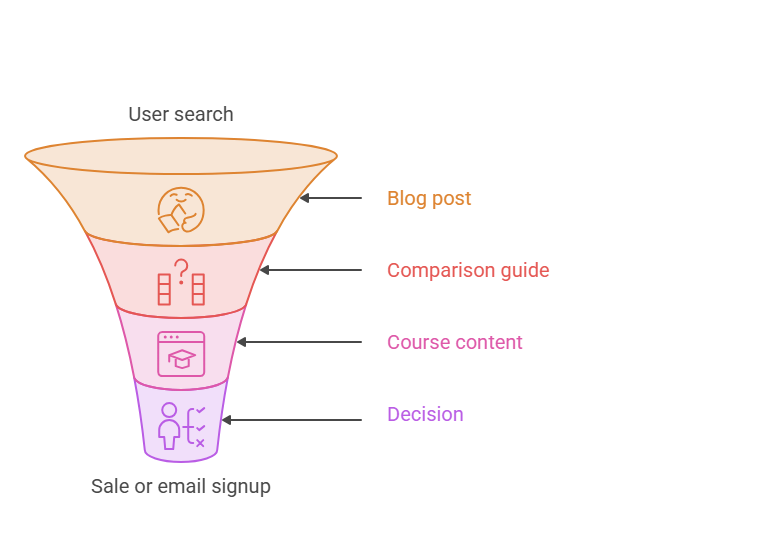
Instead of trying to turn every visit into an instant purchase, use SEO and content marketing to guide users through the journey.
For example, let's say someone wants to build confidence but can't afford therapy:
They type "How to build confidence" into a search engine, and a blog post you created shows up. They click on that blog post and find the information helpful. That post links to a comparison guide that lists different options for building confidence - including your course.
The content promoting the course impresses them, and two potential things can happen:
The person decides to invest in the course immediately, and you make a sale.
They're not ready to invest yet, but they sign up for your email list, where you can continue moving them through the decision-making stage.
Tips For Turning Search Engine Visibility into Course Conversions
1: Keyword Research Provides Valuable Insights
Keyword research still forms the basis of a successful SEO strategy because it shows you which words people use when they're searching for information.
It's not about finding generic terms, but about identifying high-intent, long-tail keywords that match what your audience wants to achieve.
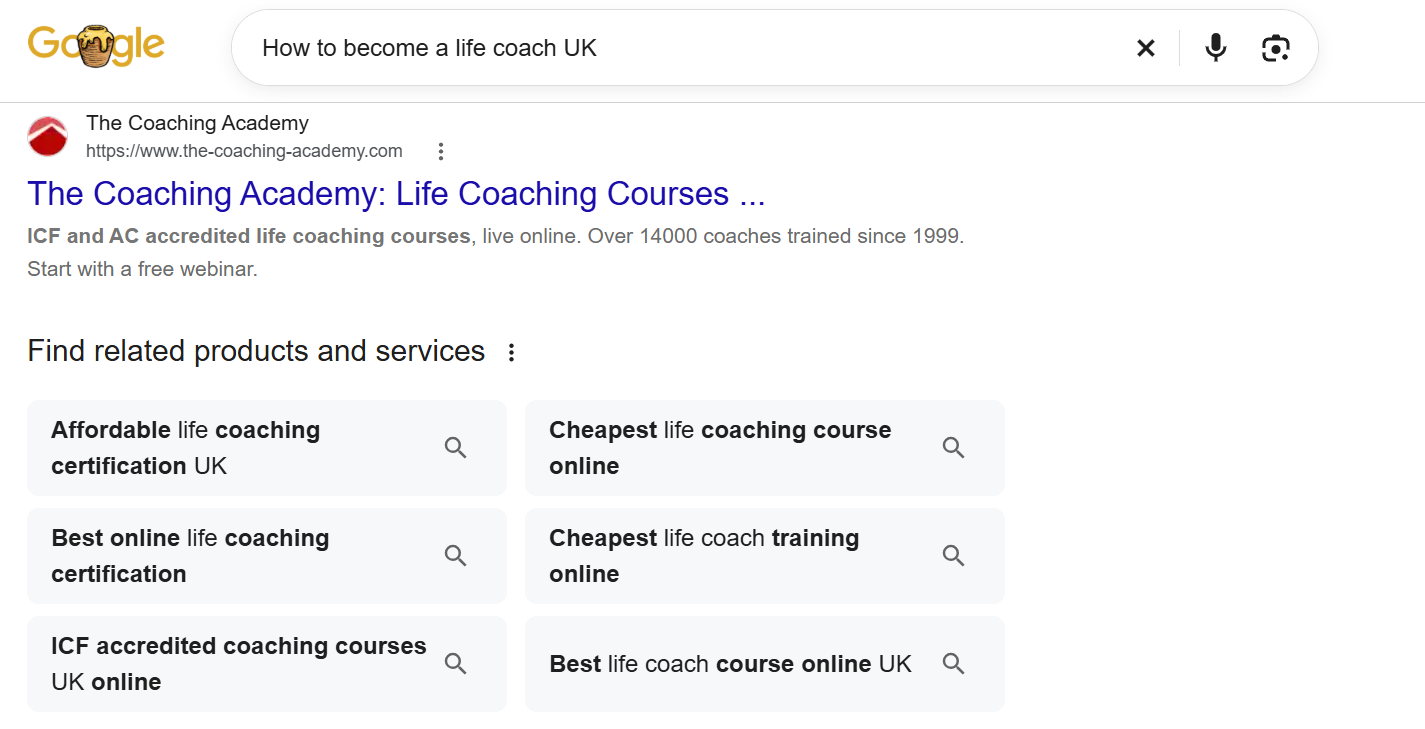
Keyword research is the foundation of an effective SEO strategy because it reveals the language people use when searching for information. For example, informational terms like "Should I become a life coach?" return blog posts and AI Overviews that provide information.
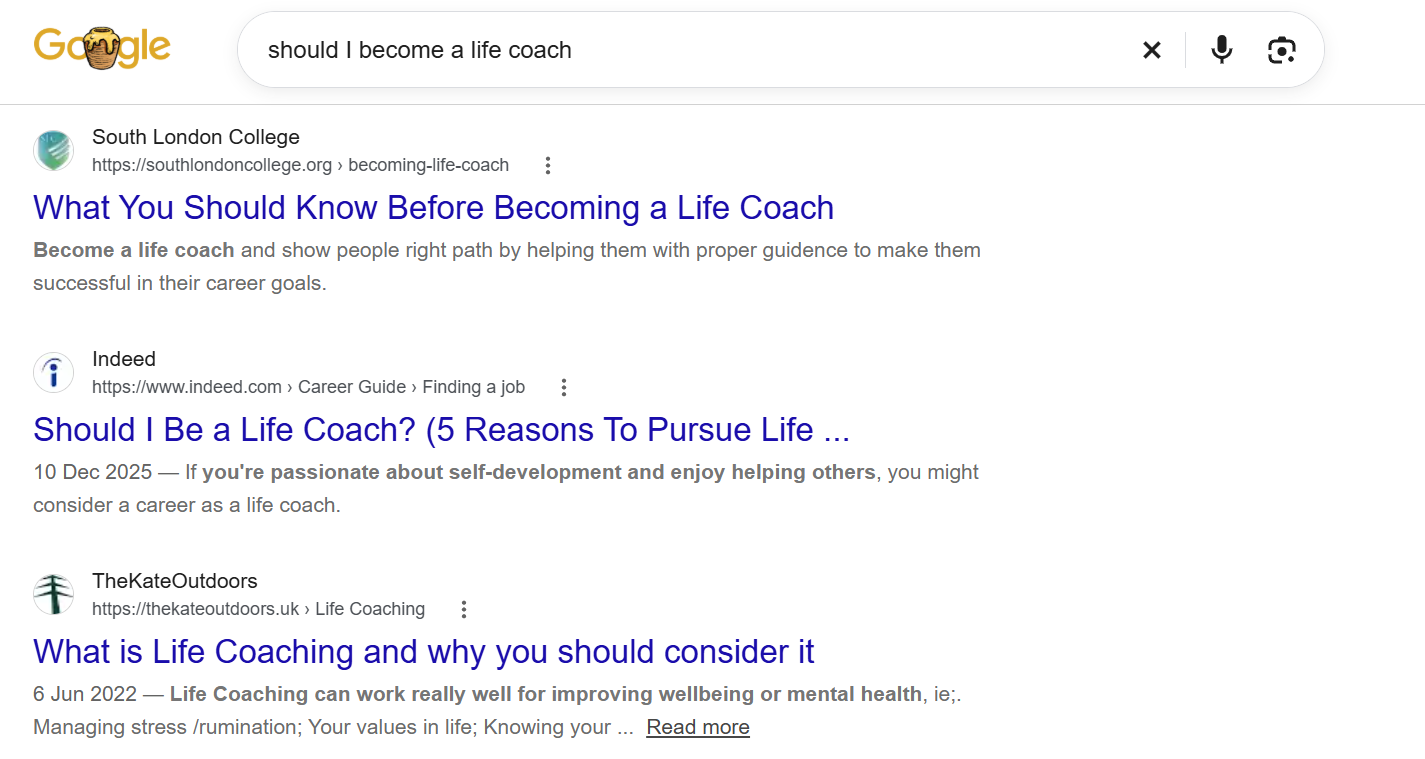
In contrast, "How to become a life coach UK" brings up course providers, comparison guides, and the information high-intent audiences are likely to consume.
2: Attract Enrolments By Optimising Your Course Sales Pages
Search engine optimisation is vital for course sales pages, as it helps people find information while also persuading them to take action.
Outlining important features such as community support, interactive quizzes, and other things people look for can help you make sales - but your content should focus on outcomes as well as features.
Prospective buyers want to be sure that they're investing in their future and the money they spend will pay off. For example, social proof and statistics about course outcomes can make a significant difference to sales.
3: Create Topic Clusters
Creating a few blog posts based on what people search for might help you appear in organic search results, but the rise of AI Overviews now means that no-click searches are making it harder to maintain or increase CTRs (Click-Through Rates).
Generic, keyword-targeted content is no longer enough to attract and convert visitors, but valuable guides can still move people through your website.
Topic clusters feature a main hub page, which links to different sub-pages. Each serves a distinct purpose, and this structure helps people stay on your website longer, digest your content, and see you as a helpful resource.
Course creators have a distinct advantage in content marketing: firsthand experience. Instead of focusing on generic guides, use your experiences to establish authority, which makes people more likely to click through to your website rather than competing with AIOs.
4: AI Search Visibility Attracts Organic Traffic
Search behaviour is changing, and AI tools are becoming increasingly popular. Instead of competing with AI, use it to your advantage.
A report from Search Engine Land confirms that 37% of consumers are using AI tools as their first port of call in 2026, highlighting the importance of AIO and LLM optimisation.
AI searches can also drive higher conversions, as visitors are typically more high-intent because of the searches they perform.
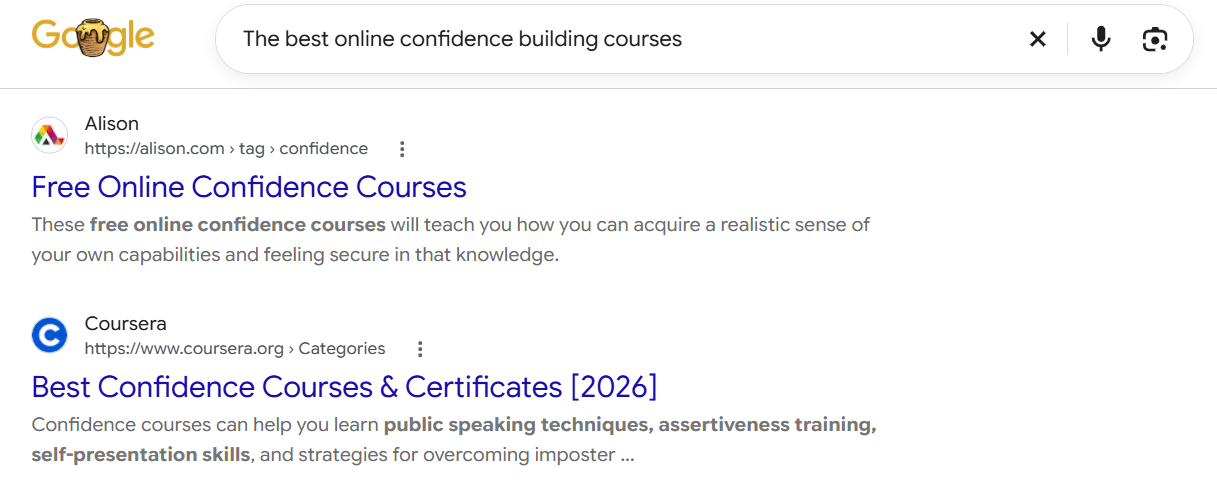
A standard Google search for "The best online confidence building courses" brings up mostly comparison guides.
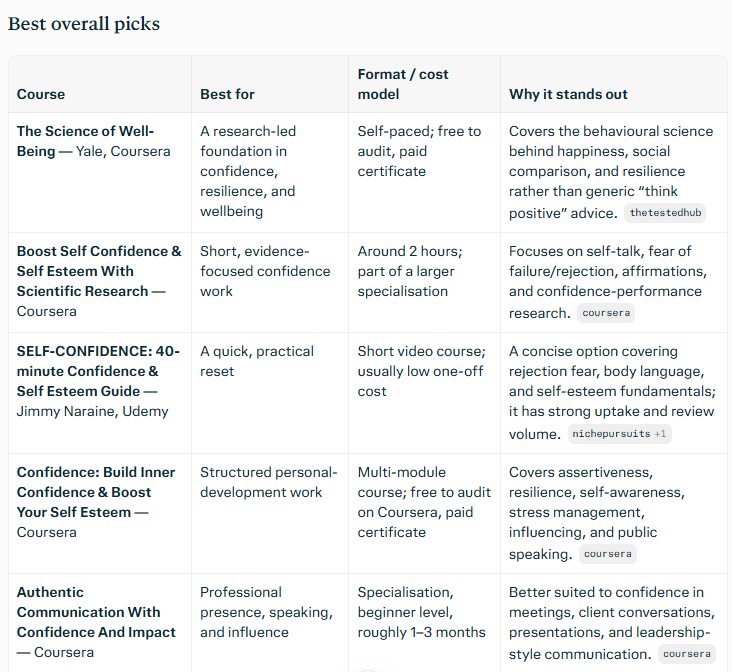
But the same search through Perplexity actually lists individual courses, making it easier for users to compare providers and make a decision - all in one place.
Interested in improving AI visibility? Take a look at our free resources, including:
5: Technical SEO Ensures Your Website Is Accessible
Technical search engine optimisation (SEO) is integral for both your personal website and any course creation platforms you use. It not only ensures your website is crawlable, but also improves user experience.
Everything from mobile responsiveness to loading times and other Core Web Vitals plays a role in your website's search presence and conversion rates.
Working with a technical SEO specialist can help you refine your website and ensure it doesn't impact conversion rates.
How to Measure SEO Campaign Success
Website traffic might give you an idea of how many people are visiting your website, but it doesn't accurately measure how much traffic is turning into conversions.
Online course creators and coaches should focus on marketing analytics that connect organic visibility to business goals.
SEO metric
What it tells you
Organic impressions
How often your pages appear in Google Search
Organic clicks
How many visits your pages receive from search
Keyword rankings
Where your website appears for relevant searches
Course page engagement
How visitors interact with your sales content
Email sign-ups
How effectively your content generates leads
Course enrolments
How many visitors become paying students
Organic conversion rate
The proportion of organic visitors completing a defined action
Use Google Search Console to see which queries bring visitors to your website, and Google Analytics 4 (GA4) to understand user behaviour, traffic sources, and conversions.
The Bottom Line
As a course creator or coach, SEO isn't just a way to build visibility; it's a sustainable digital marketing strategy that reduces reliance on paid ads and social media.
When you understand how to optimise your sales pages with relevant content, meta titles, meta descriptions, internal links, and AI visibility, you can increase traffic that can turn into conversions.
However, SEO isn't fragmented into different techniques; it's an intensive process that encompasses everything from technical SEO and link building to content quality and ongoing conversion optimisation.
When you connect the dots across all of these, your SEO strategy drives measurable results for course sales.
Ready to develop an SEO strategy that increases your ROI? Book a free proposal with Assertive today.
FAQs
Does SEO work for online courses?
Yes, SEO can help you attract visitors who are actively looking to learn. If they find your content helpful, like what you say, and have a good experience on your website, there's no reason these visitors shouldn't become engaged, active leads.
Can I use SEO to sell courses without social media and online advertising?
Absolutely - but social media is an important digital marketing channel for building a brand presence. SEO is a long-term strategy, but social channels build your authority as a creator while also driving clicks to your website.
Meanwhile, online ads can drive instant traffic to your website, which helps with new courses or promotions.
Should I optimise my course platform or my main website?
You should optimise both, as each supports the customer journey. For example, your website can attract visitors with educational content and drive people to your course platform or sales pages. Then the content on these pages can drive conversions.
How long does SEO take to generate online course sales?
SEO won't instantly increase course sales or subscriptions, as it's a strategy that gradually compounds with consistent effort. However, organic visibility and traffic growth typically increase within 3-6 months, but the success of your strategy ultimately depends on the entire website experience.