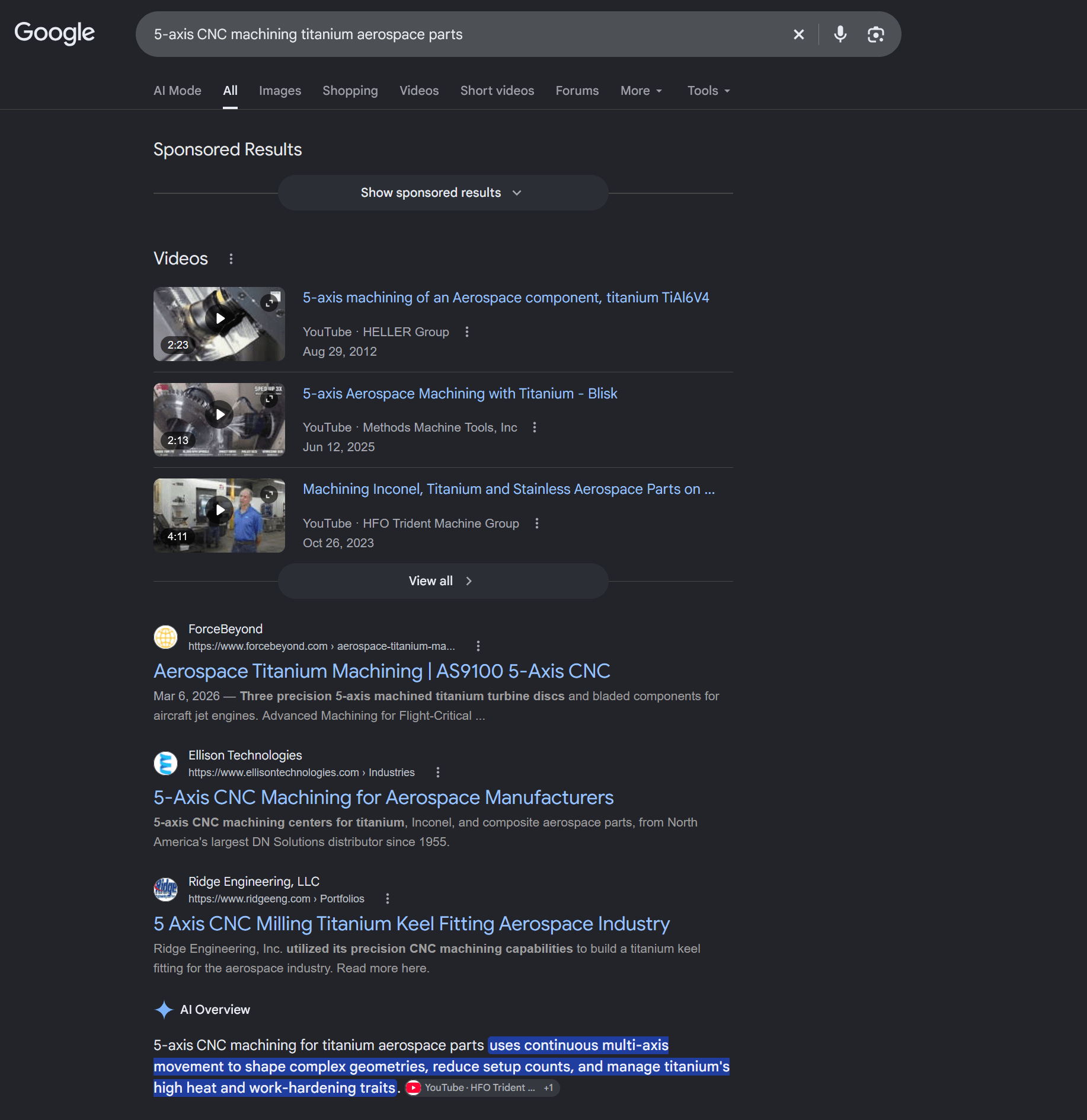










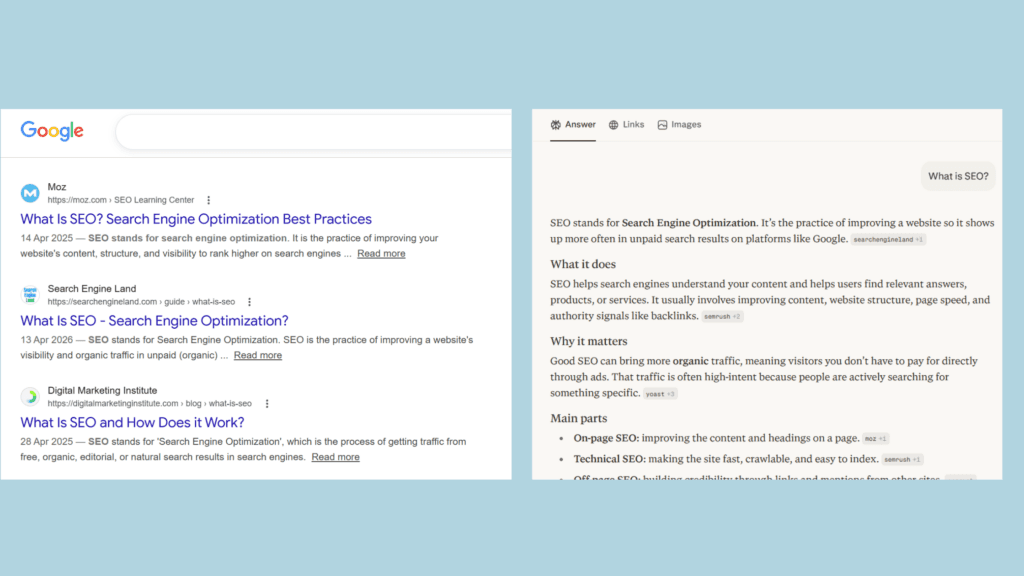


SEO is dead, and today it’s all about AI. You’ve probably heard that repeatedly and are wondering how to navigate organic growth in a world where SEO no longer matters.
But here’s the thing: SEO is still vital to any marketing strategy. As one of the UK’s most respected digital agencies, we’ve been at the forefront of search since 2007.
We’ve seen algorithms change, voice search become a significant factor in any organic strategy, and AI go from an exciting new technology to an ingrained part of marketing operations.
SEO is changing, and LLM optimisation is now vital for long-term growth. But it’s not a case of which one to use; it’s now to integrate both into your marketing strategy.
That’s what we’ll cover in this post.
TLDR: LLM Optimisation vs SEO
Traditional SEO isn’t going anywhere. Google still dominates search, and the fundamentals (good content, strong backlinks, solid technical foundations, genuine relevance to what people are actually searching for) still determine who ranks and who doesn’t.
What’s shifted is what happens after your content is found.
AI tools like ChatGPT don’t serve up a list of links and leave the user to browse. They read, synthesise, and respond. Which means the question is no longer just “can people find my content?” — it’s “will AI use it to build an answer?”
Put simply:
- SEO gets your content in front of the right people
- LLM optimisation gets your content woven into the answer they receive
You need both. And the good news is they’re not as separate as they might seem. Quality content that’s clearly structured, genuinely useful, and consistently authoritative tends to perform well in both worlds.
The mindset shift is straightforward: you’re not just trying to rank anymore. You’re trying to create useful content that’s structured enough that both humans and AI systems choose your content over everything else available.
The Evolution of SEO
Traditional search engines like Google and Bing still dominate online searches today. But more people are turning to AI Overviews and LLMs to find information.
Large Language Models aren’t replacing SEO, but they are adding an extra layer to how we optimise content.
Google processes around 13.7 billion searches each day, with the average person performing three to four searches (SQ Magazine). When we compare this to AI search, there’s a significant gap.
For example, ChatGPT processes around 2 billion queries each day, while Perplexity processes 780 million queries each month (Search Engine Land).
So, even though AI is growing and LLMs are processing increasing numbers of searches, traditional search engines still dominate the market.
What Is Traditional SEO?
Traditional SEO is the process of optimising your website and content to rank higher in search engine results pages (SERPs). There are four types of SEO, with each playing a key role in your website’s rankings:
- On-Page SEO: Content creation, meta description, meta titles, and the things your website visitors see.
- Off-Page SEO: Building authority through backlinks.
- Technical SEO: The backstage elements, like page speed, mobile responsiveness, and loading time.
- Local SEO: Optimising a website to ensure that it appears in local search results.
Search engines use crawlers to discover and rank pages based on their signals. The more trustworthy and relevant your content is, the higher its chances of ranking well in search results.
This system worked for years and remains essential today. However, Google’s AI Overviews now summarise content and cite sources directly in the SERPs.
What Is Large Language Model Optimisation?
Large Language Model Optimisation is the process of writing and structuring content so that LLMs like ChatGPT and Perplexity extract text from it and cite the source in answers. Instead of just ranking high on a search results page, you can become part of the answer.
For example, if someone searches for “The best SEO tools”, an LLM will extract information from the most relevant content and cite it in the answer:

It’s important to remember that LLMs don’t traditionally rank content. Instead, they select, interpret, and synthesise information.
The Key Differences
Why Traditional SEO Still Matters
You’ve probably seen marketing influencers state that SEO is no longer relevant or necessary, but that’s not the case at all. LLMs don’t create answers; they scan their knowledge for the most relevant answers and extract text to form an output.
That’s an important distinction, because LLMs can’t deliver value without having access to raw data. Even though some people say SEO isn’t a top priority anymore, it’s still vital for your website’s growth.
AI Tools Rely on Indexed Content
If your content isn’t crawled and indexed, search engines and LLMs can’t use it. A 2025 research report from Ahrefs revealed that 76% of AI Overview answers pull content from the first 10 search engine results.
Simply creating content and hoping it will appear in both search results and AI answers isn’t enough. Your content must be easy to crawl, index, and rank.
Topical Authority
Websites that consistently publish high-quality content on a topic are more likely to be referenced by both search engines and LLMs. Google has prioritised websites that have established expertise in a subject area; topical authority is even more important for LLMs.
Large Language Models are trained on vast amounts of content. The websites that appear frequently across a subject usually cover it from multiple angles and go into detail, and are seen as more reliable sources.
When you focus on creating content that aligns with Google’s E-E-A-T criteria, you have a higher chance of appearing in AI engine answers.
Backlinks
LLM SEO doesn’t rely on backlinks like traditional SEO, but they still play a role in determining credibility and authority. For example, Google is more likely to index and rank authoritative content with backlinks from highly regarded sources, because these links act like a vote of confidence.
The more backlinks your website has, the likelier it is to appear in AI citations. As with classic SEO strategies, it’s not about quantity. Quality is everything.
One backlink from an authoritative publication is worth more than 100 backlinks from low-authority websites.
Search Intent Alignment
Traditional SEO focuses on intent alignment. Put simply, your content should answer real questions and give users exactly what they’re looking for.
When it comes to optimising for AI systems, search intent is more important today than ever before. LLMs work by interpreting the meaning of a specific query and searching for content that directly addresses it.
Just like the search engines display content that matches search intent, LLMs do the same, as you can see from these Gemini examples.
The question “What should I look for when buying trainers?” is informational, and Gemini has returned citations from informational blog posts.

But, when we change the search to “What are the best trainers for women in 2026?”, the answers focus on commercial intent:

If your content aligns with search intent and delivers on its promise, performance will improve across all channels.
Where Generative Engine Optimisation Changes the Game
SEO gets your content seen, LLMs determine whether it’s selected. Even though you should still focus on SEO, ignoring Large Language Model SEO impacts organic traffic and prevents you from appearing in generated answers.
Content Structure Matters
LLM SEO strategies focus heavily on content structure. These systems rely on structured content that’s easy to extract. That means you should write compact and direct answers of up to 60 words under each heading.
Then, expand and go into more detail. While this seems like a small structural adjustment, the structure of your writing determines how often you’ll appear in AI-generated answers.
FAQs Hold More Power
FAQs used to be mostly important for user experience, but they’re now integral to appearing in AI searches. When someone types a query into an LLM, the model will search for the most direct and clear answer available.
Websites with FAQ sections that use structured schema markup are more likely to appear in Google’s AI Overviews and LLM responses.
AI Systems Rely on Multiple Sources
AI models rely on a range of sources when deciding which websites to reference. So, while traditional search rankings rely on website authority and content quality, AI tools look at LinkedIn, review platforms, Reddit and other sources to establish which sources are more credible.
When you don’t appear consistent across these platforms, it can lead to reduced confidence, where AI assistants are less likely to cite your content.
Focus on Both SEO and AI Search
It’s not a case of choosing one over the other, as both strategies matter. Plus, you don’t need to implement two different strategies, as strong traditional SEO lays the foundations for AI visibility.
Here are the steps to optimise for both.
Clear Topic Targeting
Both SEO and LLM rely on clear topic targeting. Vague content doesn’t rank well in search results and won’t be selected by LLMs.
Centre your content around a specific topic or question, and make sure you cover it fully, rather than writing for algorithms and worrying about target keyword density.
Structured Formatting
Headings, lists, bullet points, and logical flow should be standard practice, not afterthoughts. AI crawlers rely on content structure to determine which sources to cite.
When your content serves a purpose, is organised, and simple to navigate, it’s more likely to appear in AI answers.
Create High-Quality Content
AI-driven search might be changing traditional SEO, but there’s one thing that won’t change any time soon: quality is the hallmark of high-performing content.
If your content answers search queries and offers genuine value, it’s more likely to rank higher and appear in AI responses.
Be Consistent
Just as Rome wasn’t built in a day, website authority isn’t built in a single piece of high-quality content.
What matters most is creating content that aligns with user intent while also focusing on topic depth. Everything you create should serve a distinct purpose, use internal links, and reinforce your knowledge.
How to Adapt Your Content Strategy for AI Visibility:

- Audit Your Content: Arrange a professional AI audit to gauge your content’s chance of appearing in AI answers. Each piece should clearly answer a question and provide genuine value.
- Answer Questions: Look at what your target audience is asking and create content that directly addresses these questions.
- Use Structure: Always structure your content using bullets, lists, clear headings, and logical sections.
- Build Clusters: Topic clusters help you create content around core themes, enhancing coverage.
The Bottom Line
While AI-generated responses and LLM optimisation are becoming must-haves for any digital marketing strategy, they’re not replacing traditional SEO. Instead, the most successful websites are leveraging both to increase visibility and establish authority.
Keyword research, building backlinks, and on-page SEO still matter, but the goal today isn’t just to rank your website high in the SERPS; it’s to become the best possible answer to queries.
If your current organic strategy needs work, we offer a range of SEO and LLM SEO services. Please get in touch with us today for a free consultation.
FAQs
Will LLM optimisation replace SEO?
Definitely not. LLM will continue to work alongside SEO, complementing it instead of competing with it. Most content cited by AI systems already ranks highly in traditional search results, but LLMs also offer opportunities for more niche websites to gain traction.
For example, a new website that hasn’t built authority through backlinks can still appear in AI-generated answers.
Can I still rank on Google without thinking about LLM optimisation?
Yes, you can. Traditional SEO is still important for any website. However, when you don’t factor in LLMs, you’re missing out on the opportunity to build authority and capture website traffic.
Remember, digital marketing is constantly evolving, and the most successful websites stay up to date with trends.
How do I measure whether my LLM optimisation is working?
Three levels are worth tracking:
- Citation Rate: Creating a set of up to 50 relevant queries and testing them across AI Overviews, Perplexity, and ChatGPT.
- AI Referrals: Use GA4 to track visitors from AI platforms.
- Business Impact: Does increased AI visibility increase branded searches and establish growth?