











This guide is all about why financial brands need strong content authority to attract website visitors and turn those visitors into clients. The search landscape is changing, but one thing will never change: financial brands live and die on trust.
With it, you have the opportunity to position your financial business as respected, reputable, and a safe choice for potential clients. Without it, you're fighting for visibility in a crowded sector, where target audiences are already sceptical.
In this post, we'll explore the importance of strong content authority for financial industry websites, and how to strengthen yours.
TL;DR: Why Financial Brands Need Strong Content Authority
Trust is essential in financial services SEO. Strong content authority helps financial brands demonstrate credibility, expertise, and transparency, giving potential customers confidence in their decisions.
Google holds financial content to high standards. As a Your Money or Your Life (YMYL) sector, financial websites should demonstrate E-E-A-T through accurate, trustworthy, and expert-reviewed content.
Content authority supports SEO and AI visibility. In a competitive market, detailed guides, topical clusters, original insights, and well-structured content can help brands appear in traditional and AI-powered searches.
Quality content drives business growth. Addressing informational, commercial, and transactional search intent helps financial brands attract relevant visitors and turn them into customers.
Accuracy and compliance are non-negotiable. Financial content should align with relevant FCA requirements, explain risks clearly, avoid misleading claims, and remain up to date.
Building authority takes time. Consistently publishing valuable content, showcasing professional expertise, earning reputable backlinks, and reviewing existing resources can strengthen long-term visibility and credibility.
What Is Content Authority in Financial Services?
Content authority is how trustworthy and credible a financial business comes across through any information it publishes.
It's not about knowing all the technical jargon and writing hundreds of articles to showcase your knowledge; it's about demonstrating a genuine understanding of regulations, customer needs, and the challenges they face.
For example, if a potential customer wants information about debt management, high-authority content would cover the different options available, link to free services, and include things like a repayment calculator.
This content will have higher authority and trustworthiness than a competing website that simply provides a simple explanation and then offers its services as a solution.
Content Authority vs Topical Authority
Topical authority covers a website's knowledge of a certain subject. Content authority measures the quality, depth, and coverage of a specific piece of content or library.
For example, a loan broker's website should have interconnected pages that fully cover debt, borrowing, and the person's rights. That's topical authority - it's the big picture, and it determines how search engines rank your website.
Content authority measures a single asset or connected library. For example, a guide on different types of loans, or a cluster that covers different borrowing options with regular updates and aligns with Google's E-E-A-T (Expertise, Experience, Authoritativeness, Trustworthiness) criteria.
Both are equally important, but content authority is essential to the user journey. When your content delivers genuine value and satisfies the user's search intent, they'll spend more time on your website and are more likely to convert.
Why Is Content Authority Vital for Financial Companies?
The financial services industry is heavily regulated because it directly affects an individual's or company's wellbeing. Misleading information, outdated compliance information, and content that attempts to persuade people to make risky financial decisions can have a lasting impact.
For this reason, finance sector websites face more red tape when creating content.
Google's E-E-A-T and YMYL Guidelines
When building a financial services content strategy, it's essential to remember that everything you create falls under Google's E-E-A-T guidelines:
Experience: The content must show first-hand experience.
Expertise: The creator should have the knowledge/qualifications required to discuss the subject. Or, it should be reviewed and quality-checked by someone who does.
Authoritativeness: The creator or website must be a reliable source of information.
Trustworthiness: Information must be accurate, transparent, and in-depth.
E-E-A-T applies to all websites, but financial services have an additional layer of complexity in the form of Google's YMYL criteria:
Your Money or Your Life in the Finance Sector
Google's YMYL criteria are for websites that can directly impact a person's finances, health, or wellbeing. For example, if an ecommerce website provides inaccurate product information, it might erode trust, but it won't have a major impact.
In contrast, if a loan website provides inaccurate information about interest and repayments, it could affect someone's financial health and lead to debt.
That's why everything you create should be reviewed by a qualified financial specialist, checked for accuracy, and have evidence to back it up.
Building Trust and Brand Authority
Purchasing decisions aren't all made equal; they're often based on risk and financial impact. Low-cost and low-impact products like clothing are often made on impulse, while tech items like TVs and phones require more consideration and research.
Financial products are both high risk and high impact, because the wrong decision can impact other areas of a customer's life.
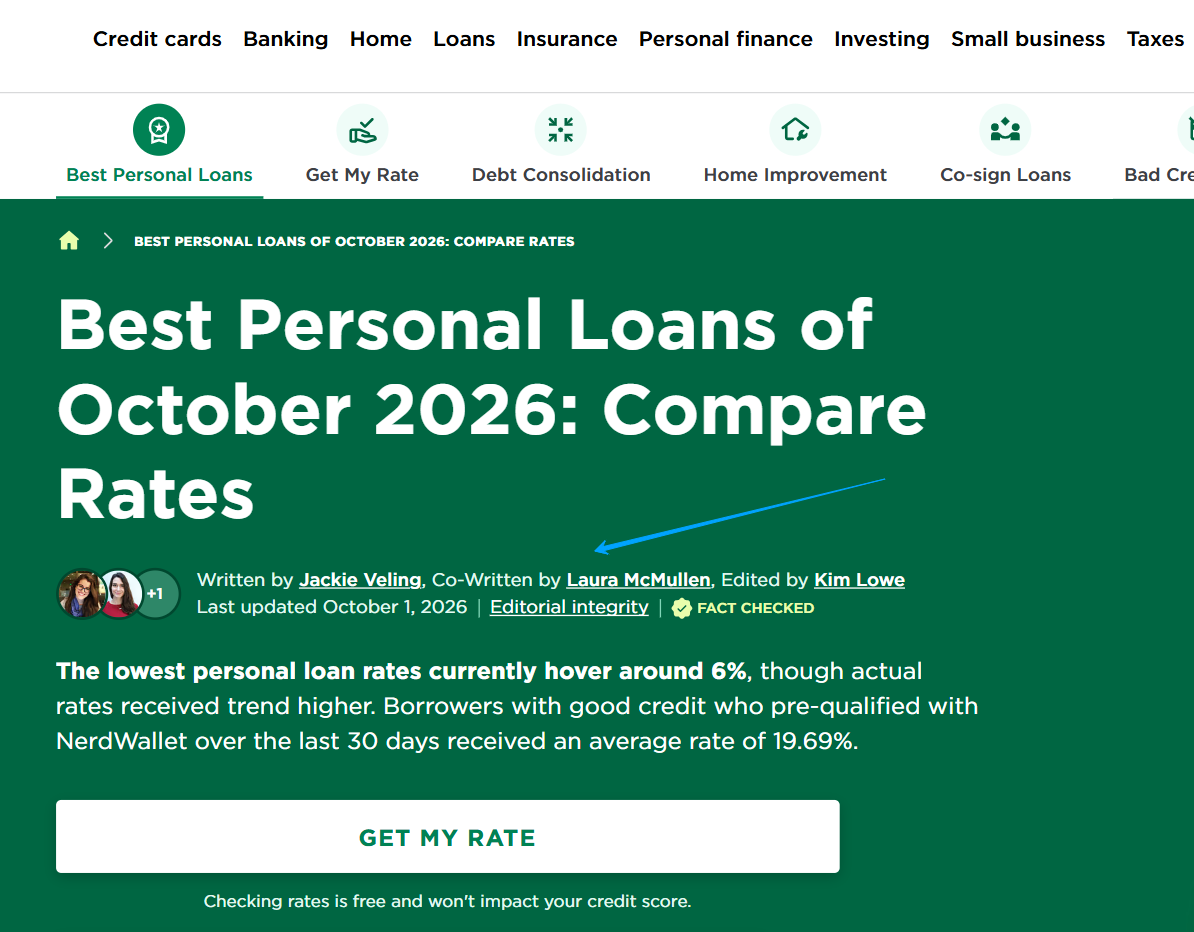
Content quality is central to building brand credibility and authority - both of which influence customer trust levels.
Imagine two websites that offer mortgage advice. One has a few pages with sales-focused language but limited information, while the other lists repayments, interest rates, and offers interactive tools for potential customers.
The second website has more brand authority, which means it's easier for customers to trust.
Content Creation Supports Organic Visibility
Search engine optimisation connects websites with users who are actively seeking information or solutions.
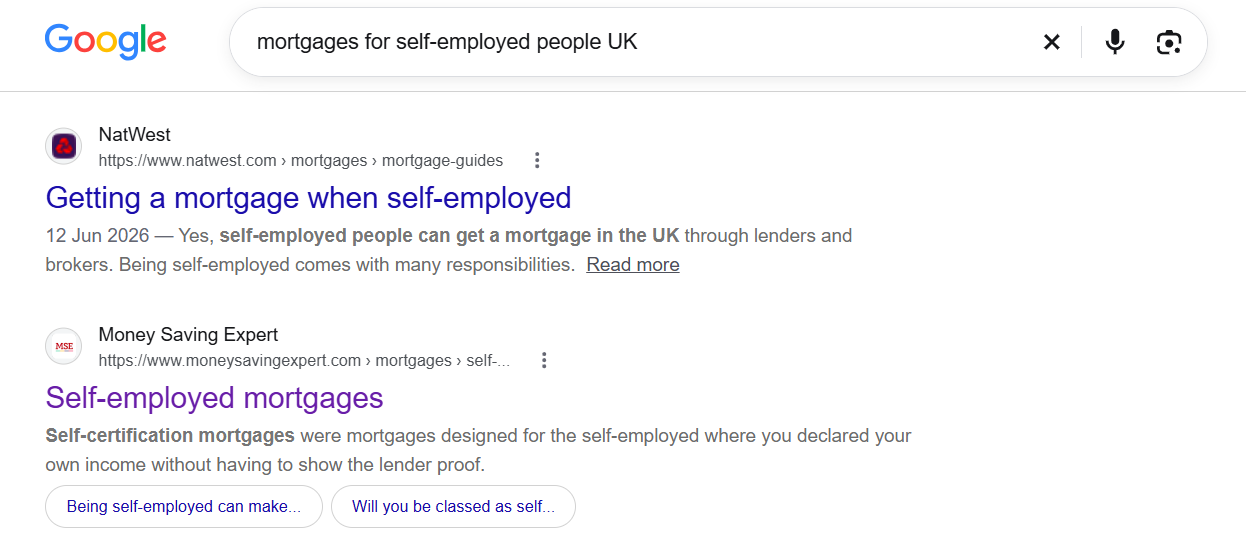
But financial SERPs are incredibly competitive, with comparison websites, publications, banks, lenders, brokers, insurers, and independent financial advisors all competing for visibility. Essentially, this means that smaller websites struggle when trying to compete for broad keywords.
As you can see from this example, "mortgages for self-employed people UK" brings up large banks and comparison websites.
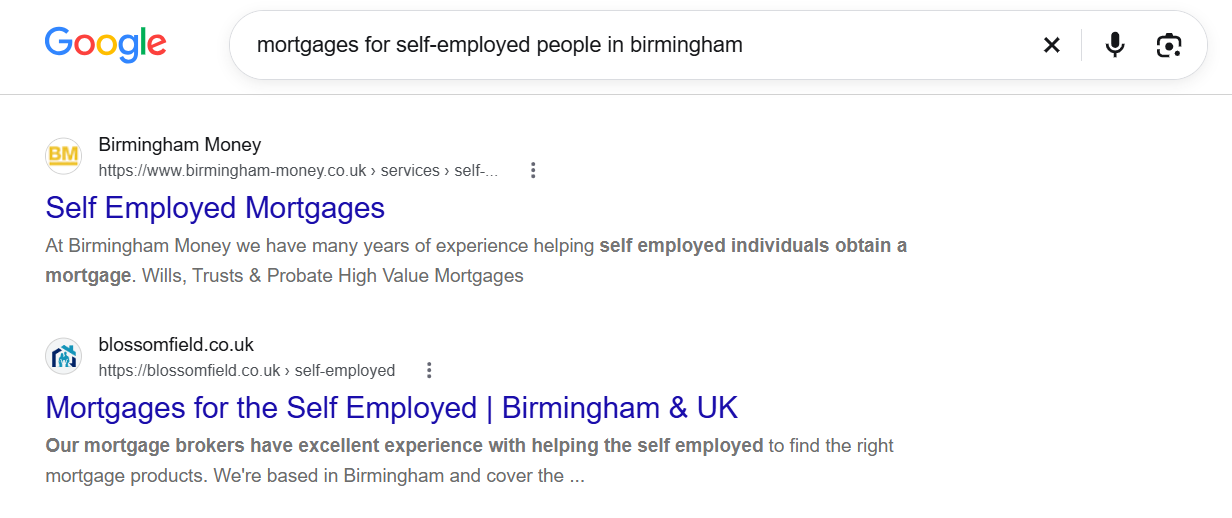
But small businesses can increase their visibility by targeting locations. "Mortgages for self-employed people in Birmingham" brings up local services that wouldn't appear in national searches.
Clusters for Full Topical Coverage
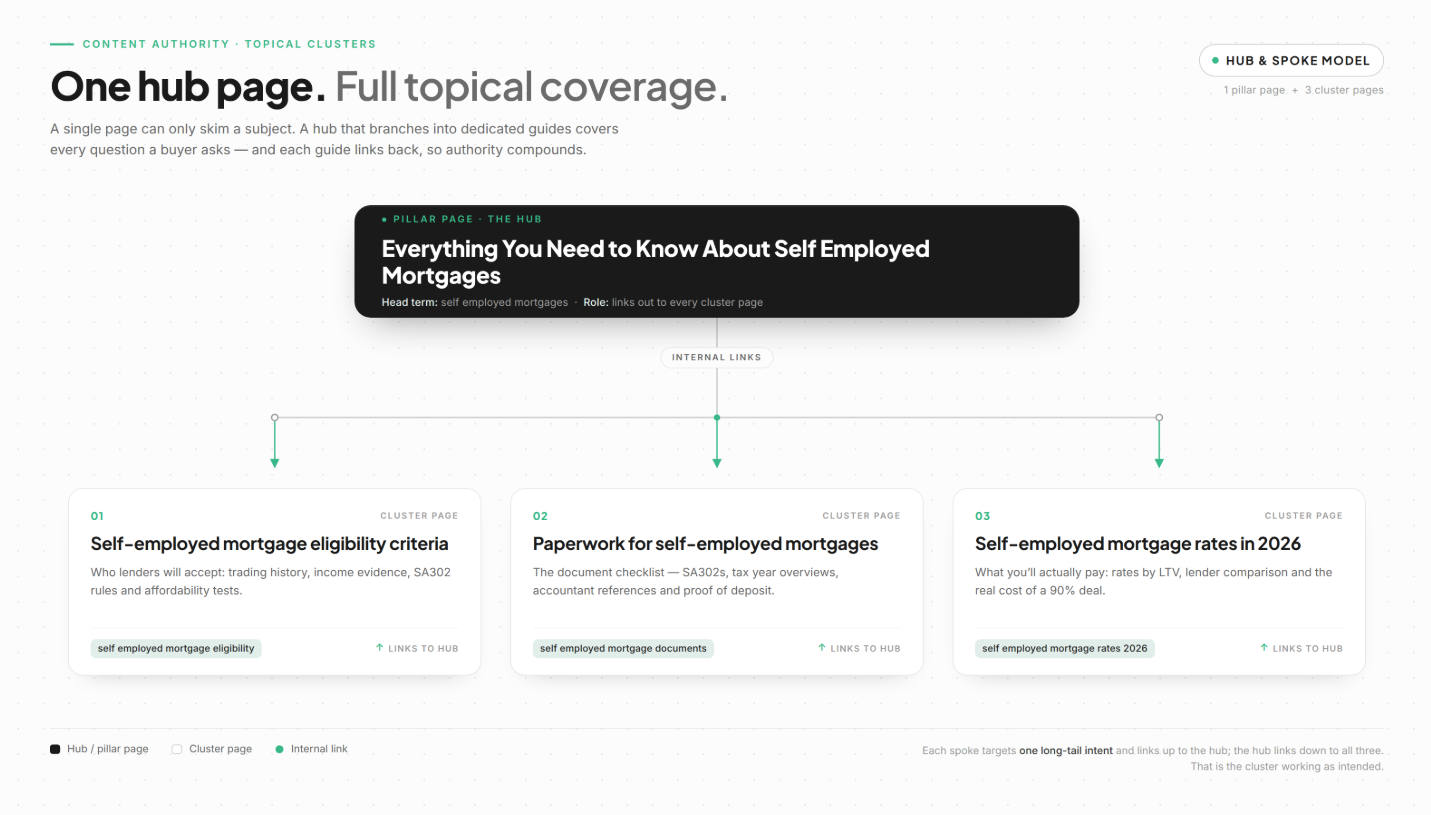
Another example of strong content authority is creating topical clusters that link to individual pages. Instead of one page that offers brief coverage, the hub page branches off into individual guides, which strengthens a website's authority:
AI is Changing the Customer Journey
Artificial intelligence has transformed multiple industries, and finance is no exception. Today, content marketing isn't just about being found in search engines; it's also about structuring your content to enhance visibility in Google's AI Overviews and LLMs.
Research from Lloyd's Banking Group revealed that 16.9 million UK consumers used AI tools for financial advice in 2026, and 28 million used them for money management.
The depth of these searches presents new opportunities for finance sector websites. For example, someone might ask a tool like Perplexity, "Why choose a five-year mortgage deal over a two-year deal?" and the tool will scan different resources for information - then provide a structured answer:
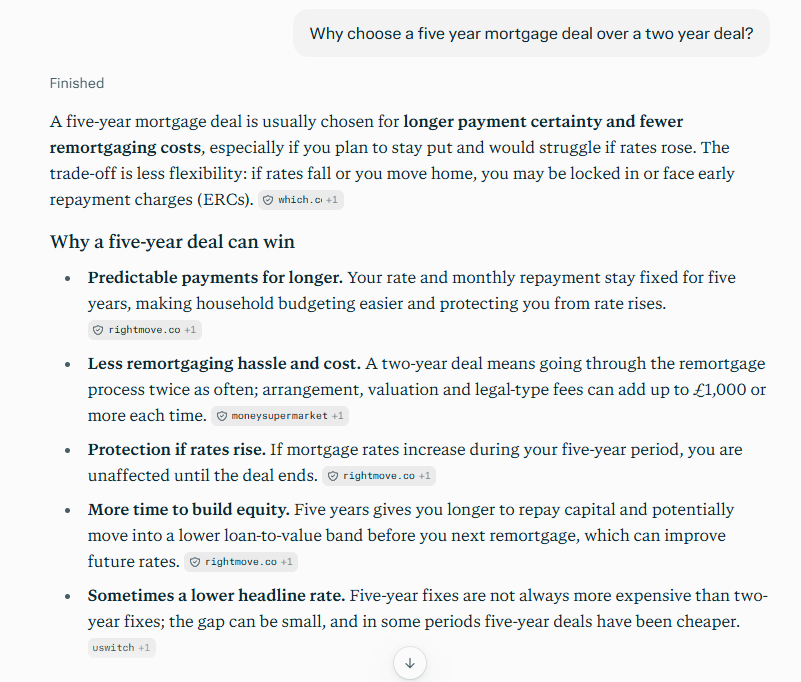
Appearing in these searches can generate up to four times more conversion rates than traditional search engines (Mintec).
Improving Your Visibility in AI Searches
AIO and LLM optimisation requires a different approach, which includes:
Answering questions with clear explanations before offering supporting details.
Following a logical content structure that includes headings, subtopics, and explanations.
Offering original research and showcasing your expertise.
Supporting each claim with evidence from high-authority sources.
Creating lists and tables.
Strategic Content Marketing Can Encourage Business Growth
Attracting organic traffic isn't the end goal; it's a starting point. You could get thousands of visitors each month, but if those visitors don't turn into leads, then there's no real commercial benefit. That's why content authority requires optimising for the entire user journey:
Informational Intent: Also known as top-of-funnel intent, this content answers common questions for users who are at the beginning of their journey. This includes topics like "The benefits of financial planning" and "Buying a home vs renting".
Commercial Intent: Users are actively exploring and comparing their options. Commercial intent satisfies queries such as "The best bank accounts for executives" and "Loan providers for bad credit".
Transactional Intent: When someone is ready to make a decision. For example, "Get a free mortgage advice consultation" or "Apply for low credit rating loans".
Navigational Intent: Signposts users to a certain page, like "NatWest mortgage application".
When you address each stage of the user journey, you have the opportunity to turn casual browsers into customers - and that's where measurable business growth happens.
How Financial Services Companies Can Build Content Authority
Building authority in the finance sector is an ongoing investment requiring time and resources. It's not something that happens overnight, but applying these strategies can help implement a content marketing strategy that compounds.
Create Relevant Content That Meets the Needs of Potential Customers
Before creating content, gain valuable insights about your target audience. You can do this by looking at social media platforms, reading competitor reviews, and using forums.
Once you understand your target audience's pain points, needs, and what they search for, you can design a content strategy that delivers genuine value.
Focus on Financial Expertise
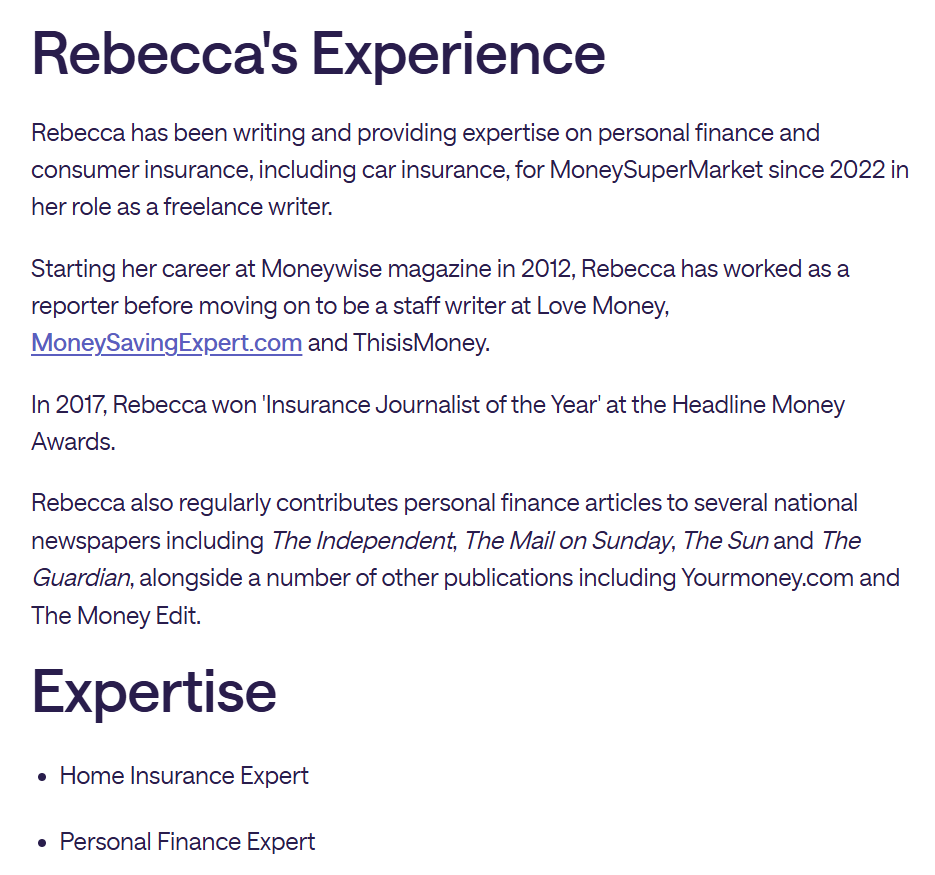
Financial content marketing isn't a case of finding some relevant keywords and creating content around them; you need to demonstrate expertise. This includes publishing original research, delivering market insights, and ensuring you stay updated with industry trends.
It's also important to showcase your team's expertise, including professional qualifications, memberships, FCA compliance, and author biographies.
Accuracy, Compliance, and Transparency
Whether it's loan brokers, credit card providers, mortgage providers, or insurance companies, content marketing must deliver transparency and compliance. This means aligning content with Financial Conduct Authority (FCA) and Consumer Duty Guidelines.
Key requirements include:
Explaining complex ideas simply and avoiding jargon.
Presenting clear financial risks surrounding each product.
Avoiding overstating the benefits of a product.
Providing a clear breakdown of immediate and long-term costs.
Update Content Regularly
In the finance world, quality content = accurate content. Emerging technologies, changing market conditions, and new tax rates can all impact content authority. Many financial services conduct quarterly content audits, where everything from service and product pages to educational resources is updated.
Displaying clear dates (published in 2023, updated in 2026) can increase trust levels from search engines, AI tools, and potential customers.
Build Credibility Across Your Digital Marketing Strategy
Last but not least, credibility no longer lives on your website. AI tools use multiple sources to extract and compare information before deciding whether to cite a brand.
This means that your financial marketing campaigns should focus on building coverage across multiple touchpoints, including social media platforms and through high-quality backlinks.
A link in a highly respected financial publication is worth more than 10 links in low-authority or irrelevant publications.
The Bottom Line
For financial services, content marketing is an ongoing investment - where credibility and authority matter at each stage of the customer journey.
The financial institutions that focus on creating valuable content that demonstrates trust, accuracy, and transparency will gradually build authority over time. And when that authority begins to reach prospective customers, it turns into sustainable business growth.
By combining SEO and AI optimisation with content that aligns with E-E-A-T and YMYL, you can stand out in a competitive market.
Assertive specialises in developing organic strategies for the financial services industry. With a proven track record in delivering long-term business growth, our specialists are here to support your marketing needs. Please book a free proposal today.