











Experience, Expertise, Authoritativeness, and Trustworthiness (E-E-A-T) matter in finance SEO because of the sector's complexity.
With robust regulations from the Financial Conduct Authority (FCA) and Google's YMYL guidelines, E-E-A-T should be ingrained in everything your specialists in the finance sector and fintech founders do.
In this post, we'll explore why financial sector companies need to understand E-E-A-T and how to ensure your content aligns with Google's Quality Rater Guidelines.
TL;DR: E-E-A-T in the Finance Sector
E-E-A-T is especially important for finance SEO because financial content falls under Google’s YMYL guidelines.
Strong E-E-A-T goes beyond good content. Credentials, expert reviews, case studies, trusted backlinks, transparency, and technical signals all matter.
AI content isn’t automatically penalised, but financial content needs genuine expertise, human oversight, accurate sourcing, and original value to build trust.
E-E-A-T also supports AI visibility. Clear sources, expert input, structured data, and verifiable information can improve your chances of being cited in AI-generated results.
What Is E-E-A-T (Experience, Expertise, Authoritativeness and Trustworthiness)?
E-E-A-T is a framework created by Google to assess content quality. Google states that content should offer genuine value to readers as part of its people-first stance (Google Creating Helpful Content).
Let's look at each element of the E-E-A-T framework:
Experience: The knowledge and experience of the author. This includes personal experiences and case studies.
Expertise: Subject matter expertise is also essential. The author should have genuine expertise in the financial sector, or a professional should verify the content.
Authoritativeness: Google looks for authoritative websites with case studies and an established reputation. The author's credibility also plays a part in determining authoritativeness.
Trustworthiness: The content should be accurate and verifiable, with unbiased financial advice. Transparency and website security can also impact your search rankings.
Why is E-E-A-T Important for the Finance Sector?
E-E-A-T is vital for financial services because people need to know that the information they receive is accurate and reliable.
Creating quality content isn't enough; it must also align with Google's YMYL (Your Money or Your Life) guidelines. These guidelines are for content that can impact an audience's wellbeing, financial stability, and health.
Here's why Google implements such strict rules for finance content:
It Protects Readers: Financial decisions can significantly impact a person's life. From taking out a loan to applying for a new credit card, promotional or inaccurate content can spread misinformation and lead to financial losses.
It Establishes Reputability: Fintech brands, banks, mortgage providers, and loan brokers face natural consumer scepticism. A YouGov survey revealed that 42% of people in the UK don't trust financial institutions, but transparency and accuracy can build brand reputation.
High Standards: Both traditional search engines and AI models place extra scrutiny on financial services content. Websites that have verified information from professionals, cite sources, and ensure transparency are more likely to be viewed as authoritative sources.
Does Google Penalise AI-Generated Content in the Financial Sector?
Google doesn't automatically penalise content because it was generated with AI, but financial websites already have stricter quality guidelines than content in lower-trust sectors. So, while you can use AI in theory, the reality is that this content is less likely to secure high search results rankings.
Google's Search Quality Rater Guidelines combine E-E-A-T and YMYL with two additional ranking factors when determining where to place a page:
Page Quality: Individual pages are rated from lowest to highest. PQ ratings are based on reputation and content value.
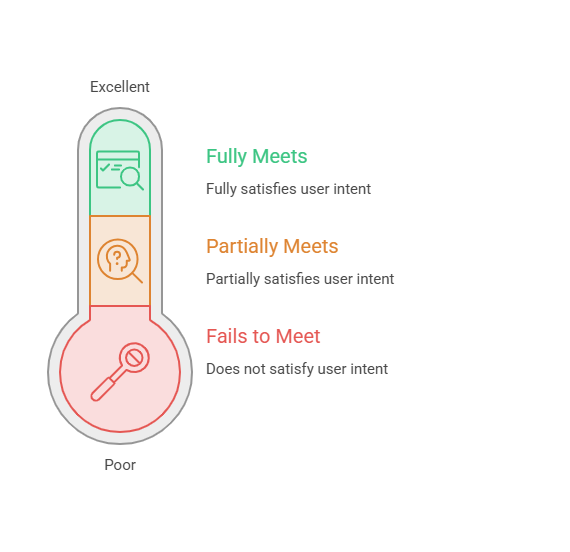
Needs Met: These ratings determine whether a search result matches user intent. The ratings range from "Fails to Meet" to "Fully Meets".
While Google doesn't automatically penalise AI content, research shows that pages generated by AI with little human insight or perspective receive the lowest ratings, meaning quality raters don't view them as helpful content (Search Engine Land).
So, while AI lets you publish financial content at larger volumes, it has a lower chance of ranking than human-produced and verified content.
How to Ensure Your Financial Content Aligns With E-E-A-T Guidelines
To ensure a stronger search performance, everything you create should follow E-E-A-T guidelines - but this is easier said than done. Because beyond content, other factors influence whether Google views your website as trustworthy, including off-page SEO, technical SEO, and your reputation.
Implementing the following strategies can help you improve your SEO performance and appear in AI search engine results.
Experience
Creating genuinely helpful content that showcases your financial knowledge and provides readers with unbiased information is the first step in establishing experience.

But Google looks at other factors, including whether you can actually prove that experience.
Reviews
Testimonials are fine for showing what it's like to work with you, but research shows verified reviews are more likely to build consumer trust (Trustpilot). This means that you should actively display third-party reviews on your website instead of just hand-selecting testimonials.

Case Studies
Case studies fall directly into the show don't tell category. If a financial service can prove it's helped clients and clearly outlines its process, prospective clients are more likely to trust its experience. It also shows search engines that your institution has verifiable knowledge.

Expertise
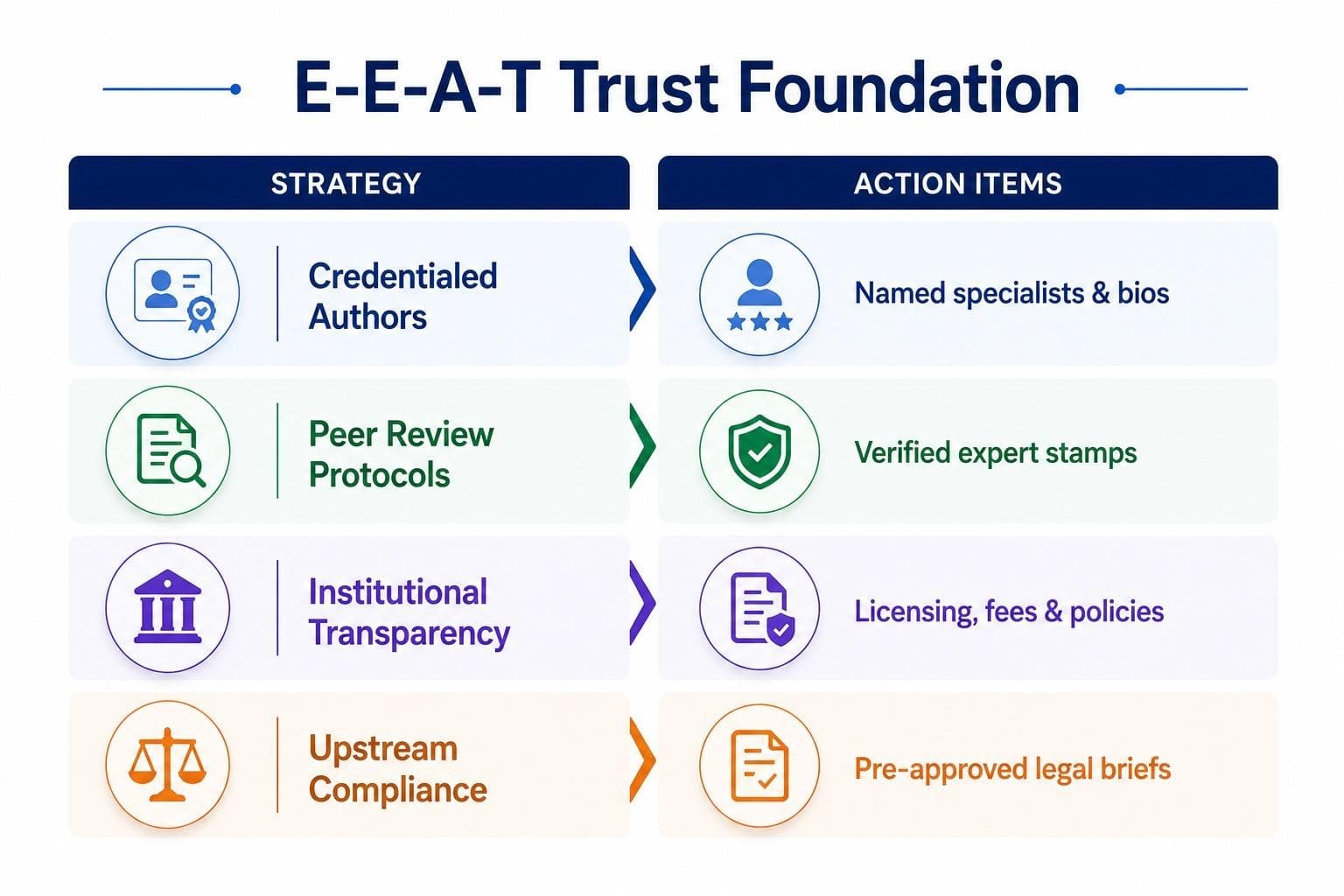
Expertise is about demonstrating your professional qualifications and credentials. As a direct ranking factor under YMYL, your content should either be written by a professional or verified by one.
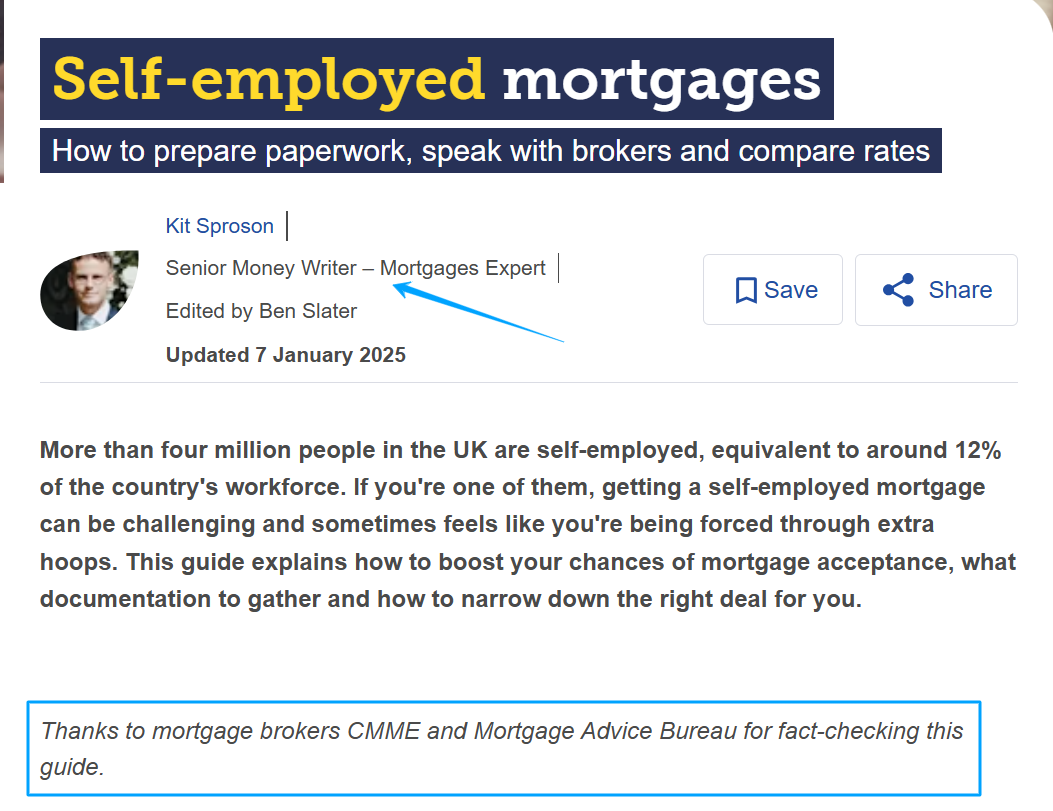
For example, if a professional content writer creates a high-quality blog post, the information should be fact-checked and verified by a finance expert or organisation - as you can see from this example.
Bringing in Other Experts
Asking other experts to contribute to your website can also be beneficial. For example, an independent finance expert or a journalist with a proven history of writing about mortgages or debt management topics adds another layer of credibility.
Using Credentials
Whether you use finance specialists to write or fact-check content, their credentials should be clearly displayed on the profile.
These include Chartered Financial Analyst (CFA), Associate Chartered Accountant (ACA), and Certificate in Mortgage Advice and Practice (CeMAP) - all of which are highly respected credentials.
Authoritativeness
Authoritative websites don't just provide reliable information; they back that information up with proof.
For example, instead of just listing a writer and their credentials, dedicated author bios that cover the individual's background and financial services history are more authoritative than content with no author information.
But what you do off-page also plays a key role in your finance brand's authority.
High-Quality Backlinks
Backlinks are a core principle of search engine optimisation and a vital part of any digital marketing strategy. They can also cement your authority and improve your search rankings - as long as you secure links from reputable websites.
This means sites that are in the finance industry, major news publications, government websites, and official bodies like the FCA.
10 high-quality backlinks in relevant publications are worth more than 500 spammy links with no relevance to your brand.
Trustworthiness
Trust is a critical element in E-E-A-T for financial services, because it aligns with Google's YMYL guidelines. Creating trustworthy content is only one part of showing search engines that your finance company is reputable. So, let's take a look at the other factors.
Regulatory Compliance
All applicable financial services in the UK should be registered with the FCA and provide this information on their websites:
This includes adding schema markup so search engines can verify your credentials.
Transparency
The DTR (Disclosure Guidance and Transparency Rules) state that all financial services must be transparent regarding the potential risks of products. This includes listing the downsides and fees to give prospective clients clarity during the decision-making process.
You should also list any commercial partnerships and affiliates. This also applies to commission received on financial products.
Editorial Controls
Implementing editorial controls shows that you care about providing accurate information. Back up any content you create by linking to professional organisations and respected publications.
Content Freshness
When it comes to content created for the finance industry, regular updates aren't just for user experience; they're also compliance rules. You should regularly audit your content and fact-check it against current information, including FCA updates and Bank of England interest rates.
Technical E-E-A-T
E-E-A-T doesn't just apply to off-page and on-page SEO, because structured data ensures that search engines can find, crawl, and index your financial content. Adding schema markup translates human trust signals into structured information that both search engines and AI tools can understand and extract.
You can use a tool like Schema.org to add the right structured data:
Schema Type(s)
Reason to Add
FinancialService and Organization
Provides vital company information, including your address and FCA registration.
Person (Author)
Connects author bios to their wider digital footprint, including social and professional profiles.
ReviewedBy
If the person creating content isn't a financial specialist, the ReviewedBy schema shows Google that it was verified by a professional.
FinancialProduct
Structured data for minimum deposits, interest rates, terms, and other key information.
E-E-A-T and AI
As more people turn to AI tools like ChatGPT, Perplexity, and AI Overviews for financial products and advice, E-E-A-T isn't just about traditional SEO success anymore. You also need to create content that AI engines are likely to trust and cite.
AI looks at the following factors when deciding which content to use and cite:
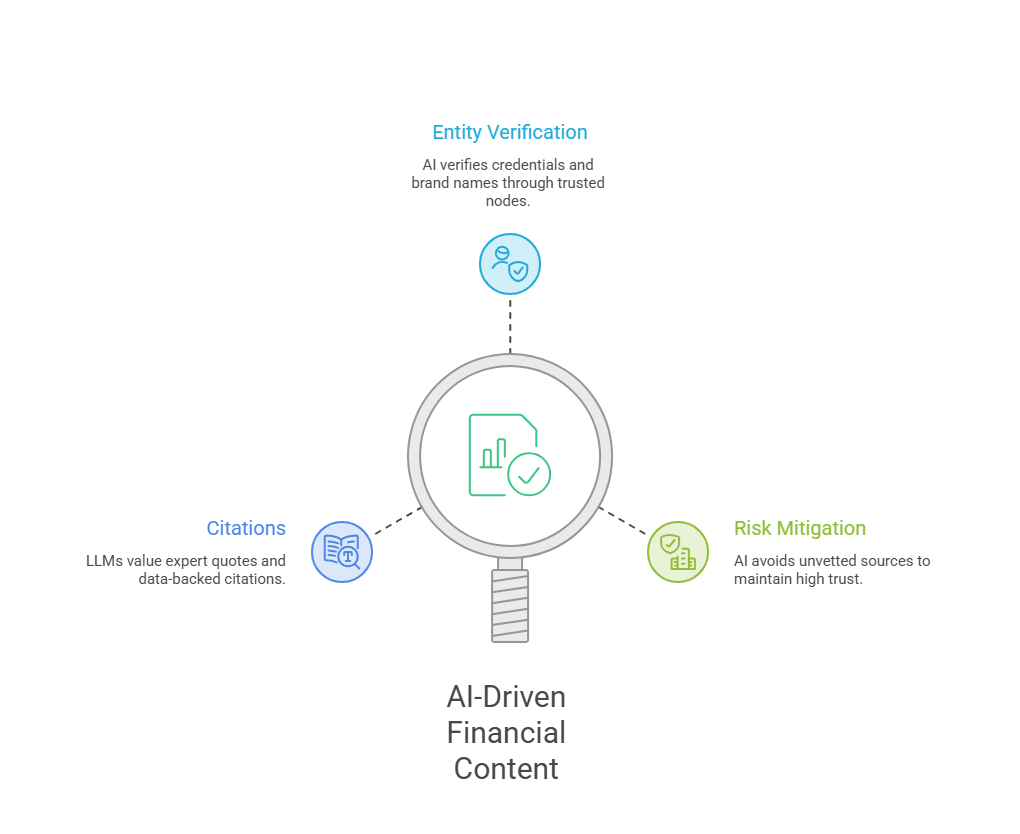
Citations: LLMs usually focus on sources with expert quotes, data citations, and demonstrated regulatory compliance.
Entity Verification: AI looks at trusted web nodes when verifying credentials, brand names, and authors. Financial brands that implement schema markup and have verified bios are usually more likely to appear in AI-generated answers.
Risk Mitigation: Generative AI engines actively try to avoid unvetted sources due to the high-trust nature of the financial sector.
The E-E-A-T Checklist for Finance SEO
E-E-A-T Pillar
Audit Action Item
What to Do
Status
Experience
Third-Party Reviews
Replace static testimonials with live reviews from trusted platforms such as Trustpilot or Feefo.
Experience
Case Studies & Data
Add detailed case studies that show what was done, how it was done, and the results achieved.
Experience
First-Hand Insights
Include original screenshots, real examples, practical insights, or your own data where relevant.
Expertise
Expert Review
Have financial content reviewed and fact-checked by someone with relevant industry expertise.
Expertise
Clear Credentials
Make relevant qualifications, such as CFA, ACA or CeMAP, easy to find on articles and author bios.
Expertise
External Contributors
Bring in quotes or insights from financial advisers, journalists, or other recognised industry experts.
Authoritativeness
Author Pages
Create dedicated author pages covering each contributor’s experience, credentials, press mentions, and relevant profiles.
Authoritativeness
Relevant Backlinks
Build links from reputable, relevant sources such as financial publications, regulated businesses, and national media.
Authoritativeness
Topic Coverage
Group related content into clear topic hubs and make sure key subjects are covered in enough depth.
Trustworthiness
Schema Markup
Add relevant structured data, including Organization, Person, FinancialProduct, and reviewer markup where appropriate.
Trustworthiness
FCA & DTR Compliance
Make FCA details, affiliate relationships, fees, and relevant risk warnings clear and easy to find.
Trustworthiness
Content Updates
Review important content regularly, keep rates and product information current, and show when pages were last reviewed.
AI Visibility
AI Citation Readiness
Make content easier for AI platforms to understand and cite with clear answers, credible sources, supporting data, and expert input.
FAQs
What does YMYL mean in finance SEO?
YMYL (Your Money or Your Life) are quality standards for topics that can affect someone's health, wellbeing, safety, and finances. This includes loans, insurance, mortgages, and investment advice.
How can financial websites improve E-E-A-T?
Demonstrate expertise and experience by using qualified authors or reviewers. Publish case studies and display verified reviews. Always list your credentials, implement schema markup, and prioritise transparency.
Does E-E-A-T matter for AI search as well as Google?
Yes, most of the signals that E-E-A-T uses make financial content more useful to AI engines. Using structured data, including verifiable information, and providing clear sources demonstrates an authoritative website.
Strengthen Your Finance SEO Strategy
E-E-A-T isn't a nice-to-have for financial services and fintech products: it actively determines whether your website appears on Google search engine results pages and within AI-generated answers.
If you'd like to improve your organic visibility, attract clicks, and turn those clicks into clients, Assertive specialises in custom SEO and GEO strategies that cement authority. Please get in touch with our finance SEO specialists today for a free proposal.