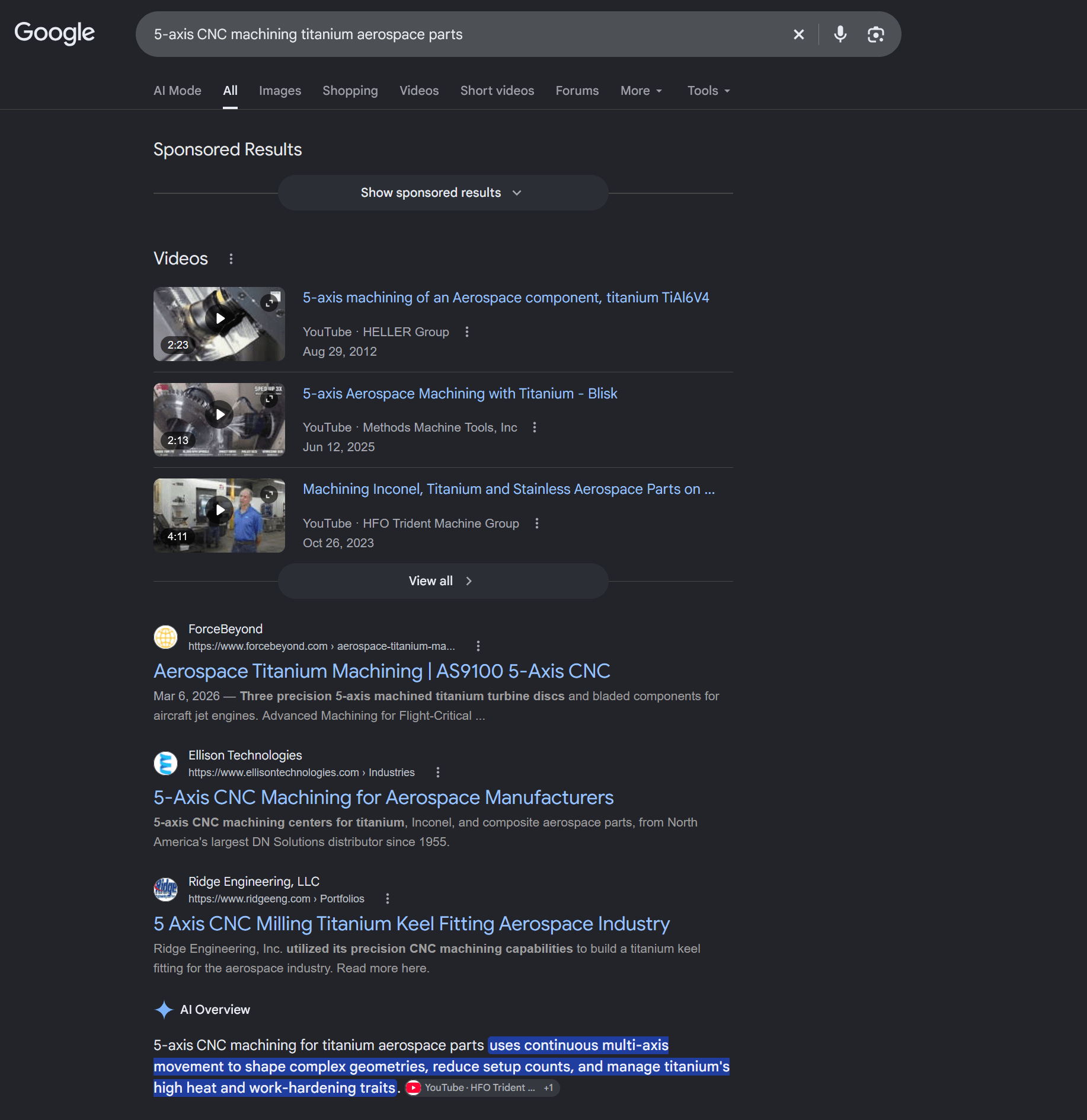












AI search is changing how people look for and find law firms. In the legal sector, user behaviour is shifting from organic search dominance to getting instant answers generated by AI Overviews and LLMs. With higher rates of zero-click queries reducing website traffic, your law firm's marketing strategy must change from simple keyword research to active AI optimisation.
Traditional SEO is still a core part of the process, but AI is adding an extra layer of complexity to marketing for law firms.
In this post, we'll explain how AI search might impact your marketing strategy and how the firms that stay ahead of this curve will survive.
TL;DR: AI Search and Law Firm Marketing
AI search isn't replacing SEO: Traditional legal SEO is vital, but law firms now need to consider visibility across AI Overviews and LLMs alongside standard search results.
High Google rankings don't guarantee AI citations: AI platforms can cite sources outside the top organic positions, making authority, relevance and well-structured content increasingly important.
Informational content still has value, but it needs a purpose: Generic legal articles face greater competition from AI-generated answers, so focus on in-depth content that demonstrates genuine expertise.
Your wider online authority matters: Reviews, professional profiles, industry publications, brand mentions and other external signals can strengthen your firm's visibility and credibility.
Don't neglect technical SEO: Crawlability, site structure, internal linking, schema markup, mobile usability and page speed all contribute to a strong foundation for search visibility.
You don't necessarily need a completely separate AI strategy: Instead, expand your existing SEO strategy to account for how people discover and research law firms through AI-powered search.
What is AI Search?
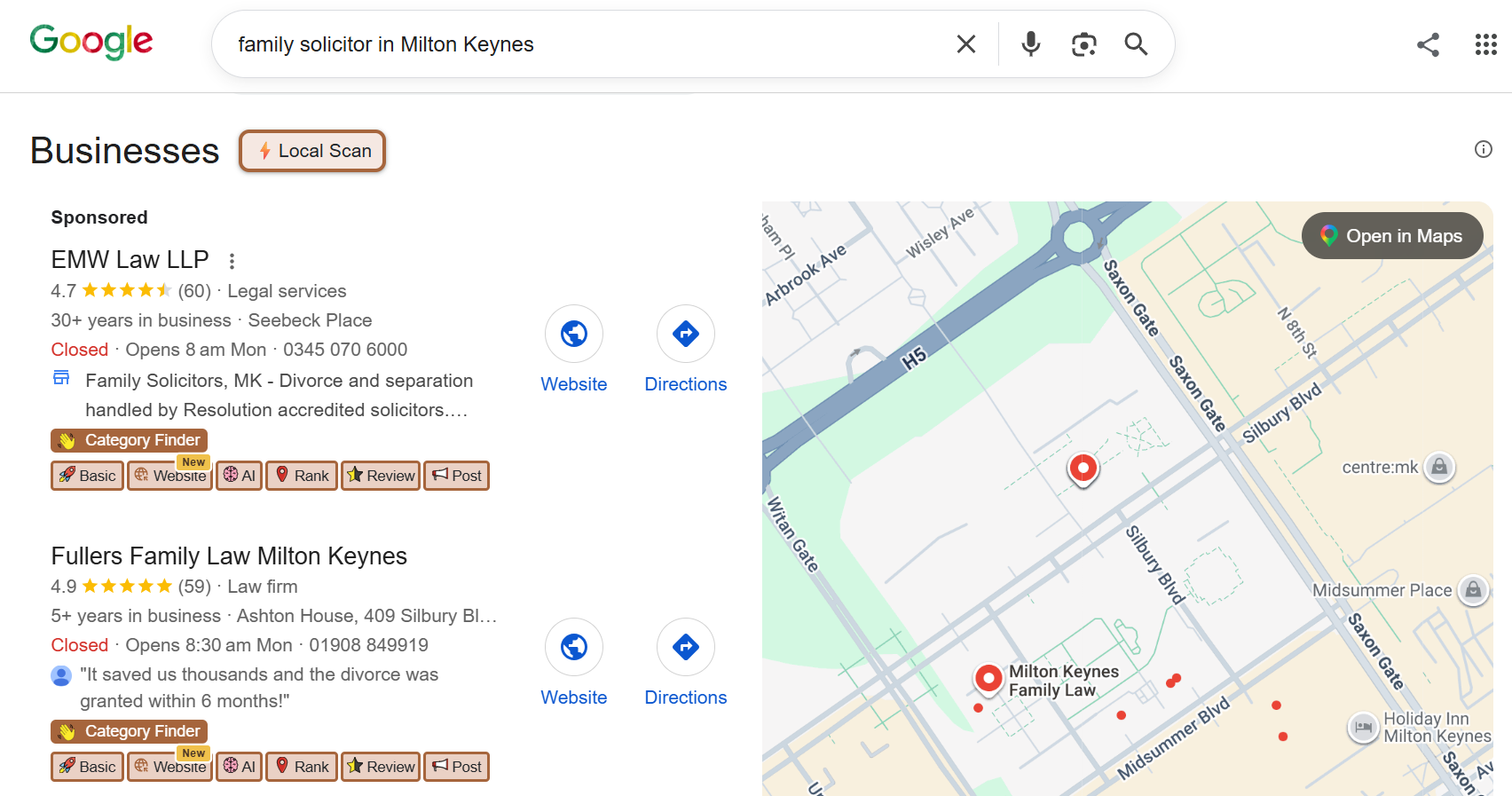
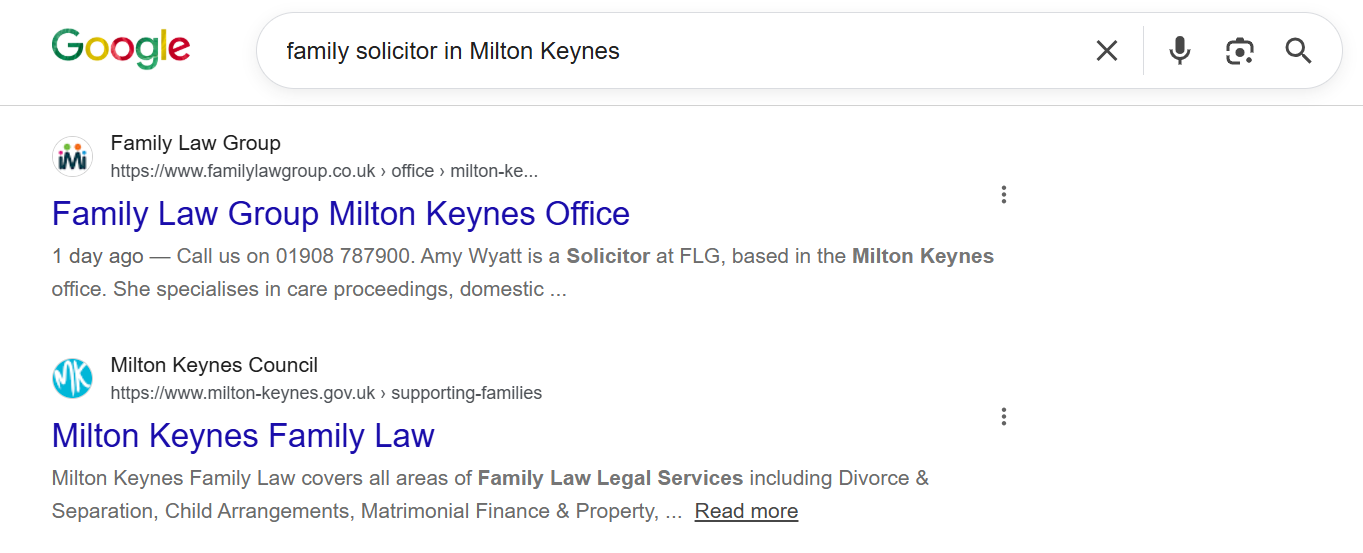
When someone performs a standard Google search, they might use queries like "family solicitor in Milton Keynes". The results page will show a list of local firms through Google Maps and relevant web pages with blue links further down.
AI tools work differently: when someone enters a query, they use generative AI to provide a direct answer rather than displaying web pages.
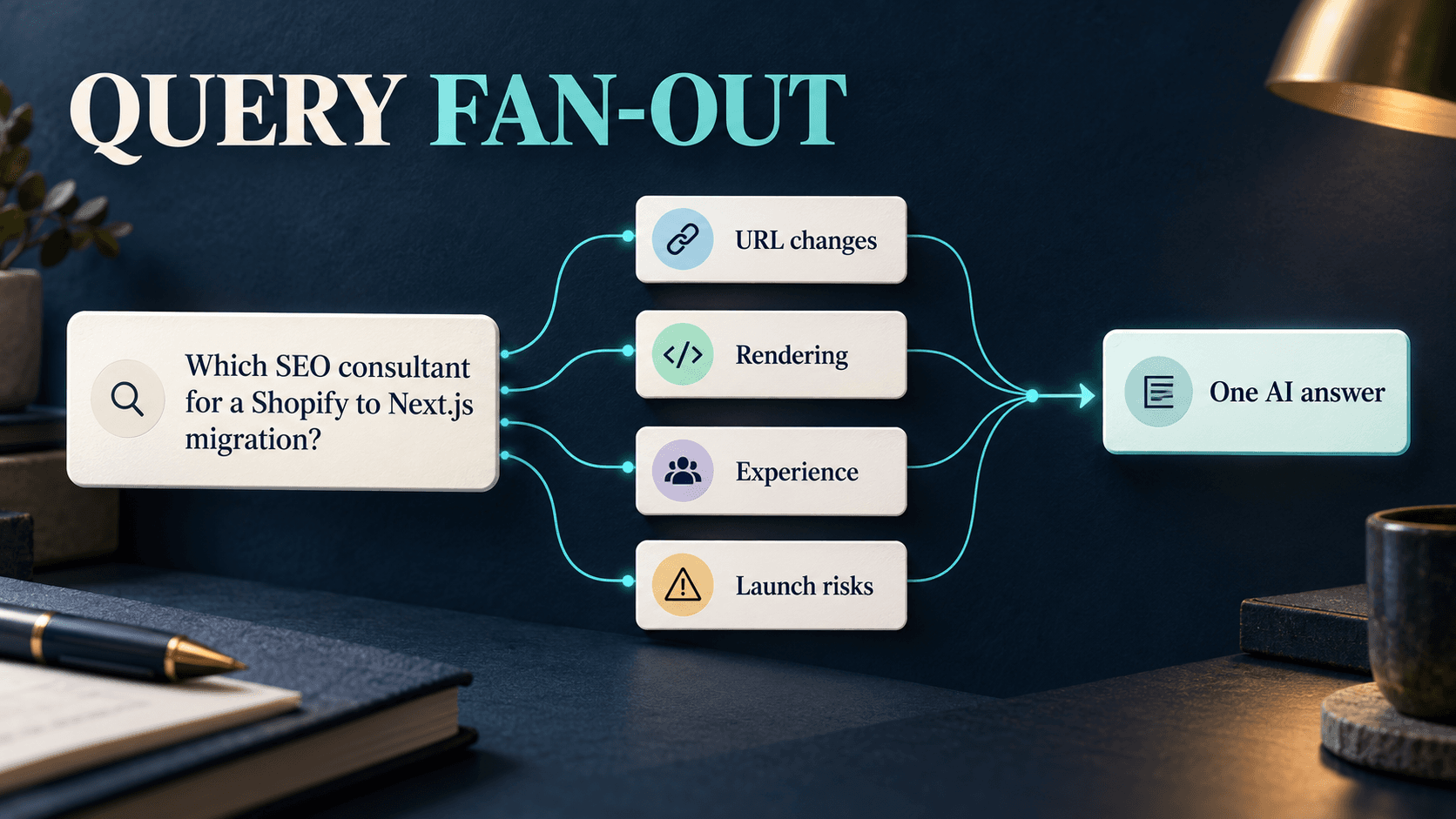
Both Google's AI Overviews and LLMs can also handle more complex queries, making it easier for clients to find the right support. For example, if a prospective client types "Which family solicitors in Milton Keynes specialise in complex child custody cases?", both the AIOs and Perplexity offer a detailed breakdown.
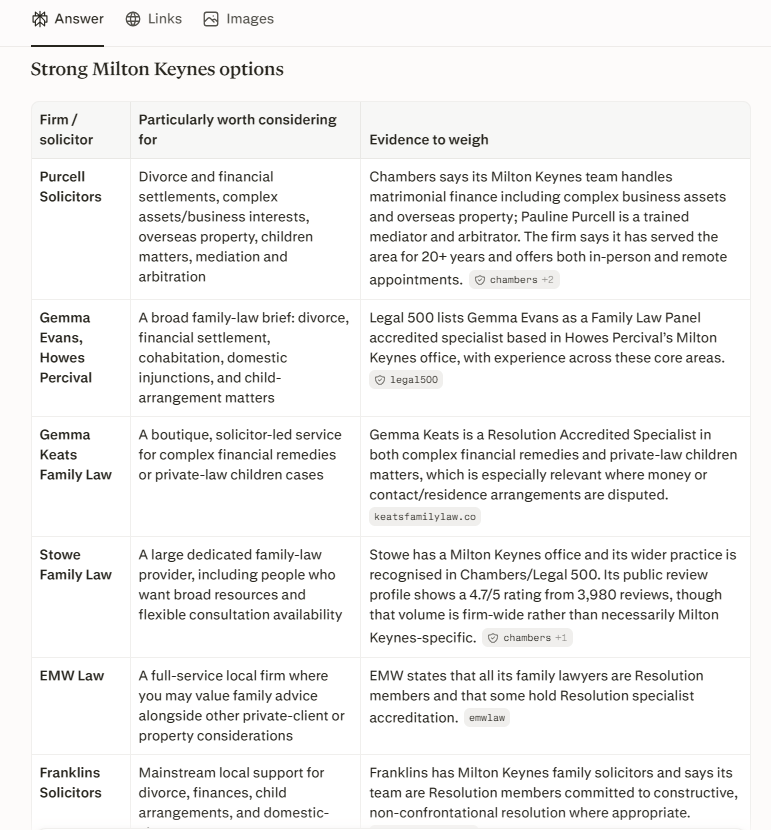
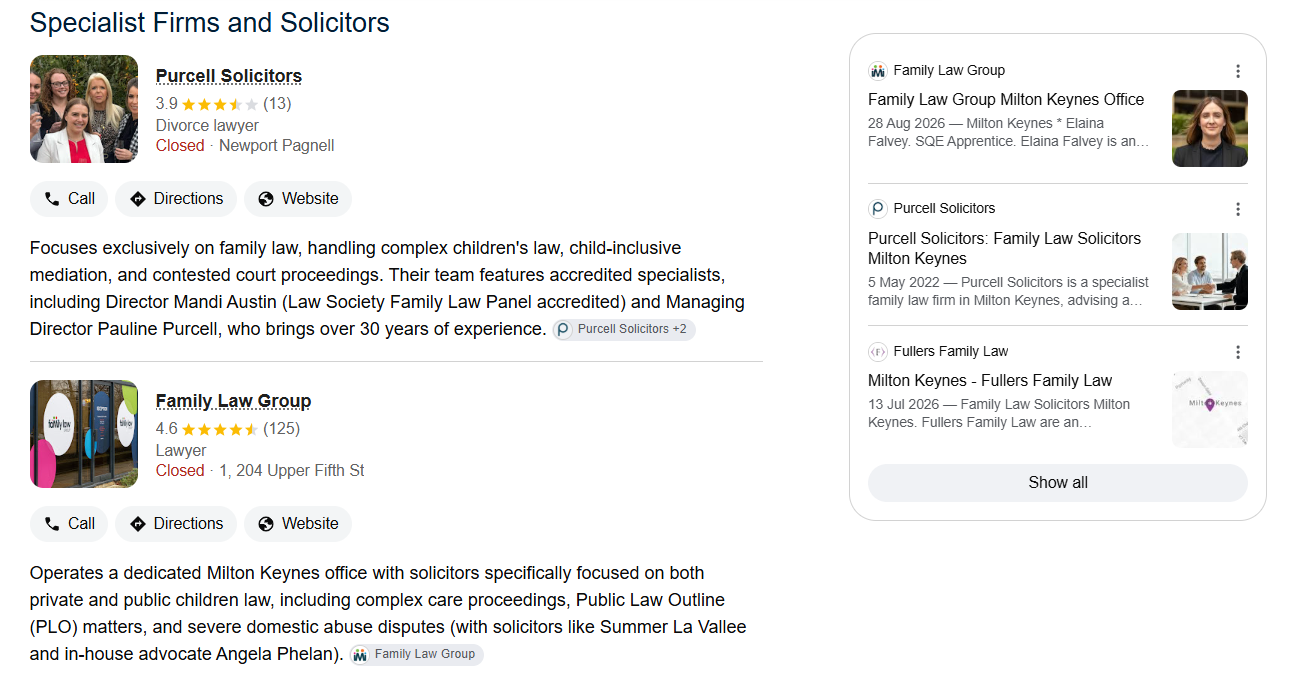
Because AI is conversational in nature, it allows for more complex queries than traditional search results.
Are AI-Driven Searches Replacing SEO?
There's a misconception that AI is replacing traditional SEO, but this isn't the case. However, it is becoming an integral component of any digital marketing strategy, with both AI and SEO working together for organic visibility.
For example, Google's AI Overviews and AI Mode extract information directly from the SERPs and condense it into an answer with citations (Google).
So, your website still needs to be indexed by search engines and eligible to appear in results to be cited.
LLMs like ChatGPT, Claude, and Perplexity also scan for relevant information and choose which sources to cite. A core principle of SEO is creating optimised content that aligns with search intent. Without this, AI tools wouldn't be able to understand and cite your law firm in relevant queries.
The Biggest Changes are Happening in the SERPs
There was a time when securing a top-three ranking position almost guaranteed a click, but that's no longer the case.
For example, Search Engine Land stated that 68% of Google Searches ended with 0 clicks in 2026, and there's a simple reason for this: When someone performs an informational search and AI overviews provide an answer, there's no reason for them to click.
But that doesn't mean traditional SEO is pointless, as the AIOs cite sources in their answers.
Instead of scrolling through the organic search results page, users might click on those links to learn more.
A 2026 Ahrefs study also found that SERPs with an AIO had a 58% lower click-through rate. Remember, these are general statistics, and someone actively looking for a law firm will usually click through to learn more.
But the simple takeaway is this: Appearing in traditional search results is no longer enough. If your law firm isn't cited in AI searches, it's missing out on valuable traffic.
How AI-Powered Searches Might Impact Law Firm Digital Marketing
The legal sector is driven by trust, and potential clients perform due diligence before deciding. This is actually good news for law firms, because your website, Google Business Profile, and social media accounts are still integral to your legal marketing strategy.
It's not about eliminating traditional SEO, but understanding that AI is likely to change how people discover your practice.
Google's AI Overviews are Changing Informational Searches
Informational content was a vital strategy for law firms, as blog posts and long-form guides answered the questions prospective clients were likely to ask. But because of how AIOs work, they appear more frequently for informational queries.
Content like "How long does a divorce take?" and "What's the average sentence for a DUI in the UK?" is more likely to trigger AIOs.
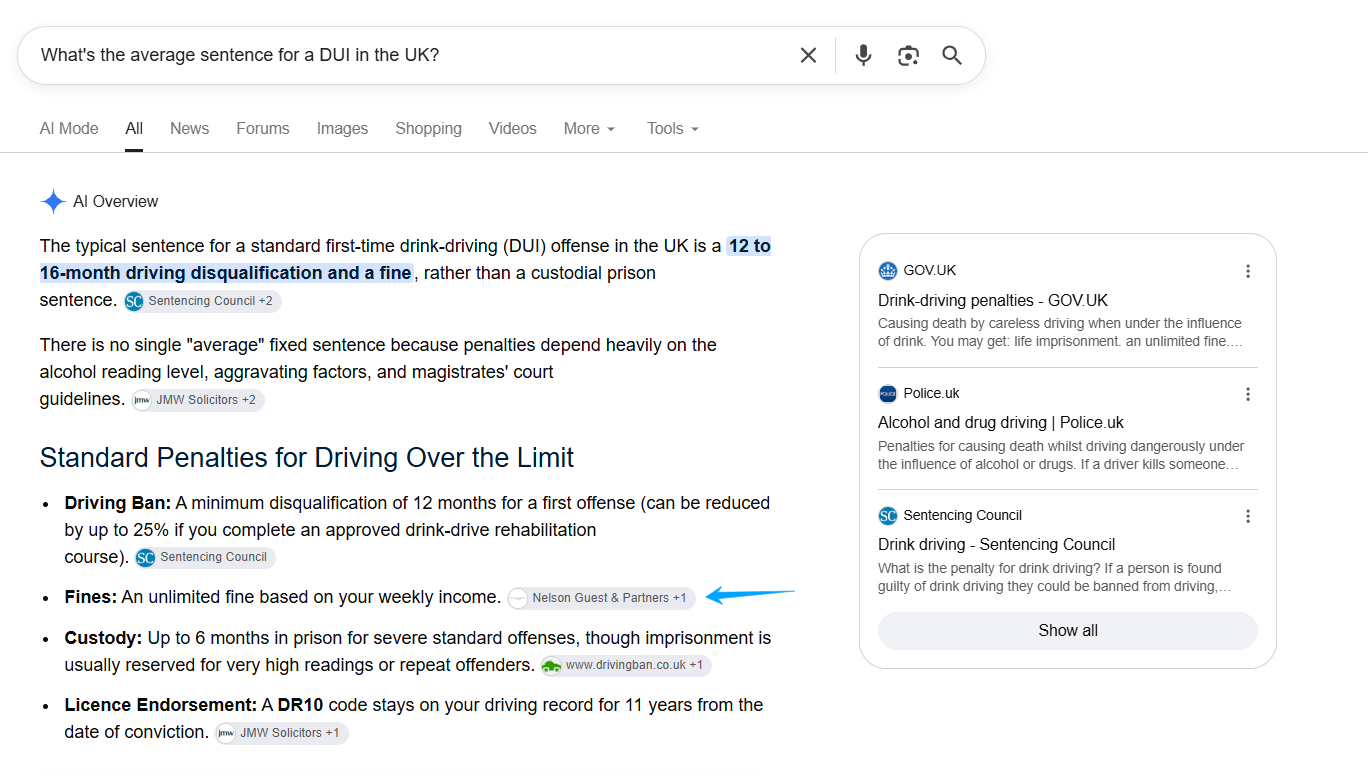
But, as you can see from these results, Google is citing sources and providing links to click on. So, informational content is still important for law firm website traffic.
The difference is, creating informational content for the sake of it instead of with a distinct purpose often means you're competing against hundreds of other law firms. Hyper-focused informational content that covers a topic in depth is more likely to secure citations and clicks.
High Rankings Don't Automatically Guarantee AI Visibility
Traditional search marketing focused heavily on rank position. Securing the top organic spot drove most clicks, while websites on page two had minimal visibility.
AI tools have added new layers to discovery. Securing top ranking positions is still important, as both AIOs and LLMs look for high-authority sources when citing information.
But simply ranking on Google's first page doesn't guarantee citations. An Ahrefs study confirmed that many AI-cited sources don't appear in Google's top 10 organic results.
LLMs look for sources that have entity relationships, extractable information, and topical authority. So, a website that ranks on page two of the SERPs still has an opportunity to appear in AI searches if it meets these criteria.
Similarly, a website that Google ranks on page 1 might not have strong AI visibility if its content isn't optimised for answer extraction.
Law Firms Must Show Expertise
We've also seen changes in how much content law firms produce, thanks to AI. In theory, a law firm could use Claude or ChatGPT to produce 50 blog posts about personal injury claims in hours.
But because these models draw on existing data, the content will be generic and add little value for readers.
Google has stated that it doesn't penalise AI-generated content, but the platform requires content to establish E-E-A-T. This means that everything you create should have genuine expertise and value.
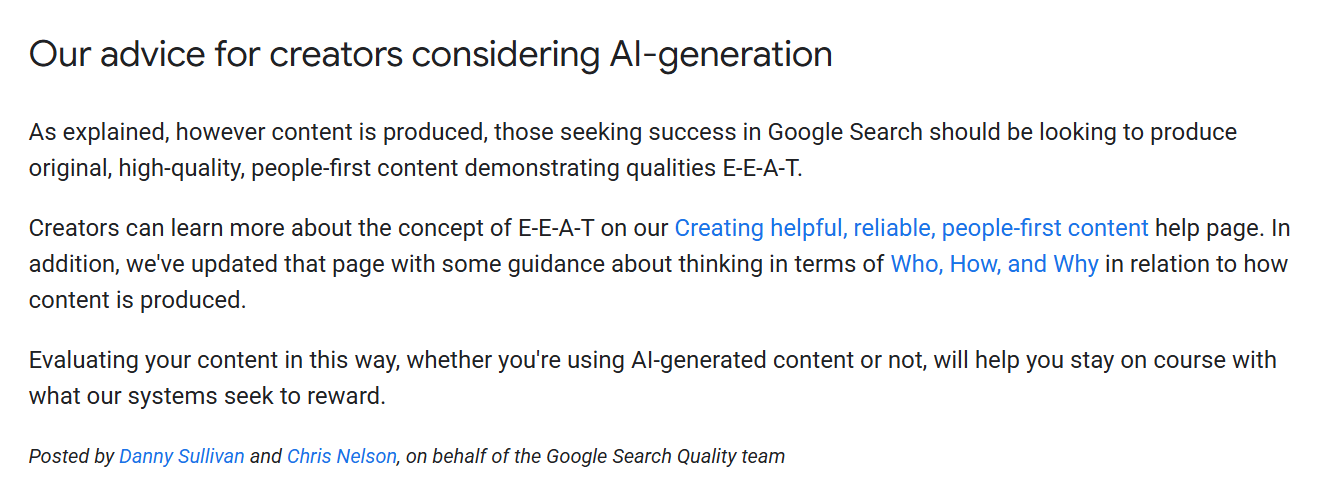
Law is a complex sector, and potential clients want reassurance that they're working with professionals who can help them.
It's also important to remember that generic content doesn't distinguish your practice from others. Instead, your content should include genuine case studies, perspectives from solicitors, and information that users won't find just by typing a query into AI search engines.
Web Authority Will Become More Important
Your law firm's reputation doesn't exist only on its website. Today's client journey requires multiple touchpoints, each contributing to reputation and trustworthiness.
Everything from verified reviews and professional profiles to appearances in industry publications and news coverage defines how potential clients perceive your law firm.
For example, if a law firm says it specialises in commercial law but its only authority is on its website, that will significantly impact its reputation.
In contrast, if a competitor regularly appears in construction- and trade-focused publications, commercial clients will usually view that competitor as more reliable due to its presence.
AI engines don't just look at a firm's website when citing sources; they check social media, brand mentions, and verified reviews. So, focusing solely on your website rankings could impact your AI visibility.
Technical SEO Impacts AI Search Visibility
AI search is changing how people find law firms; the core SEO foundations are still important. This includes technical SEO.
A website that isn't mobile-friendly, optimised for fast loading times and lacks structure will struggle to appear in both the SERPs and AI answers.
LLMs rely on structured information, so use the appropriate schema markup to help crawlers understand your content, and add internal links for topical relevance.
While some people recommend using an llms.txt file, Google has advised that this isn't necessary to appear in AI searches.
Will Law Firms Need a Separate Search Strategy for AI Models?
Answer Engine Optimisation (AEO) and Generative Engine Optimisation (GEO) increase your law firm's chances of appearing in AI-generated answers...but does this require a separate strategy?
In most cases, no.
Although AI is changing the typical user journey, traditional SEO still determines whether potential clients can find your firm.
The key principles are still the same:
Your website needs to be technically sound.
Your content should offer genuine value and cement your legal expertise.
Local SEO, including an optimised Google Business Profile, helps you attract high-intent clients in your practice area.
Backlinks and appearances in industry publications are still essential.
The difference is that it's no longer enough to optimise solely for search engine rankings. Optimising for AI Overviews and standalone AI platforms is - and will continue to be - a central component of your visibility.
Your wider strategy should include all touchpoints from SEO fundamentals to establishing brand authority.
The Bottom Line
Artificial intelligence has changed the legal sector, but that doesn't mean that the foundations of marketing for law firms have changed. Instead, success today relies on adding an additional layer to your core strategy that includes optimising for AI Overviews and large language models.
Legal services will continue to be in demand, but the way people find and choose solicitors is shifting. Law firms that understand how to combine SEO with AI search trends will be the ones that navigate this transition successfully.
No matter how prepared for AI search you are, we specialise in custom strategies that position your law firm as an authority and turn clicks into clients. Please get in touch with us for a free proposal.