











For 20 years, SEO for wellness resorts meant one thing: appear in top-ranking Google positions to get the click. Is it still a core part of your online visibility? Of course. But AI searches are changing how people discover and book wellness experiences.
According to Booking.com, 8-40% of travellers are using AI to make travel plans and discover resorts, with the highest usage rates among Millennial and Gen-Z demographics.
The fact is this: wellness resorts that don't appear in AI search results are missing out on high-intent traffic and bookings. SEO is central to getting cited in Google's AI Overviews and LLMs. The core principles are still the same, but there's an extra layer of complexity.
In this guide, you'll learn why your wellness resort needs SEO to appear in AI search results, and strategies to enhance your visibility.
TL;DR
AI is changing how travellers find wellness resorts: Guests increasingly use tools like ChatGPT, Perplexity and Google AI Overviews to research, compare and shortlist wellness experiences, making AI SEO essential.
Traditional SEO is still essential, but it’s no longer the whole picture: Resorts need to rank in search engines while also making their content easy for AI platforms to understand, trust and cite.
Specificity improves AI visibility: Clearly outlining treatments, practitioner credentials, wellness programmes, guest outcomes and your unique philosophy gives AI systems useful information to reference.
Authority needs to exist beyond your website: Relevant media coverage, high-quality backlinks, Google reviews and other trusted third-party mentions can strengthen your resort’s credibility in both search and AI results.
SEO and GEO should work together: Strong technical, on-page and local SEO provide the foundations, while GEO adds an extra layer designed to increase citations and visibility across AI search platforms.
How AI is Impacting the Travel Industry
AI has become ingrained in multiple sectors, and the travel industry is no exception. While Google Search still plays a role in the discovery and booking process, people are turning to AI search engines for more complex or niche queries.
ChatGPT and Perplexity process hundreds of millions of searches each month, and research published by PhocusWire revealed that 80% of travellers use AI at some point when planning a trip.
Wellness Tourism Statistics
Wellness has been a growing sector of the travel industry for a long time, and it shows no signs of slowing down. The Global Wellness Institute estimates a Compound Annual Growth Rate of 9.1% to 9.7%, with a forecasted net worth of $1.4 to $2.4 trillion by 2035.
With hectic lives and an always-on culture, more people are switching off and finding ways to relax. Wellness travel is particularly popular among high-net-worth individuals, with 44% taking a wellness trip in 2025. Further, 58% have one planned for 2026 (EHL Insights).
Despite the cost of luxury wellness resorts, Millennials and Gen-Z audiences typically spend more on these retreats, and experts predict that Gen Alpha will continue the trend.
So, with all this, making sure your resort appears across every touchpoint in the search journey isn't optional; it's a necessity.
Why a Traditional SEO Strategy is No Longer Enough to Attract Guests
SEO is still a vital part of any organic strategy. People still type queries into search engines and look for information.
Some might ask for recommendations, while others compare wellness resorts and read reviews.
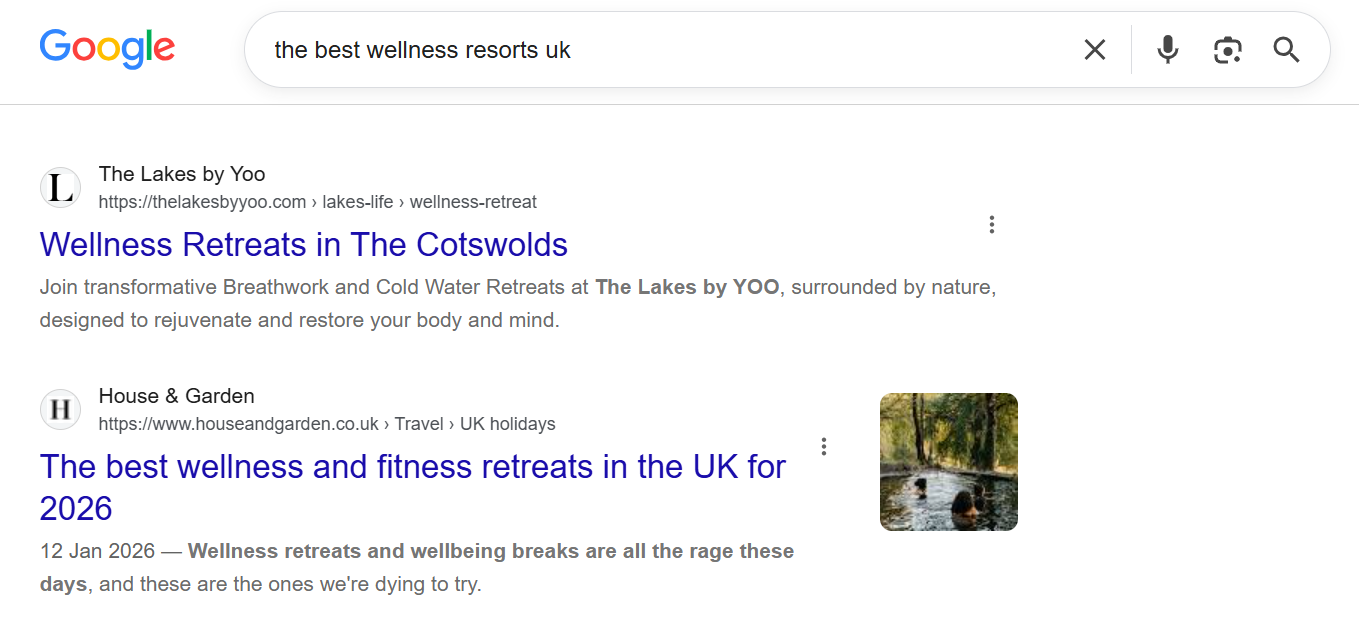
But the traditional search engine journey has changed due to Google's AI Overviews. Today, people can perform the same search and view a condensed breakdown before they even scroll to the top 10 organic results.
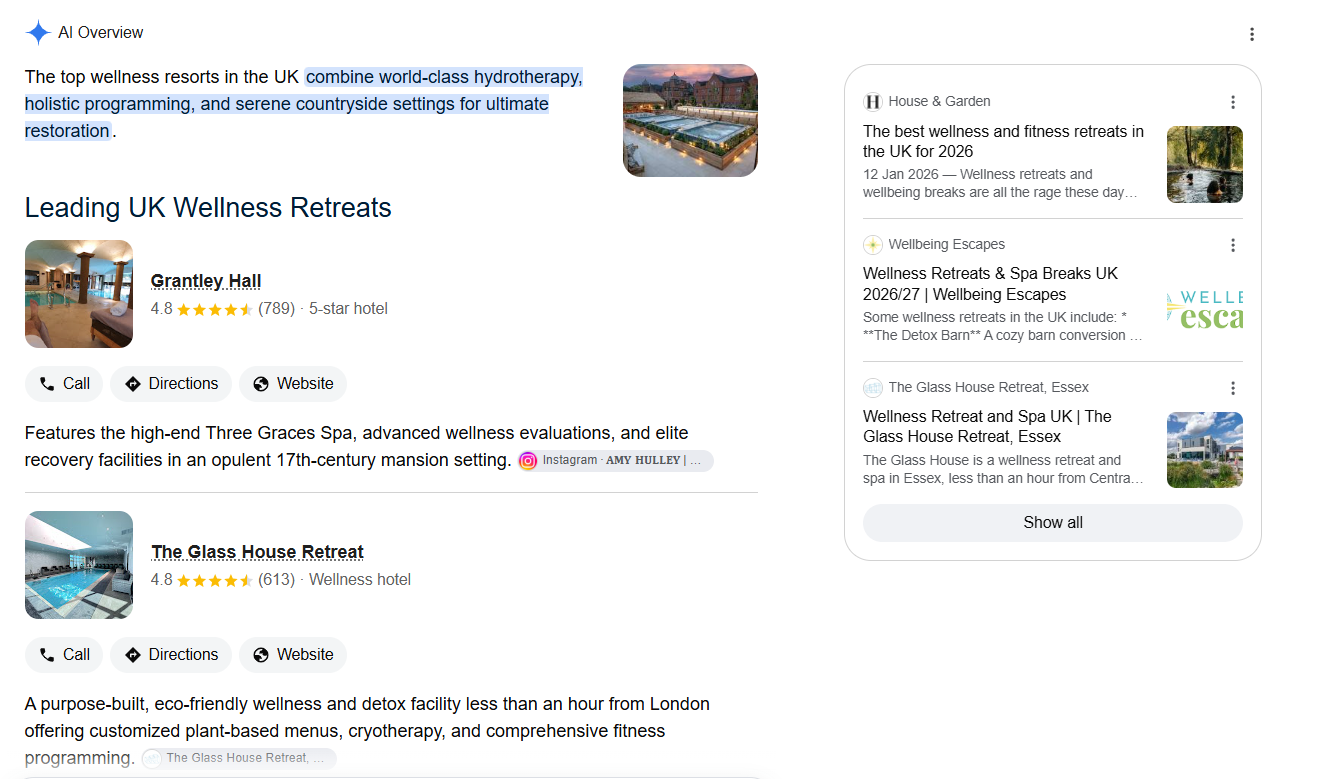
This streamlined experience is changing how wellness resorts approach online visibility. Because the question isn't just "Does our website have enough weight to rank on Google?" It's now "Will AI trust our resort enough to cite us as an option?"
Generative Engine Optimisation (GEO)
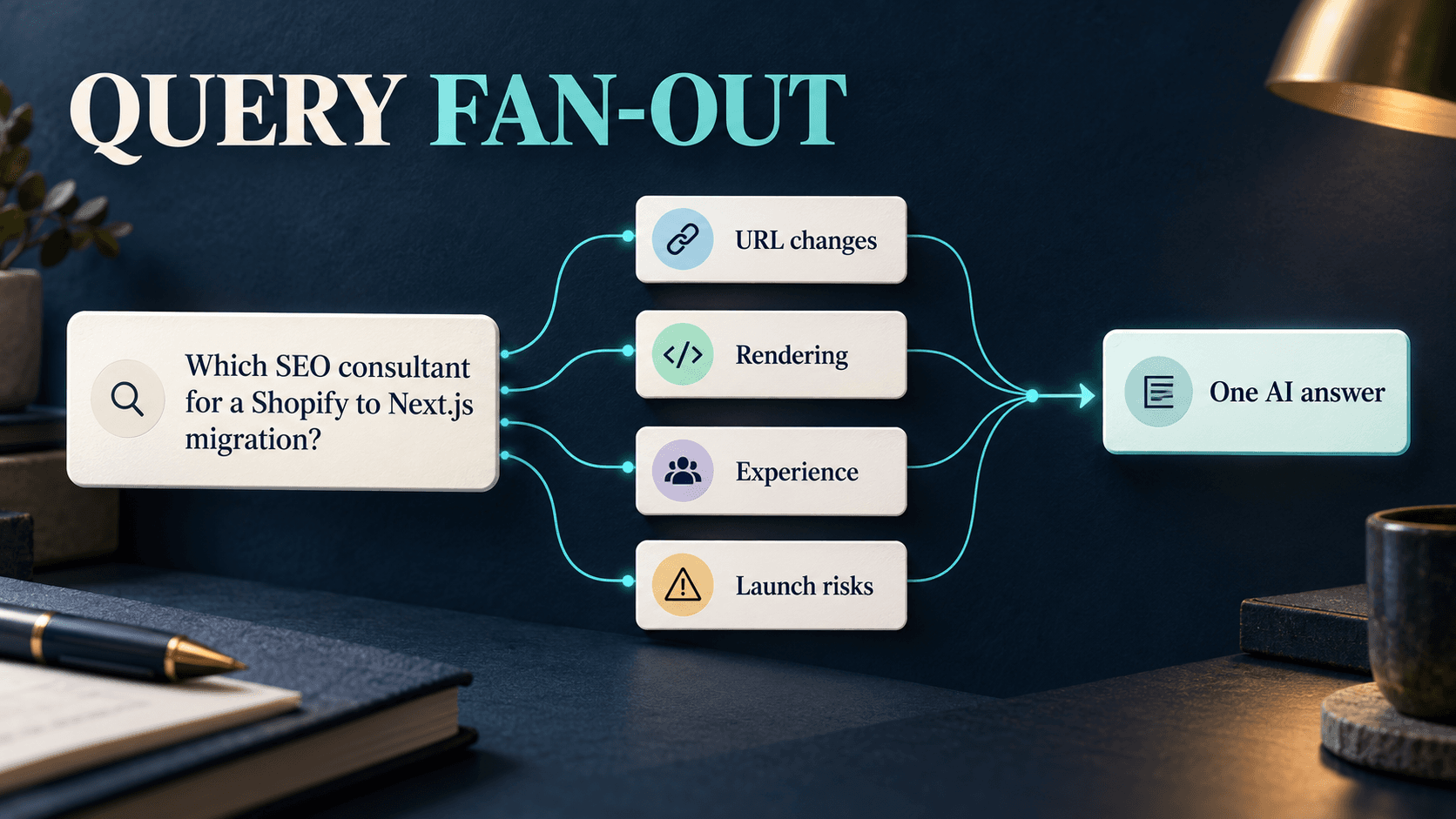
GEO works differently from traditional SEO because AI systems don't show lists of links. Instead, they generate an answer using multiple sources and cite where the information came from.
Princeton's GEO Benchmark Paper found that specific content characteristics influence how and when a brand gets cited in AI searches:
Content that adds statistics, uses structured information, cites sources, and includes direct quotes is 30-40% more likely to be cited in AI searches.
Wellness brands that receive mentions across credible third-party channels receive more citations than websites with traditional backlinks focused on one or two websites.
AI models look less for keywords and more for meaning. They don't scan for repetitive phrases; they cite verified sources that demonstrate authority across the web.
How High-Intent Travellers Use AI to Find Wellness Resorts
Searching for a standard hotel and a wellness resort are two very different experiences.
If someone asks an LLM to find a hotel or destination, the engine is focusing on category and geographic matching:
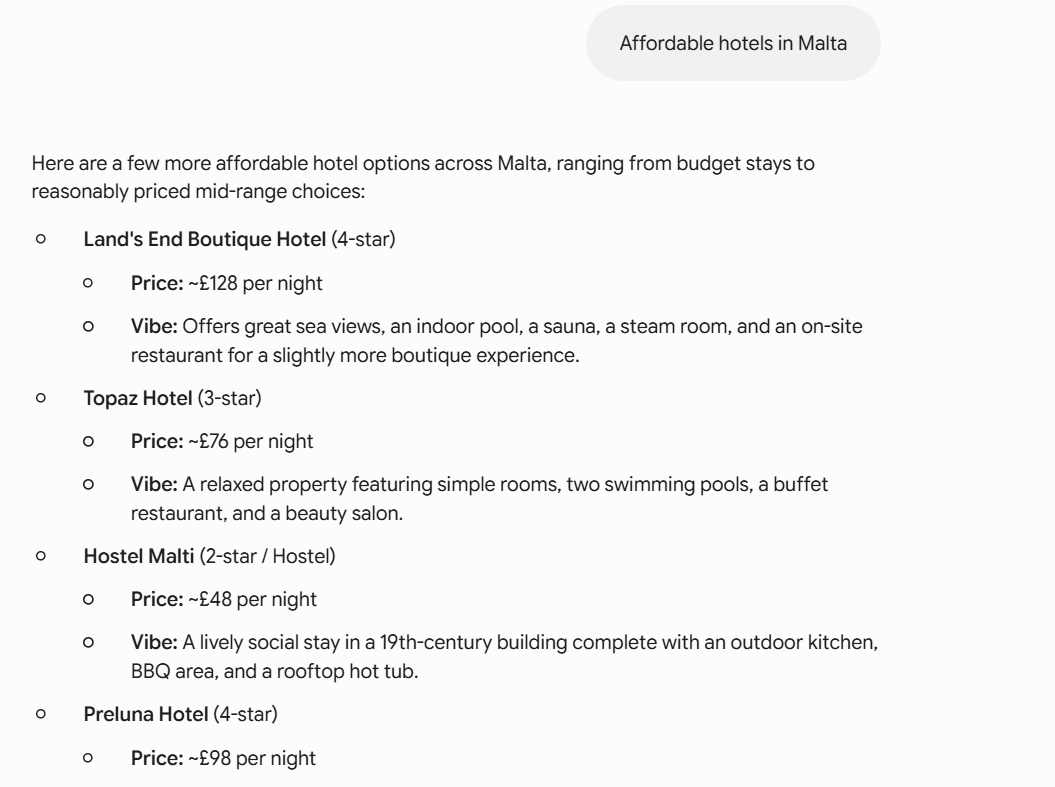
But luxury wellness travellers are looking for more specific information. For example, they might ask questions like "Resorts in Barbados that focus on Yoga and meditation." Or, "European wellness resorts that aren't overly regimented".
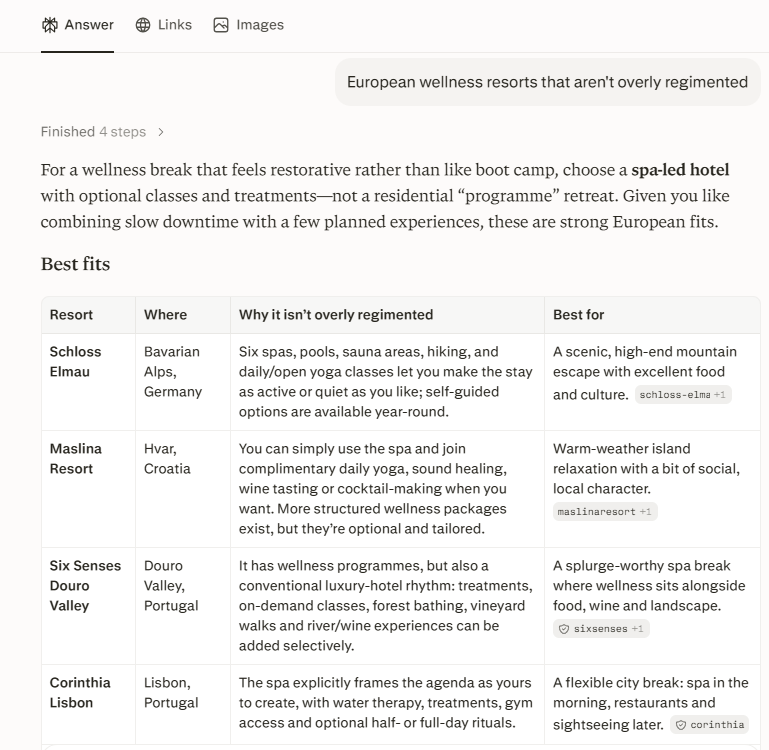
Because of the nature of these queries, AI systems require structured information to work with, including:
The modalities your resort offers and who leads them.
Typical outcomes guests experience.
A clear UVP, including the resort's philosophy.
Remember, this information has to be distributed across different channels. Instead of a single website page, a downloadable brochure or Instagram, AI models look for consistency and established brands.
The Unique Advantage for Boutique Hotels and Wellness Resorts
Wellness resorts generally fall under the luxury category, as they often attract high-net-worth clients looking for indulgence.
As a result, a wellness resort may already create the type of content that AI systems respond to. This includes:
Practitioner profiles with established credentials.
Detailed itineraries and wellness program descriptions.
Menus with ingredient information and diet plans for different needs.
Detailed testimonials for previous guests.
Brand mentions and backlinks from high-authority publications.
Think of it like this: An all-inclusive family hotel might list the number of pools it has and available activities, but a wellness resort showcases its UVP, philosophy, practitioners, and other core factors that AI systems can cite.
How Your Wellness Resort Can Make Sure it Shows up in AI Searches
If your resort wants to appear in AI searches consistently and attract clients, it's vital to ensure that both Google's AIOs and LLM engines can find, understand, and cite it.
Creating Specific Content
All wellness brands have to balance luxury copy with SEO. Add in the importance of structuring content for AI, and it's easy to see why so many brands struggle to get it right.
Aspirational copy may suit luxury audiences, but AI models respond to specific details. So, instead of "Transformative wellness experiences", you should instantly state the experience, demonstrate practitioner expertise, and tie each separate page to your overall philosophy.
Third-Party Influence
Backlinks have always been vital for organic visibility, and that hasn't changed. But AI models naturally look for authority across different touchpoints.
So, your website can feature testimonials and copy that makes you stand out, but its visibility depends on third-party platforms.
For example, are you mentioned in wellness journalism publications? Do you have reviews from verified platforms like Trustpilot and Google Business Profile?
Think of it like this: when you're looking for a service or product, you'll check the provider's website. But in most cases, you'll check what third-party platforms say before deciding.
It's no different for people actively comparing wellness resorts.
Demonstrating Expertise
Wellness resorts are a luxury with premium pricing. For this reason, potential guests want to ensure that they're getting what they paid for.
Instead of generic team sections, each practitioner should have a clear biography that lists their credentials and describes the type of experience they offer.
Given the price of wellness resorts, discerning travellers will expect clear team pages with detailed profiles.

Outcome and Experience-Focused Reviews
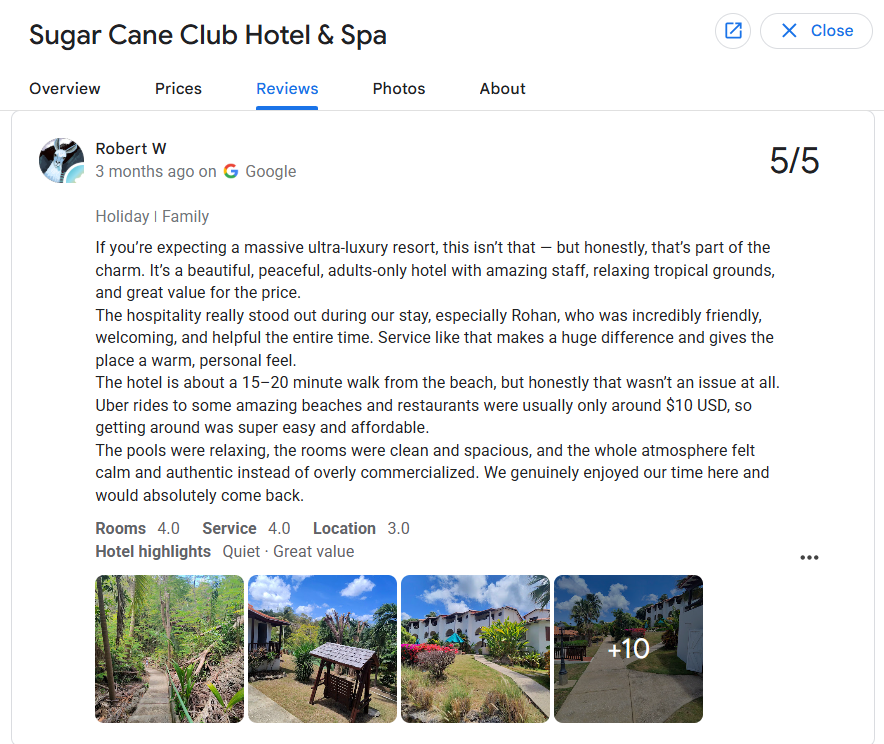
Verified reviews from former guests prove that your wellness resort delivers on its promises, but the quality of reviews makes a significant difference.
For example, a simple review like "Clean rooms and friendly staff" is fine for a budget hotel or B&B, but wellness resorts need to collect outcome-focused reviews that let potential guests imagine the experience.
AI models will look for qualitative evidence that establishes credibility and answer the type of questions people are asking.
Encouraging guests to leave detailed reviews and asking them about their experience can significantly increase the quality of your testimonials.
Tracking What Matters
Traditional keyword and rank tracking shows how your brand is performing on search engines like Google and Bing, which is still vital. But a newer metric to track is Share of Model.
Share of Model provides a realistic estimate of how familiar AI engines are with your brand by establishing the frequency in which you show up, brand sentiment, and where you rank in AI answers.
This metric is becoming increasingly important because a wellness resort might rank on the first page of Google but be invisible in AI searches.
Combining SEO with GEO for Long-Term Visibility
AI models aren't replacing SEO, but the wellness resorts that update their marketing strategy to ensure SERP rankings and AI citations can secure more organic traffic, which increases booking rates.
The core principles of SEO haven't changed, and not getting these right can impact your AI search visibility:
Technical SEO
Websites that don't use structured data, load slowly, or aren't mobile-friendly are less likely to show up in AI searches. Although page 1 rankings don't necessarily mean that AI will cite your website, Gemini actively uses the SERPs when citing answers.
Websites without schema markup are at a distinct disadvantage, as AI engines use this information to understand and cite your content.
On-Page SEO and Local SEO
On-Page SEO elements like Information Architecture and concise content make it easier for AI to understand your website. For example, instead of long paragraphs, add FAQ sections, tables, bullet-point lists, and structure each page for readability.
Local SEO also plays a role in AI visibility. Someone might ask "What's the best spa break in York?" and the answers that AI cites will depend on Google Business Profile reviews, local third-party mentions, and NAP consistency.
Test and Refine
AI is still relatively new, and what we're noticing is that models use different criteria to cite sources. As with traditional search optimisation, there's a degree of testing and refinement. What works on one platform may not be effective on another.
The Wellness Resorts That Succeed Will Add GEO as an Extra Layer
With more travellers turning to AI for long-tail searches, digital marketing success today isn't linear, but granular. SEO continues to lay the foundations for organic growth, but Generative Engine Optimisation is a strategy that you can't afford to miss.
Instead of sacrificing one for the other, expand on your current SEO strategy to accommodate AI searches. For example, building high-authority backlinks is still essential, but diversifying your outreach strategy to incorporate brand mentions in relevant travel publications increases your AI visibility.
Treating AI SEO as a priority, not a future problem, lets you take an active role in the conversation instead of struggling for clicks and bookings.
If you're interested in our hospitality SEO and AIO services, which give you a foundation to build on, please book a free consultation today. Once we understand your needs, we'll generate a no-obligation quote.