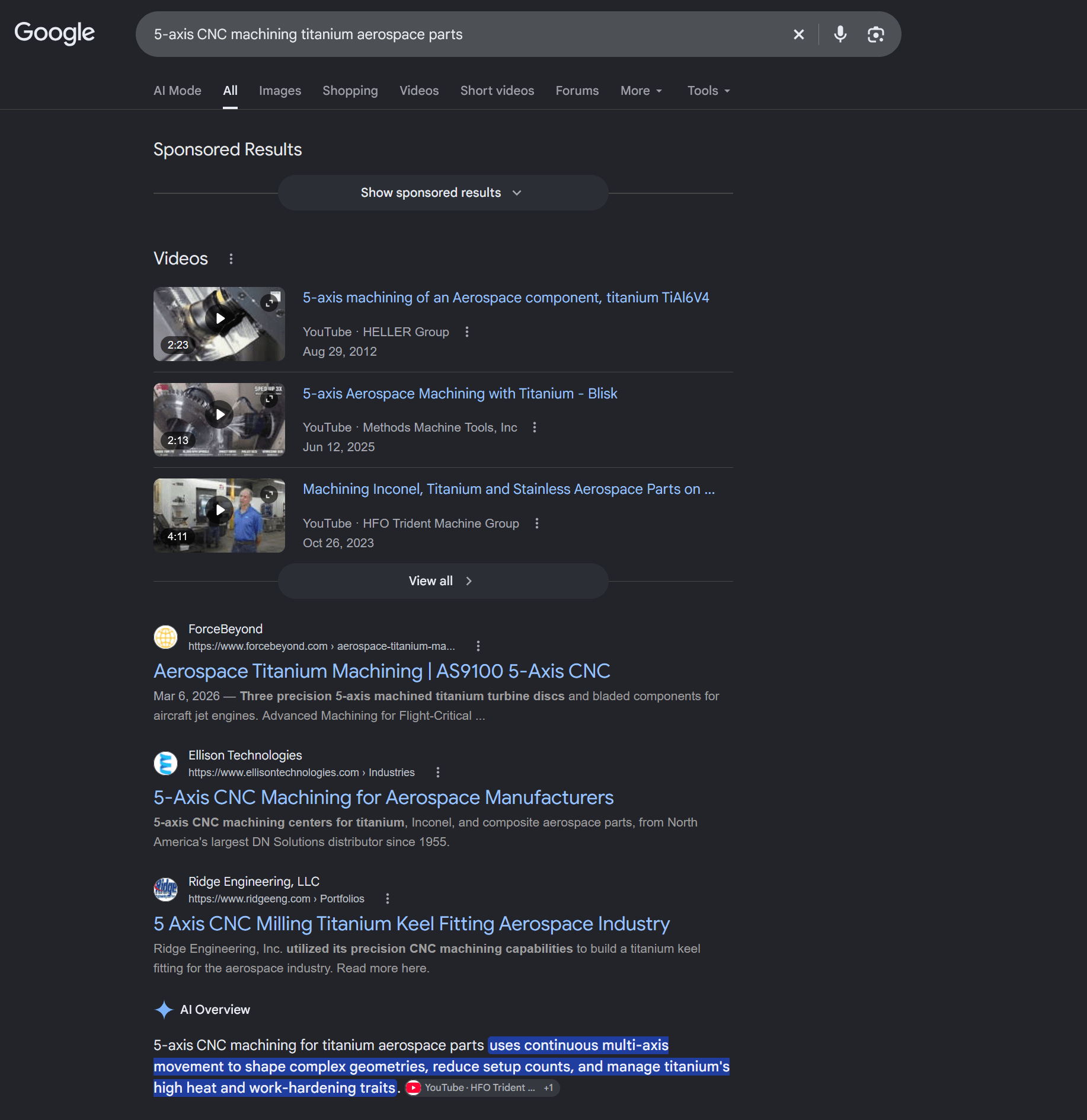












Up until recently, a travel business's success relied on two things: ranking on search engines and online travel agent referrals. While both are still important, the rise in AI search has significantly changed how people search for and find destinations, flights, and resorts.
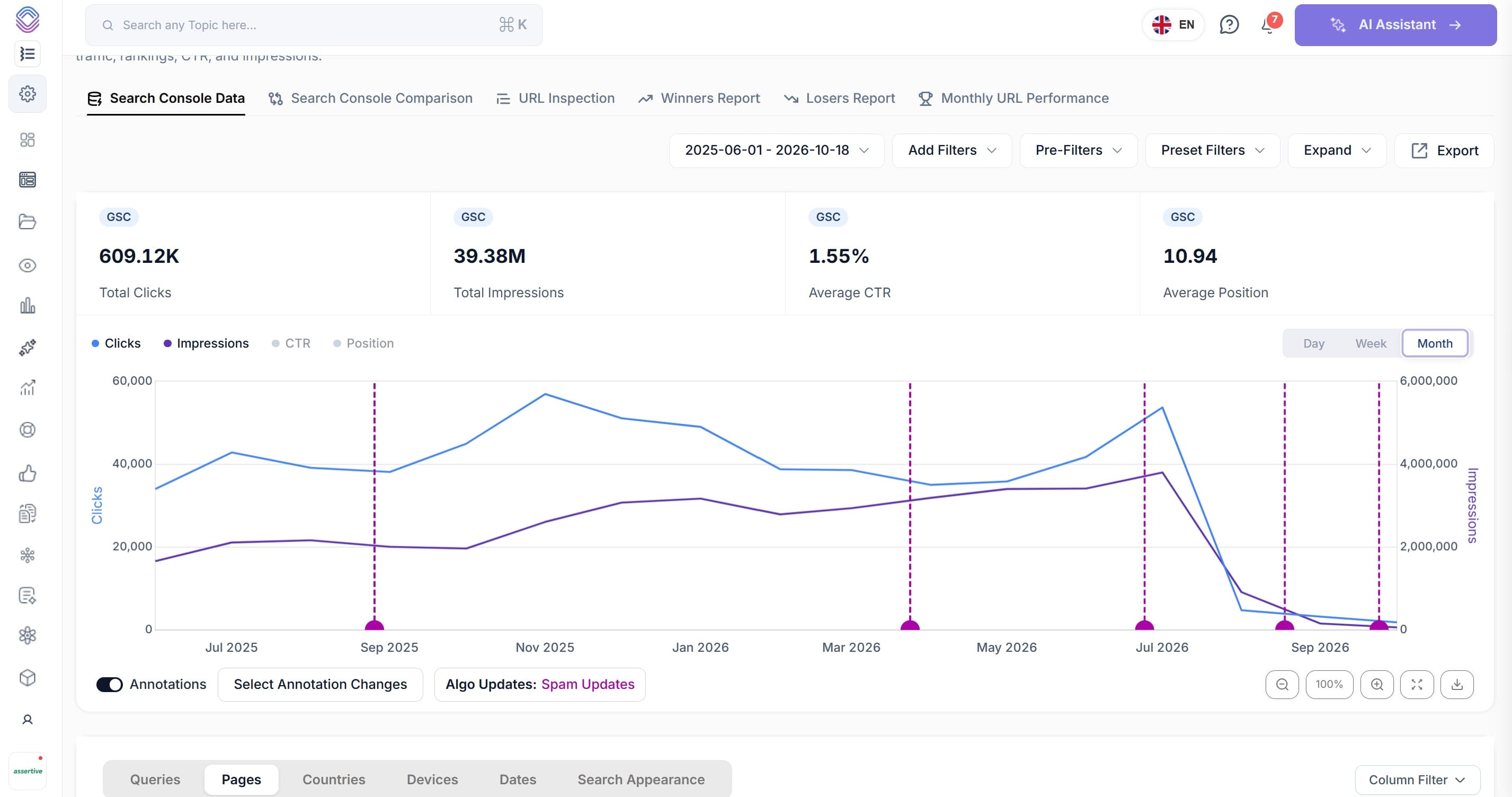
Google's AI Overviews have reduced website clicks, while traditional content and SEO often don't align with how AI models choose which sources to recommend and cite.
Here's the good news: travel businesses can recover organic visibility by maintaining their SEO strategy and learning how to structure content for AI searches.
TL;DR
Travel SEO is changing. AI search (Google AI Overviews, ChatGPT, Perplexity, Copilot, Gemini) is cutting into organic clicks — no-click searches hit 68% in early 2026, and 40% of travellers now use AI to plan trips.
AI tools cite specific answers, not whole pages — and each platform picks sources differently (e.g., ChatGPT often cites outside Google's top 100 results).
Travel sites struggle with AI visibility due to oversaturated content, weak structured data, and vague messaging ("request a quote" vs real pricing).
To improve AI/organic visibility:
Build entity authority — keep info consistent across your website, Google Business Profile, OTAs, and social.
Publish original, specific content (unique data, itineraries, client research) — not generic listicles.
Prepare for AI transactional agents with structured data and real-time pricing.
Make sure AI crawlers aren't blocked (PerplexityBot, OAI-SearchBot, etc.)
Diversify citations across many authoritative domains, not just one.
Structure content for multi-step queries with FAQs and pillar pages.
Keep investing in traditional SEO — it's not either/or.
How AI is Impacting the Travel Industry
AI is impacting the travel industry in many ways, and understanding them is the first step in figuring out why organic visibility is changing.
More people are using AI tools to discover destinations and find suitable trips. According to PhocusWire, 40% of global travellers have used AI to plan a trip, with Millennials and Gen Z being the most likely demographics to leverage tools like ChatGPT and Perplexity.
AI Overviews are also contributing to higher no-click searches - especially for informational research. A few years ago, you could create informative content such as "Best beach holidays in Europe" and win clicks from Google Search.
AIOs have changed searcher behaviour, with Search Engine Land reporting no-click rates of 68% in early 2026.
The Destination's the Same, But the Journey is Changing
Let's take the example of "best beach holidays in Europe":
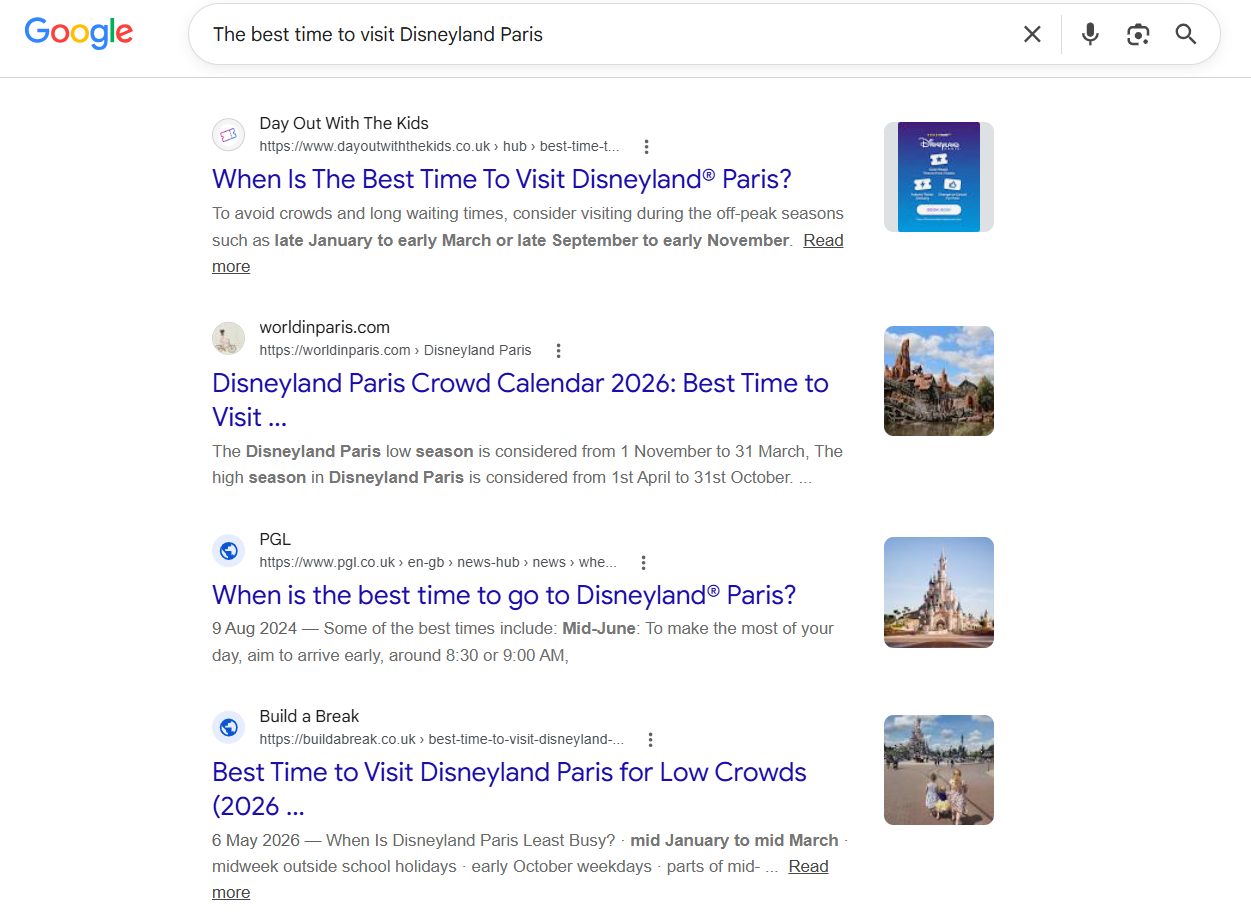
But the same query using Perplexity shows different sources.
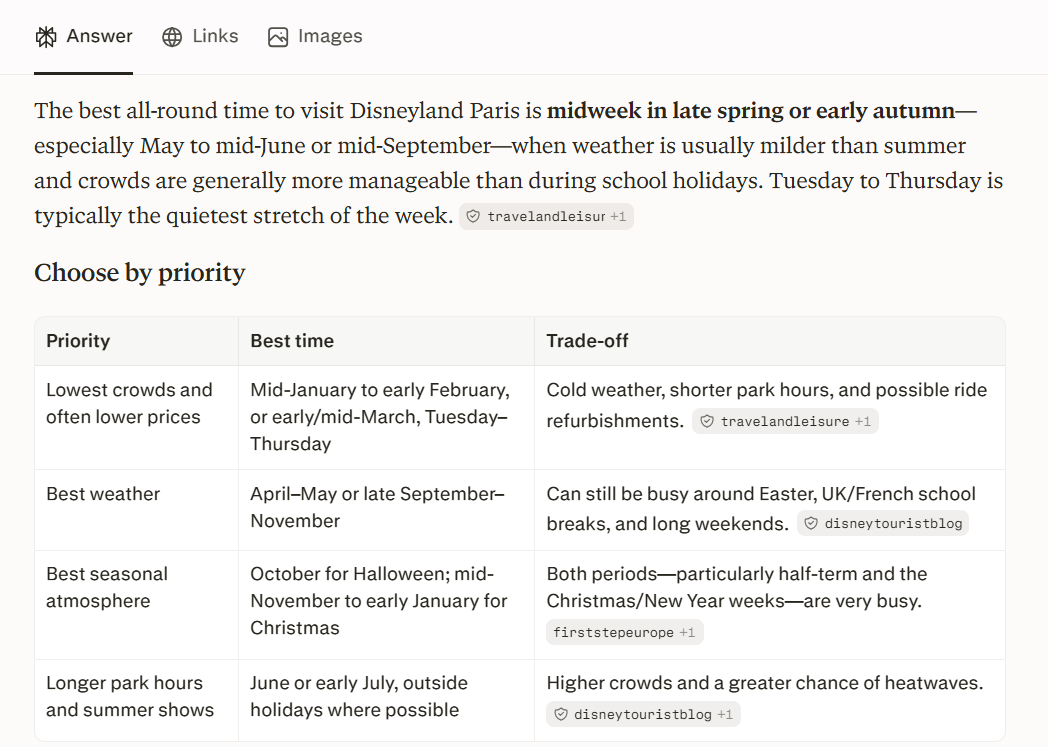
So, even if your travel website hasn't yet secured top ranking spots, it still has a chance of being cited by AI engines.
AI Engines Cite Sources Differently
At their core, AI engines are designed to provide relevant information based on the user's query. But each model has a different process when determining which sources to cite:
Microsoft Copilot: Heavily integrated with Bing and decisive in terms of citing sources. You'll often notice that Copilot uses a small set of trusted results rather than a wider net of options.
Perplexity: Uses real-time web searches to cite multiple sources. Perplexity also relies on Reddit, with the platform contributing to just under 25% of answers.
Gemini: Similar to Microsoft Copilot, Gemini is an extension of Google. So, if a website has consistently strong rankings and Google regards it as a high-authority source, it's more likely to be cited in AIOs and Gemini.
ChatGPT: ChatGPT uses its internal training knowledge, but browsing behaviour can be triggered. Interestingly, an Ahrefs study found that 80% of ChatGPT's citations aren't even within the top 100 Google Results.
The takeaway here is simple: there's no single established formula for getting your content cited, but every platform shows a clear preference for structured and verified first-party data.
Why Travel Websites are Struggling to Gain and Retain AI Visibility
Many sectors are feeling pressure due to AI search trends, but travel is one of the hardest-hit industries. The reasons include high competition, a lack of specific content, and underused structured data.
Content Competition
It's common for sites to publish similar content in order to rank on Google. For example, a search for "the best places to take young children on holiday" brings up thousands of similar results, with many using listicle-style guides.
The main problem here is that AI models typically choose 1-2 sources to cite, and generic content provides no clear differentiator. So most AI engines default to the most specific, structured source based on their training.
A Lack of Structured Data
AI platforms love structured data (schema markup) because it enables them to understand content and extract key information. But an estimated 40% of travel websites don't implement structured data effectively.
Even if your content is amazing, failing to use schema markup makes it harder for AI models to read and understand your content.
Balancing Branding With Specificity
One challenge travel businesses face is maintaining their brand identity without sacrificing specificity. For example, some destination content centred around luxury tours asks people to request a quote, which was fine previously.
But AI models prefer specific information, including clear price breakdowns and itineraries that they can pull into answers.
How Your Travel Business Can Improve Organic Visibility
Whether you're a hotel, travel agency, or an experience-focused tour provider, organic visibility today is about balancing traditional SEO with AI optimisation. Here's where you should focus your efforts:
Focus on Building Entity Authority
AI systems don't review and evaluate websites page by page. Instead, your business is a complete entity that encompasses NLP consistency, review platforms, third-party booking services, and Google Business Profile.
Establishing consistent information across multiple touchpoints makes it easier for AI to view your content as reliable.
But when your Facebook page shows different tour and pricing information than your listing on OTA websites, it erodes trust and significantly lowers your chances of appearing in AI answers.
"Quality" Content Isn't Enough
There was a time when ranking content meant reviewing what competitors had created and aiming to provide more topical depth. Is this still a valuable tactic? Absolutely. But both AI models and Google value content with original data and perspectives.
Both the SERPs and AI look for information gain. This could mean taking a common sub-topic and covering it in depth in a separate guide, or conducting research to uncover unique data.
Put simply, your travel business should focus on unique itinerary structures, visitor/client surveys, and experiences your competitors can't replicate.
Prepare for Transactional Agents
AI is entering a new phase, and this will likely impact the travel sector. OpenAI's Agentic Commerce Protocol and Google's Universal Commerce Protocol are transforming merchant transactions; the travel industry will feel the effects, too.
For example, AI agents will likely be able to find suitable destinations, check availability, and complete a booking for potential clients, without them even needing to visit your website.
This will potentially pose problems for sites without clear schema and real-time updates. AI models that struggle to understand your booking process will ignore your service in favour of a competitor with clearer information.
Preparing for this phase involves implementing structured data, using dynamic real-time pricing, and enabling AI to trigger transactions.
Make Your Content Reachable
You should also ask a technical SEO specialist to check whether your robots.txt file or other security settings are blocking AI search crawlers, such as PerplexityBot, Claude's crawlers or OpenAI's OAI-SearchBot.
Blocking these crawlers limits their ability to discover and retrieve your content, which impacts your AI visibility.
You might also hear about llms.txt, which is a proposed file designed to help AI systems access website content. But Google expressly states that llms.txt isn't required for its AI search features and has no impact on visibility or rankings (Search Engine Journal).
Diversify Your Visibility
Source diversity is a core factor in how AI models measure your travel business as a reputable source. For example, five mentions across different high-authority domains signal more trust than 60 mentions on the same domain.
So instead of focusing on appearing in one travel directory, it's essential to build citations and links across tourism boards, niche publications, industry associations, and regional press.
Even if these websites don't have the same domain authority as larger publications, the fact that multiple publications mention your site demonstrates trust.
Structure Content for Multi-Step Queries
Travellers are more likely to use AI platforms for layered queries. For example, if someone's searching on Google, they might ask "Italy beach holidays with cooking classes". But an AI search might be more layered, like "Find me a holiday in Italy that includes beach days and cooking classes".
While Google offers some context, you can see from the results that most of the SERP focuses on cooking.
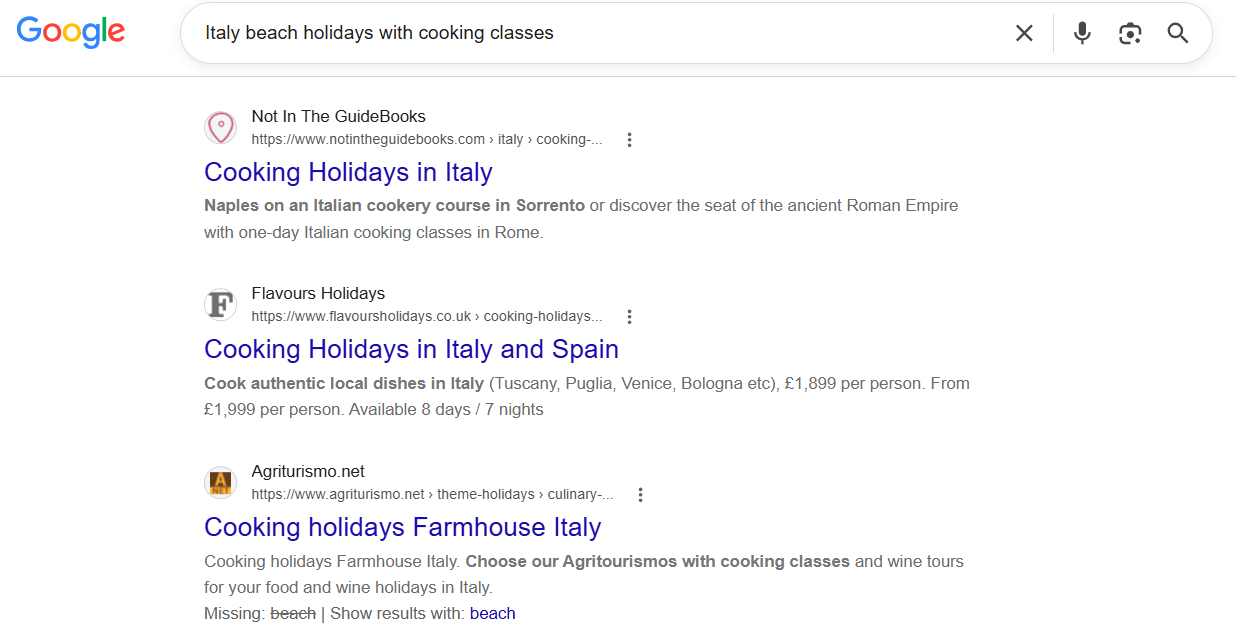
But Perplexity offers more in-depth answers and suggestions.
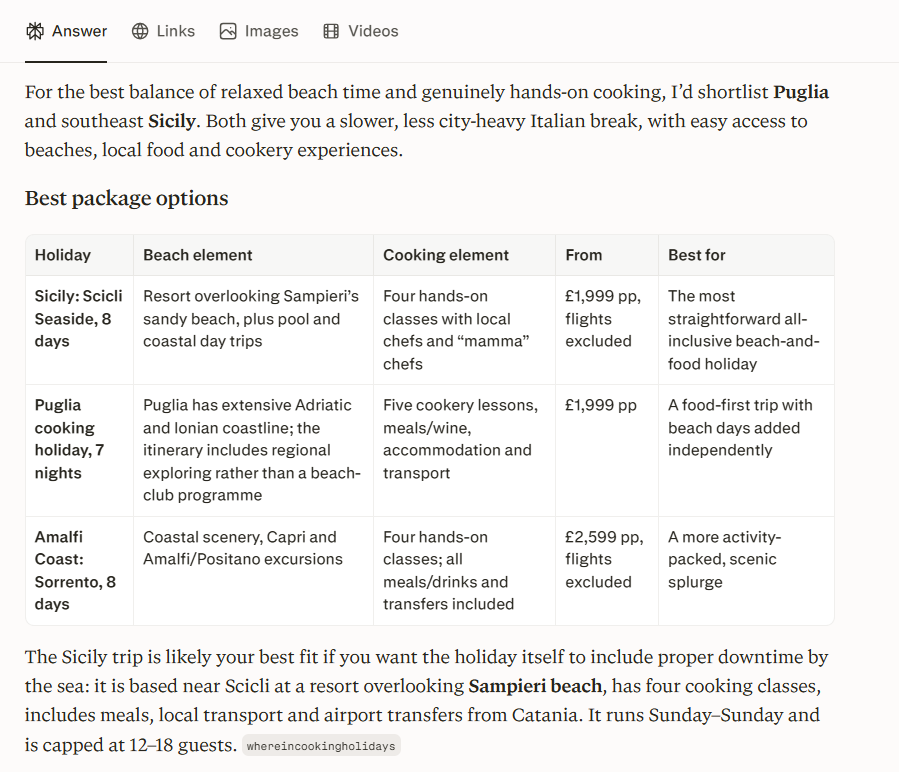
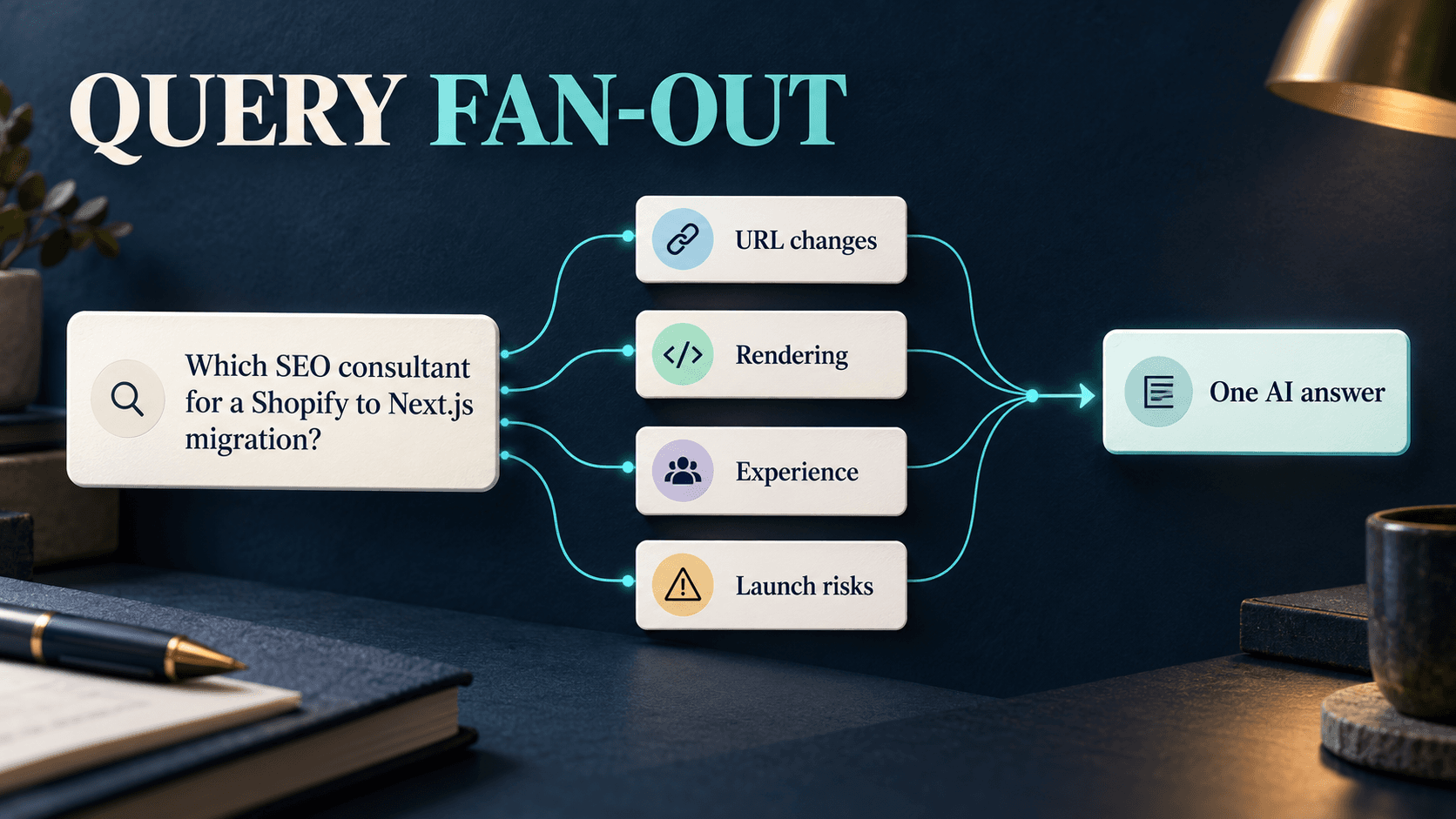
The reason for this is how AI models work. They break a query into sub-questions and search each individually - also known as query fan-out.
If a page answers one component of that question, it has a chance of being cited, but comprehensive coverage has a better chance of securing multiple citations.
This includes adding FAQ sections, answering the questions potential travel clients ask, and creating pillar pages with supporting sub-pages.
Don't Ditch Traditional SEO
AI searches might be becoming more popular, but that doesn't mean you should forget traditional SEO. From your website's technical SEO to content and backlinks, these factors still play a key role in your organic visibility.
It's not about picking one over the other, as both determine whether your website attracts traffic and generates conversions.
The Bottom Line
The travel industry still relies on the same principles to attract clients. Online Travel Agencies and your Google rankings determine whether people can find your website, while the content determines booking rates.
But not adapting to AI searches will significantly impact your visibility. More people are using AI to discover travel businesses, and we can expect to see direct bookings through platforms like OpenAI in the future.
It's not about completely changing your focus, as traditional SEO practices still hold weight. But the travel businesses that adapt for AI are the ones that will continue to grow and scale.
If you'd like support with your organic visibility, Assertive is a specialist SEO and AIO agency. Please book a proposal today to see how we can help.