











Product page SEO is more important today than ever before, thanks to the rise of AI searches. Google's AI Overviews and LLMs like ChatGPT, Perplexity and Claude don't care about ranking your website; their only mission is to answer questions.
With AI search engines frequently turning to product pages over blog posts, knowing how to optimise them is integral to making sales.
So, what does this mean for eCommerce brands? Well, if you can understand how to optimise your products for AI visibility, you have every opportunity to attract more customers - even if you're not appearing in Google's top 10 results.
In this guide, we'll cover why product page SEO matters more in AI search, and reveal the best techniques.
TL;DR
AI search engines (ChatGPT, Perplexity, Gemini, Google AI Overviews) don't rank pages; they answer questions and cite product pages over blog posts.
50% of shoppers now use AI tools to research products before buying, so product page SEO has become critical to visibility and sales.
Ranking well on Google doesn't guarantee AI citations. A product page on page 2 of the SERPs can still be the top-cited answer if it's structured clearly for LLMs to parse.
Product page and Ecommerce SEO now has two jobs: rank well in traditional search, and be structured so AI models can find, understand, and cite it.
AI models prefer specific, concrete descriptions, structured data (schema markup), third-party reviews, and clear FAQ-style content over vague, persuasive copy.
The product page is only half the picture: Google Merchant Centre feeds (and equivalents on other AI shopping surfaces) are treated as an authoritative, machine-readable source — separate from the page itself.
Mismatches between your website and your feed (price, availability, variants) make AI systems less likely to cite you, even if your on-page content is excellent.
Key feed checks: fill in optional fields (size, material, age group), sync feed and site changes in real time, and map reviews to schema (AggregateRating) so ratings count as machine-readable trust signals.
Blog posts still support AI visibility but no longer carry the weight they once did — AI tools default to product pages for hard facts like pricing and specs.
Core technical SEO still matters: broken links, slow load times, and poor structure will stop AI systems from reading your content at all, regardless of how well it's written.
The Rise of AI-Driven Search in Ecommerce
One thing we should make clear here is that AI isn't replacing traditional search engines. Creating compelling content that the search engines rank is still an important part of your overall visibility. But AI-driven search gives brands more opportunities to drive traffic and sales.
Research published by Triple Whale reveals that 50% of shoppers use AI tools to explore and evaluate products before purchasing. Website visits from AI search engines contributed to 32% longer visit times and 27% lower bounce rates.
The fact is, we live in a grab-and-go world, where people want quick options and accessibility. AI simplifies product discovery and research by providing concise answers.
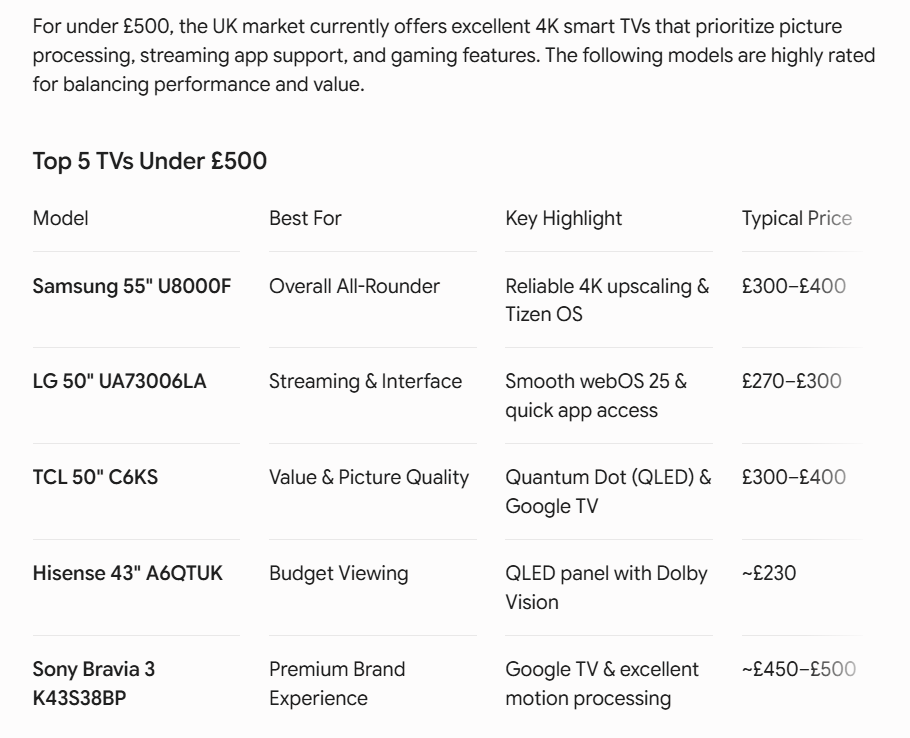
Let's take a look at an example. Say someone is planning on buying a new TV and isn't sure which to get. They might perform an LLM search like "the 5 best-rated TVs under £500".
Instead of having to look at comparison guides, AI provides instant and condensed information:
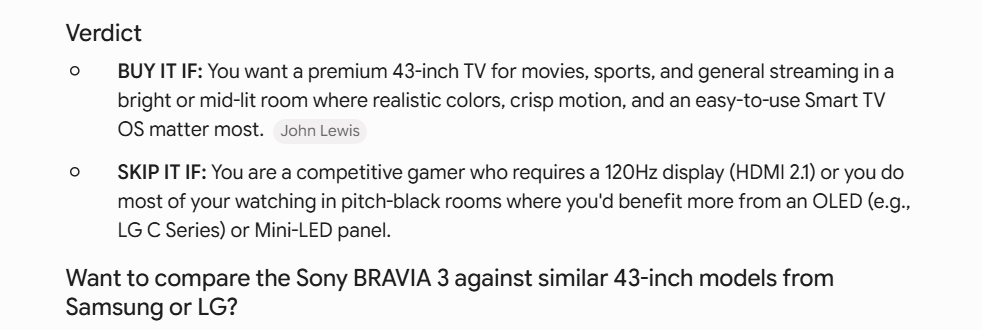
Or, if someone's in the consideration stage, they might ask a question like "Is the Sony Bravia 3 K43S38BP worth it?" As you can see, Gemini provides a comparison with recommendations:
Ranking Links vs AI Citations
To understand the impact of AI search on product page SEO, it's important to realise how ranking links and citations differ. Traditional search engines rank a web page based on how it aligns with search intent and other factors.
Websites with clear product information, structured data, and strong authority typically rank in the top positions. AI models are different because they search for an answer to the user's query.
So, the websites with the clearest structured information typically get cited more - even when they're not in the top results.
This is where a lot of Ecommerce brands get confused. You're dominating the SERPs, so that should carry over into AI citations. But that's not always the case.
Take the term "women's hiking books UK". Google displays Northwest Territory and GO Outdoors as the top two options.
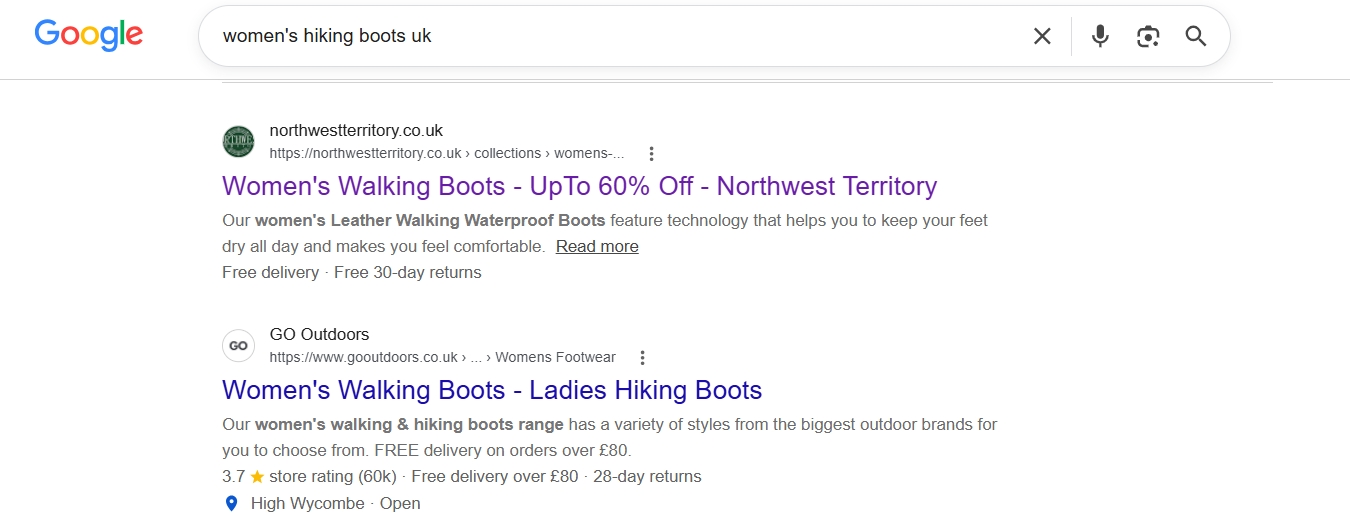
Perplexity, however, pulls from reviews and also mentions the brands Decathlon and Keen Footwear.
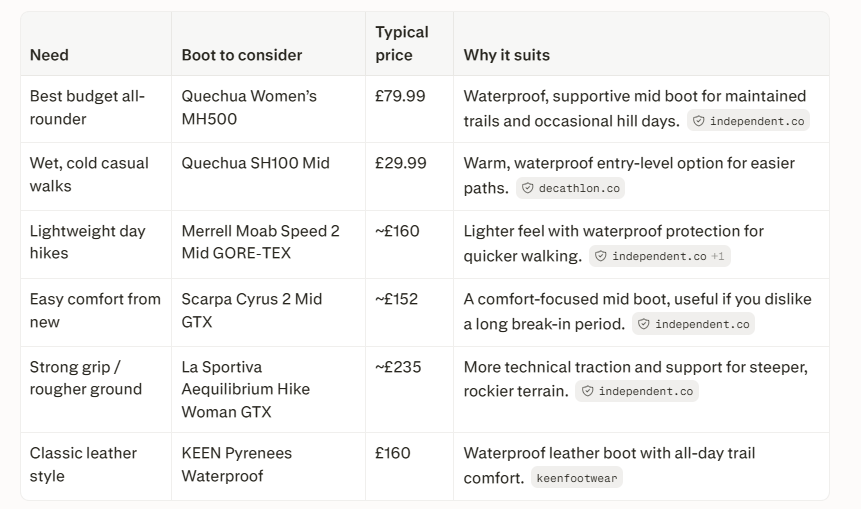
Product Page SEO Has Two Jobs Now
Product pages can be on page 2 of Google yet be the most cited answer on LLMs, because the information is structured in a way that LLMs respond to.
The same principle applies for traditional SEO. Just because a product secures top SERP rankings, there's no guarantee that AI will cite it.
So your product page SEO strategy now has two jobs:
Aligning with Google's ranking criteria for top SERP positions.
Being structured and informative for AI models to find, understand, and cite it.
What AI Search Engines Look for When Deciding Which Product Pages to Cite
AI search is becoming more popular because it allows for more specific queries. While organic search dominates informational and commercial-focused queries such as "the best memory foam mattresses", AI can go more in-depth and provide informative answers.
For example, if we use the query "which memory foam mattress is best for one side sleeper and one back sleeper", you can see that Google search brings up different guides and comparison posts, but it doesn't instantly answer the question.
Compare that to Perplexity, and you can see it picks the Emma Premium Hybrid Mattress.
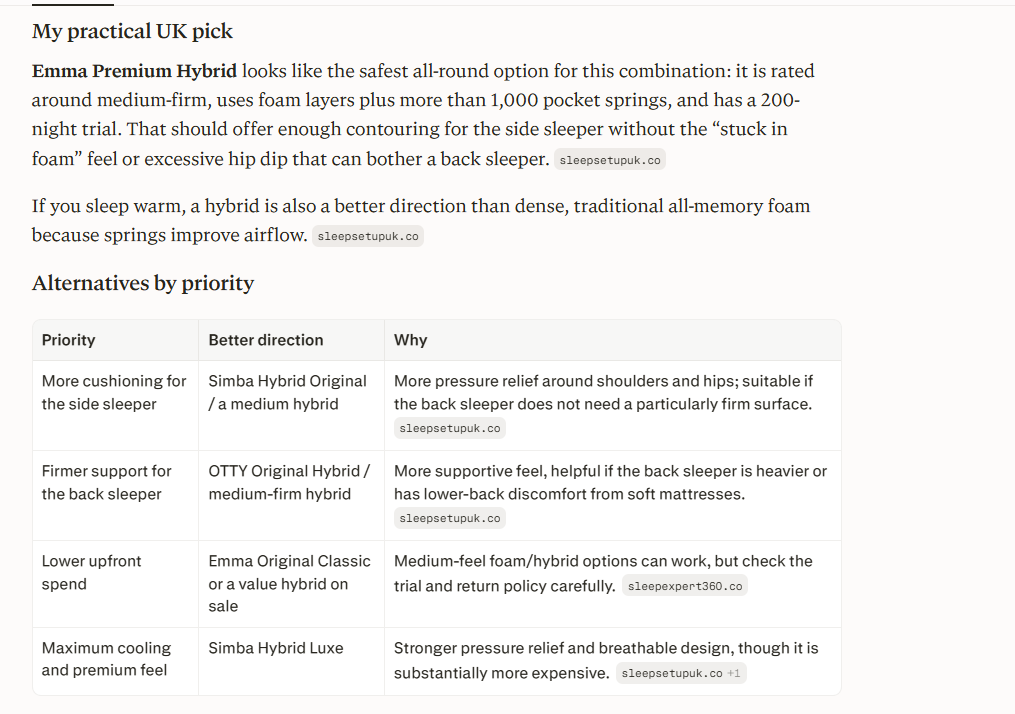
So how do AI models find this information? Most importantly, why did Perplexity select the Emma mattress instead of competitors?
It all comes down to how AI tools work.
Specific Descriptions
AI models thrive on specificity instead of words that read nicely but don't say much. If a product page clearly details who the product is for, its features, benefits, and pricing information, that will perform better than a page that aims to capture the imagination.
Structured Data
Product schema markup helps AI models understand different aspects of your products, including their price, name, ratings, availability, and other details.
Think of it like this: structured data is basically a menu that both search engine crawlers and AI bots can scan and understand.
Reviews
Testimonials will always have their place, but AI-generated responses tend to draw from third-party sites, including Trustpilot and Expert Reviews.
This is valuable information for Ecommerce brands, as asking customers to leave reviews through third-party platforms and established product review sites gives shoppers social proof and AI search engines something authentic to cite.
Content that Answers Questions
FAQs play a vital role in helping potential customers decide. They're also popular for LLMs and AI-generated answers because they provide direct answers.
Product pages that focus on addressing common questions are more likely to be cited by AI than those that offer ambiguous answers.
Consistency Across Each Touchpoint
One thing many brands forget about AI is the importance of consistency across all touchpoints. This includes both visible and behind-the-scenes touchpoints. Your website copy, product feeds, and JSON-LD structured data should all be consistent and updated as soon as something changes.
This is especially important for Ecommerce brands, as product pricing and availability can change regularly.
Product Pages are Only Half the Source
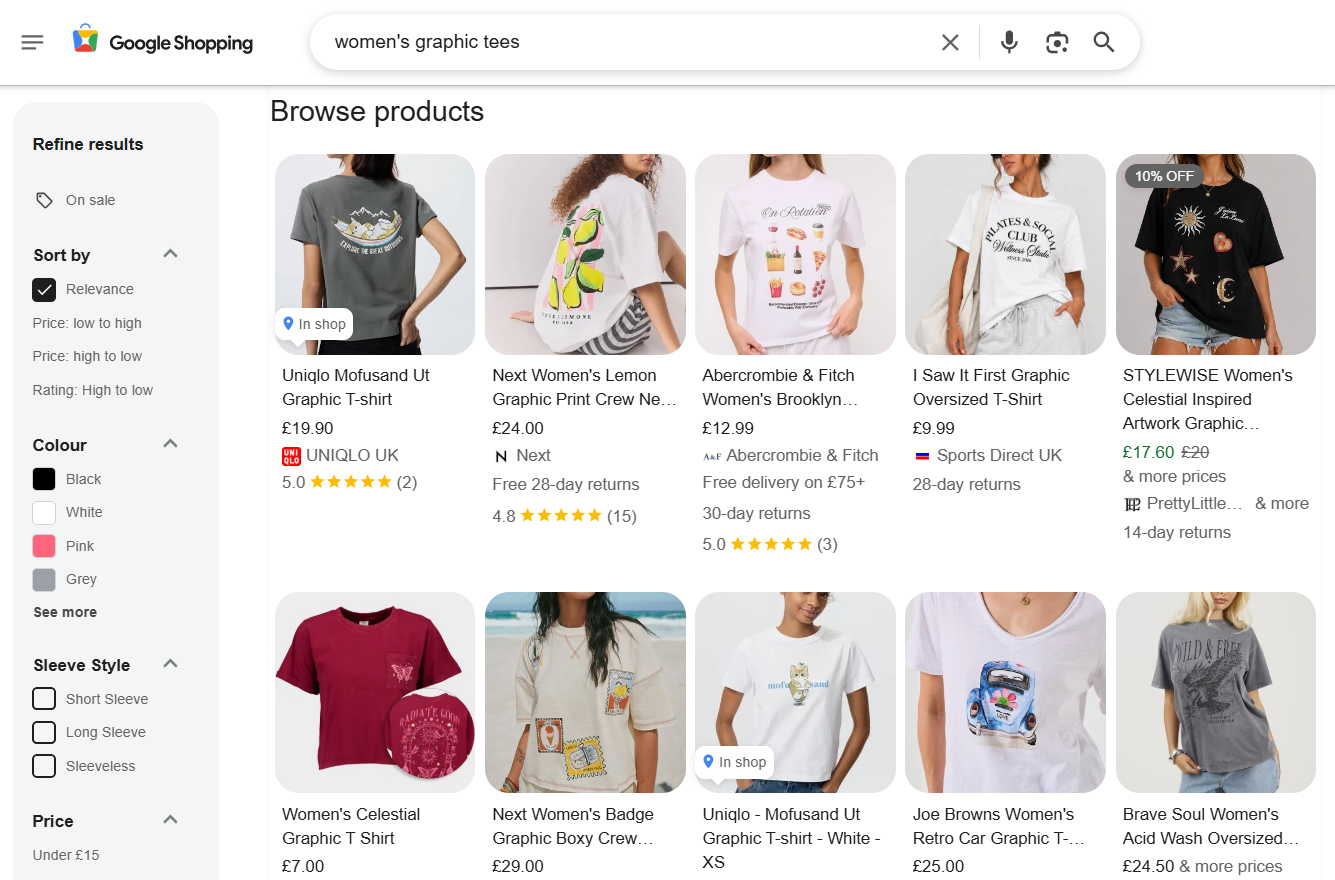
Google's AI Overviews regularly address shopping queries by pulling information from the Merchant Centre, which includes category fields, GTIN, condition, availability, and price.
The information you provide to Google Merchant Centre then becomes visible through Google Shopping, YouTube, Google Search, and Maps.
If you want your customers to find your products through Google Shopping, you need to set up Merchant Centre.
AI Tools Work Similarly
Other AI tools follow the same pattern, treating product feeds as authoritative, readable versions of your products. That's why getting your product feeds right matters, because even small changes not reflected in these feeds can significantly impact your visibility.
Even if you have the best product descriptions, a mismatch in information between the website and your feed can make both LLMs and AI-generated summaries wary of citing your brand.
The Most Important Things to Check:
Field-Level Completeness: Leaving some fields blank in Merchant Centre doesn't usually impact Shopping ad eligibility or search engine results pages. But they do influence AI answers - particularly constraint-based queries. If you have blank fields, it's worth looking at which ones may be vital for citations.
Synchronisation: Changes should be in real time, including sold-out products, price changes, and availability information. When both your website and feed update, AI can find the right information and cite it, avoiding inaccuracies. This includes your JSON-LD product schema and feed entries.
Machine-Readable Reviews: Remember, star ratings are for potential customers, but they do nothing for your AI visibility unless you map them using AggregateRating schema. This includes using the rating_value and review_count attributes, which establish trust signals.
Important: If your store doesn't run product feeds, these actions aren't as important. The priority remains with on-page elements, including avoiding keyword stuffing, creating benefit-focused descriptions, and search engine optimisation.
Do Blog Posts Still Play a Role in AI Visibility?
Blog posts are still important for AI visibility, but their role has changed a lot in recent years. The days of simply writing content to appear in search results are fading, because AI technology now provides answers in the SERPs themselves.
But when it comes to Ecommerce, AI search engines naturally look for product pages with specific, accurate information rather than blog posts about that product.
While blog posts can help potential customers learn more about products, the product page contains the information LLMs look for. This includes availability, specifications, pricing, and other key things that people search for.
And that's why product SEO carries more weight today. Your blog could secure top rankings and featured snippets, but if you're not optimising for AI-driven answers, you're missing out on a growing audience.
Product Page SEO in the AI Era
AI systems might be becoming more popular, but you'll still need to focus on traditional SEO strategies. For example, if your web page doesn't load properly or has poor navigation, AI search engines will struggle to discover and understand the content.
Addressing broken links, ensuring responsiveness across all devices, using optimised URL structures, and optimising images are all vital. So, AI hasn't necessarily changed the game; it's just added an extra layer of tactics required to succeed.
Following the tips in this guide enables you to maintain a consistent presence across both organic and AI search results. Today's product pages should still be compelling, but failing to provide direct answers and structuring the content for AI decreases your chances of securing citations.
If your product pages aren't pulling their weight, or you're confused about how to optimise content for AI, we're here to help. With a proven track record in both LLM and Generative Engine Optimisation, our specialists are equipped to support your growth.
Please get a free proposal today.