










Search engine optimisation decides whether a SaaS company gets found at the exact moment a buyer starts looking online for a solution.
Buyers do their research long before they speak with a sales team, and where they land during that research shapes the shortlist they build, the trust they extend, and eventually the vendor they choose.
Here's how you make sure your SaaS company is on their list.
TL;DR
Search engines are where most B2B software buyers start their research, so organic visibility puts a SaaS business in front of buyers while they're actively searching for solutions, software categories, and vendors.
SEO attracts higher-intent visitors because organic search captures people who have already expressed a need through their searches rather than interrupting people who aren't looking to buy anything yet via paid ads.
Detailed competitor comparison pages intercept qualified buyers who are actively looking to switch away from a legacy provider they're already frustrated with.
Securing top search positions lowers the cost of acquiring new users too, since ranking pages keep delivering traffic long after the initial investment ends, and that traffic compounds over time.
Visitors who arrive through organic search have already defined their own problem before they land on the page, so search-sourced leads close at far higher rates than leads from cold outbound or paid channels.
SEO improves the efficiency of the SaaS customer acquisition strategy when success is measured through qualified leads, trials, demos, paying customers, CAC, and customer lifetime value rather than traffic or rankings alone.
SEO Puts SaaS Brands in Front of Buyers and Helps Them Understand the Product More
The main way search engine optimisation supports customer acquisition is by making your software visible during that early, independent research window. Buyers today want a completely rep-free experience. They want to finish the bulk of their evaluation before they ever speak to a sales team.
Because of that, 90% of B2B buying processes start with some kind of online search. And 71% of those researchers start with a generic Google search rather than looking for a specific brand name.
And when they do search, they hardly ever just type in one thing and call it a day. On average, a buyer actually runs 12 separate searches before they ever engage directly with a specific vendor website. When you are missing from those results, you are missing 12 different opportunities where people are investigating their problems, looking at tools, comparing features, and checking out competing options.
When you implement a strong SaaS SEO strategy, it puts your brand right in the middle of all that. It actively drives customer acquisition by guiding them through every single stage of their exploration and giving them enough useful information to keep evaluating the software entirely on their own terms.
Your Ranking Position Determines How Much Buyer Attention You Capture
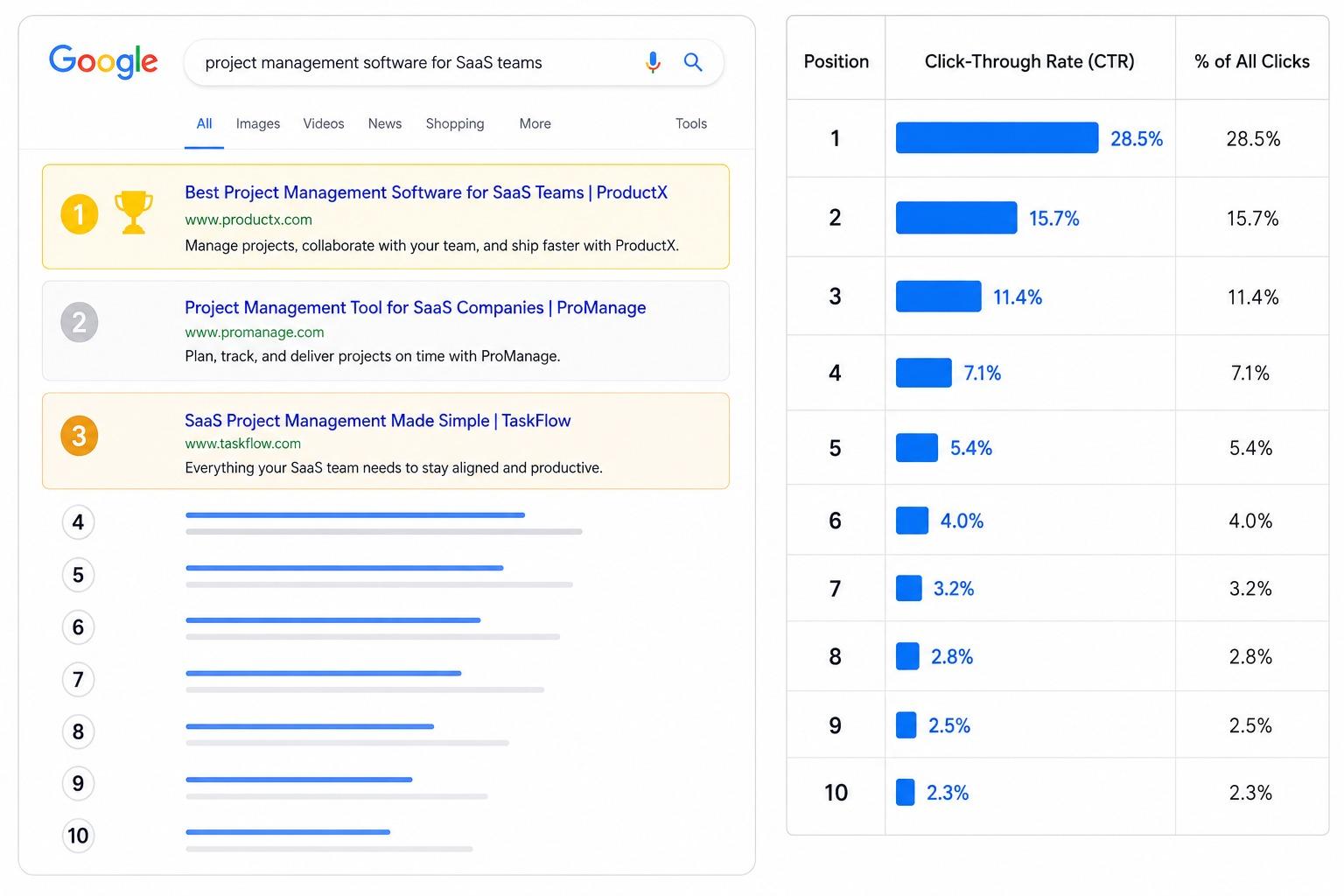
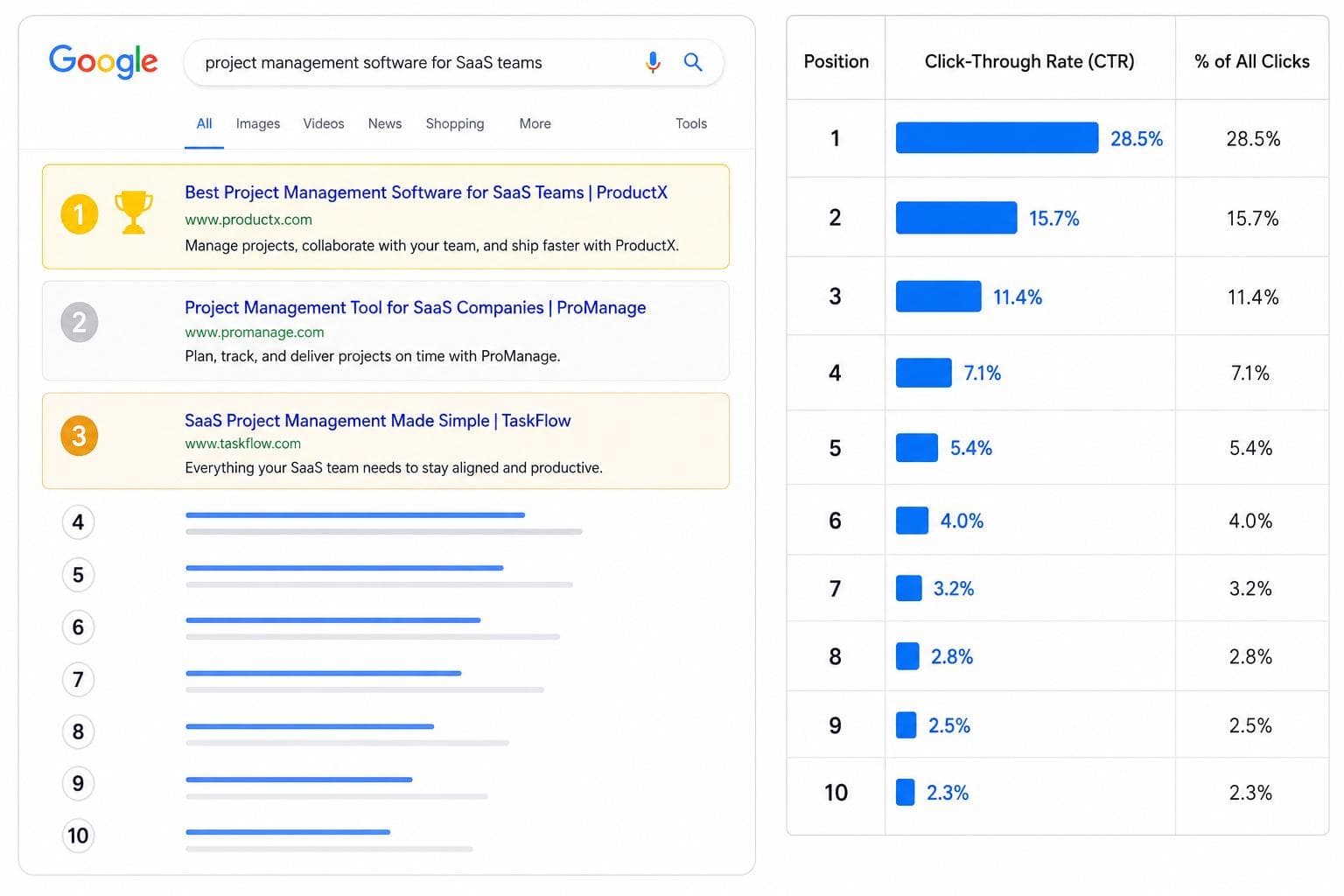
When we talk about how SEO services support a SaaS customer acquisition strategy, we have to look closely at exactly where you sit on the search engine results pages. You might notice that your site finally made it to page one, but your new user signups are still completely flat. That happens because your specific ranking position audit is completely determines how much buyer attention you actually capture.
When you execute a great SaaS SEO strategy, you absolutely have to aim for those top spots. Think about it. The top 3 organic positions combined capture roughly 54% of all clicks for any given query.
Position 1 gets a click through rate of around 28.5%. Position 2 drops to 15.7%. Position 3 sits at 11.4%. And by the time you reach position 10 at the very bottom of the page, you are converting under 3% of searchers into actual visitors.
What this means for your customer acquisition strategy is that ranking on page 1 for a competitive term at position 7 or 8 only delivers a tiny fraction of the traffic that a top 3 ranking would bring.
Sure, both of those count as page 1 search rankings, but when you get to that number 1 spot, that is what really matters because it captures the absolute most customer demand. And executing great SaaS SEO is exactly what gets you to that top spot.
SEO Captures Demand That Already Has a Problem Behind It
Buyers often search for ways to solve an immediate, frustrating moment long before they even realise a SaaS tool exists that can solve it in just 3 clicks. When you do a thorough keyword research, those search patterns become completely obvious.
But you have to do it smartly. You might notice that plenty of software companies fall into the traffic trap, chasing top-of-funnel informational keywords just to inflate their search engine traffic numbers. When you do that, those broad terms might bring in thousands of visitors, but many of them are just students or early-stage researchers who never actually convert into revenue.
When a prospect types a specific, bottom-of-funnel query into search engines, they have already identified their pain point, and they are actively hunting for a resolution. Because of that, the organic traffic landing on your site through those search intents carries far more commercial intent.
When you get those high-intent visitors onto your site, the impact on acquisition is massive. Leads sourced through organic channels close more than 7 times as often as outbound prospects. This happens because they have completely self-qualified before they ever enter the marketing funnel. So, rather than chasing massive search volume, a successful SEO strategy zeroes in on the exact queries where buyers are actively evaluating vendors.
For example, if you sell project management software, targeting long-tail keywords like "best scrum tool for remote developers" yields a much higher conversion rate than a broad term like "top work management tools".
SEO Can Improve Acquisition Economics Because Content Keeps Working
The mathematical reality of subscription software dictates that growth is only sustainable if your customer acquisition cost remains significantly lower than the revenue generated over the lifespan of the account. But relying heavily on paid ads or PPC campaigns creates a very linear cost structure. The exact moment your advertising budget runs dry, your traffic completely stops, which makes sustainable growth incredibly difficult.
Right now, the average blended CAC sits at $239, against a purely organic cost of $205. When you get your inbound channels dialled in, that gap widens even further for trial signups specifically. Organic acquisition runs around $47 per trial, against $142 through paid ads.
Why does this gap grow over time rather than shrink? Because a paid budget stops producing signups the second the spending stops. But when you create a ranking piece of content, it continues to attract new users and generate free trial signups for months or years after publication.
You also have to consider that paid models suffer from rising costs over time as competitors continuously bid up the same exact terms. Now, that does not make organic search free. Executing great SaaS SEO requires a real investment in research, content strategy, technical work, and ongoing improvement.
But when you get it right, those investments directly help B2B SaaS companies push their SEO efforts to a 702% return over a 3-year average. And the payback lands around 7 months on campaigns tied to a customer lifetime value above $10,000.
Search-Sourced Customers Also Close Faster and Stay Longer
You might notice that leads from other channels take forever to convert, or they churn out almost immediately. But search-sourced customers actually close faster and stay much longer.
Leads sourced directly through organic search close at a rate of 14.6%, against just 1.7% for outbound-sourced leads. When you look at that 8.5 times gap, it is driven entirely by why the visitor showed up in the first place. They were actively looking for a solution, rather than just being pushed toward a purchase through an intrusive ad, which makes acquiring them so much more efficient. And when you get those high-intent users in the door, this exact same self-selection carries right over into customer retention.
Comparison and Alternative Content Intercepts Switching Buyers
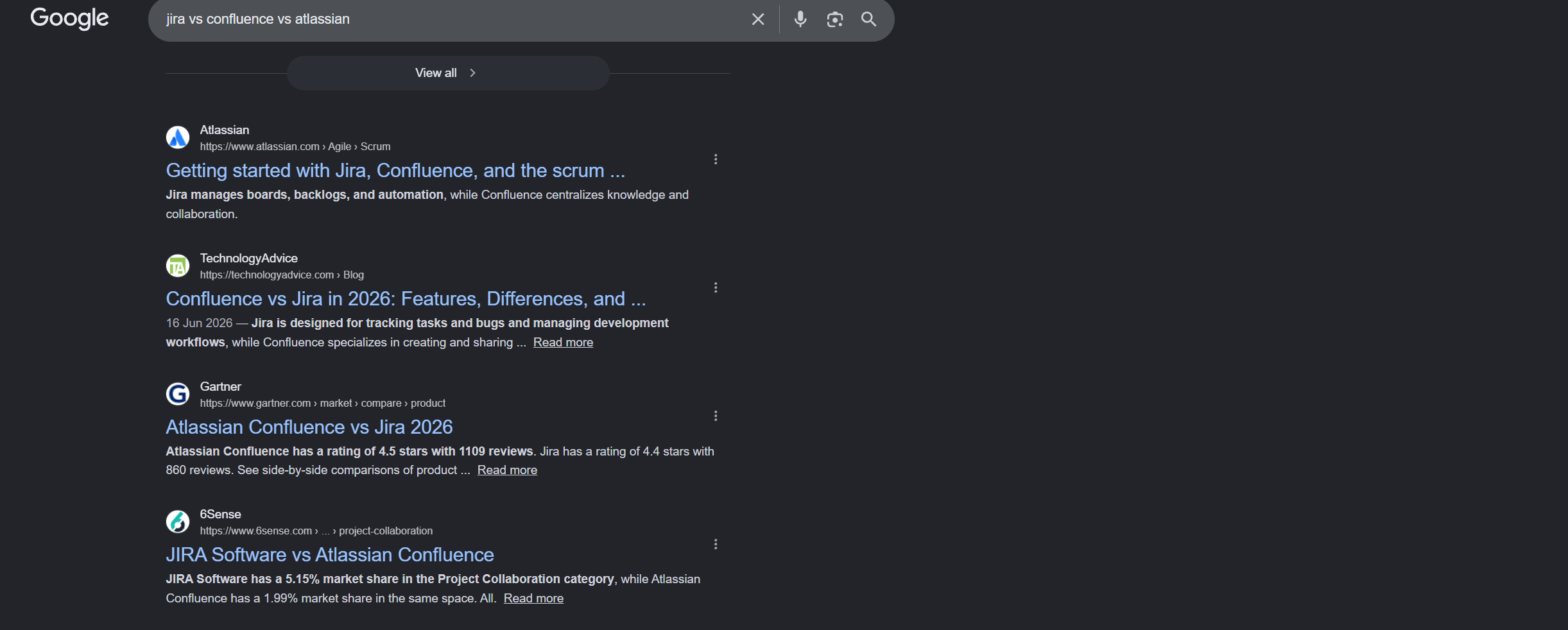
You might notice that buyers in the middle of their evaluation phase rarely go with the first option they find. They frequently search for alternative solutions and pricing breakdowns before making a final commitment. When you create content that objectively evaluates these alternatives while highlighting your own unique strengths, you intercept buyers at the exact moment of decision. Getting this right directly secures highly qualified buyers who are actively looking to switch providers.
When a SaaS company ranks for its own comparison and alternative content, it controls this narrative directly and drives the acquisition. If you do not do it, competitors and review sites will gladly capture this comparison traffic and steal those potential users whenever a SaaS company skips building one.
To really drive signups, these comparison hubs should be supported by detailed feature pages and educational blog posts that form comprehensive topic clusters. When you create content that thoroughly explores a core subject, search engines understand your topical expertise and reward your domain with higher visibility. Adding customer success stories and embedded product videos to these pages further solidifies that trust, moving the prospect much closer to a purchase.
Over the years, I have found that weaving in a sticky table of contents and a sticky call to action on the side of the page drastically improves conversion rates by keeping the next step visible at all times. And the best part for acquisition is that this content works even for early-stage companies with minimal domain authority, since the comparison itself, not general brand recognition, pulls in the click.
You can also build out specific integration pages to capture users who are trying to connect their existing tools. When you highlight how seamlessly your software connects with their current tech stack, it not only acts as a powerful acquisition hook but also increases their willingness to pay by up to 20%.
Technical SEO Removes Friction From the Buying Process
You might notice that your website has amazing content, but it just is not converting visitors into users the way you expect. That happens because even the most insightful content will fail to drive customer acquisition if the underlying technical infrastructure of the website is fundamentally flawed.
Think about it from the buyer's perspective. They are trying to evaluate your software, but if they land on a slow or confusing website, that friction actively repels them. They bounce, which kills that acquisition opportunity and negatively impacts your overall search rankings.
This is exactly why conducting a comprehensive technical SEO audit is absolutely non-negotiable for SaaS websites.
A huge part of this is optimising your page speed. Search algorithms actually use core web vitals as a direct ranking signal right now because they reflect whether the user is having a good experience. When you get those technical issues sorted out, your fast-loading pages keep visitors engaged, which significantly increases the likelihood that they will actually complete a lead capture form and enter your sales pipeline.
Other things you should look at include crawlability, internal linking, and site structure, along with the basics of on-page SEO like your meta descriptions.
SEO and Digital Authority Strengthen Trust
You have to remember that buyers rarely purchase on impulse. They need a massive amount of confidence before they commit to software that affects their workflows, budgets, data, or internal operations. This is exactly where search visibility actively contributes to your bottom line.
When your brand repeatedly appears for relevant questions, potential buyers naturally become familiar with you during their independent research phase. That familiarity directly lowers their hesitation when it is time to sign up.
And this connects directly to how search engines view you. They continue to rely heavily on external trust signals to evaluate the credibility of a website before ranking it. Because of this, earning high-quality backlinks from reputable industry publications is a fundamental requirement for dominating the search engine results pages.
Securing these endorsements requires proactive digital PR. When you commit to producing genuinely valuable resources that other people naturally want to reference, authoritative domains will link back to your software platform. That dramatically increases your overall domain authority. But more importantly for your pipeline, it clearly signals to algorithms and buyers alike that your brand is a trusted leader in the space.
If you want to see how this all comes together, please reach out and contact our SaaS SEO team for guidance. We would love to sit down and discuss exactly how search engine optimisation can completely support your go-to-market strategy and significantly strengthen your SaaS lead generation.