











SEO strategies for estate agents and property developers have transformed from a siloed process to a multi-faceted discovery engine in 2026. Whether you sell properties, provide letting services, or develop projects, understanding the modern search journey is central to your success.
Visibility today isn't just about ranking for a set of keywords; it's establishing a unified presence across multiple touchpoints. In this guide, we'll look at how SEO for estate agents has changed, and what you need to do to remain competitive.
TL;DR: SEO for Estate Agents and Property Developers
Think beyond Google: Optimise your presence across search engines, AI tools and property portals such as Rightmove and Zoopla.
Match keywords to search intent: Target informational, commercial and transactional searches across the entire property journey.
Invest in local SEO: Build location-specific pages, target hyper-local searches and keep your Google Business Profile active.
Optimise property listings: Maintain URLs properly, manage expired listings and ensure properties are optimised for both your website and third-party portals.
Get the technical foundations right: Prioritise crawlability, mobile UX, website speed, structured data and crawl-budget management.
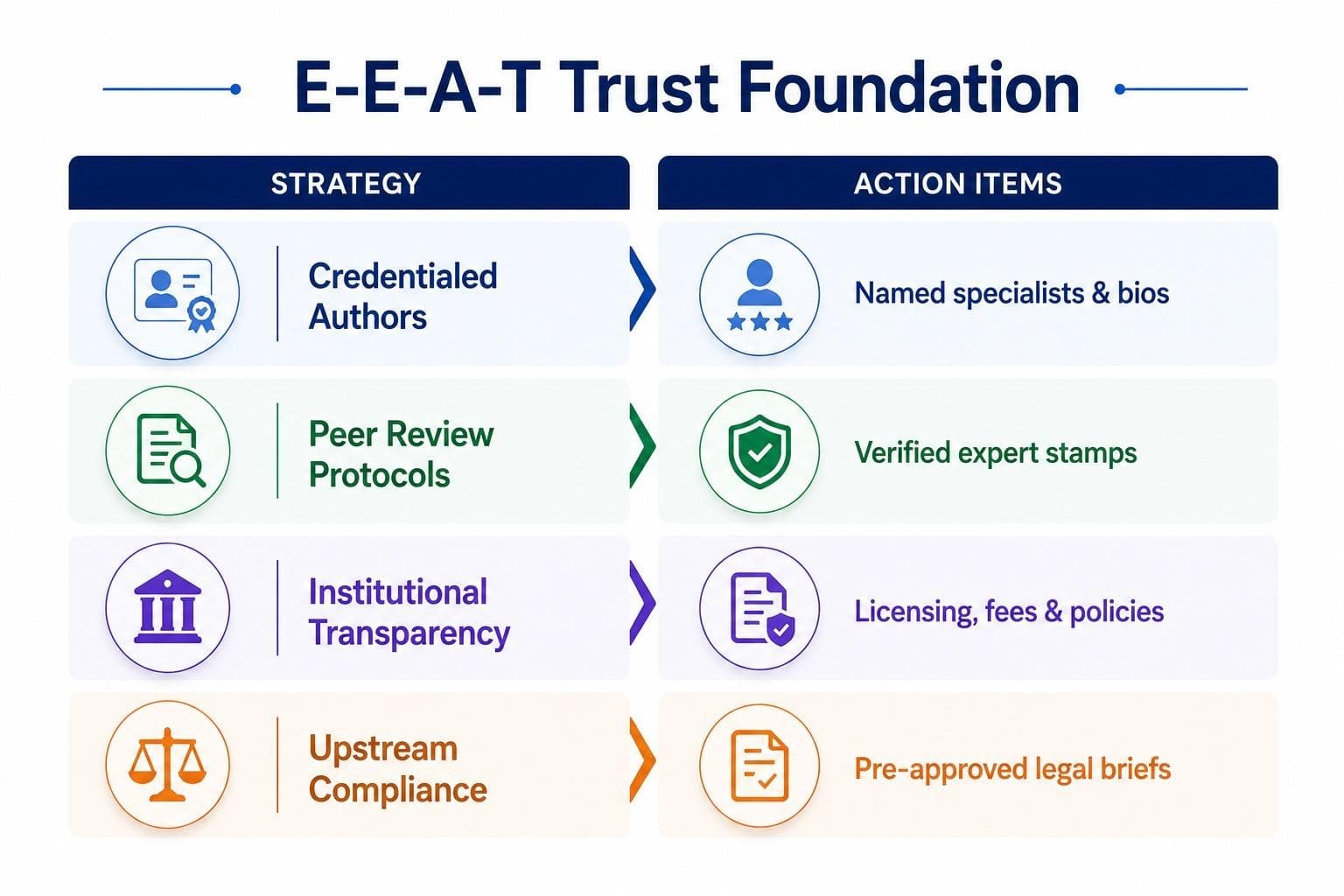
Build genuine authority: Strengthen E-E-A-T withexpert content, original insights, credentials, backlinks and local citations.
Optimise for AI discovery: Structure content so that AIOs andLLMs can easily understand, retrieve and cite individual passages.
Measure leads, not just rankings: Track valuations, viewings, enquiries, calls and other conversions to understand whether SEO is actually generating business.
Why is SEO Essential for Estate Agents and Property Developers?
The days of dropping into a local estate agent's office are long gone, with 93% of prospective buyers searching for properties online (Development Finance Today).
Property portals like Rightmove and Zoopla attract millions of people, andBBCresearch found that Rightmove attracts 10,000 views every minute on average.
Commercial keywords dominate the SERPs, with "houses for sale" being the most common term on Google. Further to this, large cities including London, Manchester, and Glasgow are the most popular locations to search for homes.
As you can see from these searches, Rightmove and Zoopla dominate the SERPs, followed by established estate agents with a national presence.
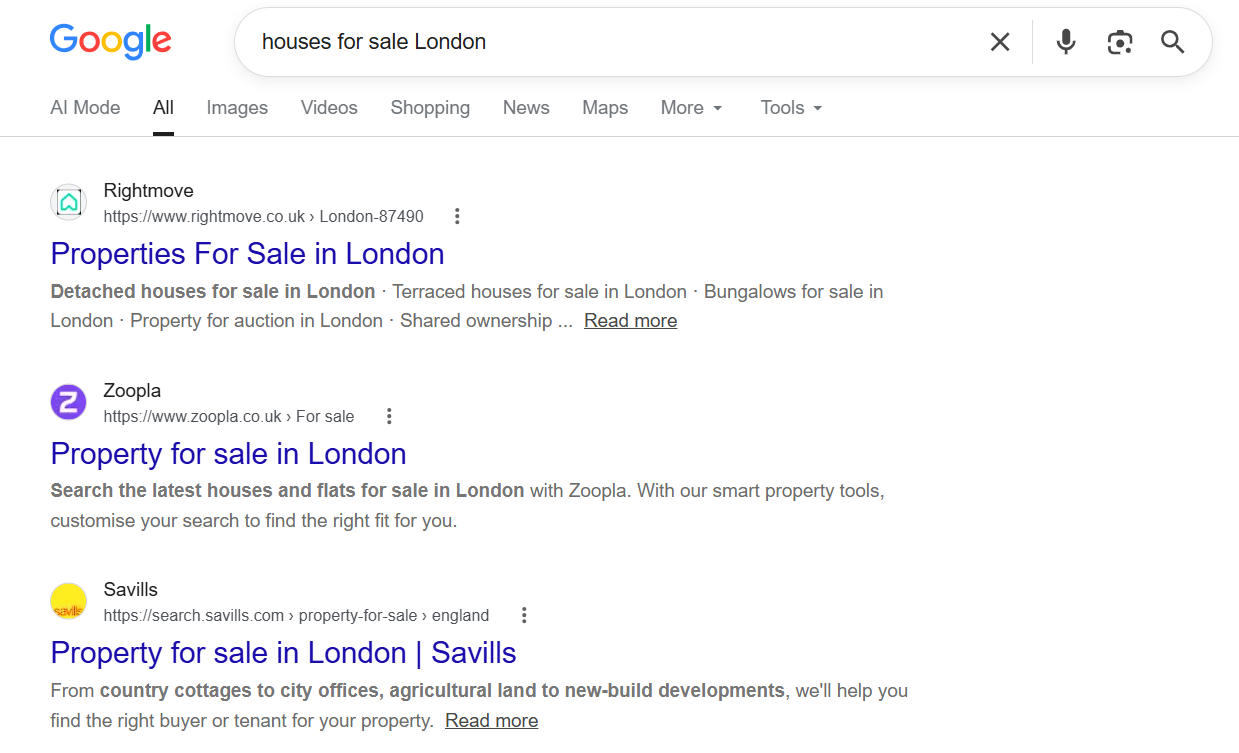
So, beyond ensuring your website shows up in searches, you also need to optimise your listings for property portals.
Search Engine Optimisation Helps You:
Appear in Google and comparison search engine results.
Enhance your online visibility and attract clicks.
Build awareness in your local operating areas.
Attract both prospective buyers and sellers at every stage of the journey.
Turn website visitors into qualified leads.
Remain competitive in a property market that's constantly changing.
Optimise for Search Intent, Not Keywords
Keyword research used to be a list-building exercise, but search volume is only a small part of the equation. Understanding the why behind each search helps you attract targeted traffic at each stage of the user journey.
For example, informational searches like "the best areas to buy an investment property" often appear early in the journey, while commercial searches happen when people are actively looking for properties.
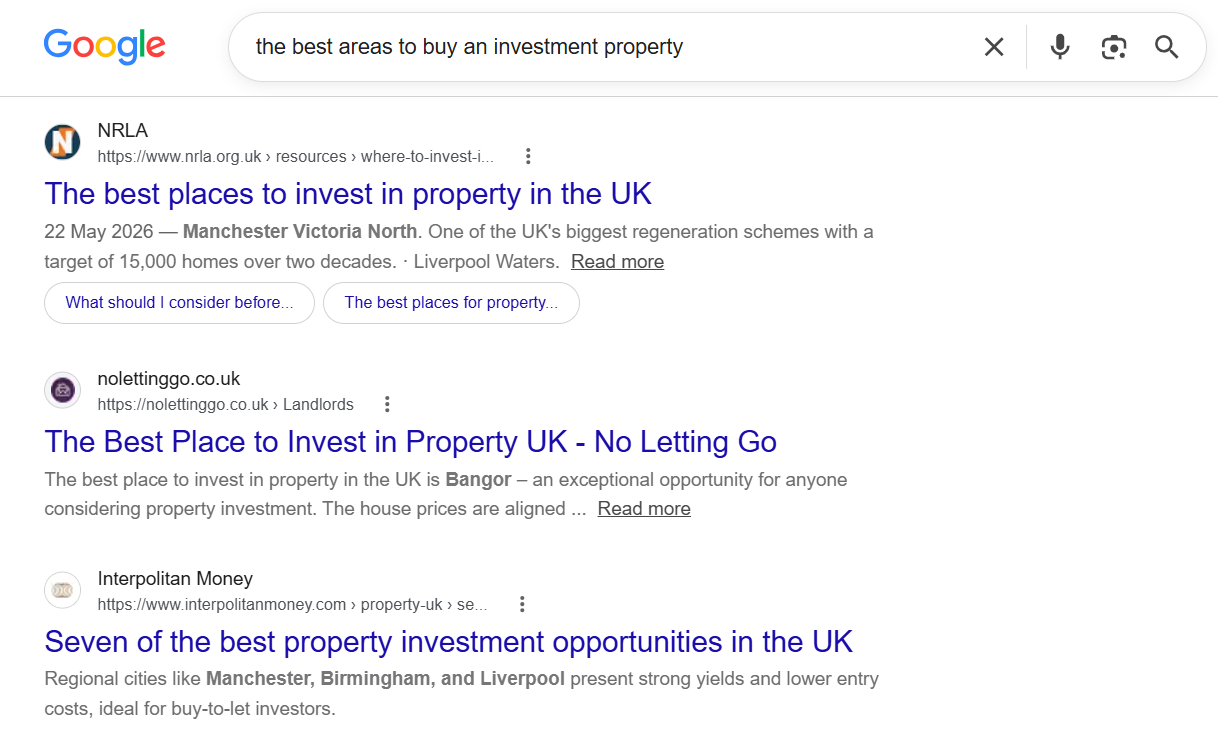
Understanding the nuances behind each search ensures that you target keywords and phrases that attract the right traffic.
One of the biggest SEO mistakes businesses make is treating keyword research as a list-building exercise.
Mapping Keywords to Intent
Understanding the relationship between keywords and search intent can also help you streamline the customer journey and ensure each page serves a distinct purpose.
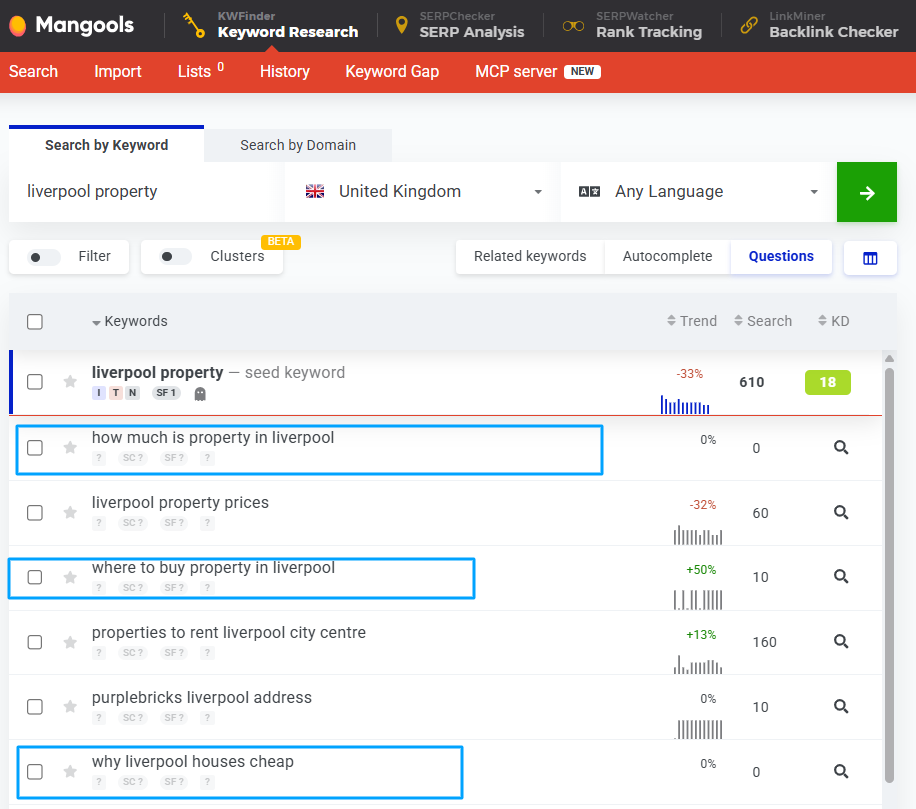
As you can see from this keyword research, "property in Liverpool" brings up a range of terms - each aligning with different stages of the search journey.
Informational terms are vital for early-stage customers and establishing authority:
Commercial terms like estate agents Liverpool are for comparing solutions, while transactional terms including apartments to rent Liverpool are for when someone is ready to take action:
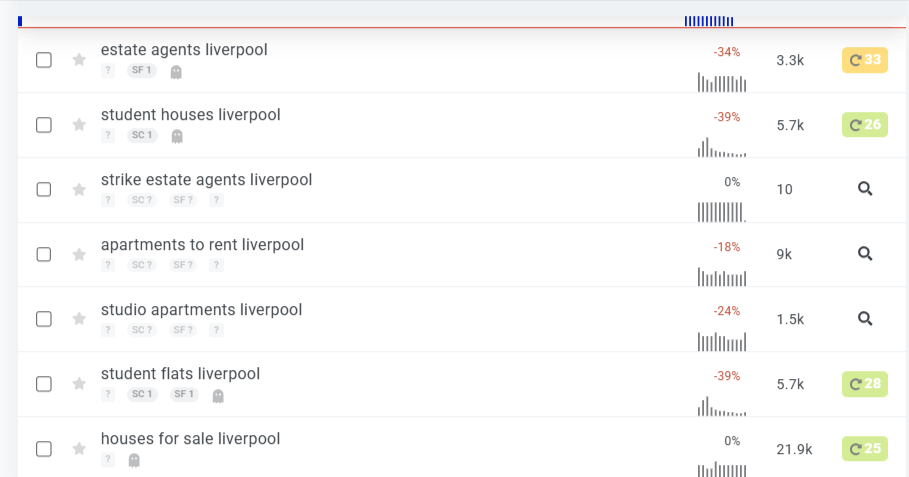
When you understand the intent behind each search, you can create pages that move prospective buyers, sellers, and renters through your website.
Optimise for Local Search
Local SEO is non-negotiable for estate agents and property developers because most searches are concentrated in a specific area. When someone searches, they don't type in "estate agents UK" because they're looking for local properties.
This means that realtors and property developers must focus on location-specific keywords, dedicated pages, and a regularly updated Google Business Profile.
Using Location Pages for Visibility
The property services niche is dominated by national estate agents and property search engines. But smaller agencies can increase their visibility by optimising for hyper-local searches.
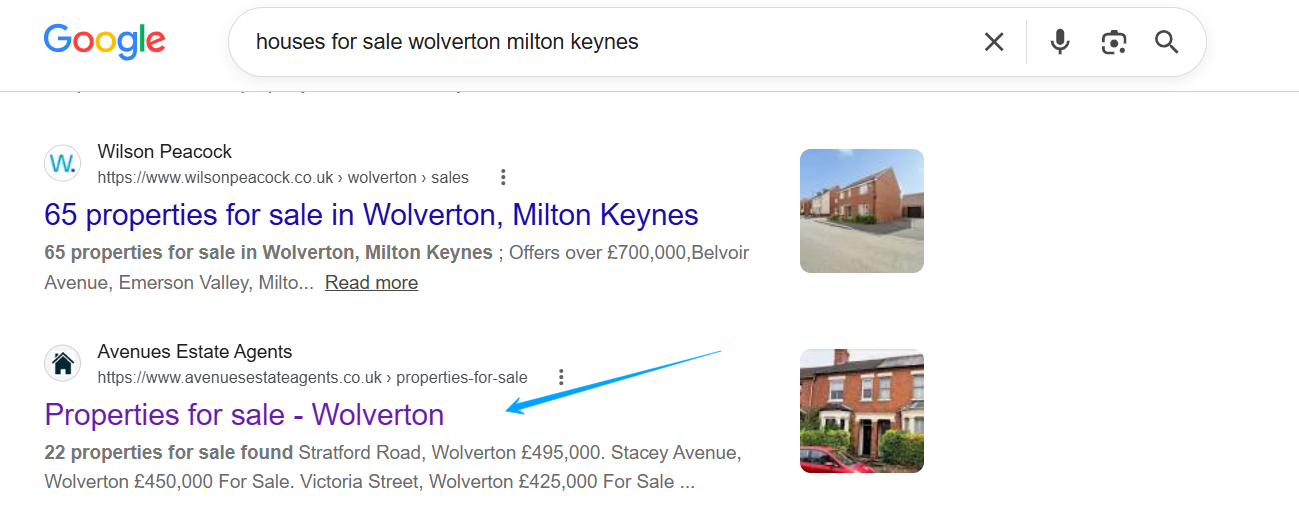
A Google search for homes in Milton Keynes brings up Rightmove, Zoopla, and Taylors.
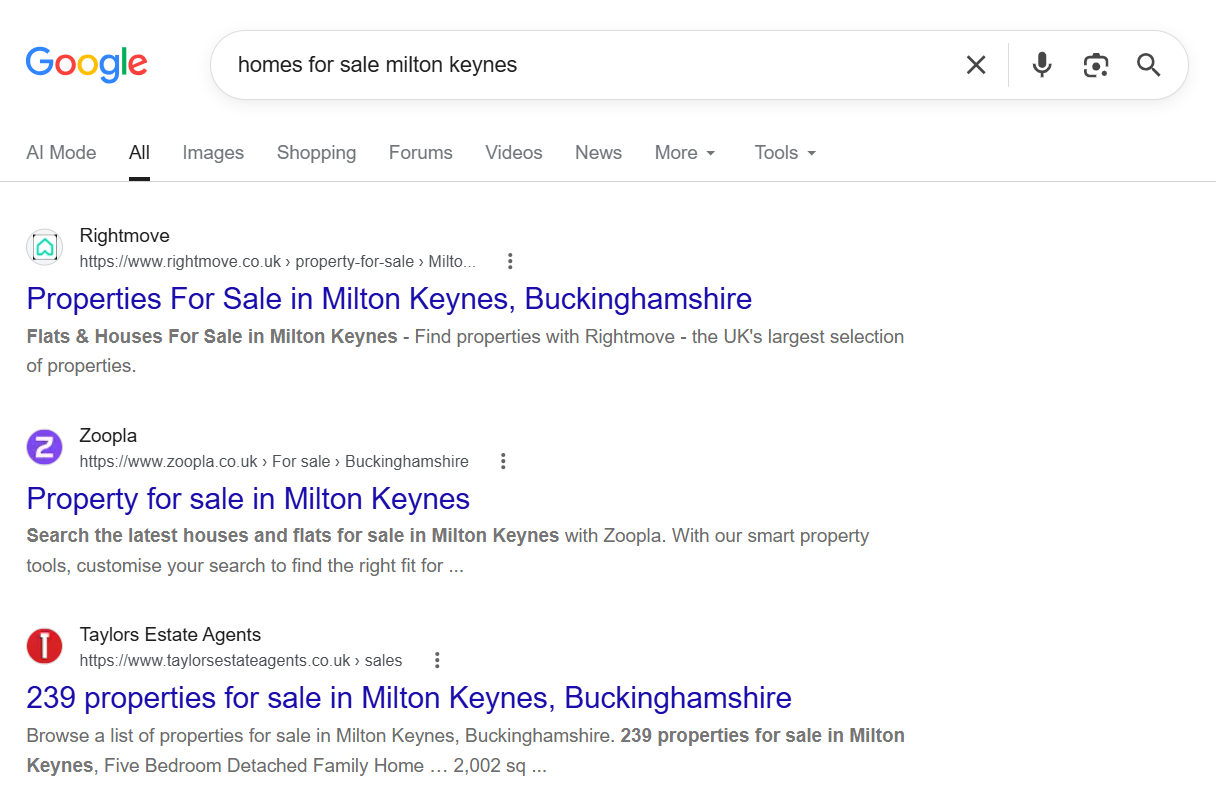
But when we narrow the search to Wolverton, smaller agents with a local focus start to appear.
Helpful Content for Local Audiences
Local audiences aren't just searching for properties; they want information. Which schools are nearby? How far will they have to walk to the local shop? Is there a lot of crime in the area?
Both estate agents and property developers can capitalise on these searches by creating valuable content that answers the questions prospective buyers, renters, and sellers are asking.
Google Business Profile
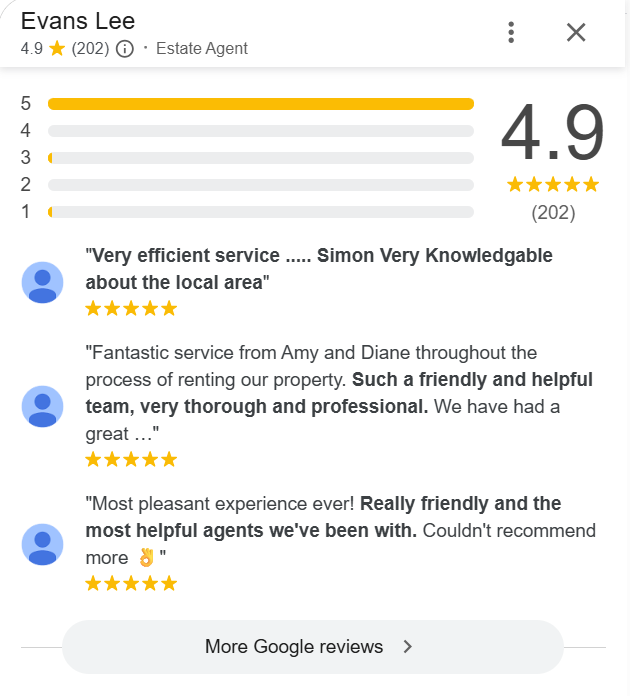
Google Business Profile is one of the most important assets for local estate agents and developers, serving as a hub for prospective clients. Beyond helping you appear in "near me" searches, GBP also builds your authority through information, updates, and reviews.
Despite GBP's importance for local SEO, many agents treat it as a static directory listing rather than an asset that should be constantly updated.
Adding regular posts, ensuring NAP (Name, Address, Phone Number) consistency, and responding to all reviews shows that your business is active and engaged with its community.
Technical SEO
Technical SEO for estate agents and property services websites is vital because it ensures that search engines and AI bots can crawl, understand, and rank/cite your content. While there are many elements of technical SEO, the most important for property websites include:
Property Listing Management
Property listings can be challenging for technical SEO, even though they may look like on-page SEO on the surface. When you're dealing with a high volume of properties that are sold, rented, and taken off the market, it's easy to forget the importance of technical maintenance.
Expired URLs, 404 errors, and missing redirects can affect both organic search and AI visibility. Deleting a property listing without implementing redirects can damage equity and authority, while leaving inactive listings on your website hurts customer experience.
Property websites also need to manage crawl budgets because search filters can create hundreds of URL combinations. Property listing management isn't a one-time job; it's a continuous process. That's why many agents use professionaltechnical SEO services.
Website Speed and Mobile UX
Property websites often feature heavy elements, such as high-resolution photos, videos, virtual tours, maps, and calculators - all of which can impact website speed.
Ensuring your website is responsive across all devices, compressing images, and monitoring Core Web Vitals enhance user experience and reduce bounce rates.
Use Structured Data
Structured data enables search engines to understand what your web pages are about. Implementing schema markup can help your website appear in rich results and give search engines clarity.
It also helps AI understand your business and properties as entities, which increases your visibility in AI-generated answers.
By defining your brand, branch locations, and listings as connected entities, you essentially increase your search coverage.
Establish Authority Through Content Creation and Link Building
The UK's real estate sector is notoriously competitive, with average agency numbers increasing 3-4% each year (Property Soup).
National agents and property developers aren't just competing against each other; they're also competing against third-party platforms, while local agencies must establish themselves as experts in their community to secure clients.
Authority isn't given: it's earned through consistency, expertise, and positioning.
E-E-A-T Signals
Experience, Expertise, Authoritativeness, and Trustworthiness are the foundations of a high-authority service business.
It's no longer enough to find some keywords and create content, because originality, perspective, and uniqueness determine where Google ranks you, and whether audiences trust you.
Aside from EEAT, the real estate industry also falls into theYMYL (Your Money or Your Life) category, making everything you create high-stakes content.
This means ensuring accuracy and transparency at all times, while also displaying credentials and clear team member profiles:

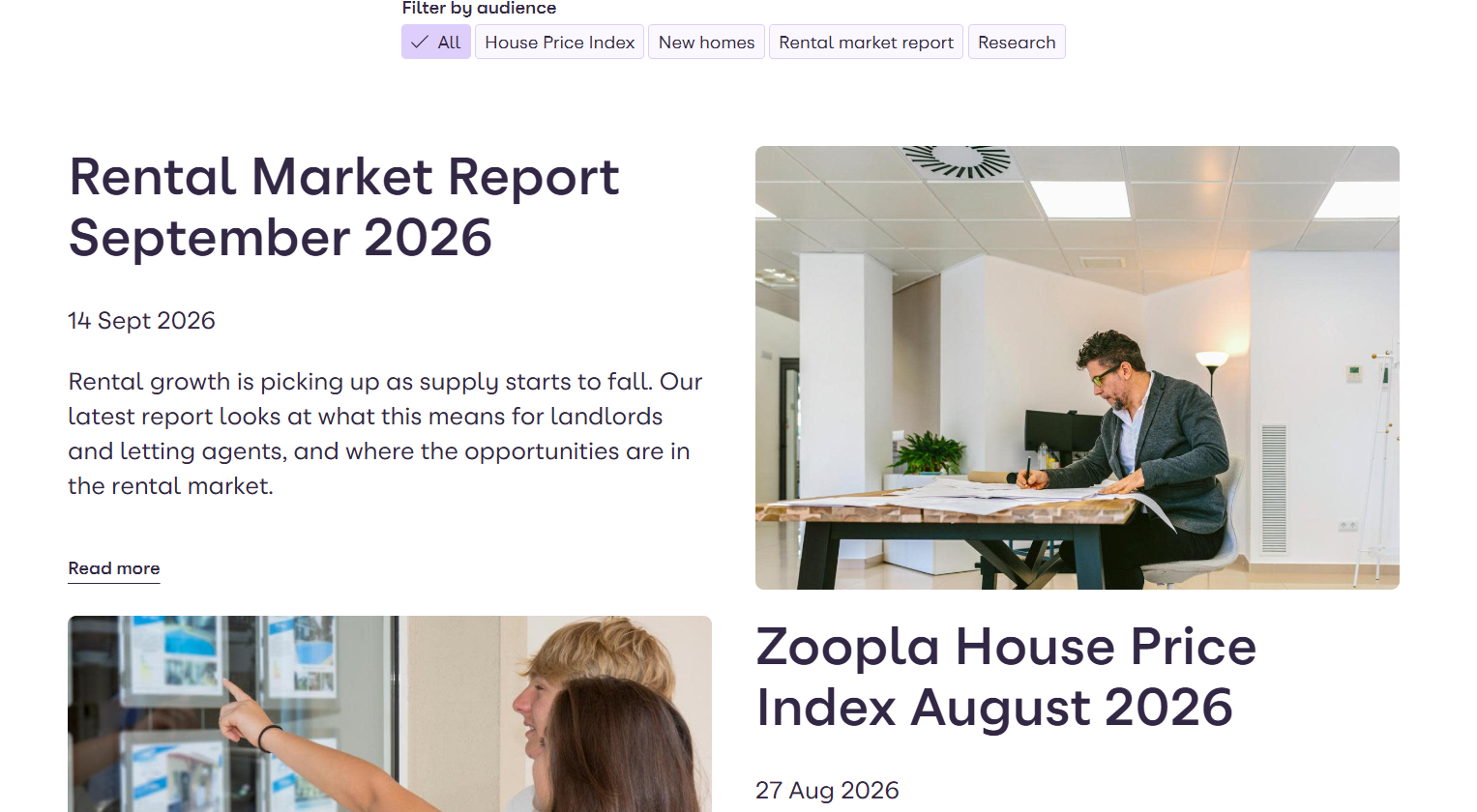
Content creation has also become more nuanced. Instead of typical blog posts, agencies should focus on original research, case studies, and guides that support clients through all stages of the process.
Websites likeZoopla are a perfect example of establishing authority through research and insights:
Backlinks and Local Citations
Backlinks are still a vital authority signal, but, as always, quality matters more than quantity. Estate agents can earn links through local press opportunities, sponsoring community events, and listing properties on third-party platforms.
Developers have a unique opportunity to increase their online presence through aligning with sustainability initiatives and playing an active role in regeneration projects.
Remember,digital PR is highly effective if you have original data and insights.
SEO in the AI Era
The rise of AI tools means that the average property search journey has become more layered. While lexical searches (keyword and web page matchings) are still important, not optimising for semantic search leaves you at a distinct disadvantage.
A person might search for "estate agents in South London" using a tool like Google, but turn to ChatGPT, Gemini, and Perplexity for conversational queries such as "What are the safest South London neighbourhoods for families?"
The core fundamentals of GEO (Generative Engine Optimisation) are similar to SEO, including ensuring your estate agent website has no technical roadblocks, implementing an internal linking strategy, and creating helpful content.
But your content must be understandable and extractable.
Writing for AI Tools
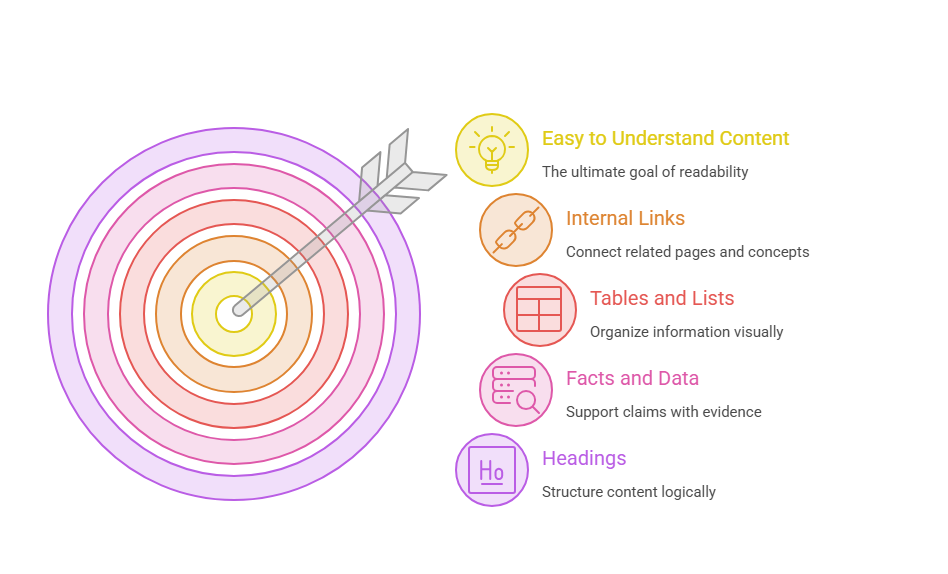
While traditional search engines favour discoverable content, AI models need to understand it. Instead of processing the entire webpage, they focus on passage retrieval and extract the information that best matches the user's query.
Making your content easy to understand includes:
AI doesn't mean that traditional SEO is no longer important. Instead, you should consider it as an additional layer to your current strategy.
Measure Results for Your Estate Agent Website, Not Vanity Metrics
Ranking for keywords and attracting website visitors can show you that your SEO strategy is working at a basic level, but these are vanity metrics if those visits aren't turning into clients.
Measuring commercial outcomes lets you see which areas of your strategy need refinement. These include:
Valuation requests
Viewing bookings
Property enquiries
Calls, emails, and form submissions
Downloads
Signing up for property alerts
Use Google Search Console to view your search engine rankings and see which pages and queries are generating visibility. GA4 gives you a clear idea of what happens to your organic website traffic once visitors arrive on your pages.
The Bottom Line
Building a modern SEO strategy in a competitive property market goes far beyond keywords and website rankings; it ensures your website appears at each stage of the search journey.
Potential clients, renters, and buyers don't stick to one platform; they move between Google, property portals, local searches, and AI tools.
Instead of focusing solely on appearing in Google search results, your real estateSEO strategy should focus on attracting the right clients and evaluating whether it delivers genuine commercial value.
The property industry is competitive, but Assertive can help you connect with potential buyers, build a strong search presence, and cement your property development company's or estate agency's authority in the age of AI.
Please get in touch today for a free proposal.