












Do hotels and resorts need SEO beyond booking platforms? Unquestionably. Booking engines are great for getting leads and bookings, but over-reliance on them can leave you out in the cold.
The door's shut on maximum profitability, and your resort's existence depends entirely on whether Expedia, Trivago, and Booking.com recommend your hotel to guests.
We're not against booking platforms, and you should absolutely use them to build your presence. But implementing SEO for hotels and resorts gives you control over:
When you appear online
Who finds you
What happens when they click through to your website
The ROI you generate each year
So, if you want to increase direct bookings and take control of your resort's future growth, we'll cover everything you need to know about SEO in this guide.
TL;DR
Booking platforms (Expedia, Booking.com, etc.) bring visibility, but relying on them alone is risky and expensive.
Since 61% of holiday searches start on Google, investing in hotel and resort SEO lets you capture direct bookings, which means full revenue, fewer cancellations, and the chance to build loyalty and repeat stays.
The main SEO priorities:
Keep your Google Business Profile updated (it feeds Google Hotels).
Create location-specific pages, add hotel schema markup.
Fix technical issues (speed, mobile, site structure), write meta titles/descriptions that earn clicks.
Publish local-expertise content targeting long-tail keywords.
Build quality backlinks through digital PR and partnerships.
AI-driven travel search is also growing fast, so optimising for LLMs matters too.
Commissions are a recurring cost forever, while SEO compounds over time. Use booking platforms, but don't let them own your future.
The Problem With Booking Platforms
Booking engines are great at what they do, because they've spent billions on training travellers to search on their websites. The draw for hotels and resorts is simple: visibility to a global audience.
Research shows that Booking.com processed over 1 billion room nights in 2025 alone and generated a 13.5% year-on-year revenue growth (Business of Apps).
With so many active global users, it's easy to see why so many hotels and resorts turn to these platforms...but there are some downsides to consider.
You Rent the Relationship
Let's say a family is looking for some fun in the sun. They choose their destination, and head to Expedia or Booking.com to find accommodation. Your resort shows up, so they click it, view the gallery, and complete their reservation through the platform.
On the surface, it seems like you've sealed the deal, but you don't own this relationship - you rent it. Many hotels don't even get the guest's email address, which means you can't contact them directly to upsell experiences or engage in post-stay remarketing.
Pricing Competition
When people use these platforms, they're looking for the best deals. Unfortunately, this means you might need to reduce your rates to compete, or you'll get lost in the crowd.
While large resorts can often navigate lower pricing due to volume bookings, boutique hotels and local guest houses might be priced out of competing for new guests.
Booking Fees
Nothing comes for free, and booking platforms make their money through commission fees. When someone books your hotel or resort through Expedia, Trivago, or Booking.com, you'll be charged a commission, which can range between 10% and 30%.
This leaves many resorts with a problem: do you increase your pricing and risk losing out on potential guests? Or, do you deal with the commission fees and limit your profitability?
Why Focus On Direct Bookings?
Did you know that 61% of all holiday-related searches begin on search engines like Google and Bing? Whether someone types in "family-friendly resorts in Tenerife", or "romantic European city breaks", the websites that show up in these searches have a good chance of securing clicks.
And, when someone clicks through to your website and books there, you don't have to worry about any commission, because you own that booking.
Here's why direct bookings matter:
Improved ROI
When a guest books directly through your website, you keep 100% of the fee. For example, if you charge £100 a night, and someone books for a week, that's £700. But if your booking came from another platform, a 20% commission means you'll only get £560.
Let's say you have 20 rooms at the same rate, and they're booked for 36 weeks of the year, you'll generate £504,000 in room revenue. At a 20% commission rate, that's £100,800 paid to booking platforms instead of staying in your business.
Guest Quality
Depending on OTAs can also impact your cancellation rates, because OTA bookings have almost double the cancellations of direct bookings (Cloudbeds). This is because booking through these platforms is often impulsive, whereas direct bookings from the hotel's website require more consideration.
You can also communicate with guests before they arrive, offering upgrades, explaining more about the experiences you offer, and nurturing the post-checkout relationship.
Simple things like loyalty schemes or being able to email guests directly can result in repeat bookings.
Local SEO for Hotels
When someone's searching for a hotel, they're looking locally - even if they're not in the area. For example, a search for family-friendly resorts in Barbados brings up these results:
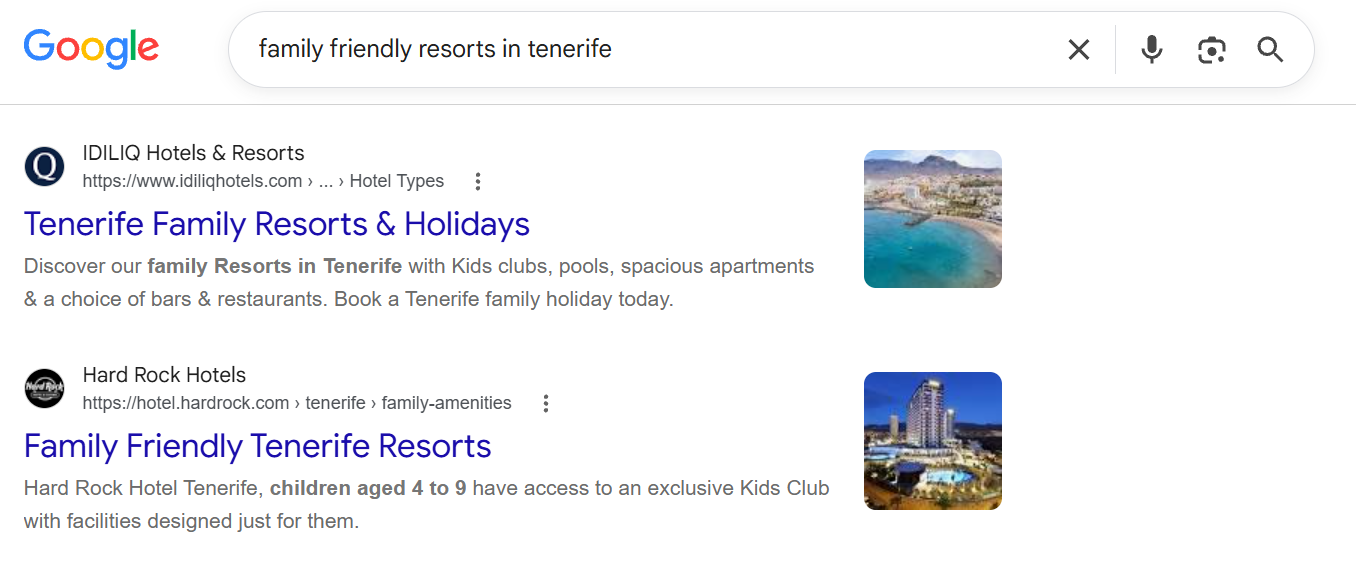
While some people will click on the organic results, most will use the local map results to compare hotels. If your hotel doesn't appear in these results, you're missing out on valuable traffic and the opportunity to turn this traffic into paying guests.
Google Business Profile
The core component of a local online presence. It's where you'll list information about your hotel, including booking rates, photos, and reviews. However, GBP for hotels works slightly differently because the profile feeds into Google Hotels.
Google's integrated travel search feature takes information from your Google Business Profile, letting users check availability, view rates, and compare booking options.
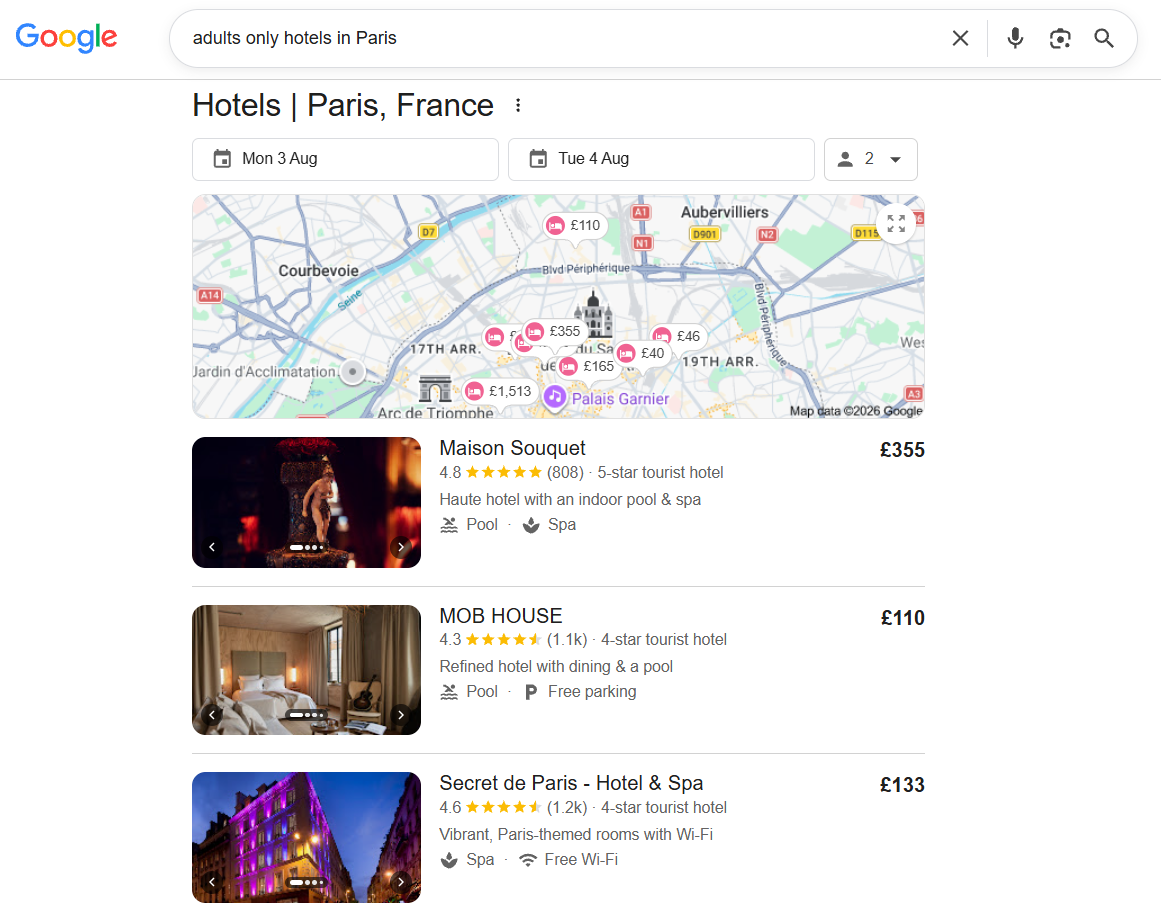
So, when you regularly update your profile, ensure accurate information and NAP consistency; it influences where you appear in Google's travel feature.
Location Specific Pages
Your hotel website should help show up in relevant searches, and you can achieve this through location-specific pages. Larger resorts or chains might have multiple brands or locations, and each should have a dedicated page.
Hilton is a great example of how to leverage location-focused content. The main website lists different destinations for users to explore:
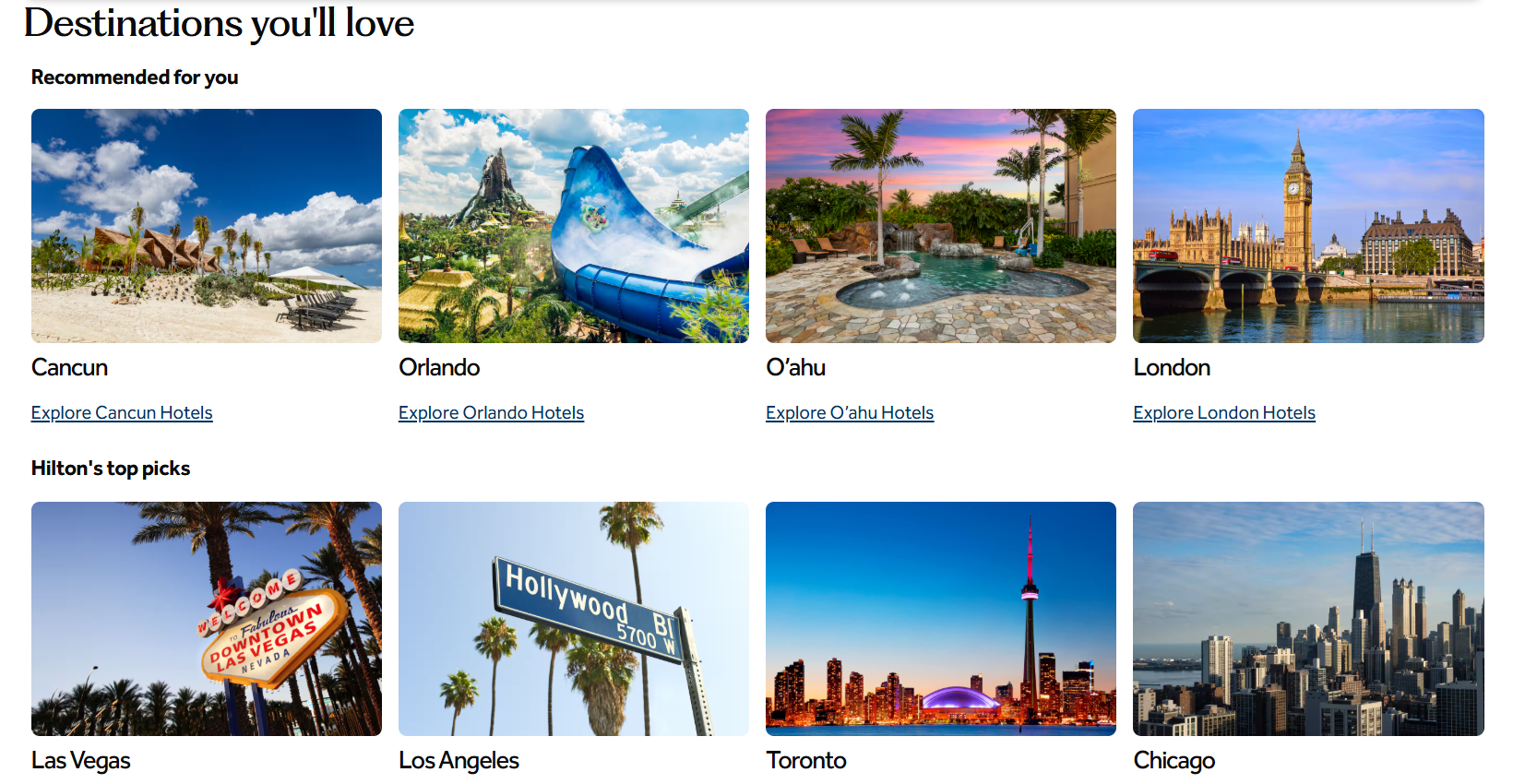
Then, each location has a list of hotels and relevant content, which establishes Hilton as a global - and local - expert.
Local Schema Markup
Schema markup helps search engines understand what your content is about and enhances indexability. Structured code lets search engine crawlers display accurate information and increases your chances of appearing in rich results.
The most important types of hotel schema include:
Hotel / Resort: Outlines basic information such as average star ratings, amenities, and check-in times.
HotelRoom: Room categories, guest capacities, and bed types.
Offer: Feeds direct booking links, currency, and live pricing to search results.
AggregateRating: Collates guest review scores, displaying ratings in search snippets.
You can use Schema.org to create structured data markups, or your SEO agency will handle it for you.
Ensuring Your Hotel Website is Flawless
Technical SEO is intrinsic to generating direct bookings. If your website's backstage elements don't load properly or automatically adjust to mobile devices, it impacts user experience.
Nobody wants to stay on a website that doesn't work properly, and failing to optimise your site's technical elements can lead to high bounce rates.
This includes:
Continuously testing and optimising your website for fast loading times
Checking each element displays correctly
Ensuring the website is mobile-friendly
Implementing a clean site architecture
These things aren't glamorous by any means, but they lay the foundations for a successful digital marketing strategy. A specialist technical SEO consultant can assess your website's technical elements and enhance their performance.
On-Page SEO
Technical SEO is the foundations, bricks, and mortar of your hotel, but on-page SEO is its identity, personality, and interior elements.
Think of it this way: someone performs an online search and a list of hotels comes up - what makes them click yours? When someone does click through to your website, what compels them to complete the booking journey?
The answer to both of these questions is on-page SEO, because it covers your meta titles, meta descriptions, content, and internal links.
Create High-Quality Engaging Content
Content marketing should be your unfair advantage - especially if you're a small guest house or boutique hotel. Global chains and OTAs might have an overview of your location, but they'll never know it as you do.
Everything from the best restaurants within walking distance to where to go on a rainy day is an opportunity for you to create content that resonates with guests and demonstrates your area expertise.
This is where long tail keywords come in. They're phrases with lower volume, but higher intent.
For example, while larger brands will go after more competitive terms like "best beaches in Tenerife", you can target niche terms like "child-friendly beaches in Tenerife", which earns topical authority and introduces your hotel to travellers who are actively researching holidays.
Meta Descriptions and Titles
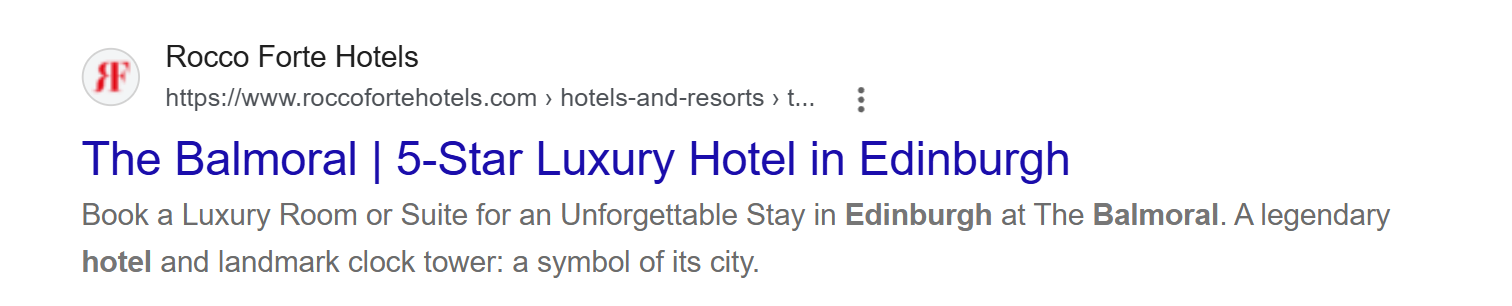
Meta titles and descriptions are what searchers see before deciding whether to click on your website. But, despite their importance, many hotels leave them blank or add generic information. Your meta title should include your main keyword, while the description should compel people to click.
Off-Page Hotel SEO
Google still cares about authority, and that means securing backlinks from reputable publications. Digital PR for hotels is about connecting with travel-focused publications, getting your resort featured in the right directories, and claiming tourism board listings.
If you cater for events, approach wedding planners and event agencies to form partnerships. Not only can this help you attract more bookings, but it also makes you less reliant on OTAs for referrals.
Remember, you don't need to buy spammy link packages or get your hotel in hundreds of publications, because search engines place more value on 10 relevant high-authority links over 100 poor-quality links.
An Example of Great Hotel PR:
With more guests factoring in the potential environmental footprint of their stay, hotels need to position themselves as an eco-friendly option. Local publications are ideal for press releases, as you can see from this example:

A Gloucestershire hotel transitioning to full solar power might not seem like an exciting story, but if guests are searching for eco-friendly hotels in the area, Hatherley Manor will be in their minds.
AI is Redefining How Travellers Search
Recent figures suggest that 8% of UK travellers use AI to plan their holiday, while 52% use it at some point during the planning process (BBC).
While 8% doesn't seem significant, it's a 4% increase in one year, showing the current and future importance of optimising your hotel website for AI searches.
A searcher might ask LLMs like Google Gemini, Perplexity and ChatGPT for hotel advice, or check whether it has positive reviews, instead of manually looking through Trustpilot or Google Reviews.
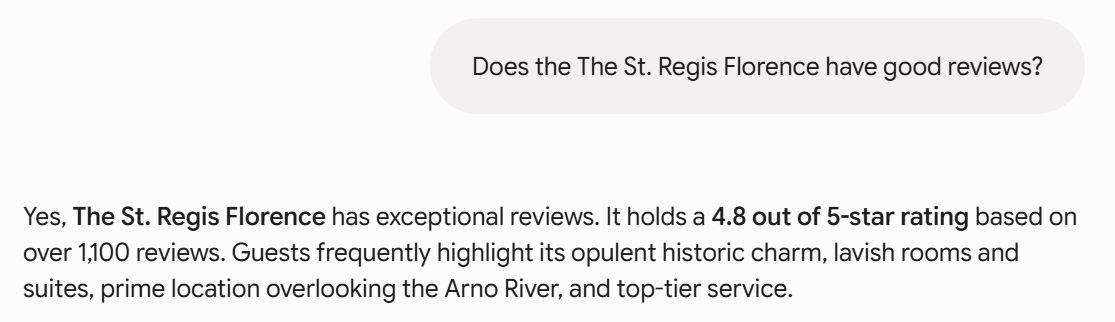
AI Optimisation works differently to traditional SEO, but the end goal is the same: to improve your visibility and generate website clicks.
Read Our Guide On SEO vs LLM Optimisation.
SEO Compounds. Commissions Don't
Booking platforms like Expedia and Booking.com can give your hotel visibility and reliable bookings, but using it as your only source of revenue means you're leaving money on the table. SEO isn't an overnight thing, but its long-term impact spans far beyond avoiding commission fees.
From owning your leads and turning one-time bookings into loyal guests to maintaining a consistent brand identity that builds on your hotel's reputation, SEO is an investment that continues to pay dividends once you've put in the initial effort.
Assertive specialises in creating tailored SEO strategies for hotels and resorts. Whether you're a small local B&B, want to scale nationally, or are ready to take your brand global, our experts drive consistent results that keep rooms filled and commissions low.
Please contact us for a free proposal today.