









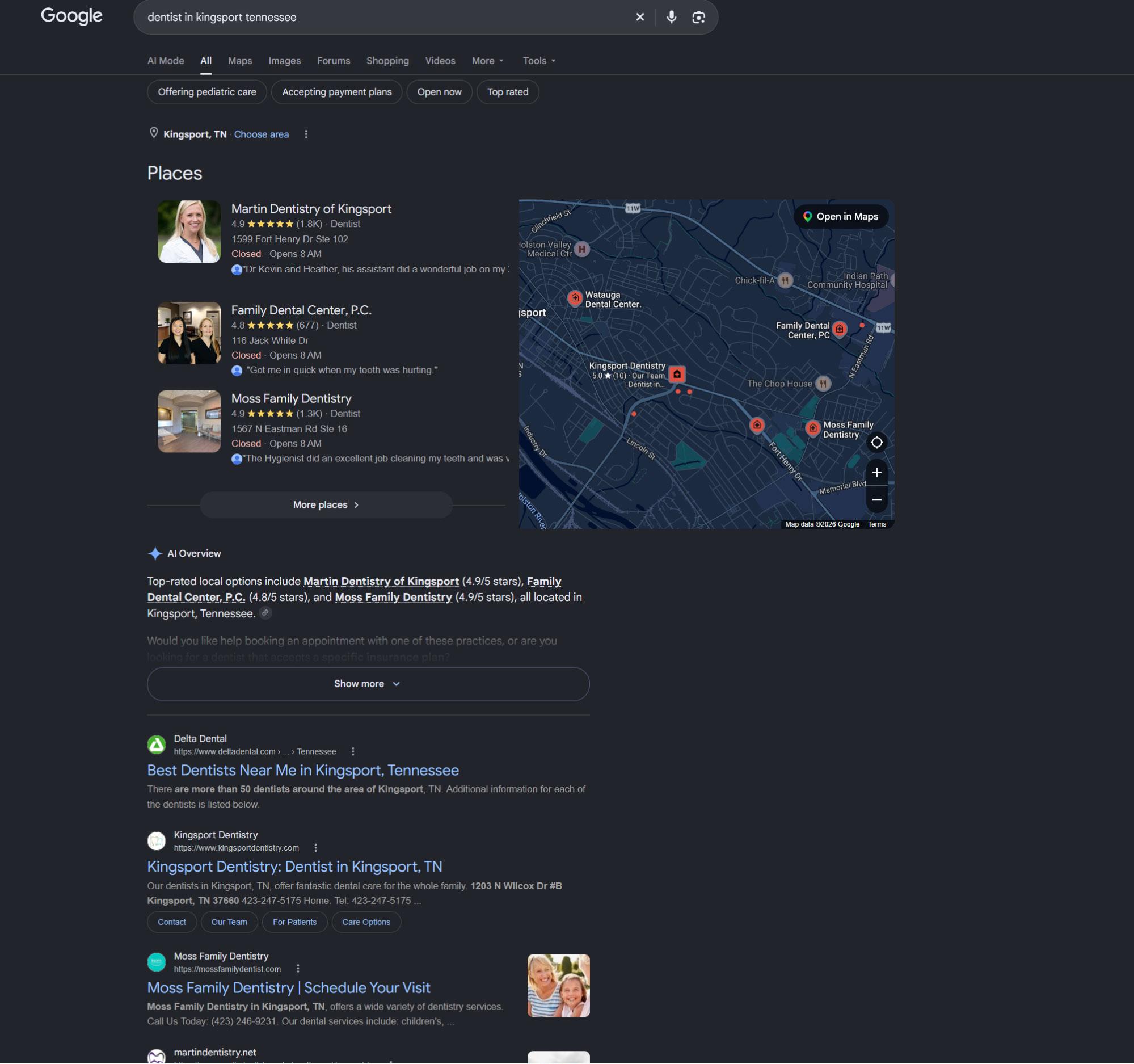

Reviews carry extra weight in healthcare because a patient has no way of judging a clinician’s skill before that first visit. They’re often searching while they’re anxious, in pain or worried about cost, which is why they lean so heavily on what earlier patients went through.
97% of consumers now read reviews when they’re choosing a local business, and 49% trust them as much as a personal recommendation. That means a stranger’s review ends up carrying the same weight as advice from a friend.
Even when a patient’s already got a GP referral or a recommendation from someone they know, 84% of them still go and check the reviews before they book, and what they find there can easily override that trust. Three in four won’t book with a provider rated below 4.0 stars, and 55% have cancelled or avoided an appointment altogether because of something they read online.
Reviews also affect how visible you are in local search and where you rank. In practice, highly rated clinics sit higher in local results, and if you want patients to find you, you need a steady flow of good reviews coming in.
We’re going to walk through how patients use those reviews when choosing a clinic, what they look for inside the feedback, how star ratings, review volume, recency, and AI search shape their decision, and how you can respond and collect reviews safely without falling foul of privacy laws or platform rules.
How Patients Use Reviews to Choose a Clinic
The whole process starts with a search, and it’s usually a local one. Over half of patients, 55%, begin by searching for their speciality “near me”, while 34% look for the best or top-rated option and 32% type in a clinician’s name.
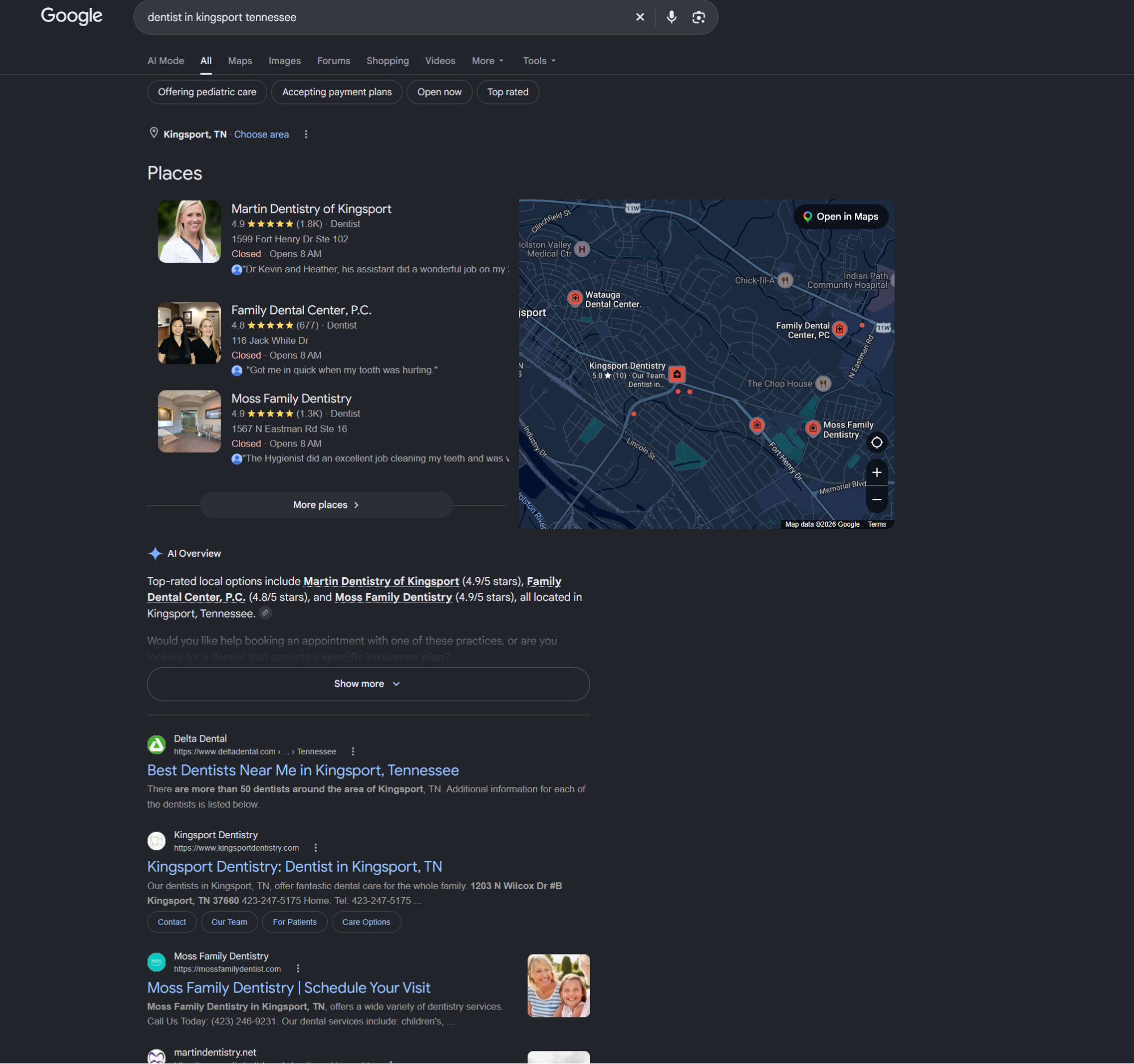
From those results, chances are they’ll see a map with a few clinics pinned on it, usually three near the top, each one showing its star rating and how many reviews it’s got. Most patients click on the one with the highest rating first and open its Google Business Profile, maybe the website too.
To get a proper feel for the place, they’ll then go and read the individual reviews, looking for the comments that keep coming up about staff, waiting times, treatment and price. That’s where they start forming an opinion of you. After that, they work their way down the list, checking the next clinics by rating.
By now they’ve usually narrowed it down to two or three, and they weigh them up on how recent the reviews are, how many there are and how each clinic handles things in its review replies.
Consider two clinics, both sitting on 4.7 stars. One had a few patients say lovely things about them last week and answered its one grumpy review politely. The other hasn’t had a new review in months and left a complaint sitting there unanswered. You know which one gets the call.
What Patients Look For Inside Clinic Reviews
When patients read reviews, they're trying to get a feel for what visiting your clinic is actually like, and funny enough, clinical outcomes don't come up much in the comments because people assume a registered clinician holds the proper qualifications.
What really decides bookings is how people get treated and how smoothly things run. Bedside manner comes first. Patients want to know whether the clinician listens, explains things clearly, and shows them respect, and 52% are put off when a doctor fails to listen.
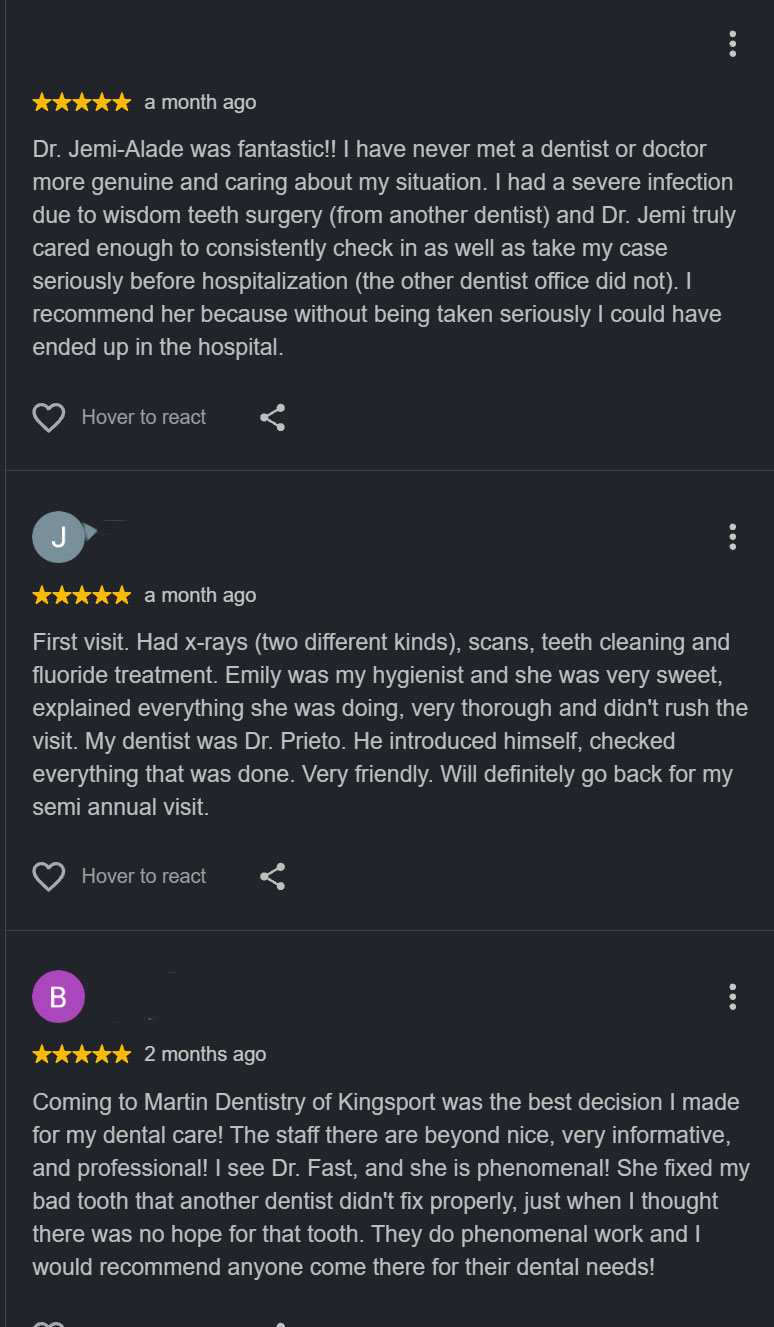
Staff attitude matters just as much. People look for receptionists, nurses, and coordinators who are welcoming and organised, and rude or unhelpful staff deter that same 52%. Both of those rank ahead of substandard care, which puts off 45%.
Then you've got the day-to-day running of the clinic. Patients want short waits, simple booking, and fees they understand upfront, so long waits put off 41%, unclear billing deters 40%, and difficult scheduling stops 20%.
Last on the list is the physical space. People notice whether the waiting areas and treatment rooms are clean and well maintained, though outdated facilities only discourage 11%.
How Reviews Drive Local Search Rankings and Map Visibility
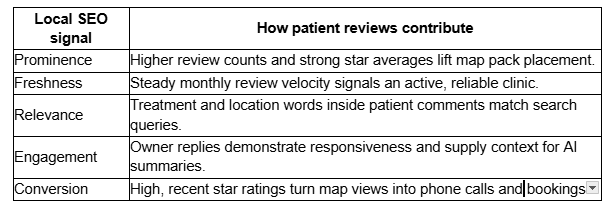
Google decides who shows up on the local map using three things, relevance, distance and prominence, and Google itself has confirmed that more reviews and positive ratings push your prominence up.
Local search specialists have taken this further by ranking 187 factors that feed into the map pack. The number of Google reviews with written text comes in ninth, how recent your reviews are comes in eleventh, and a steady flow of new reviews sits fourteenth. Recency shows up again once you’re on the map, ranking seventh among the factors that turn a map view into a phone call. Reviews carry into AI search as well, where review signals make up a 16% weighting for visibility.
The words patients use in their reviews count for something too, because when someone mentions Invisalign, knee physiotherapy or a dermatology check alongside your area, that comment backs up your relevance for those exact searches. If your Google Business Profile is fully filled in as well, consumers are 2.7 times more likely to see your clinic as reputable, 70% more likely to visit and 50% more likely to book.
How the Star Rating Filters Out Clinics Early
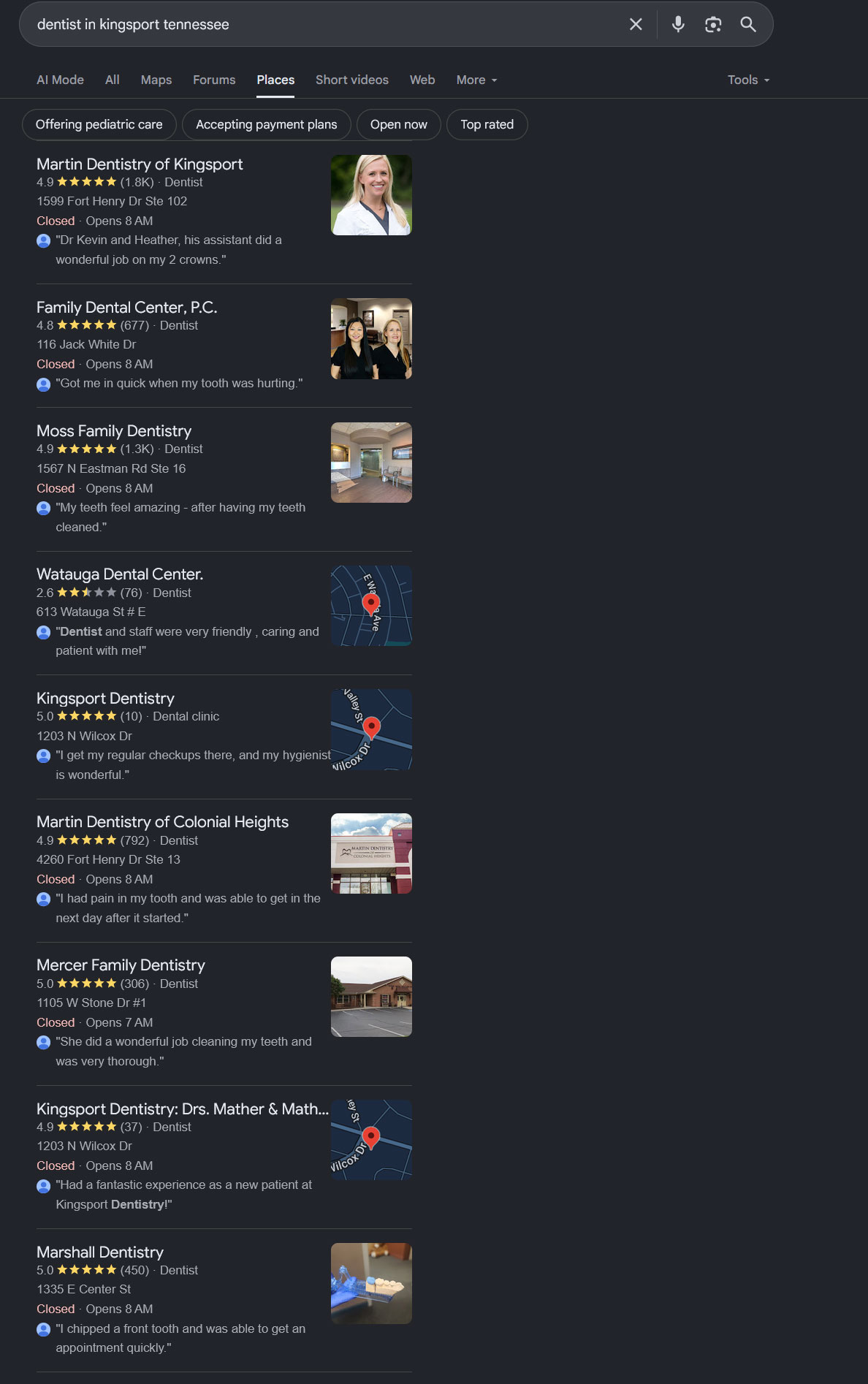
Your star rating is the very first thing patients see, which means it's also the first thing that filters you out. Three quarters of patients won't book a provider below 4.0 stars, 44% won't go below 4.5, and only 11% say the rating plays no part in their decision at all.
So if you're sitting at 3.8 or 3.9, most patients will scroll right past you on Google Maps without ever clicking on your profile. The good news is you don't need a perfect 5.0. A clinic at 4.6 clears the bar for every patient in those figures, as long as there are enough reviews behind the score to make it believable.
How the Number of Reviews Makes a Rating Believable
A 5.0 from four reviews looks fragile, whereas a 4.7 from 300 reviews looks like you’ve earned it. Across local searches, 47% of consumers avoid businesses with fewer than 20 reviews, and only 9% will choose one with five or fewer. Patients also want plenty to read. One survey found 51% of them read at least six reviews before deciding on a provider, so even a well-rated clinic needs a healthy number of reviews before people feel confident booking.
High volume protects you against isolated complaints too. With 12 reviews, one poor rating drags down your average and dominates the page, whereas with 250 reviews, one angry post reads as an outlier.
The tricky part is that most patients won't leave a review on their own. When someone is happy with their care, they feel relieved, get back to their normal routine, and rarely think to go online and write about it. Yet when a patient has a frustrating experience, they're far more motivated to jump online and vent, which means your profile naturally skews negative unless you actively nudge your satisfied patients. In fact, only 23% of patients leave feedback after every visit without being prompted, yet 68% say they'd happily write one if you simply asked them directly.
How Recency Tells Patients the Clinic Still Delivers
Staff leave, owners sell, and processes change, so a glowing review from 2023 tells a patient very little about how your clinic performs today, and if nothing's been posted in months, they might even wonder if you're still open. That's why 74% of patients only pay attention to reviews from the last three months, while 44% value reviews from the last month and 32% want feedback from the last two weeks. Having a steady monthly flow of fresh feedback proves your current team still earns that praise, and every new review gives you another chance to show how you engage with patients in public.
How Reviews on Different Platforms Shape the Decision
Google’s still the main source, used by 71% of consumers, which makes it the first place your review reputation has to hold up. Of course, it’s not the only place. Private UK and US patients also check the NHS, Doctify, CQC listings, Trustpilot, Facebook, Healthgrades, Zocdoc, RateMDs, Yelp and their insurer portals. Each of those sites shows its own rating, and while it’s hard to keep them all identical, try to keep your scores close across the board. Widely varied scores send mixed signals, and that creates hesitation when a patient is deciding whether to book.

Keeping things consistent also helps you with AI, because patients are increasingly turning to AI search before they ever click onto a directory, and those tools pull their recommendations straight from your public reviews and listings. Today, 45% of consumers use AI tools for local recommendations, and 36% of patients say AI influenced their choice of provider, ahead of traditional Google search results at 34%.
Even on Google itself, 37% of patients trust the AI Overview most, compared with just 7% for sponsored ads, and 82% read AI review summaries. The catch is that because AI builds its answers from those same review platforms, a handful of unanswered complaints or a weak score on just one directory can skew the summary a patient reads. That matters, because 60% of patients who use AI to research providers trust the answer without ever checking further.
How the Clinic's Reply Changes a Patient's Mind
The way you reply has the power to win a patient over, even after a bad review. Two thirds of patients, 66%, say seeing a provider respond directly influences whether they trust the clinic. Even better, 70% say a thoughtful reply improved their opinion of the practice, and 78% would return after a negative experience if the practice resolved their concerns.
At the same time, you have to be quick and genuine about it. Among consumers, 89% expect owners to respond, 81% expect a reply within seven days, and 19% expect one the same day. Ignoring feedback puts off 42% of people, and 50% avoid clinics that rely on generic templates.
You'd be surprised that only 51% of owners reply at all, so prompt and personal responses immediately set your clinic apart.
How Fake Reviews and Bad Replies Put a Clinic at Risk
It can be tempting to pad your profile with fake reviews to pull in more bookings, yet in a field built entirely on trust, that's a dangerous gamble. Patients can usually tell when praise sounds scripted, and once they pick up on it, they stop believing the rest of your reviews as well. With 97% of consumers wanting real consequences for fake reviews, there's a high chance a sceptical patient will report your profile.
Search engines like Google have been cracking down on this for a while now. Google blocked or removed more than 240 million policy-violating reviews and 12 million fake profiles from 2024 onwards, and in April 2026 it went a step further and banned staff review quotas and employee-name requests.
Then you’ve got the regulators to think about. In the UK, the Digital Markets, Competition and Consumers Act banned fake reviews and undisclosed incentivised reviews, and you’re looking at fines of up to 10% of global turnover if you’re caught. The Competition and Markets Authority has already been carrying out investigations. Over in the US, the Federal Trade Commission penalises fake, suppressed or selectively misrepresented reviews at $53,088 per violation.
Bad replies can land you in trouble as well, because privacy carries its own penalties. In the US, HHS fined a dental practice $50,000 in 2022 and Manasa Health Center $30,000 in 2023 for disclosing patient information in review replies. In the UK, the GMC, GDC, ICO and CQC all set confidentiality rules you have to follow. Put all of that together and you can see how honesty and privacy can make or break a clinic.
Turning Reviews into Booked Appointments
Every review signal works together to shape a patient's decision. Strong star ratings get you past that initial filter, review volume proves your reliability, and recency confirms your current standard of care. On top of that, repeated good themes reassure people who are anxious about their visit, and compliant replies show you’re accountable. What makes all of this even better is that those exact same signals also power your Google Maps rankings and AI visibility, so the work you put into your reputation brings more people to your profile in the first place.
If you're struggling with your healthcare site or want a hand pulling all of this together, we can help. We sort out directory accuracy and local healthcare SEO to build a steady, compliant review flow, offering solutions for private GP, dental, physiotherapy, aesthetic, and specialist clinics.
Get in touch, and we’ll talk through how we help you improve your online reputation and bring in more patients through positive reviews and better local visibility.