











- It’s expensive to run paid ads
- SEO is far more cost efficient
- People who click through on organic results are likely more pre-qualified
- ROI is generally higher
But, that’s not to say it shouldn’t run hand in hand with PPC, it absolutely should!
But anyone who works in digital marketing for healthcare brands will know that the cost per clicks and cost per acquisition/conversion can be monstrous!
This is why SEO is so important in healthcare, because it can make a significant difference to the businesses bottom line in terms of revenue.
Things are also changing in how people find what they want, especially in healthcare.
People don’t call their GP first anymore. They Google their symptoms, research conditions, compare clinics, and read reviews before they ever pick up the phone. That shift has changed what it takes to bring patients through the door, and it’s one of the reasons why search visibility sits near the top of almost every healthcare marketing plan I review.
I’ve spent over two decades running SEO campaigns, and healthcare is one of the sectors where the stakes are highest and the margin for error is smallest. If you run a private clinic, hospital group, dental practice, or allied health service in the UK, what follows is what I’d tell you over coffee if we were mapping out your strategy.
Healthcare SEO is often quite complex, primarily because of:
- Strict regulations
- Google’s barrier to rank (higher with medical content)
- True E-E-A-T expertise is required (you can’t fake it)
- Content generally needs more than 1 person to review and approve it
- It’s extremely competitive
But, there’s a lot of other complexities to it.
Niches within “healthcare” such as pharmaceutical are even more competitive and are also areas that are prolific for spam. We know because we’ve worked with healthcare brands, pharmaceutical brands – we’e seen the SERPS and been through the google core updates.
I’ve spent years in the SEO industry focusing on the healthspace, I used to do a significant amount of analysis on not only healthcare brands but also publications such as healthline.com.
But, even big health brands aren’t immune from SEO challenges, whether you are a private hospital group or a healthcare publication, it’s getting HARDER to get clicks, especially with Google AI overviews appearing for more and more health searches.
Take a look at Healthline and their health traffic decline!

Health publications and healthcare brands are battling MORE now than ever for clicks as AI Overviews eat into a huge share of search:

How patients actually find healthcare now
Google handles hundreds of millions of health queries every day. David Feinberg, then VP of Google Health, confirmed that roughly 7% of the billions of daily Google searches are health-related, which works out at about 70,000 every minute. That’s a large audience, and the behaviour behind those searches is telling.
Someone typing “private knee replacement cost Manchester” or “best fertility clinic London” isn’t casually browsing. They have a problem, a budget, and an intent to act. People searching for healthcare are among the most motivated users on the web. If your site isn’t turning up when your target audience performs a search, you’re obviously not going to get the click – be that user at a pre-consideration phase or ready to enquire.

We can see AI overviews appearing for more and more health related searches as well as “specific” searches for treatments, conditions, medical interventions etc.
The combination of AI overviews, blended sponsored results and map pack listings often decimates CTR.
The same pattern shows up with symptom searches. Let’ say a patient starts with “sharp pain left side” at 2am, works through the conditions that might match, and eventually lands on a treatment or service. By the time they’re searching for a provider, they’ve already done their homework. That early research phase is where most healthcare sites underperform, because they haven’t created the educational content that meets people at the top of the funnel.
This is why writing blogs for medical conditions and treatments is far less effective, primarily because of AI overviews and no doubt Google’s AI mode will eat into more share of voice when people are researching treatments or conditions.
Why healthcare SEO is not like normal SEO
Anyone who tells you healthcare SEO is just like selling shoes online is wrong. Medical search is governed by a specific set of rules that make it harder to rank and harder to stay ranked. We know, we’ve tested everything in healthcare SEO and pharmaceutical SEO.
E-E-A-T and YMYL are not optional
Google treats medical content as Your Money or Your Life (YMYL). That means Google holds it to a much higher standard than a recipe blog or a gaming site. The framework Google uses is Experience, Expertise, Authoritativeness, and Trustworthiness, known as E-E-A-T.
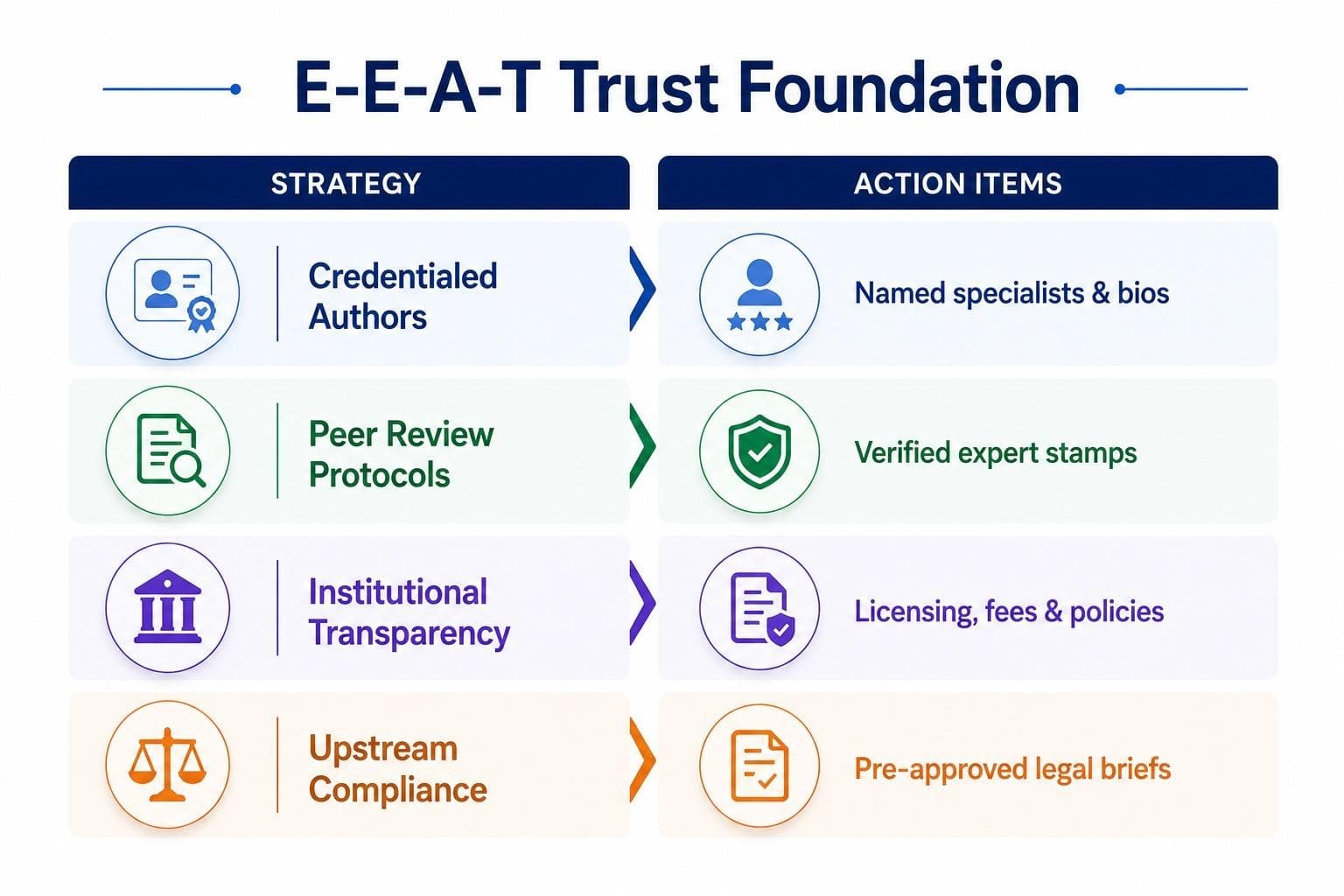
In practice, E-E-A-T means your site needs to show:
- Who wrote the content, with real credentials attached
- Who medically reviewed it, with their GMC number or professional registration
- When it was last updated
- Citations to recognised medical sources
- A clear About page, regulated registrations (CQC, GDC, GPhC) where relevant, and physical clinic information
If a patient lands on your hernia repair page and there’s no named consultant, no review date, and no sense of who is accountable, Google treats it as lower quality. I’ve seen content-heavy sites lose thousands of monthly visitors overnight after a core update, purely because their E-E-A-T signals were thin.
Whilst E-E-A-T is NOT a direct ranking factor, it’s more the compliance and demonstration of expertise and trust that matters.
Faking E-E-A-T is a thing, we’ve seen medical sites pushing fake author bios and false credentials trying to game Google’s E-E-A-T.
Advertising rules tie your hands
Healthcare marketing in the UK sits under the ASA and CAP codes. Add MHRA for medicines and devices, GDC for dentistry, and the CQC for providers. You can’t make unverifiable claims about outcomes. You can’t cherry-pick testimonials. You can’t run before-and-after imagery for cosmetic procedures the way US clinics do.
Every page and ad has to pass compliance before it goes live. That slows down content production and rules out some of the quick-win tactics that work in other sectors.
NHS authority crowds the SERP
Here’s a UK-specific problem most American guides miss. For almost every health query, the NHS website ranks. So does Patient.info, Bupa, and a handful of charity sites with enormous domain authority. You’re not competing with other private clinics for the top spots on broad terms like “high blood pressure” or “knee pain.” You’re competing with the NHS.
That changes the strategy. Going after head terms is usually a waste of budget. The money is in specific, commercial queries like “private cataract surgery Birmingham price” or “adult ADHD assessment London” where intent is clear and NHS pages don’t dominate.
Where the real ROI comes from
Let’s get practical. When I pitch a healthcare client on SEO, I’m usually talking about five outcomes that justify the spend.
Lower cost per patient. Paid search for medical keywords in the UK is VERY expensivee. Cost per click on terms like “private MRI scan” can run £15 to £40, and conversion rates on cold traffic are often poor. Organic traffic, once it’s in place, compounds. A service page that ranks for its target term can deliver enquiries for years on a fixed cost base.
High-intent enquiries. Organic visitors arriving on a specific treatment page tend to convert better than ad traffic because they’ve self-qualified. They’ve searched, compared, read, and chosen to click your listing.
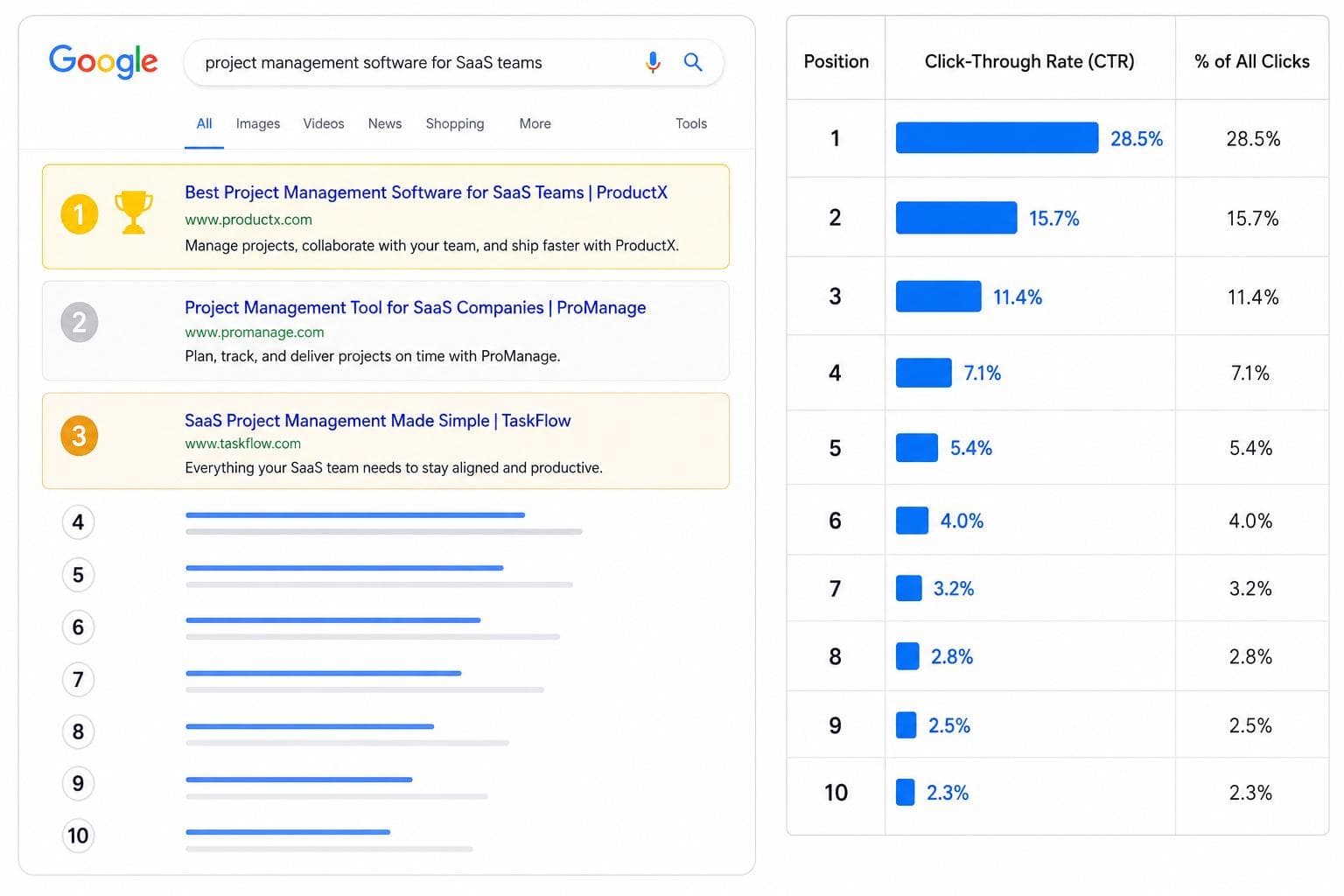
Passive trust-building. Ranking on page one isn’t just about traffic. It’s a signal to patients that you’re a credible provider. Most people click the top three results. If you’re not there, you’re fighting harder for every enquiry you do get.
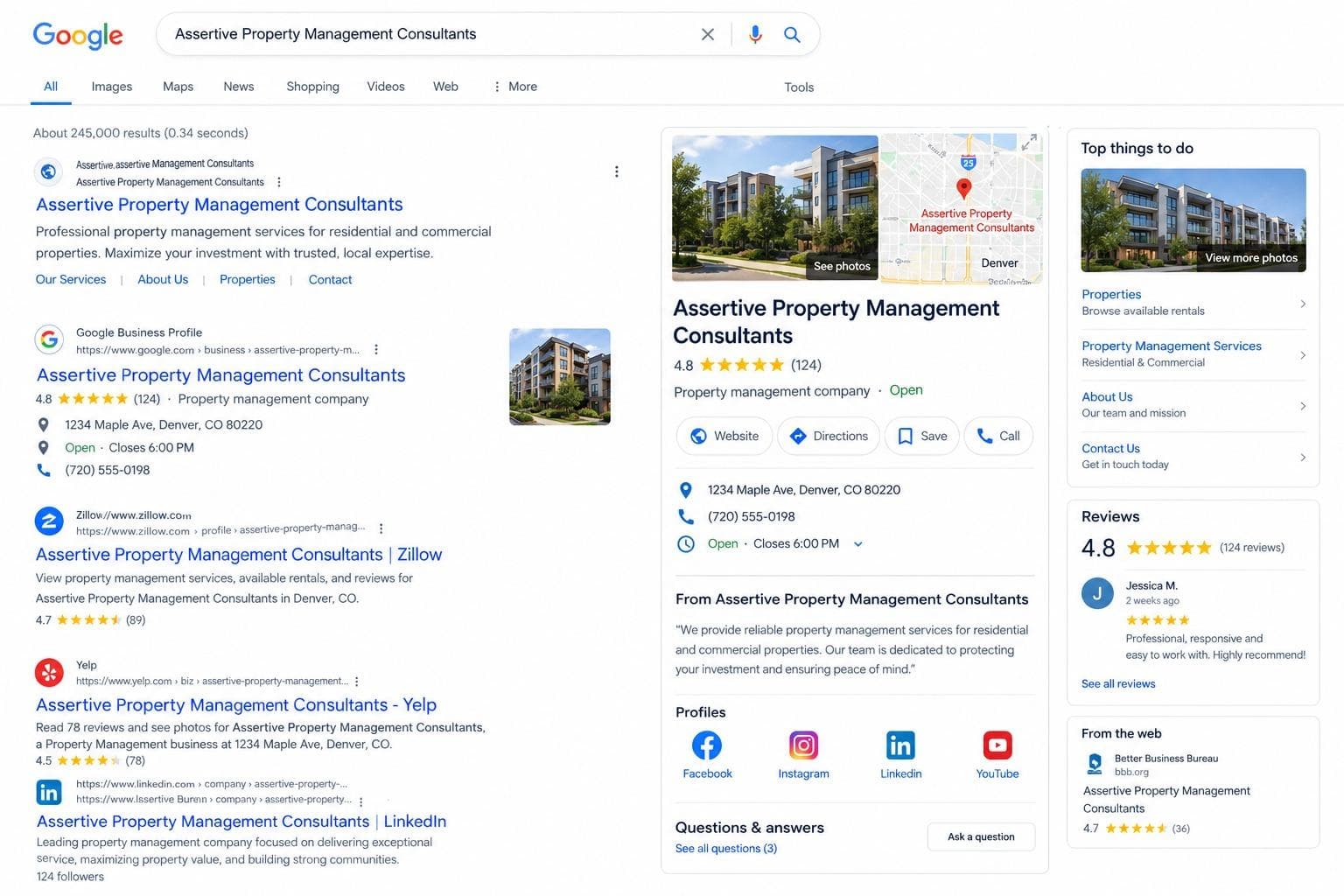
Local dominance. For clinics with a physical footprint, local search is where most of the volume sits. Getting your Google Business Profile, NAP citations, and location pages right can deliver more enquiries than a national content campaign.
Long-term asset value. A well-built healthcare site is a business asset. I’ve valued SEO portfolios at acquisition, and the organic traffic profile is often one of the most attractive parts of a healthcare deal.
What’s changing with AI search
This is the bit most healthcare marketers are behind on. Google’s AI Overviews now appear for a large chunk of health queries, and tools like ChatGPT, Perplexity, and Claude are being used for symptom research and provider comparison.
AI search changes what ranking means. A user might get their answer inside the AI Overview and never click through to your site. Or they might get a ChatGPT recommendation that lists three clinics, and you need to be one of the three.
Earning AI citations still requires strong E-E-A-T, but the content also has to answer questions directly and be structured in a way AI can parse. That means:
- Clear question-led H2 headings
- Concise answers near the top of each section
- Proper schema markup (MedicalBusiness, FAQPage, Physician)
- Mentions and links across the wider web, not just your own site
I call this work LLM SEO or GEO (generative engine optimisation). It’s not replacing traditional SEO, it’s layered on top. Ignore it and you’ll watch your click-through rate drop even as your rankings hold.
What actually makes a difference
If I had to boil healthcare SEO down to the activities that consistently produce results, this is the list.
- Build proper service pages. One dedicated page per treatment, condition, or service, written for patients and reviewed by a clinician. Not a 300-word placeholder.
- Localise properly. If you operate from multiple sites, each location needs its own page with genuine information, team bios, directions, and reviews. Thin location pages don’t rank and annoy Google.
- Get your Google Business Profile right. Photos, services, correct categories, accurate opening hours, regular posts, responses to every review. Most clinics treat GBP as a one-time setup and leave it there.
- Run a proper review strategy. Ask for reviews consistently. Respond to all of them, including the bad ones. Reviews influence map rankings and patient decision-making more than almost any other factor.
- Invest in medical content with real authors. Bylines from your consultants, not an anonymous marketing team. This builds E-E-A-T and gives you content that AI search engines are willing to cite.
- Fix the technical foundation. Site speed, Core Web Vitals, mobile responsiveness, schema markup. Healthcare sites often sit on bloated CMS platforms and tolerate slow page load times. Google notices.
- Earn links from medical authorities. Guest articles on clinical publications, HCP directories, partnerships with patient charities, digital PR tied to original research. These links carry authority signals that general backlinks don’t.
- Measure enquiries, not rankings. The only metric that matters is patient enquiries attributed to organic traffic. Set up call tracking, form attribution, and a clean view of source performance in GA4.
A note on compliance
I’ll close on something I see go wrong often. Marketing teams write ambitious copy, clinicians review it, and something in the middle gets lost. Either the content is too bland to rank, or it’s too aggressive to pass compliance.
The solution is to bring clinical review into the editorial process from the start, not bolt it on at the end. Brief writers on ASA and CAP rules before they write. Keep a record of reviews, dates, and reviewers on every page. This takes longer upfront and saves you from taking pages down six months later when a complaint lands.
The short version
Healthcare SEO is harder than most other sectors, which is exactly why it pays off. The barriers, the compliance overhead, and the E-E-A-T expectations that make it tough for newcomers are the same factors that protect the position once you’ve earned it.
If you’re running a private clinic, hospital, or healthcare group and you’re not investing seriously in search, you’re handing your market share to the competitor who is.